Discover the best Everest Three High Passes Trek routes for 2026 and 2027, including itineraries, scenic highlights, practical tips, and planning advice.
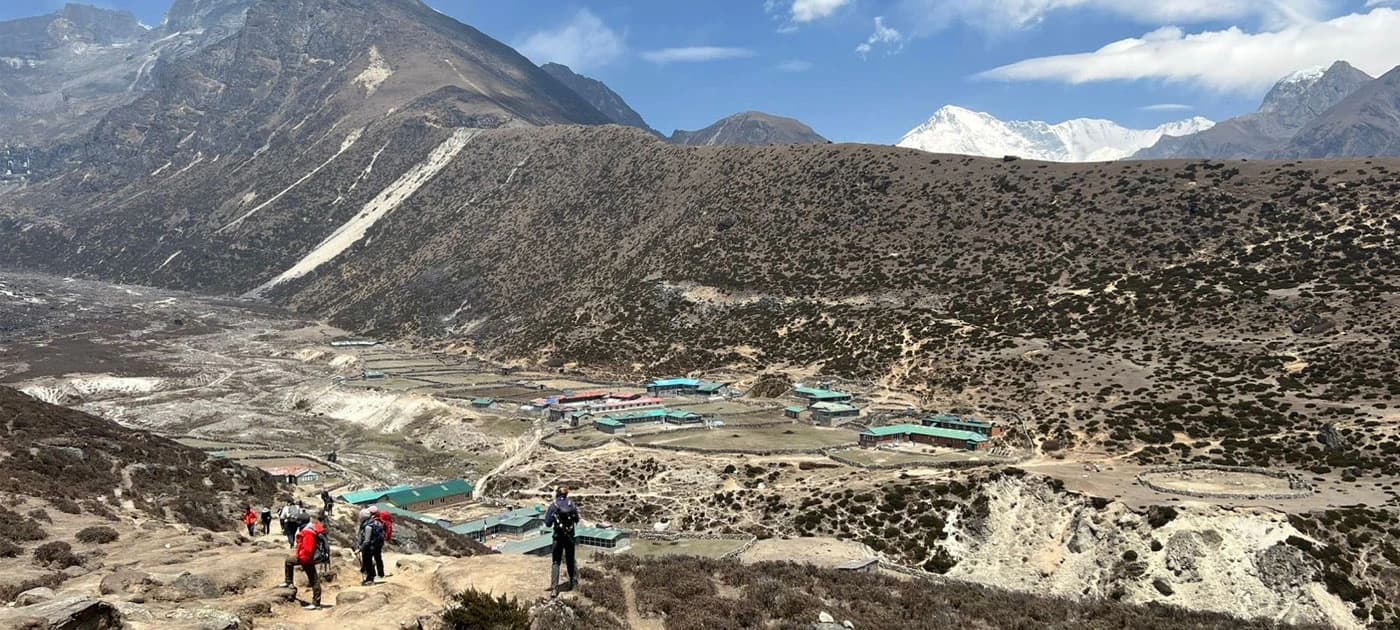
Everest High Passes Routes: Best Itinerary Guide 2026
A Quick Glance at the Adventure: What are the Everest High Passes?
The Everest Three High Passes Trek is one of the most challenging yet most rewarding treks that any trekker can take up in Nepal. The journey does not take the trekker directly through a specific standard EBC route; instead, it takes various routes from which they traverse deep into the Everest region and then cross the three iconic passes of Everest: Renjo La (5,360 m), Cho La (5, 420 m), and the Kongma La Pass (5, 535 m). The trailhead also passes through Everest Base Camp and Kala Patthar (5545 m), exploring the Gokyo Valley and lakes, making it a perfect Everest Circuit Adventure.
This trek is the best opportunity to experience the entire Everest region up close, and through firsthand experience, the trek combines getting to experience the rich Sherpa culture of the region, traditional mountain villages, and the ancient Buddhist monasteries. Through this trek, you don't only get to see Everest through an up-close glance while crossing the passes, but also see the other mountain ranges surrounding Everest, like Lhotse, Nuptse, Makalu, Cho Oyu, and Ama Dablam.
Here is a short insight into the high passes:
Kongma La Pass (5535 m)
The Kongma La Pass is the highest and the most challenging one among the three passes, which demands a strong level of fitness and acclimatizes the body well, gradually, to avoid altitude sickness and physical fatigue. The trail is not technically difficult, but it does include a rocky and rugged moraine walk through a scree section. The route runs between Lobuche and Chhukung. After the descent from Kala Patthar, it is the last pass that you will face if the trek is done through the anti-clockwise route, following Renjo La and Cho La. Reaching here is an achievement, where you will be rewarded with the sweeping panoramas of Makalu, Lhotse, Everest, Nuptse, and the iconic Khumbu Glacier.
Cho La Pass (5420 m)
Perched at an altitude of 5420 meters, the pass of Cho La is the most technical pass; it is not the hardest, but it is quite intense and may also require crampons, microspikes, and careful walking on snowy trails, especially during wintertime. The pass links Dzongla and Thagnak through a crossover by the glacier and falls in the trail, after a descent from Gokyo valley/Gokyo Ri/lakes. The vantage point is famous for showing the views of the Himalayan peaks, such as Cholatse, Nuptse, Taboche, and the Ngozumpa Glacier
Renjo La Pass (5340 m-5360m)
It is the lowest among the three ultimate passes, yet it is still known to be difficult due to an extremely steep climbing section and rugged moraine, so careful walking and the assistance of a trekking guide are still crucial. The trail connects the Gokyo Lake area to Thame Valley, above the Ngozumpa Glacier, giving you a pure off-the-beaten-path trekking experience. Reaching the top offers an impeccable close-up view of Himalayan giants, Cho Oyu, Makalu, and the expansive Gokyo basin.
Main Route Options for Everest High Passes
Route 1: Going through Kongma La, Cho La, and finally Renjo La (Anticlockwise Route)
This route generally follows: Lukla → Namche Bazaar → Tengboche → Dingboche → Chhukung → Kongma La → Lobuche → Everest Base Camp → Dzongla → Cho La → Gokyo → Renjo La → Thame → Namche Bazaar → Lukla
Compared to the other routes, this one is the most demanding. It puts trekkers on a path that lets them reach Kongma La early, after they have acclimatized well in Namche Bazaar and Dingboche. Most trekkers refer to this as the anti‑clockwise circuit and the classic Three Passes route. You can also find this route described in detail in a blog post on our website. This trek usually takes around 17–19 days for most trekkers, but it highly depends on the side trips included and the delay of the flight to Lukla, which usually happens during peak season.
Route 2: Renjo La, Cho La to the Kongma La Pass (Clockwise Route)
This route goes through: Lukla → Namche Bazaar → Thame → Lungden → Renjo La → Gokyo → Cho La → Dzongla → Everest Base Camp → Lobuche → Kongma La → Chhukung → Dingboche → Namche Bazaar → Lukla.
This trekking route begins with Renjo La, then provides an early visit to Thame and passes through the beautiful Gokyo Valley. For most trekkers, this route takes around 17–20 days, depending on their pace and how their guide manages the itinerary, but it usually does not take more than 20 days to finish.
Route 3: Three Passes Trek without Everest Base Camp
The trek without going through Everest Base Camp follows: Lukla → Namche → Thame → Renjo La → Gokyo → Cho La → Dzongla → Lobuche → Kongma La → Chhukung → Dingboche → Namche → Lukla.
This route features crossing the three passes without visiting Everest Base Camp and is chosen by people who only want to experience the three high passes. This trek usually lasts around 14–16 days, depending on how much time trekkers take each day, but it does not last more than 16 days.
Route 4: Three Passes with Everest Base Camp (Ultimate Everest Circuit)
This trekking route offers the most complete experience of Everest and the Khumbu that a trekker can get. It goes like this: Kathmandu → Lukla → Namche Bazaar → Namche → Kongma La → Everest Base Camp → Kala Patthar → Cho La → Gokyo → Renjo La → Thame → Lukla.
This trek is the complete experience for any trekker planning the Three Passes Trek, as it gives you the full experience of the entire Everest region and the Khumbu villages. It ultimately explores every scenic highlight: Gokyo Ri, EBC, Kala Patthar, and the Everest three pinnacles, so you do not need to take the trip solely, which can be finished within a 19-21 day timeframe.
Everest High Passes Route Comparison
| Route | Pass Order | Everest Base Camp & Kala Patthar | Typical Duration | Difficulty | Best For |
| Anti-clockwise | Kongma La → Cho La → Renjo La | Yes, included | 17-19 days | Challenging | Trekkers wanting the classic route with better acclimatization before the highest pass |
| Clockwise | Renjo La → Cho La → Kongma La | Yes, included | 17-20 days | Challenging | Trekkers who prefer Gokyo early and want to finish with Kongma La |
| Three High Passes without EBC | Renjo La → Cho La → Kongma La | No | 14-16 days | Moderate | Fit trekkers short on time, who mainly want the high passes |
| Ultimate Everest Circuit | Kongma La → Cho La → Renjo La | Yes, with EBC and Kala Patthar included | 19-21 days | Extremely challenging | Trekkers wanting the most complete Everest experience |
Day‑by‑Day Everest Three Passes Itinerary (19 Days)
The most famous Everest Three Passes route is the ultimate adventure, which crosses the pinnacles of Cho La, Renjo La, and Kongma La, along with exploring the Everest Base Camp and Kala Patthar at the same time. This 19-day itinerary follows a gradual pace, with hikes of 5-6 hours, gaining 400-500 meters in altitude, and has great acclimatization days at 3 major points, Namche Bazaar, Dingboche, and Gokyo Valley, which help you to rest and acclimatize well, leading to a 99% success rate with no problems.
Days 1–3: Kathmandu, Lukla, and Namche Bazaar
Your trek begins in Kathmandu, where you meet your trekking company and the team you’ll be traveling with for the duration of the trip.
On Day 2, you take an early morning flight from Kathmandu to Lukla. After landing, you start your trek to Phakding, walking through forests and wooded trails along the Dudh Koshi Valley. This marks the end of Day 2 on the 19‑day Three Passes trek.
On Day 3, you continue along the same trail toward Namche Bazaar, the main hub of the Khumbu region and home to some of its most diverse culture and scenery. These first few days are all about gradually gaining altitude and beginning the acclimatization process.
Days 4–6: Acclimatization in Namche and Trek to Dingboche
Day 4 is a full acclimatization day in Namche Bazaar. You can take one or two short hikes—such as to the Everest View Hotel or Khumjung village—to help your body adjust to the elevation, then return to Namche to rest.
On Day 5, you leave Namche and trek toward Tengboche, one of the most culturally significant villages in the Khumbu. Here, you can visit the famous Tengboche Monastery and explore other small monasteries in the valley. As you trek deeper into the day, the views of Ama Dablam open up in all their glory.
Day 6 takes you from Tengboche to Dingboche. The landscape becomes more barren and alpine, and the altitude starts to feel more challenging as you rise above 4,000 m. Proper acclimatization is key from this point onward.
Days 7–9: Acclimatization, Kongma La Pass, and Everest Base Camp
Day 7 is another acclimatization day, similar to your rest day in Namche. You’ll use this time to prepare for the first high pass of the trek: Kongma La, which sits at around 5,535 m and is the highest of the three passes.
On Day 8, you cross Kongma La Pass before descending to Lobuche. This is one of the most demanding days of the trek, with steep climbs, rocky terrain, and high altitude.
Day 9 takes you from Lobuche up to Everest Base Camp (5,364 m). Walking among the Khumbu Icefall and the tents of climbing teams is a highlight of the journey. Days 7–9 are among the most eventful, giving you your first high pass and the iconic Everest Base Camp experience.
Days 10–12: Kala Patthar, Cho La Pass, and Gokyo Valley
On Day 10, you start early to hike up to Kala Patthar, one of the best viewpoints for Mount Everest. From here, you get clearer and more panoramic views of Everest than from Base Camp itself, which is often surrounded by other peaks and ice formations.
Day 11 is dedicated to crossing the second high pass: Cho La Pass (5,420 m). This section involves navigating icy and sometimes slippery terrain, often with the aid of fixed ropes. Good footwear and careful footing are essential.
On Day 12, you trek from the Cho La side to Gokyo, entering the stunning Gokyo Valley with its turquoise lakes and towering peaks. These three days—Kala Patthar, Cho La, and Gokyo—are widely considered some of the most scenic of the entire trek.
Days 13–15: Gokyo Ri, Lungden, and Renjo La Pass
Day 13 begins with an early hike to Gokyo Ri (around 5,357 m). From the top, you’re rewarded with panoramic views of Everest, Makalu, Cho Oyu, and many other giants of the Himalaya.
On Day 14, you trek from Gokyo to Lungden, passing through a more remote and secluded part of the route. The trail offers a quieter, more wilderness‑like experience compared to the busier sections near Namche and Lobuche.
Day 15 is the final high‑pass day: you cross Renjo La Pass (around 5,360 m) and begin your descent into the Thame Valley. By the end of Day 15, you will have completed all three major high passes of the trek.
Days 16–19: Descent to Lukla and Trek Conclusion
The final phase of the trek is all about descending and wrapping up the journey.
On Day 16, you trek from Thame back to Namche Bazaar, retracing part of your outward route.
Day 17 takes you from Namche to Lukla, marking the end of the trekking portion of your adventure.
On Day 18, you spend the day in Lukla, resting and preparing for your flight back to Kathmandu.
Day 19 typically includes the flight from Lukla to Kathmandu (or Ramechhap, depending on flight schedules), followed by a transfer to your hotel. From here, you can enjoy a free day in Kathmandu before your international departure.
Do Route Variations Affect the Cost of the Everest Three Passes Trek?
Yes, route variations can affect the overall cost of the Everest Three Passes Trek, as the shorter Three High Passes-only itinerary usually costs less because it reduces the number of trekking days, accommodations, meals, and guide days as well. However, the clockwise and anticlockwise routes cost similarly, as both cover the same three high passes, permits, and Lukla flights. The biggest cost difference comes from including EBC and Kala Patthar, as it makes the itinerary longer and increases accommodation, food, guide, and porter expenses. Other major factors include group size, Lukla flight availability, guide and porter service, and whether you choose standard lodges, tea houses, or upgrade services.
| Route Variation | Cost Impact | Reasons |
| Three High Passes without EBC | Usually lower |
Fewer trekking days, fewer nights in tea houses, fewer meals, and fewer guide days |
| Three Passes with EBC and Kala Patthar | Usually higher | Adds several days to the itinerary, increasing accommodation, meals, guide, and logistics costs |
| Clockwise vs anti-clockwise | Usually similar | The same major villages coverage, passes, permits, and Lukla flights are involved; however, the direction may change the sequences |
| Short high passes itinerary | Usually lower | Reduces total duration days, though the savings are limited because Lukla flights and permits remain fixed |
| Longer itinerary with rest days | Higher | More nights, food, guide wages, and possible extra porter days |
| Helicopter transfer instead of Lukla flight | Much higher | Helicopter transfers can raise the pricing of the package compared to the regular flight of Lukla |
Main Villages and Landmarks Along the Everest High Passes Route
The route passes through a chain of classic Khumbu villages and iconic high‑altitude landmarks. Each stop plays a key role in acclimatization, scenery, and the overall trekking experience, from the flight‑in gateway at Lukla to the remote valleys around Gokyo and Thame.
Lukla
Lukla (2,860 m) is the starting point for any trek in the Everest Region and is home to the famous Lukla airport, which is also called the Tenzing-Hillary Airport, named after the pioneers who first summited Mt. Everest. The airport itself is situated among hills and mountains. Once you start trekking upward from Lukla, your journey on the trek begins. The trekkers usually start trekking towards Namche from Lukla.
Namche Bazaar
This town is situated in the Khumbu region and is often said to be the main acclimatization place for the beginning of any trek done in the Everest region. This place has a lot of diversity in terms of it being a town with a mix of a lot of cultures and traditions; you can experience the authentic Tibetan culture in this place alongside experiencing bakeries, pubs, and bars inspired by European culture. This town is situated at an altitude of 3, 440 m.
Dingboche
The town of Dingboche is a high-altitude Sherpa village situated at an altitude of 4, 410 m, from where you can experience views of the mountain ranges like Ama Dablam and Lhotse. Dingboche is much more barren than Namche Bazaar; it is not really remote, but it is the point from which remote areas begin. This environment is surrounded by rocky and dry land terrain; you start seeing the mountain ranges on the horizon of the sky, and you will see mountains like Ama Dablam, Lhotse, and Nuptse.
Chhukung
Located in the Imja Valley, Chhukung (4, 730 m) is a small village that is considered to be the base of Island Peak. Chhukung is also widely associated with Island Peak climbing. From Chhukung, the views of Lhotse, Nuptse, Ama Dablam, and Island Peak are extremely clear and are among the best you can get throughout the trek. This is the point from which you begin your journey to Kongma La.
Kongma La
The Kongma La Pass is one of the most iconic passes of the Everest region or any region and is located at a freezing elevation of 5, 535 m. It is one of the three passes of the trip that connects the Imja Valley with the Everest Valley. The pass is covered with rocky and glacial trails; it offers amazing views of the various mountain ranges that surround Everest and its regions.
Lobuche
Lobuche (4, 940 m) is a small village settlement located on the trail along the route to Everest Base Camp; usually, trekkers stay here before continuing along their trek up to Everest Base Camp. This village sits at the glacial base of Khumbu Glacier. The landscape of Lobuche is mainly composed of and surrounded by a lot of glaciers and rocks. From Kongma La and this point on, the trekkers start trekking slowly as the air starts becoming thinner.
Everest Base Camp
The Everest Base Camp is an iconic point for any trekker through the Everest region; for some trekkers, this is the ultimate destination of the trek; for some, it is a part of the trek: the Everest high passes with EBC. The Base Camp sits at an altitude of 5, 364 m; you can see the views of the iconic Khumbu Icefall from this point, it is to be noted that you cannot see a clear view of Everest from the base camp due to the views being blocked by the surrounding mountain ranges so instead you can trek up until Kala Patthar to get the best views possible of Mt. Everest.
Kala Patthar
Kala Patthar is one of the most famous viewpoints of the entire Everest region. Situated at an altitude of 5, 550 m, this point offers the best close-up views of Mt. Everest. Kala Patthar is a ridge-type rock situated right on top of the Gorak Shep, and trekkers normally start trekking early in the morning up to this point as the weather is most stable around that time. From this point onwards, you start getting excellent views of Everest and the mountain ranges surrounding it like Mt. Lhotse, Nuptse, Pumori, Ama Dablam, Dhaulagiri, etc.
Cho La
Cho La is another one of the three passes of the three-pass trek situated in the Everest. Located at an elevation of 5, 420 m, it is the pass that connects Everest with the Gokyo Valley. The pass is very important, as without the Cho La Pass, the trekkers would have to end up taking a different route to reach the Gokyo. This pass is said to be a tricky and tough one to cross, as the pass is mainly situated on land of rocky, steep, and icy terrain. Aside from being physically demanding, the trek is also influenced by the weather conditions on the day of the trek.
Gokyo Lakes
The Gokyo Lakes are numerous high-altitude lakes situated in Gokyo; the views of the lakes are undoubtedly the best views you will experience of lakes, where you will get to see the lakes when they are magnificently blue or a shade of turquoise. The lakes are situated at an altitude of around 4,700- 5,000 m, and as it is situated in Gokyo, there is a small village settlement where there are lodges, and you can stay there and enjoy the hospitality of the incredible local people of Gokyo. The views of Ama Dablam and Cho Oyu become clearer, and combined with seeing them alongside the lakes, is truly a once-in-a-lifetime type of memory.
Level of Difficulty
The Everest Passes are said to be quite challenging for trekkers who do not have prior experience of doing such treks, as it is very technical in comparison to other treks, as it includes multiple terrains that the trekkers need to navigate. The trail goes from dry to snowy, requiring much technical skill in comparison to the other treks. This trek is also considered to be hard as it mainly consists of passing high-altitude passes, which makes it difficult for inexperienced trekkers who are not used to such conditions on the trail where trekking is done. The concern with the trek can also come down to the altitude of the trek, as this trek is situated at a higher altitude.
Which high pass is the hardest?
Most of the trekkers consider the Kongma La Pass to be the hardest among the three passes, whereas the Cho La Pass is much more technically challenging due to its slippery icy sections and also the steep terrain that is hard to navigate through, but the Kongma La Pass is still considered to be the hardest of the three passes as it requires remote and long trekking combined with trying to navigate through loose rocky terrains.
How should trekkers acclimatize?
This is one of the most vital parts of any trek, and it becomes even more important in high-altitude treks. Trekkers should acclimatize by spending proper time in teahouses and lodges before starting off the next day's trek, and should also remember that if they feel uneasy starting the next day's trek right the next day that, they should spend an extra day or two around that point to get used to the weather and temperature. They should also remember to properly hydrate themselves throughout the day to avoid fatigue.
How many hours do you have to trek each day?
This depends on the pace of walking the trekkers do; the trekkers have to trek roughly 5 to 8 hours to cover and complete the trek in the amount of time that we have mentioned. The hours may differ from trekker to trekker, but for most, 5 - 8 hours is the time they trek to cover the day's goal and reach the trekking destination.
Best Season
The months of Spring and Autumn are considered to be the most suited for any treks, as these months feature the most stable weather and conditions, offering the best scenic views of the valley that you have chosen to trek. The seasons of Spring and Autumn have the largest tourist crowds in any trekking circuit due to their perfect windows of trek. The lands and trails are fully dry, and the grasslands of the trek are also fully open, making it the most beautiful trekking season. The skies also offer the most open views and weather conditions. But the downside that you may have to consider is that there might be a lot of tourist traffic around this time.
Winter Conditions
The conditions of the winter season are relatively hard but it is not to the point as extreme as the Monsoon conditions, the winter season is the season which has one of the most cinematic views and experience for the trekkers are most of the time the chosen trekking circuit or valley is covered in mist and fog making it a very memorable experience, this season's trek is done mostly by trekkers who have a bi more experience, as this season is the coldest during the year. Make sure that you don't have breathing problems in general before doing treks in this season, as the atmosphere becomes thinner around this time.
Monsoon's Limitations
The monsoon is the most extreme season in terms of weather, as conditions are highly unpredictable, making trekking days difficult even for moderate trekkers. As a result, this season's trekking is done by expert and experienced trekkers. So, if you are a beginner trekker planning to do the trek during the monsoon, we suggest you avoid it or take precautions.
Packing Recommendations
- Warm Sleeping bags to help keep yourself warm during nights, as the region becomes really cold during nights and mornings, so it is essential to get a warm sleeping bag.
- Insulated clothes, as this type of clothing helps retain the body's heat during cold weather conditions.
- Down Jackets are worn over base layers as they are one of the best options for a jacket that keeps you warm while at the same time being comfortable to trek in.
- Sturdy Trekking Boots are necessary when trekking through alpine trails and dense forests, as they are strong and provide stable support.
- Crampons are also essential footwear, as some terrains and trails might be covered with snow.
- Waterproof jackets and bottoms are very important as the trekking region is really high above and it might rain, so having waterproof jackets and pants on is really important.
- Warm Gloves, Socks, and hats to keep your hands, feet, and head warm, as these body parts are very vital to protect.
- Sunscreen at least SPF 50+ to prevent yourself from overexposure to the sunlight.
- Trekking Poles to help walk through the hard trekking terrains.
- Headlamps and flashlights are also essential items to carry, as without them, you cannot properly navigate.
- Power Bank for backup power for all the electronic devices you carry with you.
Safety Tips
- Proper Acclimatization throughout the journey
- Being properly hydrated during the trekking days will nourish and replenish your body
- Have the ability to properly recognize Altitude sickness
- Know the symptoms of AMS
- Check the weather each day before starting your trek for the day
- Trek properly through the trails while watching your steps
- Trek at the pace you are most comfortable with
- Carry emergency tools and kits, such as a first-aid kit
FAQs (Frequently Asked Questions)
How long does the Everest Three High Passes Trek take?
The Everest Three High Passes Trek takes, on average, 18-21 days, depending on the trekking route, how much they can trek each day, and whether the Everest Base Camp Trek is included.
What are the three high passes of the Everest region?
The three passes of the Everest region are the Kongma La, Cho La, and Renjo La, which are located in the Khumbu region of Nepal.
Is EBC included in the Three Passes Trek?
It is not necessarily essential to do the Everest Base Camp alongside the Three Passes Trek, but it can also be included in the trekking package according to your choice and preference.
What are the permits required for the Three Passes Trek?
The permits required for the Three Passes Trek are the TIMS Card, Khumbu Pasang Lhamu Rural Municipality Card, and the Sagarmatha National Park entry permit.
Which pass is the highest among the three passes?
The highest pass among the three passes is the Kongma La Pass and is situated at an altitude of approximately 5,535 m.
Can beginners do the high passes?
Beginner trekkers who do not have appropriate experience are usually not suitable to do the Passes Trek, as it is highly technical and extremely demanding for the most part.
Conclusion
If you are planning the ultimate Everest adventure, Destination Himalaya Treks is here to help you choose and complete the route that best matches your time, fitness level, and trekking preferences. With more than 15 years of experience in Himalayan trekking, our team carefully designs each journey to provide a safe, well-organized, and memorable experience in the Everest region.
Whether you prefer the clockwise or anti-clockwise Three Passes route, want to combine the trek with Everest Base Camp, or are looking for a customized itinerary, we offer a range of options to suit your travel plans. Each route reveals the dramatic beauty of the Khumbu Valley, from high mountain passes and glacial landscapes to Sherpa villages and remarkable views of Everest and surrounding peaks.
For more details about the Everest Three Passes Trek or our other trekking packages, please visit our website, email us at [email protected], or contact our trekking expert on WhatsApp at +977 985101681. You can secure your booking with an advance payment and settle the remaining balance after arriving in Kathmandu.
Nepal Top PlacesBest places to visit in NepalMountain GuidePlaces to visit in NepalTourist Destination in Nepal
Need Help? Call Us+977 9851016814orChat with us on WhatsApp
Latest Travel Blogs
Need Help? Call Us+977 9851016814