What is the best time of year for the Tilicho Lake Trek?
The best seasons for the Tilicho Lake Trekking are Spring, starting from March till the end of May, and Autumn (mid-September to November), where the weather and climatic conditions remain stable, with clear surrounding mountain views and landscapes. During these idyllic times, you can expect the very least likely chances of precipitation (rainfall and snowfall), which makes the trail, to stay dry, without being muddy and slippery, which suits all kinds of hikers. The temperature condition, also, is stable and moderate, without fluctuating much, rapidly, with mild humidity, perfect for a long hike duration, without draining yourself physically and mentally.
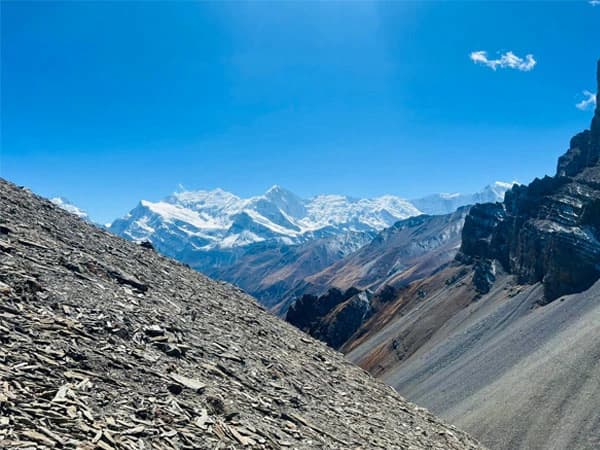
During Spring (March - May), the trail thrives in adorability, with the colorful shades of red, pink rhododendrons, lush green forest surrounding, and the clearest sky, where the thundering Annapurna massif, along with the distinct change in landscapes, will leave you speechless. At this peak time, the day's sunlight hours also last for a longer time, allowing hikers to fully explore every corner, without having to worry about getting/reaching to the destination on time.
Another season of Autumn, which begins from mid-September till November, is the time when the Tilicho Lake Trail is most crowded, as this span of the year comes after the conclusion of the monsoon, showcasing the unhindered vista of the mountains, including Annapurna I, II, IV, Dhaualgiri, Gangapurna, Nilgiri, Tilicho Peak, and many others, making the trip worth it. As this peak season follows the high cloud burst time, the trail tends to be safer, with no possibility of landslides, slippery paths, or other monsoon-related chaos, which is a significant perk of trail running during this time. Apart from that, the major festivals, Dashain and Tihar, also fall in between, unveiling the unique culture and festive celebration, on how the Tibetan communities celebrate, which makes the trip more meaningful, rather than just views, or attaining the destination.
On the other hand, this trek can also be commenced during winter (December, January, and February) and monsoon (June to August); however, there are many possible hazard situations, such as muddy slippery sections, landslides, and avalanches risk, and also, disruption of the trip, due to heavy snow navigation, that becomes so high, above 3 meters, especially, from Khangsar to Tilicho Base Camp contributing, the adventure to become more wildly streneous, than, it actually is. Meanwhile, it can be smoothly navigated even during the off-season, with prior preparations, training, and comprehensive planning, but the ideal seasons are Spring and Autumn, for such a high altitude himalayan odyssey.
Tilicho Lake Trekking Difficulty Level
Being considered as one of the high altitude adventures, the trek to Tilicho Lake falls under the moderately challenging odyssey category, which demands a basic level of physical fitness, and a strong determination mindset, who can proceed through such remote and isolated himalayan terrains. Daily, the trip covers almost 8 to 12 kilometers of distance and 5-6 hours of navigation, where the trail changes drastically every hour and every day. As you go to a higher altitude, the air gets thinner, which highly contributes to making the trek strenuous and difficult in breathing, and ascending as well, if you've never done any himalayan adventure before.
The route basically begins from Chame via Besisahar and reaches the maximum height of 4919 meters at Tilicho Lake itself, which is known as the second-highest altitude lake in the world; thus, attaining such elevation is not an easy task, possing the risk of AMS (Acute Mountain Sickness), if proper preventive guidelines is not followed, from the beginning of the trail.
Besides, the Tilicho Trek passes through a variety of terrains, from lush foreshred area, to rugged, remote, and steep sections, to the alpine valleys, and some landslide-prone areas, and avalanches; however, navigating along with an experienced licensed trekking guide makes the journey easy-going and smooth.
Just make sure that you are physically fit or trained beforehand, by engaging in some kind of exercises, like cardio, so covering such long distance trekking won't be a hassle for you. Apart from that, make sure that you tailor the itinerary, as per your pace level and experiences, and follow the preventive safety measures throughout; hence, those who do the well-planned, prepared, and trail, with the assistance of the experienced local guide, commencing this trip, is easy to commence, even for beginners, or senior citizens as well.
What is the possible rate of altitude sickness during this trip?
Ascending to high elevations with significant daily altitude gains on this remote trail reaching 4,919 meters at Tilicho Lake carries a real risk of Acute Mountain Sickness (AMS) during the Tilicho Lake Trek. This applies to any Himalayan adventure above 3,000 meters. At the trailhead, oxygen levels drop and the air thins dramatically compared to city environments. With relentless daily elevation gains, the higher you climb, the greater the AMS risk, especially if you skip safety guidelines, rush the itinerary, and ignore acclimatization days.
Meanwhile, as our 7-day Tilicho Lake Trek itinerary includes a gradual ascent hike, with only 300-400 meters elevation gain, and not going over the board, then necessary, it lets your body adopt the rising high altitude, making the journey quite easier, and smooth to navigate, no matter how much prior experience you carry. Also, we've set 1 acclimatization day at Manang (3540 m), which is the key acclimatization stop, including a side acclimatization hike to Gangapurna Lake or Ice Lake, so that during this rest day, you get to reach a bit higher elevation, somewhere around 110 meters, before you get to the highest height.
Along with that, our trekking guide will be there with you throughout the trail, to look after you, proceed the hike further, according to weather and climatic conditions, and as they are medically trained as well, they also ensure that the risk of AMS becomes minimal, by measuring your pulse rate (oxygen level), throughout, ensuring your body is doing all well.
Even though the possibility of altitude sickness is still rare, with our finely crafted itinerary, and assistance of the pro expert teams, it remains crucial, you to follow, the preventive measures, to avoid such risk, as, rather than, blindly trusting itinerary itself, and going with the flow, your meals intake, health, also, plays the major role. Hence, here are some safety measures to follow throughout the adventure, and pay attention to.
- Do not consume alcoholic beverages, too many alcoholic beverages caffiene (coffee), or even smoke, vape, or cigarettes, especially after crossing the altitude above 3000 meters.
- Before opting for this trip, ensure that you are medically okay, make an appointment with your doctor, and test your lungs, heart, and overall body.
- Undertake a gradual ascent, with only 300 to 400 m, and do not go beyond 500 meters altitude in a day, and at least, take one acclimatization day at Manang, and engage in a short hike.
- Drink at least 3-4 Liters of water every day, and if that sounds too much, then you can consider having soups, garlic, giger, tomato ones, to keep you all warm and cozy, near alpine meadows.
- At every key stopping point, or along the trekking route, measure your oxygen level (pulse rate) via an oximeter, so that you get to know whether your body is acting up well, with increasing altitude, or not.
- If you feel any discomfort or any symptoms of altitude sickness, such as nausea, vomiting, headache, skin turning pale or completely grey, dizziness, or insomnia (loss of sleep or appetite), inform the guide immediately, and follow the call of the licensed guide, as he/she is experienced, licensed, and medically trained.
Accommodation and Amenities during the Tilicho Trek
Throughout the Tilicho Lake Trekking Trail, you will be accommodated at comfortable lodges (home stays), well-facilitated tea houses, either on a private basis or twin sharing basis, depending on the number of trekkers in your group. If you are solo, then a private room will be provided for your comfort and convenience.
As it is a tea house trek, expect the rooms to be quite basic, simple, with comfortable warm beddings, cozy blankets, and pillows, which keep you warm at high altitude. Every lodge (tea house) includes basic amenities, such as laundry facilities, wifi, hot showers, chargings; however, you are charged extra by the locals, as the electricty are run by solar charge, which makes the accessibility quite limited and available only with extra cost.
In the main stopping points, like Chame, Pisang, and Manang, we offer rooms with attached washroom (bathroom), meanwhile, at higher trails, at Siri Kharka and Tlicho Base Camp, only sharing eastern style bathrooms are available. The rooms are well-maintained and sanitized for the use of the wifi or charger. It is only available at the dining area, not in your room, so it is better if you carry at least 1 powerbank to recharge gadgets (mobile, batteries), quickly, without waiting in line, as the lodge becomes more chaotic, in peak seasons, due to the increasing number of hikers.
Even though the rooms are cozy and well-heated, for extra warmth, we can provide you with a sleeping bag (-10 degree celsius rated), for the trip, without paying any extra cost, or the crampons as well, if you are worried about the snowy navigation on the upper trail.
On the other hand, before and after the trek (2 nights), on a standard basis, a hotel will be provided as a complimentary, with a BB basis breakfast, in the hub of tourism, and the middle of Thamel, Kathmandu. However, if you want to upgrade your accommodation, then you can pay an extra cost and elevate your stay to a 4-star hotel or 5-star luxury property, if you want to, or anywhere you would love to stay. Just let us know beforehand, so we can make pre-bookings accordingly.
Meals and Drinking Facilities
Our Tilicho Lake Trek package does include the standard meals: Breakfast, Lunch, and Dinner, throughout the trip, where every lodge features a wide variation of menu options, that you can choose, the meal as per your want, and it will be cooked soon after, as per your order. As the Annapurna region stands out as one of the most iconic and popular routes, you will get a wide variety of options, from veg to vegan to non-veg options, ensuring that it caters to the taste buds of every hiker, all across the globe.
While the breakfast and dinner are served at the tea house, where you will be basically accommodate at, whereas, for the lunch, most of the times, it is served along the trekking trail, at populat spot, where we can enjoy the fulfilling lunch, with surrounding disticnt views, and make your tummy happy as well, to proceed via such long distance hours, rather, than, walking for hours, and just waiting to get to the final destination, and have our lunch.
Throughout the journey, you will be catered to with variation of meal options, from western, continental, asian cuisines to local meals, and they will be cooked freshly after your order. Just make sure to inform us if you are allergic to some food items, or prefer gluten-free, full vegan, or have any dietary restrictions, so that it can be prepared accordingly.
Just like wide range of food options, every lodges serve, ample of options, for the beverages, from cold to hot ones, such as coffee, lattee, any sort of tea (herbal tea, black tea, milk tea, masala tea, green tea), energy drinks, cold drinks such as coke, fanta, etc, or packaged juice, many more. For the drinking water facilities, you can purchase bottled water along the route for USD 1 maximum; however, we suggest you bring purification tablets and just refill water at the lodges, considering budget, sustainability, on the very first hand, but it is fully your choice. Some tea house, charges you extra for refills of drinking water and high altitude, and cost somewhere around $ 2 to $ 5 for a kettle of hot drinking water, while staying at the lodges.
Travel Insurance
As the Tilicho Lake Trek route passes through a remote and isolated part of the Annapurna trail, with increasing high altitude each day, and limited medical facilities and emergency health access, it is crucial to ensure good travel insurance before starting the journey. Please, take note that we are not stating that this trek possesses any dangers or challenges; however, in the himalayas, the weather and climatic conditions change drastically, and doesn't remains stable, and along with that, increasing elevation, might cause some significant possibility of altitude sickness, and the resources is quite limited, which makes the mandatory of opting for the travel insurance just for ermergency purpose.
While opting for the travel insurance, make sure that the policy covers all the essentials, such as theft, luggage lost, medical injuries, medical bills, and most importantly, the helicopter evacuation above 3000 to 5000 meters, which is more cost-effective, and helps us to arrange the heli evacuation, if any unexpected situation occurs, along the trail.
What are the Permits required for the Tilicho Lake Trek?
For the Tilicho Trekking, there are two permits required: firstly, the ACAP (Annapurna Conservation Area Permit), and the TIMS (Trekkers' Information Management System card). These permits become mandatory for the protection of ecological nature and sustanibility purpose, as well, around Tilicho Lake, and also aim mainly to keep track of the trekkers. ensuring safety for the very first hand.
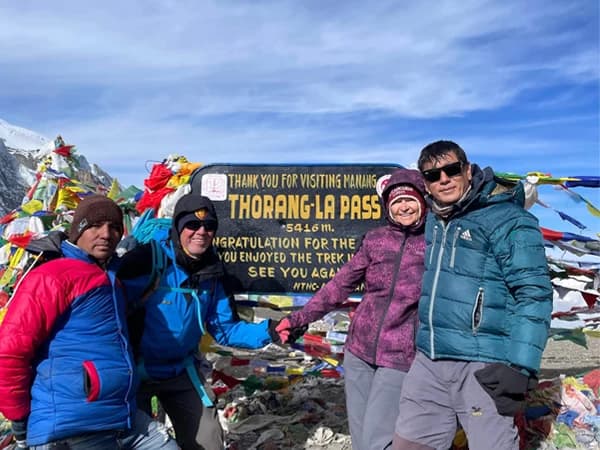
No other extra permits are required, even if you stretch your adventure to the Thorong La Pass, in between, as the ACAP and TIMS cover it fully. The required permits can be attained through Netal Tourism Board at Thamel, Kathmandu, or at Pokhara, near the police check post at lake side; however, it can only be obtained via a local travel agency, and cannot be obtained independently. Soon after your booking is confirmed with us, we at Destination Himalaya Treks and Expedition arrange all the required permits and paperwork, without additional fee, as it is included in our package.
ACAP (Annapurna Conservation Area Permit) costs approximately USD 30 (NPR 3100) per head, as in 2026, whereas the TIMS Card only costs USD 20 per person (NPR 2150 per head), for solo hikers, and costs only USD 10, for group hikers. On the other hand, for the SAARC hikers, it is half the price, just deduct it by 50% of the actual cost.
Supporting Crews for the trek
- Throughout the journey, you will be assisted by an experienced licensed guide, who carries an expertise of over 10+ years, along the route, ensuring that you navigate through the safe terrains, avoiding the hazardous areas, like landslide or avalanche sections.
- The guides are medically trained and equipped as well, so, in case of emergency, the first medical assistance that you will get will be from your trained guide.
- Our guides have a personal connection with the locals themselves (friendly, or some relatives), which elevates your overall trip, with cultural insights, letting you communicate with locals, and also, engage in daily lifestyle, such as involving in cooking local foods sessions, wearing jewels attires of tibetan communities, and so on.
- For groups of more than 6 hikers, we provide an assistant guide, along with a leader guide, for extra support, care, and assistance throughout.
- We provide strong sherpa porters who can carry upto 22 kgs of loaded bagpack, and can be shared between two trekkers.
Booking Procedure
For your bookings, we only require 10% of the total trip cost, as an advance payment, where the remaining cost can be paid after you get to Nepal (upon arrival), where we accept all the international payment gateways, which you can make via our website. Whether you are planning a private trip or a group hike, we can customize your adventure, matching your timeframe, itinerary, budget, and dates that you choose to hike, ensuring a hassle-free adventure, on the very first hand.
As we at Destination Himalaya Treks are registered with all relevant authorities in Nepal, including TAAN (Trekking Association Agency of Nepal) and NMA (Nepal Mountaineering Association), booking with us is simple, flexible, and completely secure. If you have any queries, then you can connect with us via WhatsApp at +977 9851016814, make a direct call, or just email [email protected] anytime.
Tips for the trek to Tilicho Lake: Good to Know
- ATM facilities are not available along the route, from Chame, and the trail doesn't accept any Debit/Card cards, or any other currencies, so ensure to exchange the cash while you are in Kathmandu or major cities beforehand.
- For the packing list, just carry what's essential, and do not go overboard; just stuff in the gear and clothing, as the seasonal time demands. At the same time, also consider carrying the gear, considering all the seasonal variations, such as a puffer jacket (down jacket), rain cover, raincoat, and even a sleeping bag, crampons if you want, for emergencies.
- Although every tea house has great WIFi accessibility coverage, with extra cost, it becomes poor and unstable, at the Tilicho Base Camp, or near the lake, and also, for the usage of calls, internet en route, buy a SIM card (NTC or Ncell), for internet or direct call purposes.
- Do not miss out on carrying a basic first aid kit, which includes bandages, basic pills for cold, fever, coughing, and diabetes, for emergency purposes, along with an oximeter to check the pulse rate throughout - will be provided by us.
- To enhance the trip, you can learn local phrases such as NAMASTE, TASHI DELEK, which means hello, warm greetings, and Dhnayabaad, which means thank you, in nepalese language.
- Even though all the essentials will be covered in our 7-day Tilicho Lake Trek package doesn't include your personal spending/expenses, and tips for the guide and porter, so take a brief look at our cost details section to know what is included/excluded.
- The gears can be either rented or bought at Thamel, Kathmandu, at any price rate you want, considering brand and quality, or can also be rented, so, if you haven't sorted out the essentials, then, do not panic, as we will guide you.