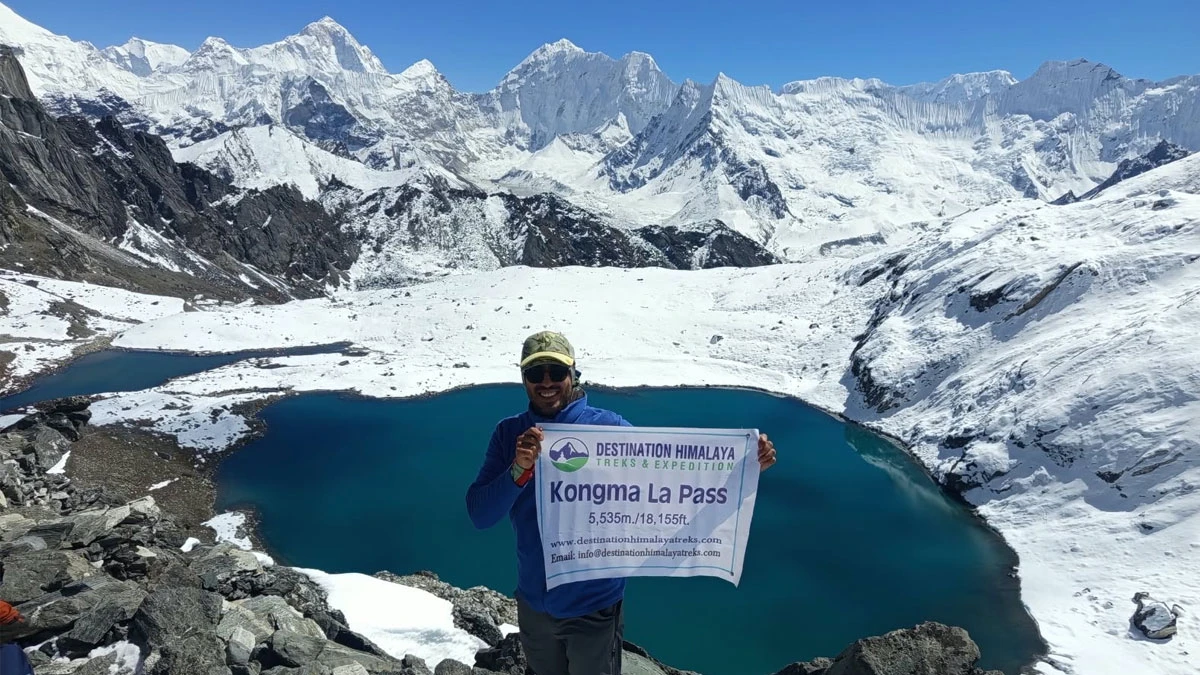
ama dablam base camp via gokyo trek
ama dablam gokyo trek

Ama Dablam Base Camp with Gokyo Valley Trek - 16 Days

295 reviews in TripAdvisor
27 reviews in Google Reviews
Recommended by 99% of travelers
Duration16 Days
Trip GradeModerate
Maximum Altitude5360 meters
ActivitiesTrekking
Group SizeAny
StartsKathmandu
EndsKathmandu
Best TimeSpring and Autumn

Highlights

  • Explore the remote Gokyo Valley and panoramic mountain vistas and glaciers from Gokyo Ri (5357 meters)
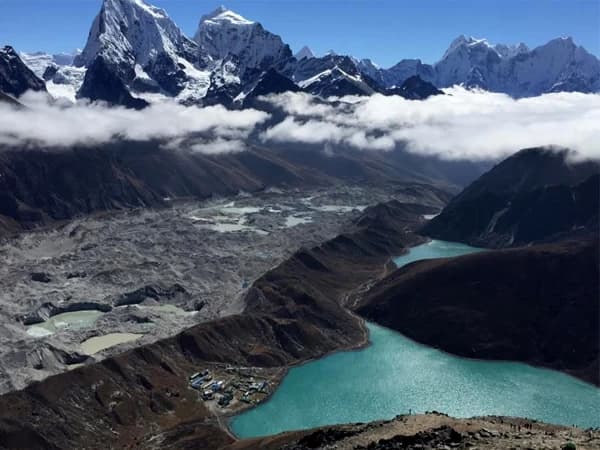
  • Witness the six series of holy Gokyo lakes, alongside the Ngozumpa Glacier, the longest Himalayan glacier
  • Experience a less-trodden, wild, and quiet route of the Everest-Khumbu region
  • A day exploration of Namche Bazaar, the heart of the Sherpas, with bars, cafes, bakeries, and high-altitude hotels
  • Visit Sherpa museums, Buddhist monasteries including Tengboche and Pangboche Monasteries, and Tibetan-influenced trails
  • Panoramas of the eight-thousanders: Everest, Lhotse, Makalu, and Cho Oyu, surrounded by other snowcapped peaks
  • Cross Renjo La Pass (5630 m) and gain a unique perspective of glaciers and the Himalayas

Ama Dablam Base Camp and Gokyo Valley Trek Overview

The Ama Dablam Base Camp with Gokyo Valley Trek takes you beyond a standard Everest trail, offering dramatic Himalayan peaks, quiet traditional Sherpa villages, off-the-beaten-path trails, and glacial landscapes, creating an unforgettable journey. This trip is designed for those seeking an unparalleled, expansive view of Ama Dablam and Gokyo Lakes.

At 6812 meters in Nepal's Khumbu region, Ama Dablam is known as the Matterhorn of the Himalayas for its symmetrical shape and exposed ridges, and it stands out as one of the most beautiful mountains. The peak reveals itself early on the trail to the Everest region, its sharp, sculpted pyramid rising proudly against the clear Himalayan sky.

Though lower than the eight-thousanders, its beauty feels unmatched—so striking that it appears in countless photographs, paintings, and memories of Nepal. For every wanderer, one glimpse is enough to understand why this mountain is so deeply loved. From Ama Dablam Base Camp, you get an opportunity to witness its summit perching at 2300 meters above the valley, which remains within your heart forever, and get to explore the less crowded side of the Khumbu region, adding a serene beauty.

Combining Ama Dablam Base Camp with a Gokyo Valley itinerary adds a powerful contrast, where you will surely enjoy the sunrise mountain views above the giants from Gokyo Ri at 5357 meters, one of the iconic Everest viewpoints.

The trek begins with a flight into Lukla, followed by the sound of the Dudh Koshi River, the thrill of crossing suspension bridges, and the warmth of Sherpa villages along the way. Gradually, the trail leaves the lower valleys behind and opens into rugged alpine terrain, where every step brings you closer to the heart of the Himalayas. If you prefer to skip the flight, you can travel by jeep to Salleri and trek for two to three days to Phakding, or choose a helicopter transfer—making the journey adaptable to your time, comfort, and sense of adventure.

Why Choose the Ama Dablam Base Camp with Gokyo Valley Trek?

The Ama Dablam and Gokyo Trek is one of the best ways to experience the Everest region without following the busiest trail (crowded route). If you are looking for something unique, wild, scenically captivating, and remote, then this excursion is perfect for you. It combines the breathtaking close-up views of Ama Dablam with the peaceful turquoise lakes and glaciers and high vantage points of the Gokyo Valley, giving one of a kind adventure.

Unlike the regular EBC itinerary, this route takes you into quieter corners of the Khumbu region, offering a quieter experience. You get to enjoy the classic route through Lukla, Phakding, Namche, and Tengboche and continue to Ama Dablam Base Camp, offering more variety, fewer crowds, and a pure Himalayan essence.

Stand in the Ama Dablam Shadow

Ama Dablam stands out as one of the most intriguing mountains in the Himalayas; this itinerary brings you up front and directly to its base camp at an elevation of 4600 meters. From here, its steep ridges, dramatic pyramid, and spectacular glacier rise dramatically above the valley, providing you an unforgettable 360-degree view, without any technical climbing neither demands prior trekking experience.

Explore the Tranquil Gokyo Valley

Gokyo Valley sets itself apart from the regular Everest treks and unveils a more untouched and unexplored side of the Everest region. Leaving the busier and standard trails behind, you get to pass through alpine meadows, glacial rivers, rugged pathways, cross yak pastures, and follow a trail shaped by ice, rock, and great, different mountain vistas. The excursion slowly reveals the turquoise series of Gokyo Lakes, where it reflects the giants, and the extensive Ngozumpa Glacier across the valley.

Breathtaking Sunrise at Gokyo Ri 

An early 4 am climb to Gokyo Ri at 5357 meters, which is one of the top favourite viewpoints, to witness the world's tallest peak, Mount Everest (8848.86 m), alongside other peaks: Lhotse, Lobuche Peak, Makalu, Nuptse, Talatse, Cho Oyu, Ama Dablam. Below, the massive Ngozumpa Glacier spreads across the valley, while the turquoise Gokyo Lakes shimmer quietly in the morning light. Unlike other crowded viewpoints, like Kala Patthar, Everest View Hotel, and Nangkartshang Peak, it rewards you with more peaceful views, blending gold and pink hues of the sunlight rays, creating a memorable moment.

Cross the Scenic Renjo La Pass (5,360 m)

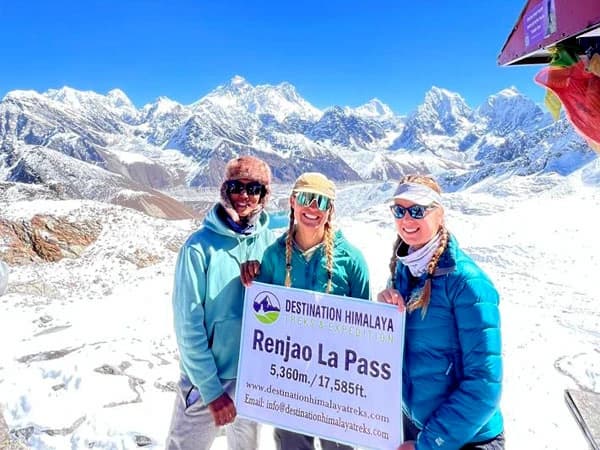
For trekkers who seek more of a thrill and a bit of a challenge, this route also includes Renjo La Pass at 5360 m, giving sweeping views of the lakes, glacier, and Himalayan peaks, before descending through quite remote Sherpa villages to Thame and Namche.  It adds a true loop experience, bringing more adventure, variety, and a stronger sense of exploration to the journey.

Experience Sherpa Culture 

The itinerary traverses the traditional Sherpa villages and Tibetan-influenced trails through mani walls, chortens, prayer flags, and wheels, passing through Namche Bazaar, Tengboche, Pangboche, Phortse, and Thame, giving you traditional local hospitality and culture, with the changing sights of the landscapes and terrains.

A Balanced and Less Crowded Everest Adventure

The best part of this itinerary is its balance. You enjoy iconic Everest-region scenery, a close encounter with Ama Dablam, the peaceful beauty of Gokyo, and the thrill of crossing Renjo La, without spending every day on the main Everest Base Camp trail.

The itinerary also allows enough time to acclimatize, with rest days at key altitude points such as Namche Bazaar and Gokyo. This gradual ascent helps your body adjust to the thin air, making the journey safer, more comfortable, and more enjoyable. It is an excellent choice for trekkers who want beauty, variety, culture, and a quieter Himalayan experience, all combined into one well-paced adventure.

Ama Dablam Base Camp with Gokyo Valley Trek Cost for 2026 and 2027

The Ama Dablam and Gokyo Trek cost starts from USD 1150 to USD 1650 per person, depending on the number of trekkers in the group. With this pricing, the package covers all the essentials, including the flight, meals, accommodation, permits, and local entry fees. One experienced guide, will be provided, for the hikers less than 4, for more than that, there will be assistant guide, basically, the guide is on the ratio of 4:1, ensuring safety and enhances experiences.

Several factors can affect the final cost, including your choice of transportation—jeep or helicopter—and the number of trekking days. Our team can help customize the itinerary to match your budget and preferences.

For the standard 16-day package, the cost is USD 1,650 per person for a private trek. The price decreases as your group size increases, making it more affordable for families, friends, or small groups traveling together. Here is the costing insight for 2026 and 2027.

No. of Trekkers Standard Cost (USD)
1 1650
2-3 1450
4-6 1250
7-12 1150
Itinerary
Trip PlanExpand all
Max Altitude: 1360 meters Meals: Breakfast, Lunch and DinnerAccommodation: 4 star Hotel
Max Altitude: 2610 meters Meals: Breakfast, Lunch and DinnerAccommodation: Tea houseDuration: 3 hoursDistance: 8 km
Max Altitude: 3440 meters Meals: Breakfast, Lunch and DinnerAccommodation: Tea houseDuration: 6 hoursDistance: 11.2 km
Max Altitude: 3880 meters Meals: Breakfast, Lunch and DinnerAccommodation: Tea house
Max Altitude: 3860 meters Meals: Breakfast, Lunch and DinnerAccommodation: Tea houseDuration: 6-7 hoursDistance: 9.2 km
Max Altitude: 3920 meters Meals: Breakfast, Lunch and DinnerAccommodation: Tea houseDuration: 5 hoursDistance: 8.6 km
Max Altitude: 4610 meters Meals: Breakfast, Lunch and DinnerAccommodation: Tea houseDuration: 4-5 hoursDistance: 9 km
Meals: Breakfast, Lunch and DinnerAccommodation: Tea houseDuration: 5-6 hoursDistance: 6 km
Max Altitude: 4470 meters Meals: Breakfast, Lunch and DinnerAccommodation: Tea houseDuration: 5-6 hoursDistance: 8.6 km
Max Altitude: 4790 meters Meals: Breakfast, Lunch and DinnerAccommodation: Tea houseDuration: 3-4 hoursDistance: 6.7 km
Max Altitude: 5360 meters Meals: Breakfast, Lunch and DinnerAccommodation: Tea houseDuration: 3-4 hoursDistance: 4.2 km
Max Altitude: 5360 meters Meals: Breakfast, Lunch and DinnerAccommodation: Tea houseDuration: 7-8 hoursDistance: 12 km
Max Altitude: 3440 meters Meals: Breakfast, Lunch and DinnerAccommodation: Tea houseDuration: 7 hoursDistance: 17.8 km
Max Altitude: 2840 meters Meals: Breakfast, Lunch and DinnerAccommodation: Tea houseDuration: 6-7 hoursDistance: 18 km
Max Altitude: 1360 meters Meals: Breakfast, Lunch and DinnerAccommodation: Standard HotelDuration: 40 minutes
Cost Details
Includes
  • Complimentary airport pick-up and drop-off service
  • Complimentary extra 2-night stay at our own standard hotel, Thamel, Hotel Bihani 
  • 2 Nights, 3 Days stay in Kathmandu on BB basis 
  • Required trekking permits: Sagarmatha National Park, TIMS Card, and local entry fee
  • Flight: Kathmandu - Lukla, Lukla - Kathmandu
  • All accommodations during the trek
  • 3 Standard Meals: Breakfast, Lunch, and Dinner with a cup of tea or coffee and seasonal fruit
  • Complimentary Duffle Bag and Sleeping Bag (If required, must be returned after the trek)
  • Registered English-speaking professional trekking guide and assistant guide, including salary, food, equipment, and insurance
  • Basic First-Aid Kit, with oximeter and water purification tablets
  • Trekking completion certificate 
  • Farewell Dinner in Kathmandu, with Nepalese Cultural Program
Excludes
  • All the Beverage bills and personal expenses (Hot water, Hot shower, Wifi charge, battery recharge, bottled water, Laundry charge, etc)
  • Travel Insurance
  • Porter (USD 450- can be shared for two people)
  • Personal trekking gear and equipment
  • Tip to the trek guide and porter
Essential Information

Ama Dablam Base Camp with Gokyo Valley Trek Difficulty

The Ama Dablam with Gokyo Valley Trek falls under a moderately challenging journey that does not demand any technical climbing skills or prior trekking experience; however, you need to be physically fit and mentally strong. Meanwhile, as it is a high-altitude trek, several challenges include weather, altitude, and long hours of distance covered through varied terrains, so make sure to be well prepared.

Daily trekking on the Ama Dablam with Gokyo Valley route usually takes around 4 to 6 hours, depending on the itinerary and trail conditions. While the walking hours are manageable, the real challenge lies in the varied and demanding terrain. Trekkers must navigate rocky sections, steep climbs, glacial landscapes, rugged paths, and continuous ascents and descents. With good physical preparation, regular training, and a steady walking pace, however, the journey becomes much more comfortable and enjoyable.

Besides the physical challenge, altitude sickness is a major concern, as the trek goes above 5,000 m, reaching Gokyo Ri at 5,357 m. Symptoms such as headache, nausea, dizziness, and fatigue should be reported to your guide immediately. Following a gradual ascent with enough acclimatization days, walking slowly, staying hydrated, and avoiding alcohol help reduce the risk.

Best Time to Trek Ama Dablam and Gokyo Valley

The ideal seasons for the Ama Dablam Base Camp with Gokyo Valley Trek are spring, starting from March till the end of May, and Autumn, between September to November. During this timeframe, the weather promises to stay stable with a mere chance of precipitation (rain and snowfall), which contributes to the trail being dry and non-slippery. Spring stands out as a colorful woodland where the rhododendrons, pines, and oaks are thriving beautifully, whereas autumn grabs the attention of trekkers who seek to experience rich cultures and festivals, as Nepal's major festivals Dashain and Tihar fall under this season.

The journey can be undertaken during winter as well, but you must have prior trekking experience, especially on high-altitude routes, as they get icy and slippery, making the trail more challenging and passes difficult to cross. However, those who are pro hikers will enjoy this season, as it is quieter; surrounding peaks get covered with white snow. On the other hand, the monsoon season is the least popular span of the year, as it brings a high level of cloudburst, hiding the mountain views with fog; however, it suits those who prefer lush green valleys, roaring waterfalls, and a bit of hazard. Hence, the best months are March, April, May, September, October, and mid-November, considering clear views, scenic landscapes, and safety, but if your holiday does not match the peak time, then it can be done during monsoon and winter as well, but of course, with expert support, the right packing gear, and preparations.

Meals and Accommodation

It is a full tea house trek; you will be accommodated at the mountain lodges, hosted by the local mountain people themselves in the Khumbu region. The rooms are simple and basic; however, they are hygienically maintained and cater to the preferences of everyone. The room features a bed with a pillow and blanket, and the communal dining area stays heated, promising to keep you warm before bedtime. Attached bathrooms are available at lower trails, but do not expect them along the higher terrains, due to limitations of water and electricity, so the washrooms are on a shared basis. 

The teahouses along the route offer a varied menu that includes Nepali, Indian, Asian, and Western dishes, so most trekkers can find meals that suit their preferences. Food is generally prepared fresh after ordering. If you have any food allergies or dietary restrictions, be sure to inform the lodge staff in advance.

Breakfast options often include porridge, eggs served as omelettes, boiled or scrambled, pancakes with honey or fruit, toast, chapati, and fresh juice. For lunch and dinner, trekkers can choose from traditional Dal Bhat, steamed rice, lentil soup, seasonal vegetables, and curry, as well as noodles, momos, pizza, burgers, and other popular dishes.

Hot beverages such as lemon-ginger-honey tea, herbal tea, black coffee, and hot chocolate are widely available and help keep you warm in the cold mountain climate. Drinking water is available in the villages, but trekkers should only consume filtered, boiled, or properly treated water and avoid untreated natural water sources.

Need Help? Talk to Expert!
min gurung
Min Gurung
+977 9851016814
You May Also Like
everest three pass trek
Starting from
US$1299US$1699
3 iconic passes
gokyo renjo la pass
Starting from
US$1149US$1499
Everest Base camp Trek via Gokyo Lake
Starting from
US$1199US$1799
Trending Combo offer