Best Time for Short Gosaikunda Lake Trek
The best seasons to explore the Gosaikunda Lake are during spring, starting from March till the end of May, and Autumn, from September to November, with stable weather, clear views, and smooth dry terrains.
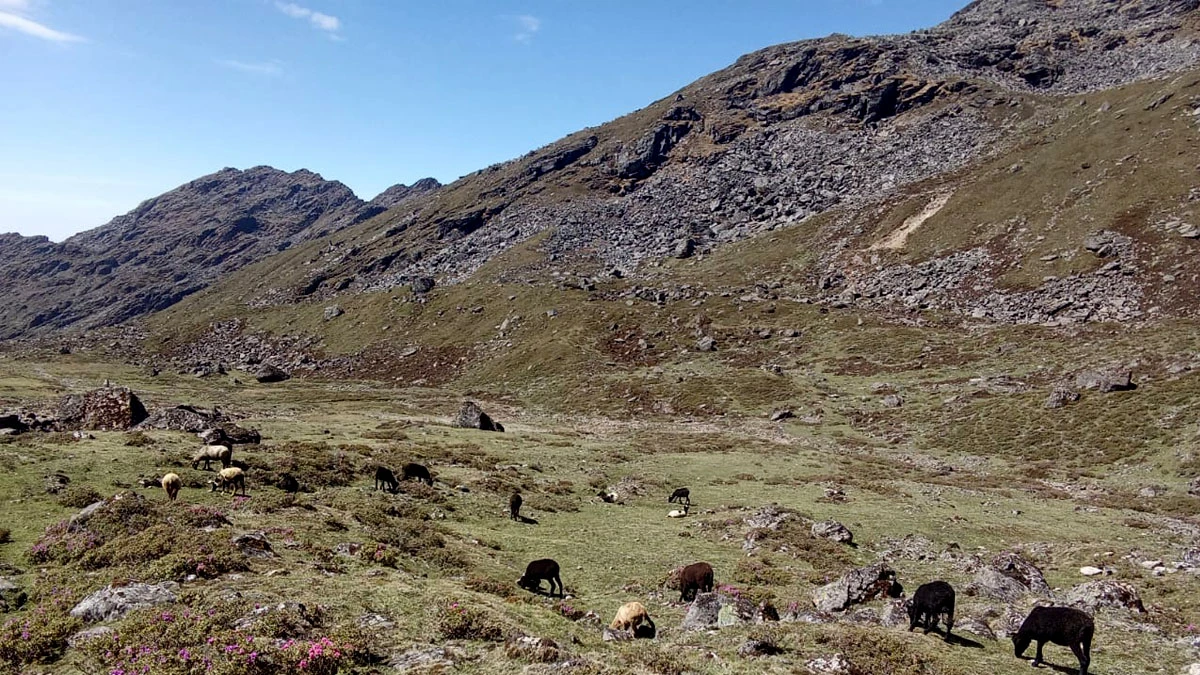
Spring is considered one of the ideal times to visit the himalayas, where the whole lush green valley thrives in the colorful shades of red, white, and pink, in the petals of rhododendrons, oaks, and orchids, with the backdrop of alluring peaks. As the trail itself covers mostly the forest area, the walking route becomes incredibly amazing, without making us feel bored or tired of the navigation. The daylight also lasts for a longer time, and the temperatures are mild, which is a perfect climate to hike, without rushing or tiring out, and entails a chill hike.
On the other hand, the season of Autumn stands out as a peak seasonal time, with heavy inflow of trekkers, both locals and international hikers, due to the holiday vacation period, as the major festivals, Dashain and Tihar, fall within this span of the year. Besides, the festival of Janai Purnima is also celebrated with the traditional rituals, prayers, and offerings, which comes in August, captivating the pilgrimage visitors, and the global hikers, who want to gain insight or celebrate the festive with locals. Apart from that, at the time being, which comes after the end of monsoon, the possibility of rain or snowfall is low or rare, which makes the terrains stay dry, smooth, and hassle-free, with the accompaniment of clear mountains and landscapes in each stride.
Meanwhile, the trek is doable throughout the year, and known as an all-around Himalayan odyssey, if prepared well enough and packing the essentials according to the seasonal variation. During the monsoon (June to August), the trail experiences a small number of trekkers, and green hills all the way along, but as there is a lot of rainfall, the route becomes muddy, slippery, and accommodations are disturbed with the leeches and mosquitoes, which may irritate novice hikers.
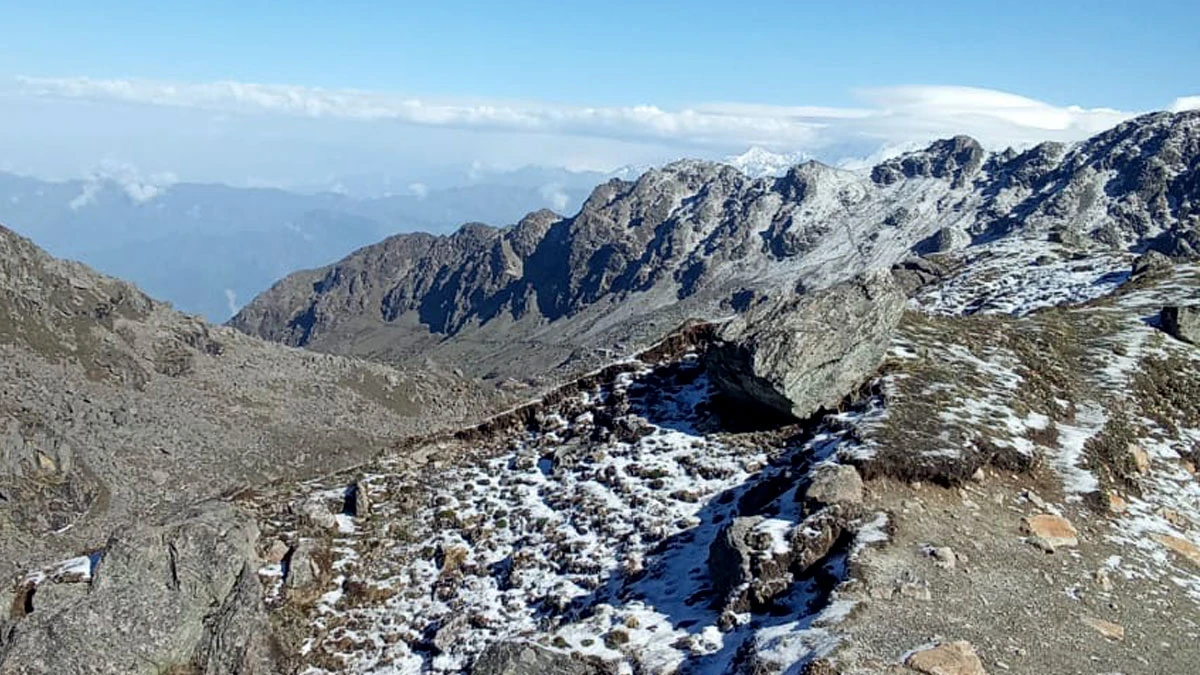
Whereas, the winter (December to February) is the coldest time of the year, with a significant drop in temperature even upto -15 degrees Celsius, near the wetland of above 3000 meters at night, and the walking terrains become completely covered with snow, which makes the trek more strenuous, three times more than at the generic ideal months. However, if you have prior experience at high altitude or icy trails, then the breathtaking snow-covered landscape and mountains will surely enhance the overall journey.
Thus, with proper planning, a customised itinerary, and packing the gear appropriately, trekking to Gosaikunda can be done throughout the year.
Gosaikunda Trek Route
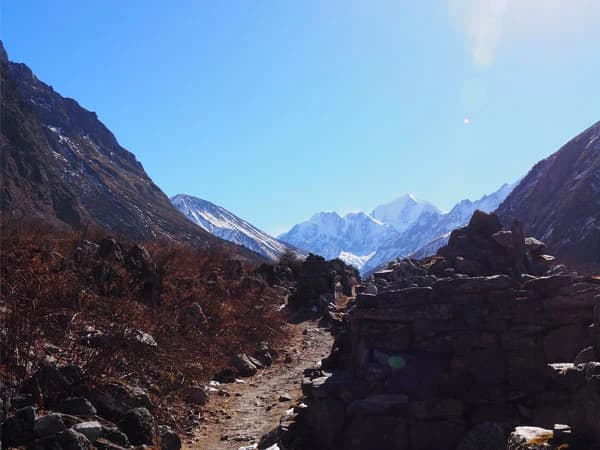
The Gosaikunda Lake Trekking starts with a scenic 7-hour drive to Dhunche, from where the trailhead officially gets started, towards either Deurali or directly to Shin Gompa, depending on the itinerary. If you want to cover, first hike, facing a thrill of 5 hours of walking through terrains, and take a gentle hike, on the next day, in ease, then, consider hiking upto Shingompa, but for first-time trekkers, just take a 3-4 hour walk to the Deurali.
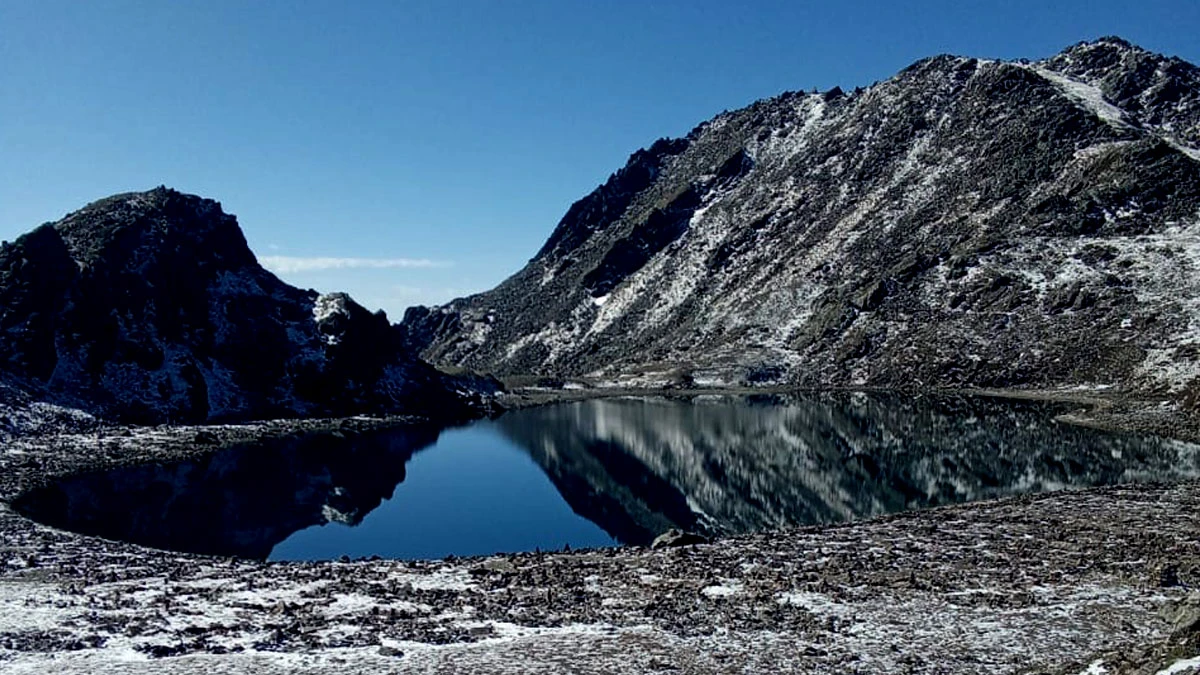
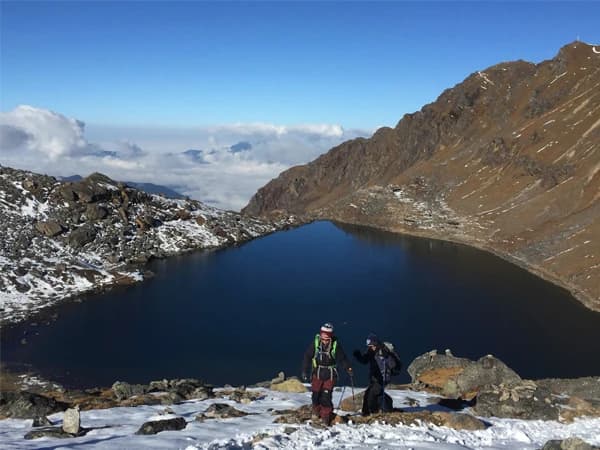
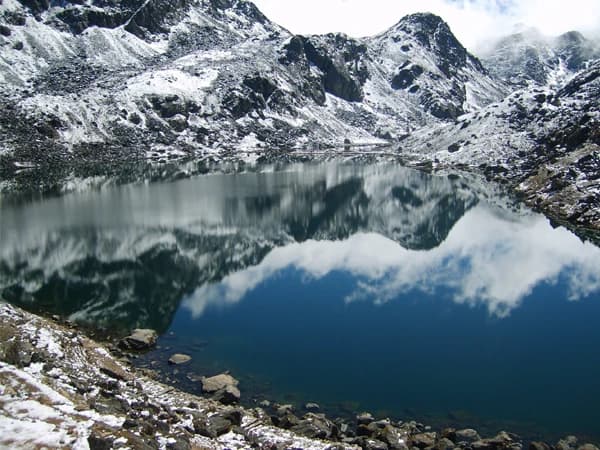
The route then takes an uphill walk to Cholangpati and then to Laurebina, one of the famous ridges or the Langtang view points, from where the open landscapes, and the panoramic first insight to the peaks, including Ganesh Himal and Langtang range, can be seen. From Laurebina, the trail proceeds on a gentle final ascent to the holy sacred lake of Gosaikunda, known as a pilgrimage and ramasar site, that has a deep spiritual connection and also supports the ecosystem and hydropower of the country.
Afterwards, from the alpine wetland, the trek retraces back to Laurebina, Cholangati, Shin Gompa (Chandan bari) via visiting a cheese factory, a monastery, and Deurali, and concludes with a final downhill trail to Dhunche and ends with a drive back to Kathmandu.
4 Days Gosaikunda Lake Trek Difficulty
The 4 Days Gosaikunda Lake Trekking is a short, quick, but challenging himalayan adventure, as it takes reaches the wetland, the highest elevation at 4380 meters, within 3 days and a rapid walking trail, that might not be everyone's cup of tea. In fact, this short trip is only suggested for the hikers who have prior high altitude experience, and are well-trained, or at least have basic fitness, to undertake such diverse terrains.
Even though the trek is considered non-technical, the frequent uphill ascent and complete downhill terrains, through increasing elevation, thinning air, and continuous hiking for straight four days, require the trekkers to be mentally and physically prepared. Meanwhile, the pathway does not include any mountain passes, alpine cross-overs, or open dangerous ridges, and takes a daily 5-6 hour walk, so even those who are beginners, but are well trained, following the guidance of the trekking guide, and have a patience level, can smoothly conquer the journey with ease.
In some sections, the isolated route or the remoteness can be too much to handle for beginners, but just take note that it is an off-beaten version of the Langtang trail, and has relatively less crowded, frequent tourists. Just trust the assistance of the guide, and walk along with him, avoid being influenced by others, and take a slow pace without rushing or draining yourself completely.
The only challenging aspect is the risk of altitude sickness, not only this, but any treks that go beyond 2500 meters, so, considering safety guidelines, it is a vital part, which decides how your excursion is going to be. Ensure to stay hydrated and consume nutritious, well-cooked meals, and avoid drinking alcohol, or high caffeine drinks, or smoking, and try to drink soup, which keeps you warm and cosy, at dinner time. At every stopping point, check your pulse rate via an oximeter, and if you feel any discomfort or signs of AMS (Acute Mountain Sickness), such as difficulty in breathing, skin turning pale, insomnia (loss of sleep, appetite), dizziness, nausea, or frequent headaches, then inform the guide immediately, so the guide can respond to such immediate conditions.
Nonetheless, the risk of AMS is rare if the preventive measures are followed, and the terrain is not so difficult, and tends to be easy going and safe, for those who consider prior preparedness, and trail along with the guide, throughout.
Accommodations
During the short Gosaikunda Trek, throughout, you will be staying at remote tea houses, basic and simple mountain lodges, run by the locals themselves, which stand out to be well maintained and hygienically sanitised as well. The rooms feature a simple-styled bed, on a twin basis, or standard basis, or group sharing, that will be arranged as per personal preferences. If you are trekking alone, then a private room will be managed as well, so you do not have to worry about room sharing, as your comfort and safety remain our priority. The beddings are cosy and comfortable, with clean bedsheets, pillows, and mattresses, whereas private washrooms are not available, as the trail only has sharing eastern styled bathrooms. Every tea house has basic and essential amenities, such as wifi, laundry, charging and hot shower accessibility, with extra fare for additional services.
Foods
Every lodge has a wide variation of food options, from western, to asian, to continental, to local ones, that cater to the taste buds, choice and dietary plans of everyone, that keeps you energised, without having to compromise on taste and meal options.
For breakfast, the menu typically includes Tibetan bread with curry and butter tea, toasted bread, with any sides, like peanut butter, jam, Nutella, butter, or any sort of spreadings, including local yak cheese, a simple American breakfast, or any sort of eggs (omelette, poached, fried, boiled), or even soups, muselis, oats, porridge, granola with yogurt many more, etc, that boost you up early in the morning.
Whereas, for lunch and dinner, it has even more options, such as pasta, noodles, ramen, burgers, sandwiches, dumplings, roti and tarkari, spaghetti, you can also try having the ultimate famous Dal Bhat, which comes with 5 other side dishes (curry, pickle, lentil soup, rice, any green salad), that can be refilled time and again.
The meals are basically served at the dining communal area, and cooked soon after you order, freshly, in the dining area. It also has a heated stove, where you get to warm yourself and interact with other hikers. For the beverages, it has many options, from cold like soda, energy drinks, mineral water bottles, etc., and hot, including coffee, tea, lemon water, ginger garlic soup, etc. From vegan to vegetarian to non-veg options, you'll find a wide variety of food and drinking options.
Transportation
For the 4-day Gosaikunda Trek, the trip begins with a regular 7-hour local bus drive from Balaju, Kathmandu, the capital city and starting point, to Dhunche, where it stops by several points, for a quick break, coffee and lunch. If you want more comfort and a private ride, then you can add a private 4WD jeep, which will come to pick you up from the hotel where you are staying, and then to Dhunche. For those who are travelling, in a group, upto 4, the price of the private jeep gets divided equally; it just costs an extra USD 140 for a private jeep. After the trekking route, it concludes, we will provide you a comfortable private jeep (included in the package), to end the trip in ease, and relax your muscles, the drive only lasts for 5 hours from Dhunche to Kathmandu.
Permits
For this trek along the Langtang region, you will require two permits to enter the protected area of Langtang National Park. Firstly, the Langtang National Park Permit, which costs approximately USD 28 (Nrs 3000) per head for foreign nationals, but costs only USD 8 (Nrs 1000) per head for SAARC national citizenship holders. The permit fare goes directly to conserve pristine ecosystems and biodiversity, and fosters the local economy and sustainable tourism. Secondly, the TIMS Card (Trekkers Information Management System Card) is mandatory for mostly every himalayan treks, including the Gosaikunda, which registers your details of the itinerary and tracks your inflow and outflow, ensuring safety and quick medical response, if any climatic hazards or unseen conditions occur along the trail.
For the trekking permits, it must be attain through, a local based travel agency, affiliated with TAAN and NMA, thus, soon after the booking the essential permits will be arranged and included in the package itself.