How to reach Tilicho Lake?
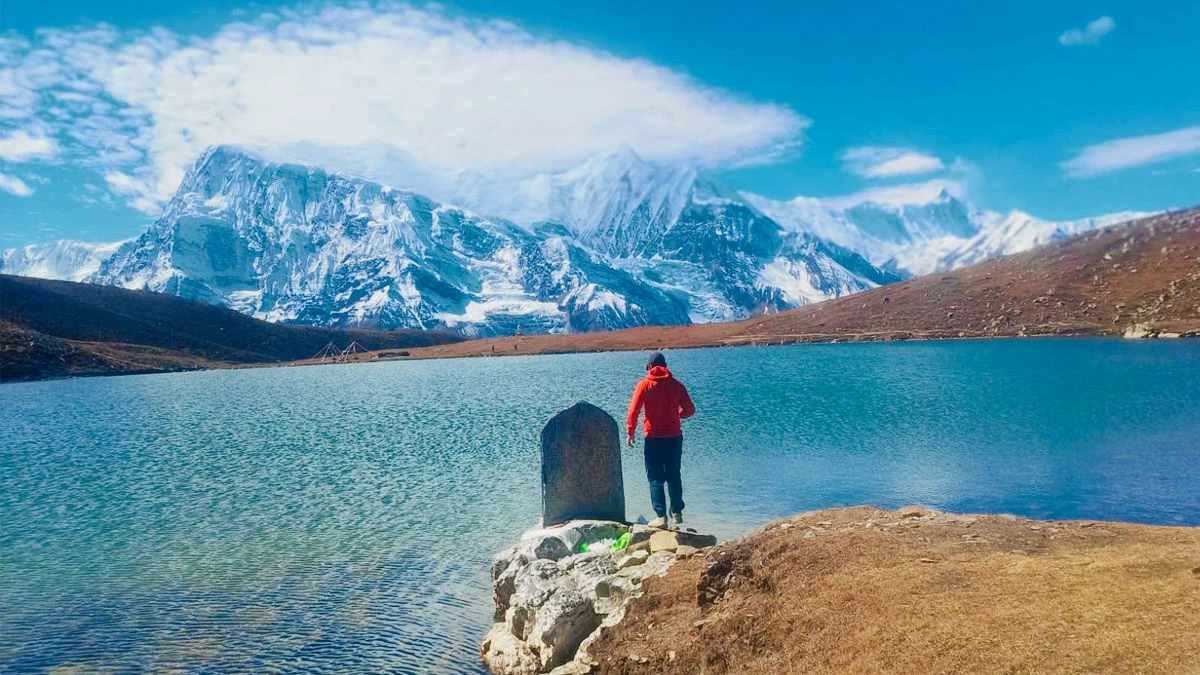
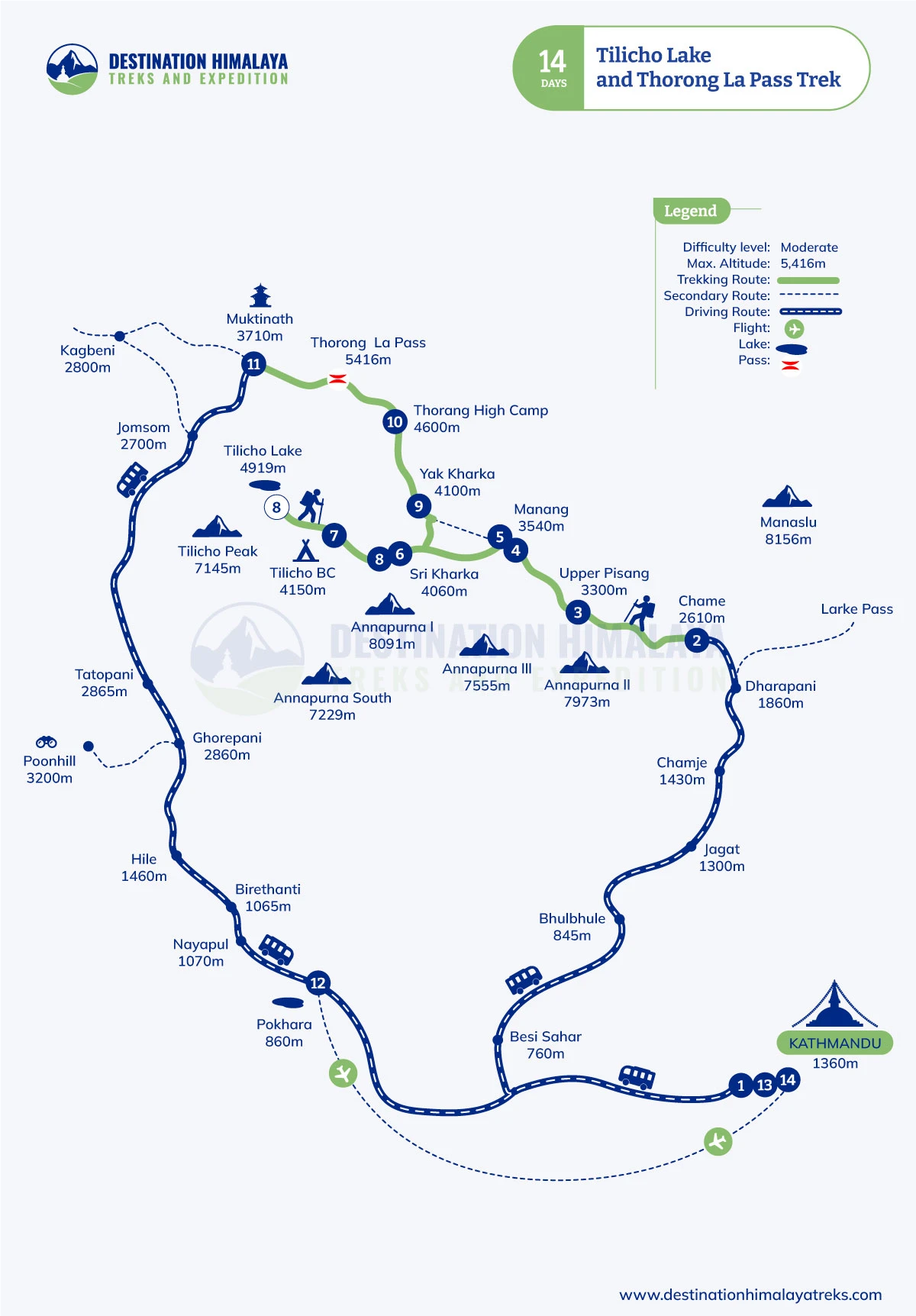
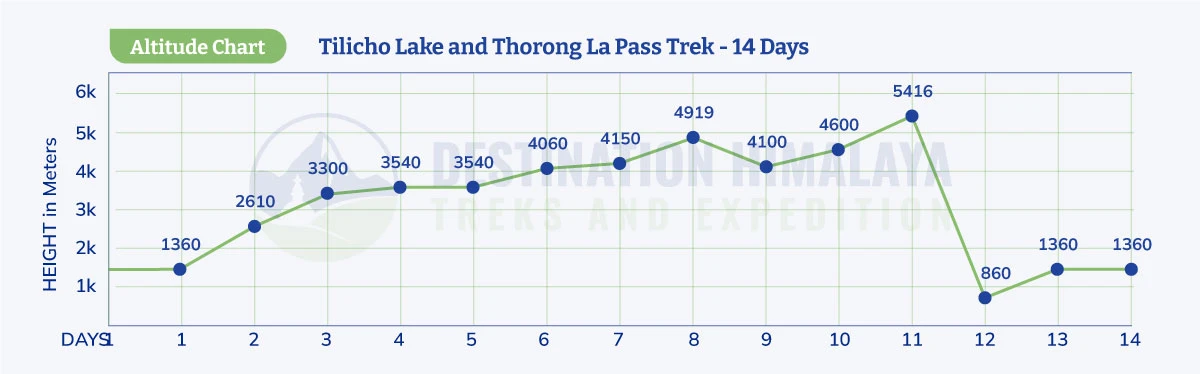
Getting to Tilicho Lake, which is considered the world's highest altitude lake, takes only 9 to 16 days, combining the Annapurna Circuit diversion, covering the total distance of almost 122 kilometers, after a jeep drive and starting the trail, right from Chame (2670 m), via Besisahar at 760 meters. Then, the walking route navigates via Manang (3,540 m), Siri Kharka via Khangsar (4,062 m), and reaches the Tilicho Base Camp (4,150 m) before attaining Tilicho Lake. To get to the lake, it takes approximately 6-7 days (1 week), covering almost 128 kilometers on foot, whereas, as this itinerary also stretches to the highest walkable pass of Nepal, Thorong La (5416 meters), with an additional, 5-6 days, and concludes at Dharapani and then, at Kathmandu via Pokhara (830 meters).
The road accessibility to the starting point of the trek, marked as Chame, can be reached via a jeep or a local transport bus ride to Besisahar, and then a shared jeep to reach Chame at 2,670 meters. Many hikers also prefer to start the adventure directly from Pokhara, after exploring the city of lakes; however, the total duration of the trip remains the same, covering the same distance and route itself, taking almost 2 weeks, with safe and gentle ascent. Our package includes the shared local bus and jeep; however, if you want to elevate the transportation to a 4WD private jeep, then you surely can with additional cost.
What is the recommended season for Tilicho Lake and Thorong La Trek?
The ideal time for the Thorong La Pass with Tilicho Lake Trek is marked by Spring (starting from March till the end of May), and Autumn (September to November), where the weather and climatic conditions remain stable, with clear views of mountains and landscapes all along. The temperature conditions also tend to be mild and moderate, ranging from 5 to 12 degrees Celsius, during the day, at higher altitude and only fall, upto -2 to -5 degrees Celsius, near the mountain pass, which makes it an impeccable season to venture out for a long duration.
Spring, the span of the year, is considered the famous peak season to commence on this trip, with colorful adornment at green hills, by red rhododendrons, pines, and orchids, with the crystal clear vista of himalayan snow capped mountains, making the journey truly noteworthy. Due to the stable humidity, the weather is quite chill, and also, it does not bother hikers much, as heavy winds do not occur at this time, unlike winter and the monsoon season. As this trekking window comes right after the end of wintertime, the climate is basically on chill zone, with fresh natural surroundings, and unpolluted airy trail, at lower altitude, whereas, the day sunlight hour also, last for longer time, offering you more time to wander around, and explore more, without constantly worrying about early nights making it a peak season, to commence on.
Another peak season, marked by Autumn (mid-September till the end of November), which arrives after the conclusion of the monsoon/ summer time, offering very few chances of precipitation (rainfall or snowfall), which many trekkers love to trail. Due to no cloud busrt, the terrains tend to be dry, free from muddy and slippery trails, which is perfect for even beginners or new hikers, demanding no such technical cross over, or gears like crampons, while crossing the pass of Thorung La. This season also stands out as the time of festivals, where the main festivals, like Dashain and Tihar, are celebrated, where one can truly unveil the majestic festival celebration and gain insight into the locals' way of celebrating such cultural roots and traditions.
On the other hand, trailing along the winter season (December, January, and February), remains quite questionable, and depends highly on hikers preferenece, previous experience, as it is the coldest time in the himalayas, with heavy level of snowfall, which increases, the possibility of blocking the high pass route and also, at the same time, the level of challenges. Due to the high percipitation, at the higher elevation, the route navigation, tends to be icy, slippery and covered with snow, which demands an experienced hiker, and those who are equipped well and engage in proper preparations and planning the itinerary, the winter of Tilicho Lake, and Thorong La Pass, will surprise, you with wonders of the classic trail, that you've never witnessed before.
Meanwhile, the season of monsoon (June to August), is not an ideal span of the year, to proceed on the himalayan journey, due to the muddy slippery terrains at low altitude, and snowy slippery navigation, at high altitude, along with continious rainfall, hiding the views of peaks and surroundings, making it not so recommended time for this trip. Thus, Spring, Autumn, and somehow winter as well, stand out as the best times to go trekking at Tilicho Lake and Thorong La Pass, where you can expect panoramic visibility, mild humidity, and an easy trail (route to navigate), making them peak times.
How hard is the combined trail of Thorong La Pass with Tilicho Lake?
Trekking to Thorong La Pass via Tilicho Lake, both combined, tends to be a moderately strenuous 14-day adventure that tests your physical stamina, firm mindset, as marking new heights in the himalayas, is not less than a wild journey, where every day feels like a mysterious world, and new surroundings. To make you understand in simple words, this trek proceeds on a daily 5 to 7 hours of walking pace, covering 8 to 12 kilometers of distance via several uphill and downhill walks, through rugged and steep sections, and gradually, transforms into icy and alpine meadows navigation, which surely demands a good physique and a strong determinent mindset, to undergo through such varied changes in trail.
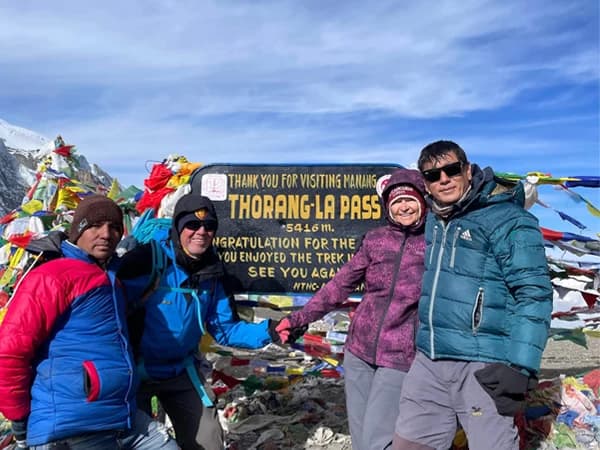
What makes the overall odyssey more challenging is the daily altitude gain, where there is thinning air, lower oxygen level, as the elevation rises, and the highest altitude level, that this trek, takes you at marks to be Thorong La Pass at 5416 meters, which makes the trek, more challenging, possing the possibile risk of altitude sickness, thus, make sure to follow preventive guidelines, from the very beginning.
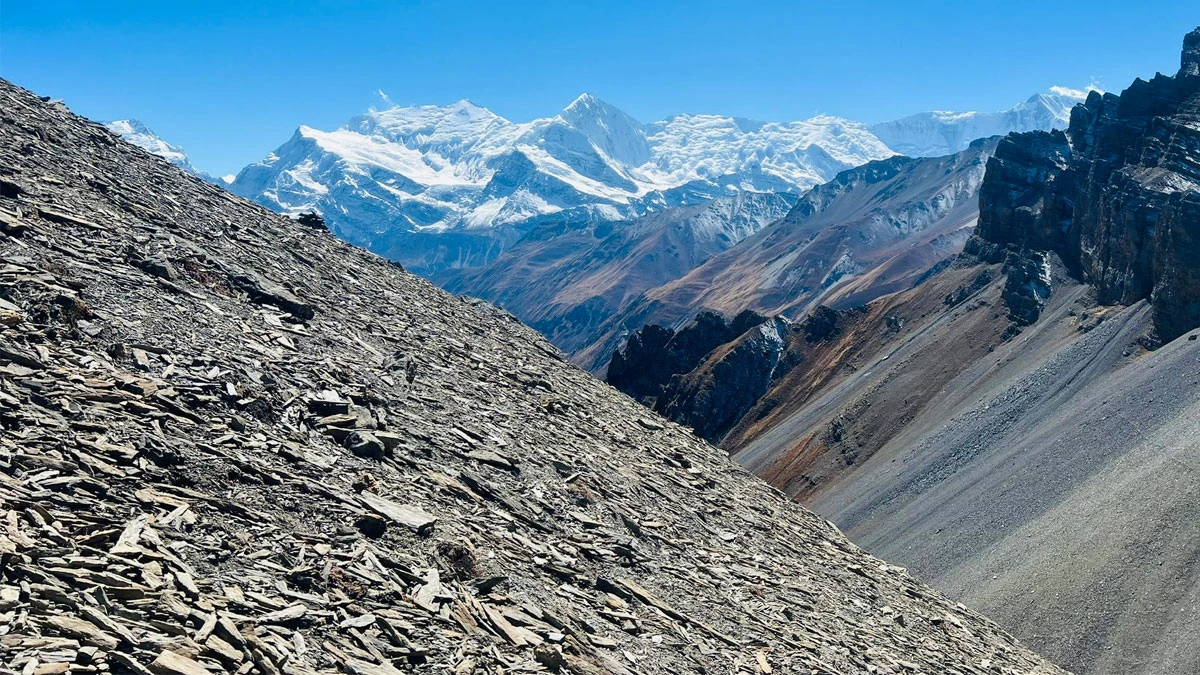
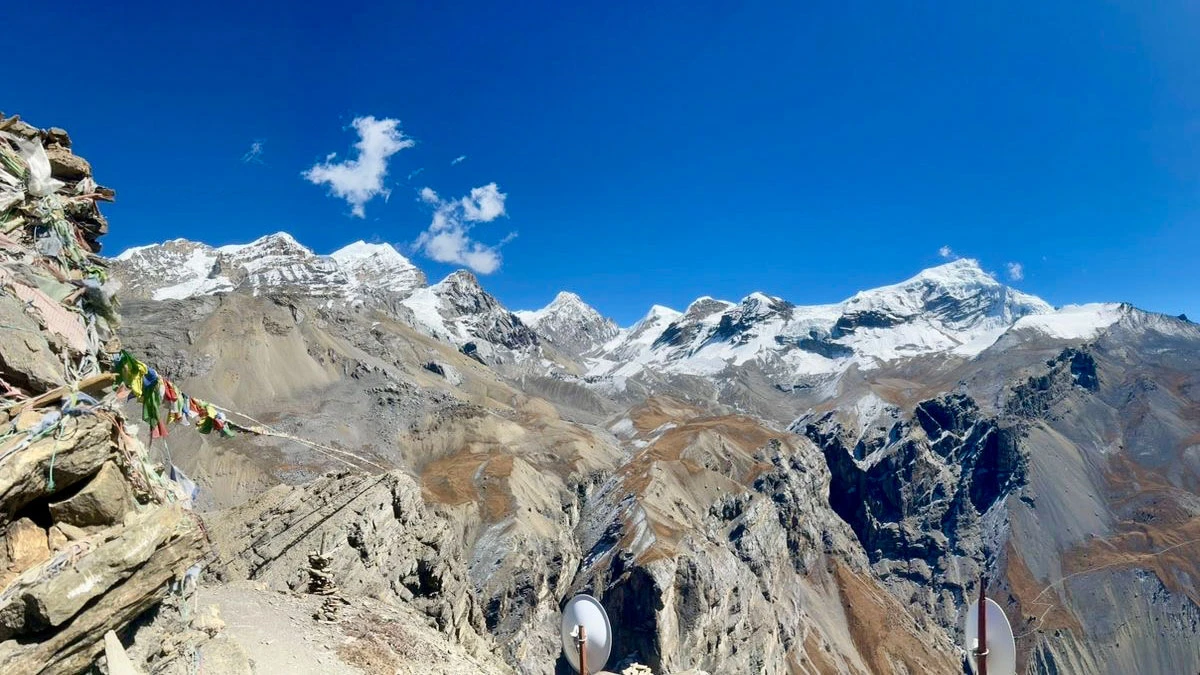
The most challenging section of this trek tends to be the route coverage from Thorang High Camp (Phedi) to Muktinath Temple, crossing the pass of Thorong La, obviously. On this very day, the trail, demands almost 9-10 hours of navigation, where the terrains changes drastically, from rugged remote and rough trail to alpine as, you get near to the mountain pass, and then, descends, again via remote, rugged and dry tibetan pleateu surroundings, with continuous downhill (descend) walk, which might be frustrating to some, who do not have any prior experience and have a basic stamina to cover such long distance.
Apart from that, the weather and climatic conditions change frequently, especially at the higher altitudes, which might be shocking to some, and the isolated sections, with no tea houses in between, might raise ample questions in your head, regarding the navigation, hence, with all those challenges, being prepared and trained before opting for this journey remains a crucial aspect. Even though, there might be some difficulties, the rewards and an accomplishment sense for hikers, of being at the two uconic destinations, Tilicho Lake and Thorong La Pass, makes the journey more exciting, rather than challenging, with those mountain and landscape views, that everyday unfolds, into something unique, becomes, truly memorable, that you can cherish for the rest of your life.
Preparation Tips and Prevention measures for altitude sickness
Here are some of the preparations to undergo to avoid such challenges along the trailhead, and prevention measures of altitude sickness on high mountain passes.
- Before starting the trip, ensure to make yourself physically fit and strengthen your body by engaging in some cardiovascular exercises, such as running, cycling, or even walking. Completing 8,000 to 10 K steps would be great every day.
- If you are a gym freak, then, along with muscle workout, you can also engage in some cardio, like a short walk, at treadmill with a 10-12 incline, or just engage in short hikes, which is the most feasible and effective exercise that you can opt for before any Himalaya adventure.
- Engage in research like the accommodations and meals expectations, to keep on, along the route, as it is completely different from the city areas, so making yourself mindfully ready helps in keeping realistic expectations, and also be prepared accordingly.
- While packing the gears and essentials, keep it light yet effective by packing only those essentials that are necessary, and do not go overboard; however, you must make sure that it includes other seasonal variations as well, like a listing down or a puffer jacket, rain cover, bagpack cover, rain coat, or even crampons, if you are doubtfull about snowy navigation.
- While setting your itinerary, make sure that it is crafted (tailored) as per your pace, or ensure that the daily pace of the hike matches your pace level or experience level. Our 14-day Tilicho Lake and Thorong La Pass Trekking itinerary includes a gradual pace, with one acclimatization day at Manang, with very steady and moderate ascent, ensuring that the itinerary matches every kind of hiker's fitness level, and poses a minimal risk of AMS (Acute Mountain Sickness).
- Throughout the trip, make sure that you keep yourself very well hydrated by consuming at least 3-4 liters of water per day, nutritious meals, and avoiding non-nutritious foods, and most importantly, avoid smoking and drinking alcoholic beverages.
- Follow the navigation of the trekking guide, and do not get influenced by other fellow hikers too easily by trying to maintain their pace and itinerary, as the trip has been set as per your health and fitness, and you will be guided by a medically trained, experienced guide, who knows every aspect of the Annapurna trail.
What are the Meals and Accommodations like during the Tilicho and Thorong La Pass Trek?
Throughout the journey, three standard meals (Breakfast, Lunch, and Dinner) will be provided to you with a cup of tea or coffee, where you can select the meals from the menu, and they will be cooked right after you order, freshly and hygienically. The trail includes a wide variety of meals, from western, continental, asian to Tibetan locals, with vegan, vegetarian, and non-veg options, matching the taste and preference of every kind of hiker from across the globe.
The breakfast, is served before the hike, as you should, whereas, the lunch is provided in between the trail, at some points, depending on the route, if there is a long distance coverage, whereas, the dinner is served at the night time before 7 PM, ensuring that the meals, are provided on time, and bestly prepared matching your taste palette.
The accommodations along the route of the classic Annapurna Circuit Trail are on a simple basis, focused on more authentic tea houses, hosted and run by the Tibetan locals, rather than luxury amenities, unlike the Everest region trail, so whatever you expect, only keep culturally focused expectations, rather than five-star amenities. The lodges (guest house) feature simple rooms with comfortable bedding, a mattress, either in single, twin, or triple rooms, depending on the number of hikers that you choose to opt for.
At the lower terrains, the rooms are more on standard side, with attached washrooms and charging sockets, attached in the room itself, whereas, as you ascend higher, only sharing washroom facility is available, however, the rooms can be in a private basis, if you are solo hiker or a female trekker, arranged as per your comfortability and group basis. Every tea house features great amenities and is hygienically sanitized, with facilities such as wifi, charging, laundry, and hot showers; however, it might charge you extra for such facilities, as it is charged by the tea house itself, and falls under personal expenses, due to limited solar energy availability at such high mountain adventures.
Our standard package of Destination Himalaya Treks and Expedition, includes, all the accommodation during the trip (13 Nights) ensuring your comfort, privacy and safety on the very first hand, to make your journey more feasible and smooth going, we offer free 2 Nights accommodations at Thamel - Kathmandu (extra 2 nights), if you are extending your stay here in Nepal, just in case as a complimentary and showing gratitude to our clients.
What permits are required for Thorong La Pass, including Tilicho Lake Trekking?
To trek along the Tilicho Lake with Thorang La Pass requires two permits, firstly, the Annapurna Conservation Area Permit (ACAP) and secondly, the TIMS Card (Trekkers Information Management System Card), which can be either attained at Kathmandu or Pokhara; however, it must be obtained from local based travel agency, as independent hiking is not allowed.
- Annapurna Conservation Area Permit (ACAP fee): This permit goes directly to maintain the trailhead, boost the economy of the locals, and must be acquired to trek along the Annapurna region, where the cost simply varies, depending on the nationality that you hold. For foreigners, it cost approx. USD 28 per head (NPR 3000) and costs half of the fee, for SAARC nationalities, and remains free for children below 10 years old.
- Trekkers Information Management System Card (TIMS Card): No matter which trail you undertake here in Nepal, the TIMS Card is compulsory to obtain, and keeps your trailhead navigation (track of hikers), in and out, ensuring safety and keeping a record of inflow and outflow. This permit is much cheaper, costing only USD 10 (NPR 1000) per head.
After your trek is booked with us, all the paperwork and required permits will be arranged by us at Destination Himalaya Treks and Expedition.
Is obtaining Travel Insurance mandatory, or can I skip it?
Getting travel insurance is mandatory, and remains one of the crucial aspects for such a thrilling trail of Thorong La via Tilicho Lake, as no matter how experienced you are, dangers do not come with alert or any horns, at such high altitude, especially, it must be obtained, due to basic reason, which is the trail, consists of few limited access of medical health posts, only for minor health injuries, or to buy medicines, and there are no hospitals available along the route. Although the route tends to be safe with assistance from our experienced, trained trekking guides, still, just for a hassle-free journey, tension free mindset, and to save thousands of dollars, we suggest you get an insurance policy beforehand.
Make sure that your insurance policy includes all the essentials, such as medical bills, thefts, injuries, damaged goods, goods stolen, trip delays and cancellation, and most importantly, the helicopter evacuation from 3000-6000 meters for serious cases.
Safe Booking Procedure
For your bookings, we only require 10% of the total trip cost, as an advance payment, where the remaining cost can be paid after you get to Nepal (upon arrival), where we accept all the international payment gateways, which you can make via website. Whether you are planning a private trip or a group hike, we can customize your adventure, matching your timeframe, itinerary, budget, and dates that you choose to hike, ensuring a hassle-free adventure, on the very first hand. As we at Destination Himalaya Treks are registered with all relevant authorities in Nepal, including TAAN (Trekking Association Agency of Nepal) and NMA (Nepal Mountaineering Association), booking with us is simple, flexible, and completely secure. If you have any queries, then you can connect with us via WhatsApp at +977 9851016814 or make a direct call, or just email [email protected] anytime.