Highlights
- Venture out on a community trek, where your small journey contributes to the well-being of locals and wildlife.
- Take a walk through Annapurna off beaten trails, less crowded pathways, and remote tea houses, immersing in the untamed nature and cultures of the diverse ethnic groups of Gurung, Magar, and Rai.
- Impeccable panorama sunrise and sunset views, from iconic view points, including Mohare Danda (3320 m), Khopra Danda (3660 m), and Ghorepani Poon Hill at 3210 meters.
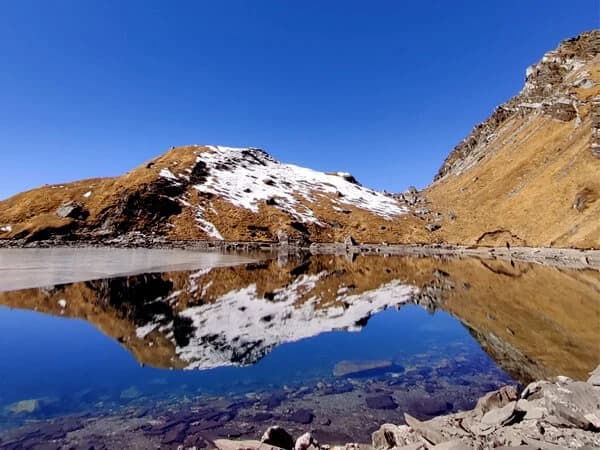
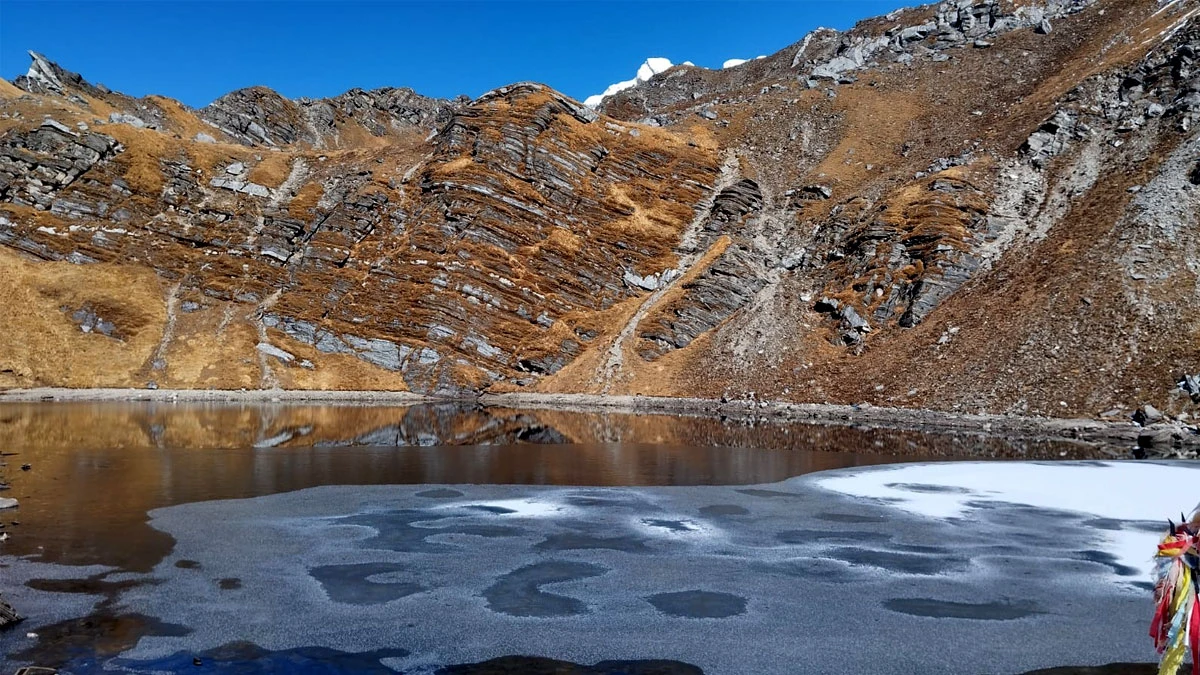
- Start your visit with a chance to visit the Galeshwor Temple, a pilgrimage site to Lord Shiva, and then explore the sacred Khayer Lake, perched at an elevation of 4,600 meters, gaining spiritual insight.
- Wander around the red rhododendron forest, through charming villages, and deep woodland areas, via river streams, cascading waterfalls, crossing several suspension bridges, and terraced fields, with a glimpse of rare wildlife: Himalayan tahr, elusive red panda, blue goat, and yaks grazing.
The Mohare Danda and Khayer Lake Trek is an offbeat pathway that reaches viewpoints of Mohare Danda, Khopra Danda, Poon Hill, and Khayer Lake. It is still considered an underrated trekking destination within the Annapurna region, due to which it is less trodden, quieter trails, and explores the remote mountain villages, giving you a full sense of serenity and pristine tea house experiences.
Lasting for 14 days, the journey is an easy-going trek, doable by beginners and any age group, with basic fitness and prior Himalayan experience, which takes a gradual ascent of 400-500 meters, covering a 5-7-hour daily hike, reaching the highest altitude at the sacred Khayer Lake at 4600 meters.
The Mohare Danda and Khopra Trek is also famously named as a community trek, where the lodges, routes, and hospitality services are owned by the local people, rather than big private companies, so if you are undertaking this hike, then you are contributing to the villages directly. Throughout, the gigantic panorama views of several mountains, including Annapurna and the Dhaulagiri range, accompany you, and the hikers get to wander through deep, lush woodland of the iconic Annapurna Conservation Area, via rhododendrons, oaks, and rivers, waterfalls, with a glimpse of the rich Himalayan flora and fauna.
As it is just newly introduced, a few years back, it is a perfect alternative to the crowded trails, like Annapurna Base Camp or EBC, and it also visits one of the sacred holy Hindu lakes, and temples in between, standing out to be a full cultural, fun, and distinct odyssey, apart from just reaching the vantage points, or a certain height.
Mohare Danda Khayer Lake Trekking Route
The Mohare Danda, Khopra Danda, and Khayer Lake trek begins with a 7-8 hour drive to Pokhara, from Kathmandu, the capital city, then the drive continues via jeep to Galeshwor, on the very next day. The Galeshwor (1170 m) is marked as the starting point, from where the walking trail begins. Before commencing the trek to Bans Kharka, we’ll also visit one of the holiest Hindu pilgrimage sites, Galeshwor Lord Shiva Temple. The trail takes an ascent to Nangi at 2300 meters, which is also widely popular as the Internet village, where the Wifi, telemedicine, and telephone began, with the former minister and now a parliament member, the legend Mahabir Pun.
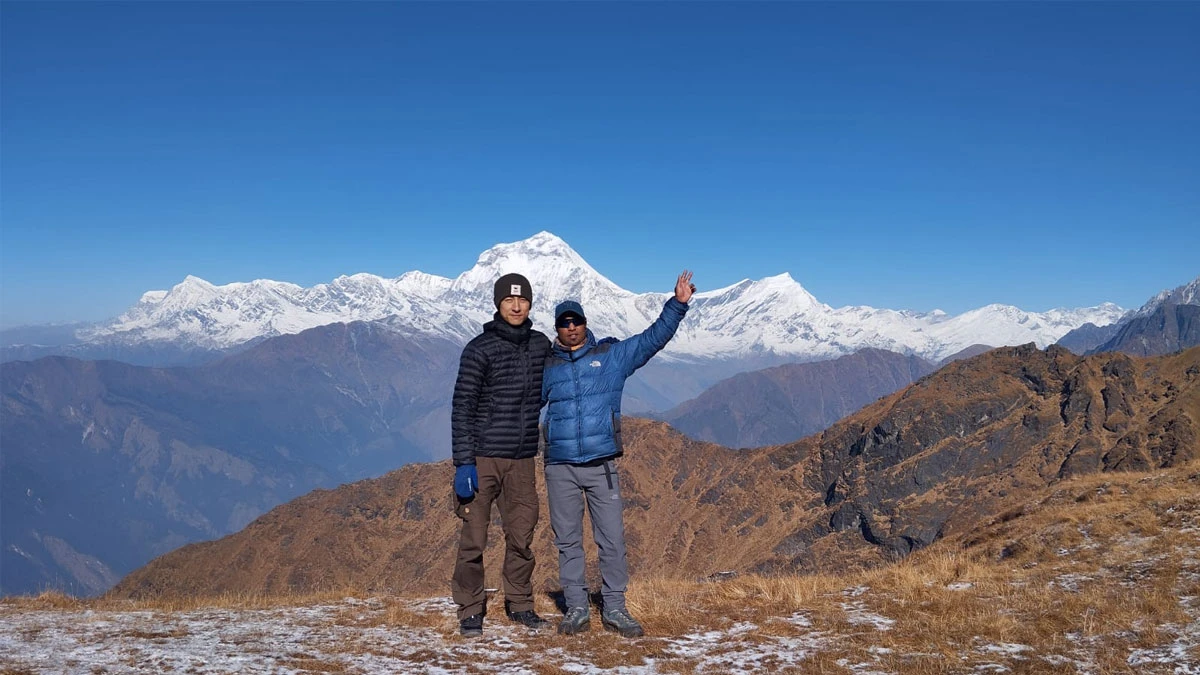
From Nandi, the route finally takes an ascent to the Mohare Danda (3320 meters), with the breathtaking, wide-angle views of Machhapuchhre (6993 m), Tukuche (6920 m), Nilgiri (7061 m), Hiunchuli (6441 m), and the world’s 7th and 10th tallest peaks, Dhaulagiri and Annapurna massifs.
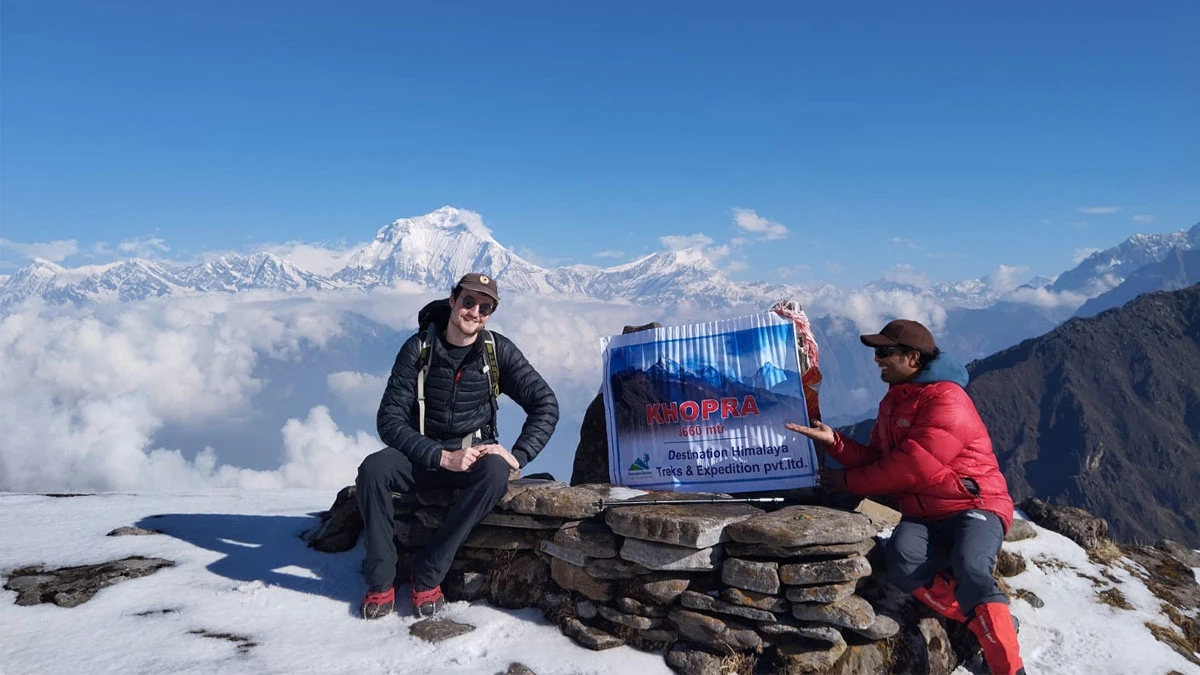
Afterwards, the trail takes a descent towards Ghorepani and Poon Hill View Point (3210 m), then touches the route to Khopra from Swanta and climbs up to the Khopra Ridge/ Danda, perched at an elevation of 3660 meters. From this hilltop, you get the reward of the 360-degree distinct insights into Gangaourna, Hiunchuli and Lamjung Himal, more closely, upfrontly compared to Mohare Danda, thus, the extended trip is worth the wait.
Then, the most challenging and highest altitude hike proceeds to Khayer Lake (4600 m) on the 9th day, with a round trip of 8-9 hours. Taking the downhill walk through Dobato and the famous cultural village of the Gurung communities, Ghandruk village, and finally the 14-day excursion to the iconic community treks, ends with a drive back to Pokhara and then to Kathmandu.
Please take note that the overall duration is extended to two weeks, as two days are added as arrival and departure dates; however, if you have already arrived in Kathmandu or Pokhara, then the itinerary can be shortened to 10-11 days. Feel free to reach out to us, for personalized itineraries, as per your duration and budget.
What cultures and traditions can you explore on the Mohare Danda Khopra Ridge Trek?
During the adventure, you get to experience rich cultures, traditions, and lifestyles as the route passes through several hill villages, where daily life, attire, meals, and spirituality are still tied to local customs, as it is less popular, and the tea houses are still in their ancient era. The trail is home to diverse communities of Gurung, Magar, Rai, Limbu, and mixed ethnic groups, where visitors get to experience the distinct cultures while staying in the homestays and lodges.
While navigating through the settlements (key stopping points) of Bans Kharka, Nangi, Tikot, and other villages, you will primarily explore the Magar community, one of the oldest hill groups, having its own music, languages, clothing, and livelihood that is solely dependent on farming. Whereas other ethnic groups, in mixed villages, especially in the earlier sections and lower trails, show you another insight into the mountain life. The most highlighted part is during the visit to the Ghandruk, known for Gurung communities, where you get to see Tamang Gurung culture dances, music, songs, and tasty local foods, giving you a full cultural exposure.
Which mountains can you see from Mohare Danda and Khopra Ridge?
Known as the best annpaurna vantage points, the Mohare Danda and Khopra Trek offer impeccable views of the Himalayan peaks, where the trekkers get to witness more than 30 giants, through a unique perspective.
The trail, firstly, covers the Mohare Danda route, where you get to immerse in the wide-angle vista of the Dhaulagiri, Annapurna I, II, III, IV, South, Nilgiri, Tukuche, Macchapuchare and Lamjung Himal, both on the sunrise and sunside angle from the hilltop. If the weather is clear, or generally during the peak seasons, the glimpse of Manaslu can also be seen, if luck is on your side.
Whereas reaching Khopra Ridge (Danda), secondly, discloses more upfront, a closer view of the mountains, especially the 360-degree panorama of Annapurna and Dhaulagiri massifs, becomes more prominent, with a wide range of insight. The other peaks become more beautiful, with the surrounding dry ridges, including peaks such as Gangapurna and Lamjung Himal, in a serene environment.
Apart from both vantage points, this trip also visits the Poon Hill viewpoint at 3210 meters, famous for the almost 19 notable peaks sunrise view, with just 35 minutes walk, that comes along the route to Khopra, as from Ghorepani the trail diverges to Swanta - the pathway to Khopra and Khayer Lake.