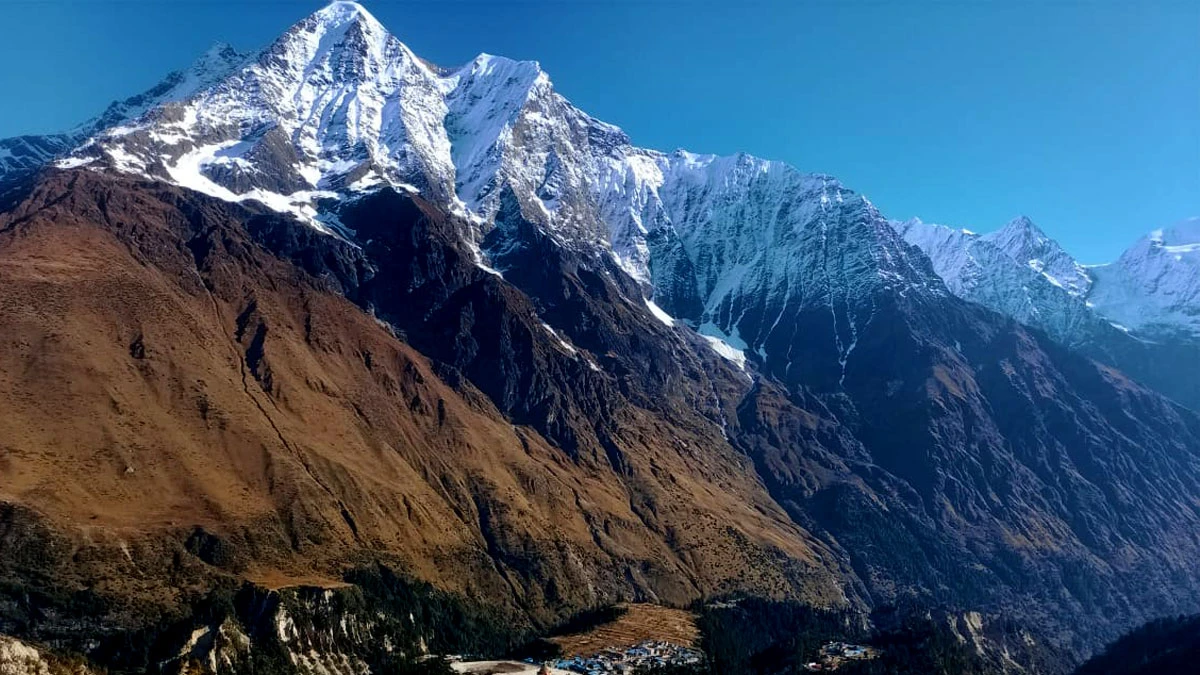
thorong la pass annapurna
manaslu base camp nepal
manaslu annapurna three high pass trek

Manaslu Annapurna Three High Passes Trek - 22 Days

295 reviews in TripAdvisor
27 reviews in Google Reviews
Recommended by 99% of travelers
Duration22 Days
Trip GradeStrenuous
Maximum Altitude5416 meters
ActivitiesTrekking
Group SizeAny
StartsKathmandu
EndsKathmandu
Best TimeSpring and Autumn

Highlights

  • Panoramic mountain and landscape views from Larkya La, Kang La, and Thorong La Passes above 5000 meters
  • Walk through the scheduled and isolated, less crowded section of the Nar and Phu valleys
  • Warm hospitality of different ethnic groups: Gurung, Thakali, Magar, Manangi, and Tibetan-influenced locals
  • Visit Tibetan Buddhist monasteries, stone-walled houses, mani walls, chortens, and prayer-flag-filled villages
  • Reach the foothills of the world's 8th highest peak, Mt. Manaslu (8163 m), an expansive glacier, and a peak glance
  • Trail along the world's deepest gorge, Kali Gandaki, Budhi Gandaki, and Marshyangdi valleys
  • Experience the classic, famous Annapurna Circuit, after the excursion of the remote Manaslu and Nar Phu sections

Manaslu Annapurna Three High Passes Trek - Overview

The Manaslu Annapurna Three Pass Trek is a challenging Himalayan expedition, linking three of Nepal’s most spectacular high passes—Larkya La, Kang La, and Thorong La — in a single journey. The adventure begins in the remote Manaslu region, crosses the dramatic Larkya La Pass (5,106 m), and then proceeds into the hidden Tibetan-influenced Nar Phu Valley. The journey continues onto the classic Annapurna Circuit, finishing with the legendary crossing of Thorong La Pass (5,416 m), making this one of the most rewarding long-distance treks in the Himalayas.

The route circumnavigates Mt. Manaslu (8163 m) and Annapurna I (8091 m), the 8th and 10th tallest mountains in the world, showcasing distinct and expansive views of the legendary giants. From lush green valleys, rushing rivers, and cascading waterfalls to windswept Tibetan plateaus, high-altitude settlements, and isolated wilderness trails, this journey unfolds through six distinct climatic zones.

Every day unravels the dramatic change in landscape and mountains, offering expansive insights into the Himalayan peaks, including Himlung Himal, Cheo Himal, Kang Guru, Gangapurna, Annapurna I, II, IV, Tilicho Peak, Mt Dhaulagiri, and many more. 

Beyond the mountains and landscapes, it is a full tea house and deep cultural journey, as walking through the Manaslu region, via Gurung and Tibetan-influenced villages, such as Lho, Samagaun, and Samdo, reflects centuries of Buddhist heritage. The hidden Nar Phu Valley feels even more remote, preserving a way of life strongly connected to Tibetan Buddhism, yak herding, and high-altitude farming. Villages like Nar and Phu offer a rare glimpse into a culture that has remained largely untouched by modern development.

While rejoining the trail of the Annapurna region, the cultural landscapes marvellously shift as it passes through Manang, one of the most beautiful high-altitude villages with dramatic peaks, and visits Muktinath — a sacred destination for both Hindus and Buddhists.

Basically, this itinerary is curated for adventure seekers who have enough time to explore the mountains and crave a deeper sense of wilderness, culture, and challenge. It is the extended version of the famous Manaslu Annapurna Trek, adding more exploration of remote valleys, high passes, and the isolated twin settlements of Nar and Phu.

Trekking Route

The Manaslu Annapurna Three Passes Trek begins with a drive to Dovan followed through alongside the Budhi Gandaki River, past traditional villages, green woodland, and deep river valleys. As you ascend higher, the trail leads to Namrung, Lho Gau, and Samagaun, where one acclimatization day with an optional hike to Birendra Lake or Manaslu Base Camp is set to help your body acclimatize and assist in safe crossings of the pass further.

From Samagaun, the route continues to Samdo and Dharamsala before crossing the challenging pass Larkya La at 5106 n, one of the most beautiful passes or viewpoints in Nepal. After a descent to Bhimtang, the trail then enters the restricted area of Nar Phu Valley, known as one of the least explored places, where ancient villages, monasteries, and strong Tibetan Buddhist culture remain as pristine as years before. Crossing the Kang La Pass at 5320 m, the route then rejoins the Annapurna Circuit at Ngawal and continues toward Manang.

The final stage of the trip follows the classic Annapurna trail through Yak Kharka and Thorong High Camp, before crossing the Thorong La Pass at 5416 m. After visiting the sacred temple of Muktinath, you descend to Jomsom and then fly back to Pokhara, and it concludes with a drive back to Kathmandu, completing one of the unforgettable trekking circuits.

Three High-Altitude Passes of the Manaslu Annapurna Journey

The high-pass trekking of Manaslu and Annapurna includes Larkya La, Kang La, and Thorong La, where each crossing brings a dramatic change in landscape, culture, and mountain views, making the trip rewarding and a true Himalayan expedition.

Larkya La Pass (5106 m)

Larkya La is the first main pass that you will encounter on the journey, which connects the remote Manaslu region with the Annapurna region. After traversing through the traditional settlements of Samagaun, Samdo, and Dharamsala, an early morning ascent that starts at 3 AM leads you to the top of the pass, which reveals the great sweeping Himalayan vistas. From the top, the morning sunrise hues in shades of pink and gold over the peaks of Himlung Himal, Cheo Himal, and Kang Guru, and the entire Annapurna range, welcome you with rewarding views. 

Kang La Pass (5320 m)

Kang La is the hardest and most challenging pass among the three major passes of Manaslu Annapurna, covering 9-10 hours of walking and connecting the Nar Phu and Annapurna Circuit Trail. The trail is steady and goes all the way downhill, which makes the crossing quite strenuous; it is also the least explored pass, giving an opportunity to enjoy the glaciers, peaks, and landscapes more. The Annapurna massif stretches expansively across the horizon, revealing a unique perspective and glimpse of the Himalayan peaks. After reaching the top, it takes a downhill walk to Ngawal, which takes you back to the classic Annapurna Circuit, where you get to witness a stunning change into open meadows and Tibetan plateau landscapes.

Thorong La Pass (5416 m)

Thorong La is the highest and longest pass among the passes, and it takes an ascent from Thorong High Camp, where the trip kicks off early in the morning, and an early morning sunrise at 4:00 AM reveals the stunning Annapurna and Dhaulagiri ranges. The long downhill walk to Muktinath Temple provides a spiritual retreat and adds more cultural exposure and value to the journey.

Together, Larkya La, Kang La, and Thorong La define the true character of this journey—combining remote wilderness, demanding climbs, ever-changing landscapes, and sweeping views of some of the world’s highest peaks.

Itinerary
Trip PlanExpand all

Upon your arrival, one of our airport representatives will come to pick you up at the hotel, carrying a dashboard with the company's name and your name on it; finding him won't be a major problem. After that, you'll basically be transferred to the hotel in the evening or midday, whenever your schedule fits. We will have a short briefing meeting, where you will be introduced to the trekking guide, who will assist you throughout the trip.

If you have missed out any gear, then you can buy it here in Thamel, Kathmandu, with reasonable pricing too, whatsoever, you will always be assisted by someone, while in Kathamandu, on the very first day for guidance. Overnight in Kathmandu; pack all the essentials, as the trip starts tomorrow.

Max Altitude: 1360 m Meals: BreakfastAccommodation: Standard Hotel

Early in the morning, around 6:00 AM, the guide will pick you up at the hotel for the drive to Dobhan, where the walking trail begins. The drive takes almost 8 hours; some parts are straight, and some are on a bumpy road, especially in the last 30-45 minutes; however, the changing scenery, greenery, rivers, bridges, off-side valleys, and farms will keep you intrigued throughout the drive.

Passing through Machhakhola and then Sotikhola, where we will have our lunch, we'll continue our drive to Dobhan. From here, the hike begins to Jagat, alongside the famous Budhi Gandaki River, which lasts for only 3 hours, and we'll reach by 5:00 PM, to the tea house in Jagat.

Max Altitude: 1340 meters Meals: Breakfast, Lunch and DinnerAccommodation: Tea houseDuration: 8 hours drive, 3 hours walk

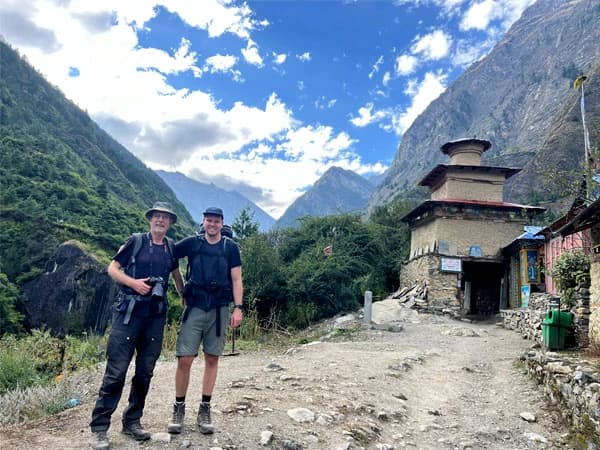
After having breakfast, the trek continues toward Deng, traversing through Tibetan-influenced trails, small Buddhist chortens, mani walls, red shrines, and several Tibetan villages in between. Passing by the settlements of Sirdibas, Phillim, and Nyak, the landscape stunningly opens up wider, with the visible Himalayan giants upfront, and the accompaniment of rivers, cascading waterfalls, and crossing several suspension bridges, above the river of Budhi Gandaki.

Max Altitude: 2096 meters Meals: Breakfast, Lunch and DinnerAccommodation: Tea houseDuration: 6-7 hoursDistance: 18 km

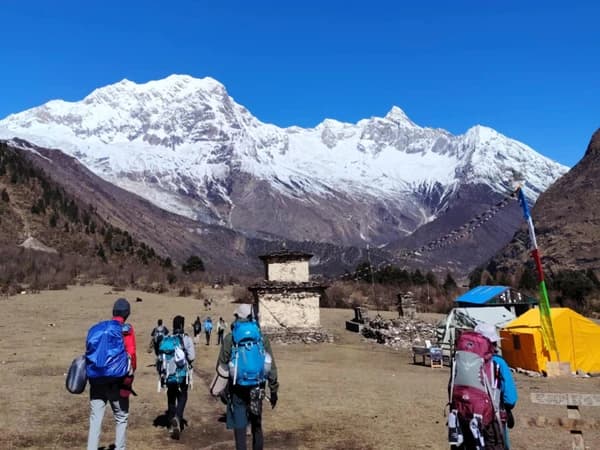
Around 7:30 AM, we will begin our journey to Namrung village, the cultural gateway to the upper Nubri valley, where the Gurung and Tamang people reside. We get to witness a more remote and traditional side of the Tibetan-influenced society, where the houses are made of stone, with carved wooden windows, along with colorful prayer flags and prayer wheels in between, too. The settlement showcases the breathtaking Himalayan giants, such as Himal Chuli, Ganesh Himal, and Mount Manaslu, which will be the closer encounter that you will ever come across. 

Max Altitude: 2910 meters Meals: Breakfast, Lunch and DinnerAccommodation: Tea houseDuration: 6 hoursDistance: 16.7 km

The hike kicks off with the front view of Mt. Manaslu and Peak 29, as we march forward to Lho Gau, which is another Tibetan-influenced settlement, surrounded by mani walls and chortens. The trail gradually climbs through the forested area, through blooming rhododendrons, pines, and oaks, and crosses small streams. As you climb higher and move further, the view of Manaslu gets even closer and more prominent, and approaching further through the villages of Lihi and Sho, with the yak herders, makes the trail even more fascinating. Lho is known as one of the major Tibetan villages, where the Ribung Gompa resides, with a great vista surrounding.

Max Altitude: 3186 meters Meals: Breakfast, Lunch and DinnerAccommodation: Tea houseDuration: 5-6 hoursDistance: 10 km

The journey today leads to Samagaun, followed by Pungen Glacier, passing by several chortens and another major village, Shyala. Samagaun is a high-altitude village, where our first acclimatization day is set, that offers impeccable insights into the peaks, and looks even more captivating during night, so it is the best place to rest overnight.

Max Altitude: 3520 meters Meals: Breakfast, Lunch and DinnerAccommodation: Tea houseDuration: 6 hoursDistance: 8 km

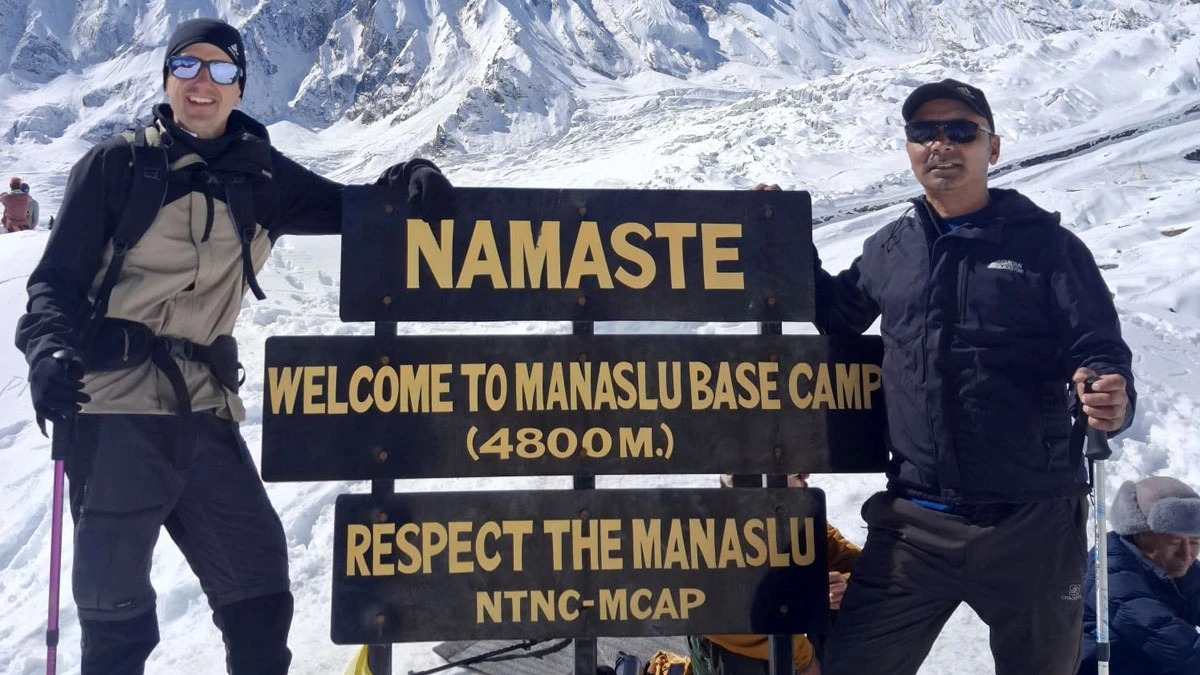
On this very day of acclimatization/rest day, we have two options: either we go to the foothills of the world's eighth-tallest peak, Manaslu Base Camp, which is a bit challenging, including a round trip of 7-8 hours. On the other hand, we have another option: to hike to Birendra Lake (Tal), which involves relatively easy and shorter walking hours. Acclimatizing here is essential, with a short hike that lets the body acclimatize, and gradually adopt the rising high altitide, contributing highly on making the trek smooth going. After getting back from a side trip, we will have enough time to explore the village, gain insight into day-to-day activities, and rest a bit. 

Meals: Breakfast, Lunch and DinnerAccommodation: Tea house

Samdo is another stopping point of our trek for today, where our hike quickly begins after having breakfast, with a giant view of the Manaslu mountain. We follow the Budhi Gandaki River, crossing several wooden bridges and suspension bridges, past wide alpine valleys and traditional small stone huts. As every hour passes, the surrounding terrain becomes wider and more open, with a front view of the massive peaks of Manaslu and Naike Peak right in front. We will basically reach Samdo by 4:00 PM, where we get to enjoy the tranquil and wind-swept settlement, with a great view of the giants.


Max Altitude: 3700 meters Meals: Breakfast, Lunch and DinnerAccommodation: Tea houseDuration: 5-6 hoursDistance: 8.2 km

The hike continues to the upper Manaslu region as we head to Dharamsala, known as Larkey Bazaar, the last settlement before crossing the pass. The hike is quite strenuous today, with a rugged and steep climb, however only lasts for 4 to 5 hours, just rest overnight at the tea house, at communal dining area, as the temeperature drops here to minus, so have hot soup and rest properly for the overnight.

Max Altitude: 4460 meters Meals: Breakfast, Lunch and DinnerAccommodation: Tea houseDuration: 4-5 hoursDistance: 7 km

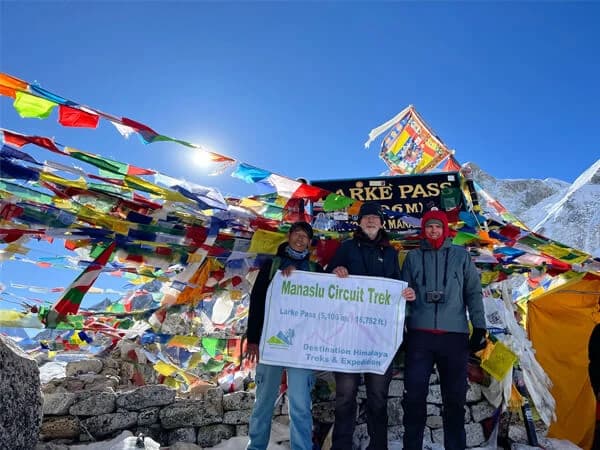
Today is the biggest day of the trek as we'll cross Larkya La Pass (5,106 m), the highest point of the Manaslu Circuit. We wake up around 3:30 AM, pack our lunch, and start walking early to avoid the strong afternoon winds that can make the crossing more difficult. The trail gradually climbs over rocky moraine beside the Larkya Glacier, passing several small glacial lakes along the way. As we gain height, the surroundings become colder and snowier, with rugged terrain and towering peaks all around.

After a steady final push, we reach Larkya La Pass at 5,106 m. The cold mountain air, colorful prayer flags, and wide 360-degree views make the effort completely worthwhile. From here, you can see Samdo Peak, Himlung Himal, Kang Guru, Annapurna II, and peaks near the Tibetan border.

After spending some time enjoying the views, we begin the long descent toward Bhimtang. The trail drops through rocky sections and azalea-covered slopes before entering the forest. By the end of the day, we will arrive at Bhimtang, a beautiful valley surrounded by mountains, where we can rest and celebrate completing the highest point of the adventure.

Max Altitude: 5106 meters Meals: Breakfast, Lunch and DinnerAccommodation: Tea houseDuration: 8 hoursDistance: 16 km

Today, we will go all the way downhill to Tilje, leaving the upper Manaslu behind; the trail approaches through alpine meadows to terraced fields and a forested trail, adorned with red rhododendrons, and subtropical woodland, marked with pine trees. The route now follows alongside the Marshyandi River on the way to Tilje, finally a lower-altitude, warm village, where we will stay overnight.

Max Altitude: 2310 meters Meals: Breakfast, Lunch and DinnerAccommodation: Tea houseDuration: 6 hoursDistance: 16.7 km

Leaving the Manaslu region, finally today, we will enter the restricted area of Nar Phu, following the Marshyangdi River alongside as we approach Koto; the expansive view of the Manaslu and Annapurna range just gets closer.

Max Altitude: 2610 meters Meals: Breakfast, Lunch and DinnerAccommodation: Tea houseDuration: 6-7 hoursDistance: 15.2 km

After having breakfast, our hike today leads to Meta village, covering almost 7-8 hours of walking trail, going all the way through isolated, scheduled and less crowded section. Past by the steep, rugged and all the way uphill walk, leads to Meta village, with a stunning vista of the Annapurna I, II, IV and Lamjung Himal.

Max Altitude: 3570 meters Meals: Breakfast, Lunch and DinnerAccommodation: Tea houseDuration: 8 hoursDistance: 14 km

The trail today follows all the way downhill, passing by chortens, mani walls, and small Tibetan monasteries, crossing small wooden bridges, and finally arriving at the village of Nar.

Max Altitude: 4200 meters Meals: Breakfast, Lunch and DinnerAccommodation: Tea houseDuration: 6 hoursDistance: 14.6 km

Today is another big day, where we will finally cross another high pass, Kang La at 5320 meters, which is the most challenging one as well, starting early at 3 AM, followed by a yak-herding section, a Tibetan-influenced trail, and a steady uphill ascent. Reaching the top of the Kang La Pass summit offers breathtaking views of the snow-capped, alluring peaks of Annapurna I, III, IV, Mt. Fishtail, and Tilicho Peak, and the entire Manang Valley at the same time. After spending some good amount of time here, we will take a descend to Ngwal village, touching the route of the classic Annapurna Circuit.

Max Altitude: 5320 meters Meals: Breakfast, Lunch and DinnerAccommodation: Tea houseDuration: 7-8 hoursDistance: 15.2 km

Leaving the village of Ngawal, the route approaches with the roaring sound of the Marsyangdi River; the trail enters subtropical forest in the first half, and in the second half, we will enter the Tibetan-influenced trail followed by chortens, mani walls, and red shrines, where we will visit Braga Monastery, a 500-year-old monastery. Reaching Manang, we get expansive wide-angle insights into the wide Tibetan plateau landscape and Himalayan peaks of the Annapurna range, Gangapurna, and Pisang Peak.

Max Altitude: 3570 meters Meals: Breakfast, Lunch and DinnerAccommodation: Tea houseDuration: 5-6 hoursDistance: 9.2 km

The trail goes all the way through less isolated and scheduled terrain, passing by the high pastures of the yaks, followed alongside the upper Marsyangdi Valley, offering a distant vista of the Himalayan giants and alpine glacier meadows. The trail goes through the pine and juniper forest, where, along the way, we may encounter yaks and horses grazing on the terraced farms, especially if it is a peak seasonal time. Going here, the air becomes more thinner, with the increasing altitude with the upfront vista of the giants of Annapurna II, IV, Gangapurna and many more. We will reach Yak Kharka by 4:00 PM, a small seasonal settlement, perfect to acclimatize for the overnight before approaching the high pass.


Max Altitude: 4012 meters Meals: Breakfast, Lunch and DinnerAccommodation: Tea houseDuration: 6-7 hoursDistance: 10 km

The trek today leads to the final settlement before we cross the pass: Thorong High Camp. Starting around 8:00 AM, the trail climbs gradually from Yak Kharka toward Ledar, offering beautiful views of Annapurna II, Gangapurna, and Tilicho Peak, along with closer views of other Himalayan massifs. After about an hour beyond Ledar, the trail descends to a wooden bridge over the Kone Khola. From there, it climbs again through a series of switchbacks, gradually gaining altitude toward Upper Phedi, also known as Thorong High Camp.

Max Altitude: 4870 meters Meals: Breakfast, Lunch and DinnerAccommodation: Tea houseDuration: 6-7 hoursDistance: 8.6 km

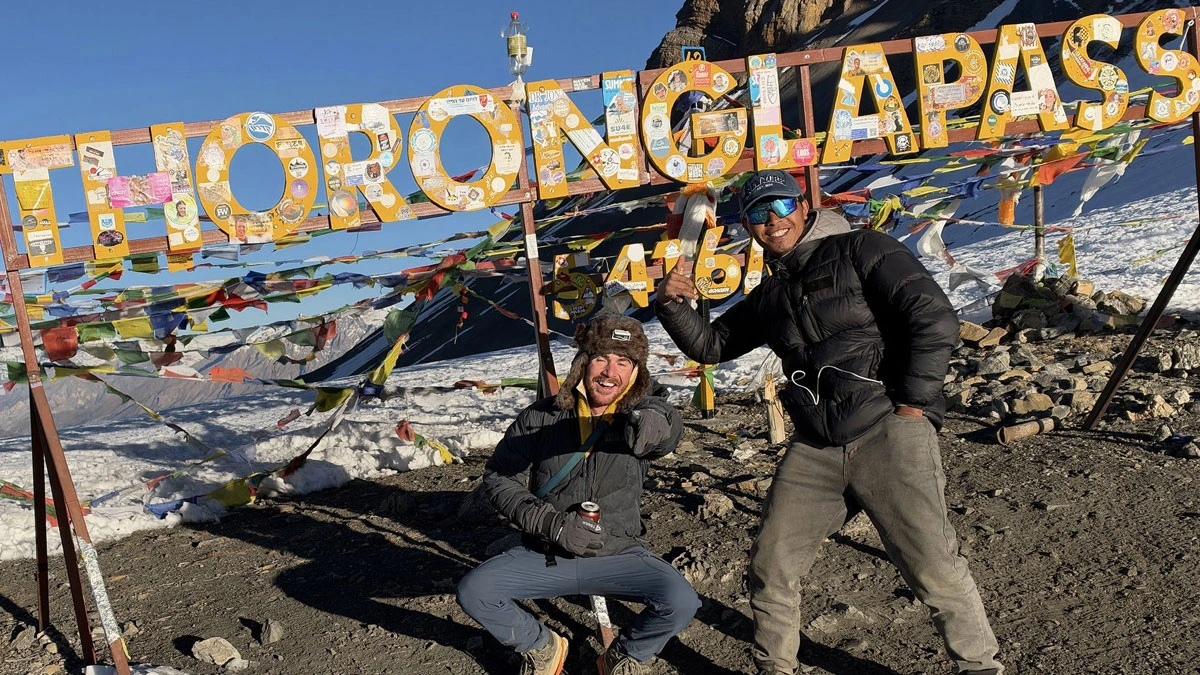
The hike starts early in the morning around 3 AM, via a steep uphill and slippery, icy pathway, all the way ascending toward Thorong La Pass. From the very top, we will get to enjoy the 360-degree panoramic views of the mountains, including Annapurna and the Dhaulagiri range alongside other giants. The trail then descends to a greener section, and then the surroundings get more intense and completely dry as we reach the Mustang region, approaching further along the Kali Gandaki Gorge, the deepest in the world. A spiritual retreat awaits us, as we will visit the Muktinath Temple, dedicated to Hindus and Buddhist, from where we even get to enjoy the dry Tibetan plateau, and surrounding Annapurna and Dhaulagiri range.

Max Altitude: 5416 meters Meals: Breakfast, Lunch and DinnerAccommodation: Tea houseDuration: 9-10 hoursDistance: 16 km

The trail proceeds through a rugged and windy pathway. After having breakfast, we will soon head to Jomsom, one of the notable settlements of the Mustang region, following the Kali Gandaki Valley, with dramatic views of the barren hills and a less-traversed pathway, with the great scenic view of the Annapurna and Dhaulagiri ranges all way along.

Max Altitude: 2810 meters Meals: Breakfast, Lunch and DinnerAccommodation: Tea houseDuration: 6-7 hoursDistance: 16 km

Early in the morning, we will catch a flight to Pokhara, that lasts for 35 minutes maximum. One of our airport representatives will come to pick you up and drop you off at the hotel. You get whole day, to explore the lake city, Pokhara on your own so make the best out of it.

Max Altitude: 830 meters Meals: Breakfast and LunchAccommodation: Standard HotelDuration: 35 minutes

Around 7:00 AM, we will board a tourist bus back to Kathmandu, enjoying the scenic drive through riverside villages, terraced hills, and winding mountain roads. The journey offers a final chance to reflect on the incredible landscapes, cultures, and high passes you have experienced over the past few weeks. After arriving in Kathmandu, you can rest and freshen up at your complimentary hotel stay. In the evening, we will gather for a special farewell dinner, celebrating the successful completion of your Manaslu Annapurna Three Passes adventure with your trekking team.

Max Altitude: 1360 meters Meals: Breakfast, Lunch and DinnerAccommodation: Standard HotelDuration: 35 minutes
Cost Details
Includes
  • Airport transfers: Airport Pickup and drop-off via private vehicle
  • Road Transportation: Kathmandu to Dovan and Pokhara to Kathmandu
  • Domestic Flight: Jomsom to Pokhara
  • Accommodation in Kathmandu and Pokhara with BB breakfast included
  • Standard Meals: Breakfast, Lunch and Dinner during the trek
  • Required Permits: Restricted Area Permit, ACAP and TIMS Card
  • Experienced English-speaking trekking guide throughout the trip
  • Guide's food, salary, insurance, and accommodation during the trek
  • Basic First Aid Kit: Oximeter - to check the pulse rate and Water Purification Tablet - to purify the drinking water
  • Arrangement of the emergency heli service, covered by your insurance company (insurance is compulsory)
  • Sleeping bag and duffel bag (must be returned after the trip)
  • Trekking Route Map
  • Farewell Dinner with Nepalese Cultural Program
Excludes
  • Travel Insurance
  • Lunch and Dinner in Kathmandu
  • Personal spending for shopping, hot/cold beverages, alcoholic drinks, bottled water, hot showers, Wi-Fi usage, battery charging, and laundry
  • Porters to carry the backpack- Cost: US$ 450 (can be shared between 2)- USD 25 per day
  • Tips for the guide and porter
Dates & Availability
Select your preferred date
Nov 2026
Dec 2026
Jan 2027
Feb 2027
Mar 2027
Apr 2027
May 2027
Jun 2027
Jul 2027
Sep 2027
Oct 2027
Nov 2027
Dec 2027
Date and Days
Price
Status
Date & Days
Nov 21, 2026 - Dec 12, 202622 Days
Price
US$1599US$2299
Save US$700
Status
Guaranteed
Date & Days
Nov 22, 2026 - Dec 13, 202622 Days
Price
US$1599US$2299
Save US$700
Status
Guaranteed
Date & Days
Nov 23, 2026 - Dec 14, 202622 Days
Price
US$1599US$2299
Save US$700
Status
Guaranteed
Date & Days
Nov 24, 2026 - Dec 15, 202622 Days
Price
US$1599US$2299
Save US$700
Status
Guaranteed
Date & Days
Nov 28, 2026 - Dec 19, 202622 Days
Price
US$1599US$2299
Save US$700
Status
Guaranteed
Date & Days
Nov 29, 2026 - Dec 20, 202622 Days
Price
US$1599US$2299
Save US$700
Status
Guaranteed
Date & Days
Nov 30, 2026 - Dec 21, 202622 Days
Price
US$1599US$2299
Save US$700
Status
Guaranteed
Essential Information

Best Time

The best seasons to explore the passes are spring, from March to May, and autumn, starting from September till the end of mid-November, with stable weather conditions and moderate humidity. The possibility of precipitation (rain and snowfall) is typically low, offering clear views without any fog. During Spring, the whole landscape gets stunningly covered with colorful flowers, especially the red rhododendrons; pines and oaks make the forest truly captivating. Autumn, on the other hand, is more popular for Nepal's major festivals, Dashain and Tihar, where trekkers get an opportunity to enrich their cultural experience by celebrating Dashain and Tihar with the locals.

The monsoon and winter seasons are generally considered off-season for this trek. During monsoon, heavy rainfall causes landslides, slippery and muddy trails, leeches, and poor mountain visibility, making the journey more difficult and less enjoyable. In winter, the high passes are often covered in snow and ice, with accumulations sometimes reaching 1.5–2 feet, which can make crossings dangerous or even impossible.

Therefore, the best times to undertake the Manaslu–Annapurna Three High Passes Trek are spring (March to May) and autumn (September to November). These seasons offer stable weather, clearer skies, safer trail conditions, and spectacular views of the Himalayas, making them ideal for a safe and rewarding trekking experience.

Manaslu Annapurna Three High Passes Trek Difficulty

The Manaslu-Annapurna Three High Passes Trekking is a challenging high-altitude adventure, suggest for experienced hikers, who can dare to cross the long passes, and cover long-distance hikes. The route crosses the passes of Larke La, Kang La, and Thorong La above 5000 meters, with thinning air and increasing altitude making the trip more strenuous.

Even though it is not a technical route, the distinct walking trail, through rugged, steep, remote terrain with multiple ascents and descents, makes the trek harder than a standard regular adventure.

Another main challenge is the mental hazard, where the hikers need to spend in the mountain areas, with limited amenities for more than 20 days. Besides, the daily hike covers 6- 8 hours, and almost 10-11 hours on the day of crossing the pass via icy, snowy, and exposed mountain paths.

As the route remains above 4000 meters for several days, altitude sickness becomes the major concern; hence, proper acclimatization is essential to reduce the risk of Acute Mountain Sickness (AMS). The pass-crossing days are especially tough, as hikers need to begin the hike early in the morning, facing cold temperatures and strong winds, and proceed with a continuous uphill walk.

However, individuals with good physical fitness, proper gears, travel insurance and a flexible itinerary, highly contributes a safe and successful experience. Meanwhile, beginners should firstly gain high-altitude experience, such as ABC, Mardi Himal, or Langtang, before attempting this demanding adventure; hence, this trek is best suited for experienced trekkers.

Foods and Accommodation

It is a full tea house trek, where you will be accommodated at the mountain lodges, hosted by the local people themselves. You will get a wide variation in rooms, such as twin or group sharing basis; finding a double bedroom is quite a challenge in the remote area, so please do not expect any such. The room is simple, with just a bed and maybe a table; however, it is well maintained hygienically.

At higher altitudes, private attached bathrooms are generally not available, so trekkers usually use shared toilet and washing facilities. Tea houses along the route provide basic amenities such as Wi-Fi, laundry service, and charging facilities, although these services may be limited or unavailable in remote areas.

Solo trekkers can usually arrange a single room, while those traveling with a partner will be accommodated in a twin-sharing room. However, during peak trekking seasons, room availability may be limited, so booking in advance is recommended.

Every tea houses, include wide variation of foods available, from Western, American, Nepali, and local meals, with hot and cold beverages. It will be served freshly cooked after you order the meal. Just do not forget, mentioning the food allergic items, if you have any. The package includes all the essentials, including the food and accommodation throughout the trek, and before and after the trip, in Kathmandu.

Need Help? Talk to Expert!
min gurung
Min Gurung
+977 9851016814
You May Also Like
manaslu circuit annapurna circuit trek
Starting from
US$1299US$1799
manaslu circuit tsum valley trail
Starting from
US$1299US$1599
manaslu circuit trek
Starting from
US$1049US$1399
Need Help? Call Us+977 9851016814