The Everest Base Camp Trek is a dream adventure for hikers and beginners alike—a chance to stand at the foot of Mount Everest and push your limits.
If you are planning this trek, the biggest question is: How much does it cost? For 2027, the EBC Trek generally costs between USD 800 and USD 4,000, depending on trip duration, group size, transport, and the operator you choose. Luxury packages can cost up to USD 5,000 per person, especially if they include five-star lodges and a helicopter ride. Choosing a route that avoids the return hike to Lukla can also increase the price.
There is no fixed price because the cost depends on your comfort, preferences, and travel style. From budget-friendly treks to premium Himalayan experiences, this guide will help you understand the 2027 EBC trek cost, what affects pricing, and how to plan your budget clearly.
Why Planning and Budgeting Matter for the EBC Trek?
The cost of an EBC Trek varies highly depending on several factors like your trip starting point, routes, trip durations, the kind of comfort you are seeking, gear, and most importantly, transportation cost and the package that you are willing to choose. Other factors such as WIFI, laundry services, supporting teams, charging facilities, and food and beverage spending determine your total pricing from start to end.
Amenities may seem basic and normal in the city, but expect unexpected costs in the mountains, such as views of the Himalayas; at the same time, personal expenses can shock you, especially if you are not used to such an expedition. Hence, having a clear overview and expected insights into the budget and itinerary, including all the unexpected fees, will give you a crystal-clear mindset of how to spend the money efficiently and fully relish the Himalayas rather than always worrying about what expenses to expect on the other days 24 hour.
In this blog, we will also discuss and get an insight into the factors that highly contribute to the Everest Base Camp Trek price, from basic amenities like lodging, food, extra services, to permit arrangements, flights, gear, and other logistics, so you can pack smartly, plan intelligently, and spend smartly like a pro. Let's take a detailed cost breakdown of the cost of Everest Base Camp (EBC) for the upcoming years 2027 and 2028.
How much does the Everest Base Camp Trek in Nepal Cost for 2027?
As the price for trekking up to Everest Base Camp, it may change rather significantly for every person. It varies depending on the way you want to travel, the services you want, and the days you spend on the trek. A regular Everest Base Camp Trek Package costs approximately USD 1199 to USD 1499. This usually entails permits, flights to and from Kathmandu to Lukla and return, a guide, a porter, food, and accommodation at tea houses. If you want some more comfort, a better hotel, and to pay for additional services, the price can also be increased and reach even USD 3,000.
For someone eager to uplift their journey experience and comfort and wants to hike in comfort and style with the best premium services and amenities, the Luxury Lodge Trekking costs $ 3500 to $ 4500 per person, which covers your 5-star accommodation, meals, permits, guides, porter, flight to Lukla, and return helicopter tour with the breathtaking aerial view over the highlands.
Whereas the Short Everest Trek, which gets completed in just 10 days, will be slightly less expensive as it cuts off several budgeting aspects in meals and accommodation with the number of days. The 10-day Rapid EBC Trek costs from $ 950 to $ 1300, which highly depends on the no. of pax in the group; however, it is only suggested for experienced hikers, as it covers 7 to 8 hours of daily distance per day.
However, if you're traveling in a group, the average price per person can be slightly lower. Solo or group trekking with a guide and porter also has the potential to alter the price. There are other cheaper options for doing the trek, but they don't include guides, lodging, and flight fare, which doesn't make sense at all; however, if you choose to opt for the standard package mentioned, then all the essentials for the trip will be covered. Also, note that every package you choose doesn't cover your international flight tickets, Nepal entry fee, visa cost, or travel insurance; you'll need to cover those and take care of a few things yourself.
Here is a quick overview of the trek packages to Everest Base Camp costs in 2027 and 2028, as per the trekking type.
Trek Style
Typical Cost Per Person (USD)
Best For
Note (Inclusions)
Standard Guided Trek Package (14 Days)
1199 to 1499
Suits every kind of hiker; gradual walking pace; a package that includes supporting crew: Experienced English-speaking trekking guide
All important essentials included; however, the tea houses are simple, do not expect premium lodges, and an additional cost is required for upgrading the accommodation
Budget-Friendly Package (12 Days)
1099 to 1499
Highly suggested for experienced hikers; excludes accommodation in Kathmandu, excludes porter service
Journey typically begins right from Kathmandu- Lukla flight; however, it covers every arrangement like flight cost, permits, meals, and tea houses; however, services can be less than the standard package
16 Days Comfort Package
1599 to 1999
Suits every age group, from families with kids to senior citizens 60+ years old
Premium services included, with lodges alongside attached bathrooms at major key stops; a guide and porter are there to assist you, with 4-star accommodations in Kathmandu, the capital city
Luxury Package (12 Days)
2999 to 3599
Highly suggested for beginners who are skeptical about long-duration hikes; includes only a one-way hike to the EBC, and returns to Kathmandu directly from Gorakshep by helicopter (avoiding downhill return to Lukla)
All essentials are included, with premium services, and mainly helicopter services are included, avoiding the regular Lukla flight
EBC by Road Package (17 Days)
1199 to 1499
Suggested for individuals with fixed time, no time for extra buffer days, as it avoids the Lukla flight; the itinerary is fixed, you do not have to worry about flight traffic and weather problems, as it completely avoids the airway and takes a jeep ride instead
Includes all services, with private 4WD Jeep
Rapid 8 Days Package
1049 to 1299
Suggested for experienced trekkers with prior high altitude experience above 5000 meters
Includes all services, but acclimatization days (extra rest days) are avoided; hence, only for experienced trekkers/hikers
EBC with Heli Return (12 Days)
2399 to 2799
Customized for short-time hikers; takes a return flight to Kathmandu from Gorakshep, but includes a regular Lukla flight from Kathmandu, hence less expensive than a luxury package
Includes all essentials, with an extra heli return to Kathmandu
The final price of your Everest Base Camp Trek depends on your chosen package, included services, group size, and number of trekking days. The rates above are standard starting prices and may change according to your preferences and customizations.
Please visit the individual trek pages for the most updated 2027 pricing, detailed itineraries, and a complete list of inclusions and exclusions. International flights, Nepal visa fees, travel insurance, and personal expenses are generally not included in the package price.
EBC Trek Cost: Local vs International Operators
Choosing the right operator is one of the biggest factors in your Everest Base Camp Trek budget. Local Nepali agencies, international operators, and online travel agencies offer very different prices, services, and levels of transparency.
Local Nepal Agencies
Shaking hands with the existing local agencies is always the best thing to do when you are considering such a high-elevation trek in the mountain areas, where each step should be tracked down, ensuring your safety, comfort, and so on. Local agencies carry ample experience of more than 15+ years and also hold great professionalism, which also deeply understands every corner of the Everest region. Besides, if you are considering the expedition with local companies, then you are highly contributing to the local economy, as they hire and have the best teams of local guides and porters from the region itself.
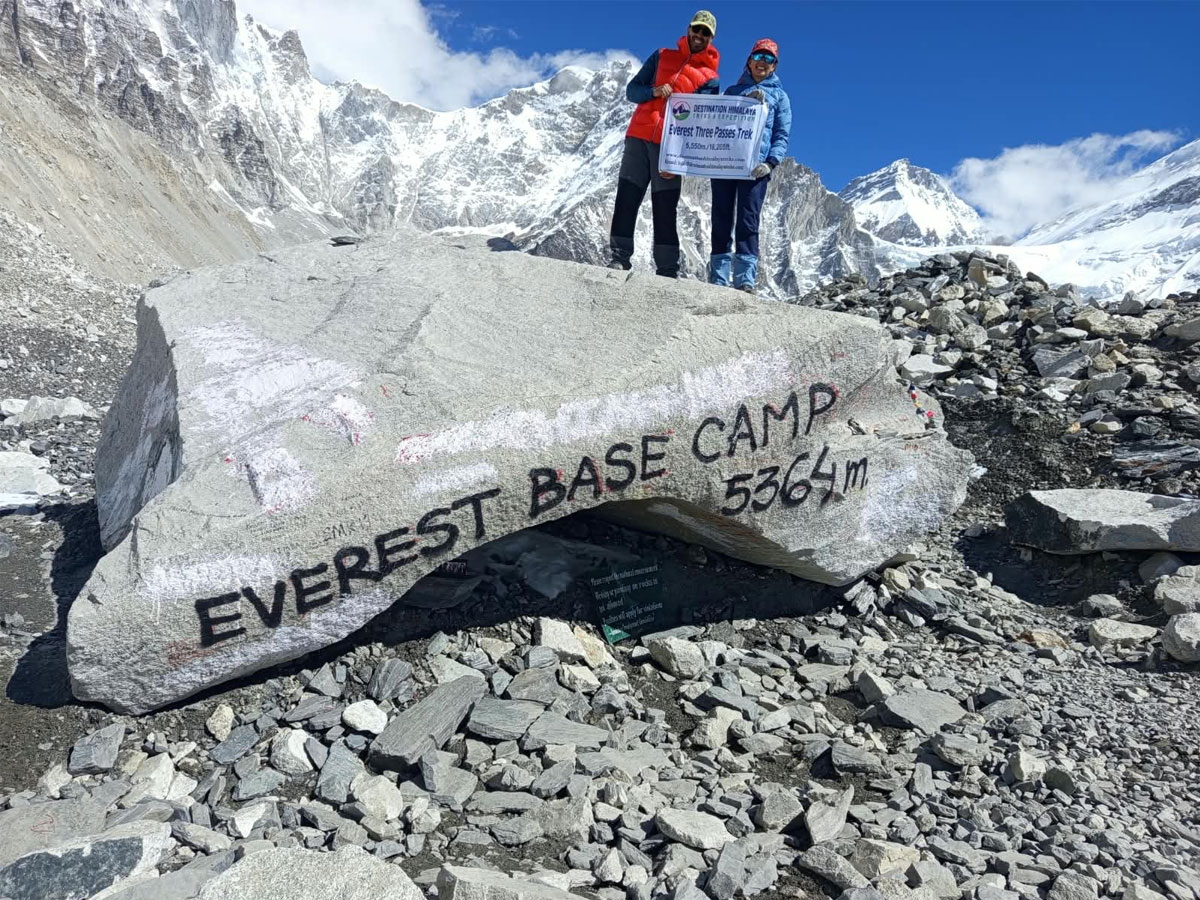
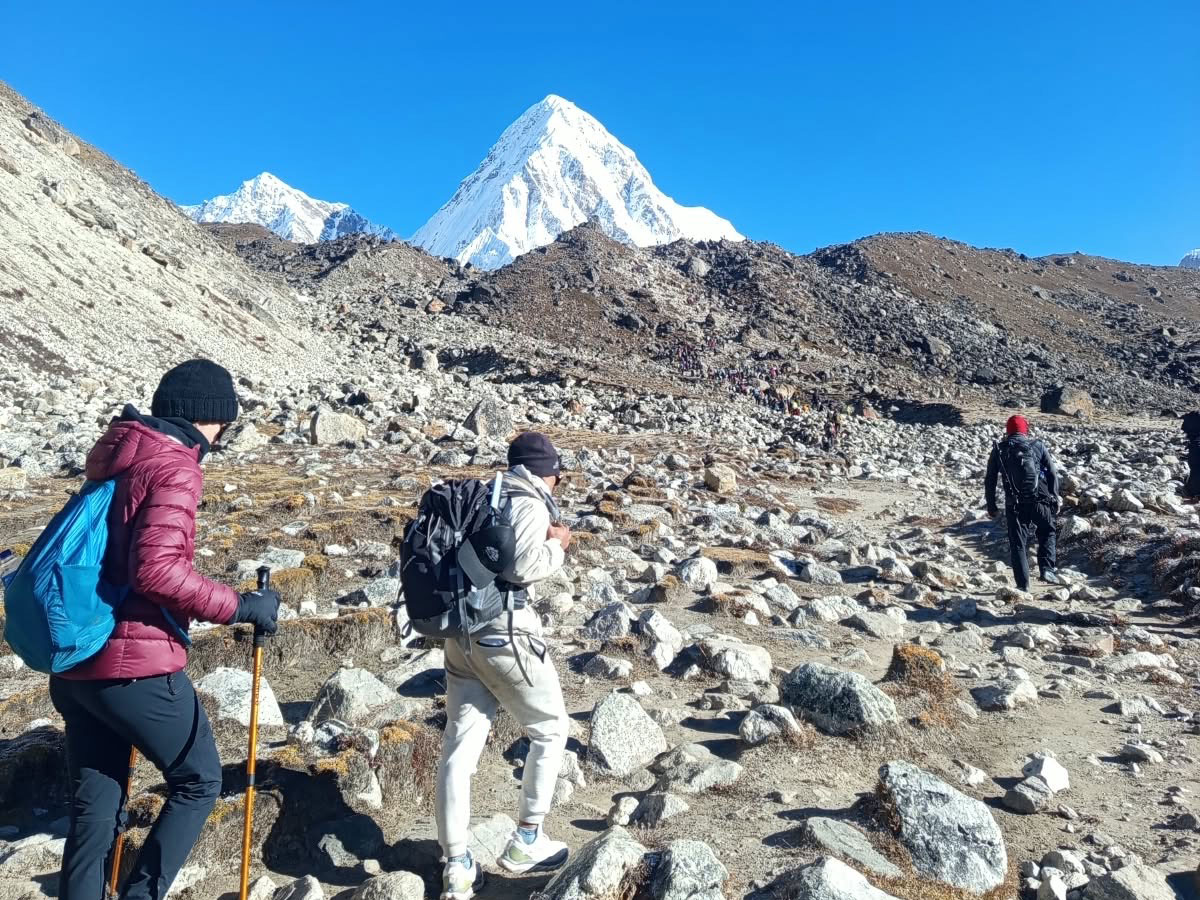
Trekkers standing at the EBC
Keeping everything aside, if you are partnering with the registered local companies under the Government of Nepal, based in Kathmandu - Thamel, then there are several cons, like the emergency medical assistance being provided immediately and even en route, as they have a close connection with local medical health care posts and also big fat rescue companies of the mountains. Also, the local operators can arrange many modes of transportation via jeep or car, in one go, without any negotiation for an alternative route; for instance, Everest Base Camp via Jiri goes through an ancient, classic route perfect for those who want to avoid the Lukla flight and go on the cheaper side as well.
Amongst all, the local registered companies offer a variety of packages, based on trip duration, budget trips, luxury, short ones, to extended combined versions, ensuring they cater to your preferences and choices. Let's take an instance; if you are opting for the standard 14-day EBC Trek, then it starts from $ 1100 to $ 1600 and can also be tailored to $ 999 per head, as per the requirement of the individuals. We at Destination Himalaya Treks and Expedition have categorized the Everest region packages on three 3 particular bases: Budget, Standard, and Luxury, where the budgeted trip costs approx. $ 950 to $ 1200 per head, whereas the standard itinerary cost starts from USD 1200 and goes up to USD 1500 per person; meanwhile, the luxury ones range from USD 3500 to USD 5000 per person.
However, the pricing highly varies from agency to agency, considering safety, services, and the highly rated popular agency, nonetheless, if you are willing to opt for this trek, then, booking with the local operators is always the best thing to look after considering safety, negotiable price and supports the local economies at the same time.
International Operators
There is no doubt that when it comes to expensive items or higher-cost things, we always perceive that it's better in service and the provider is fully committed to offering the premium logistics required. However, that's not the case when it comes to such a Himalayan mountain adventure, as the tea houses and other amenities remain the same, but you are just paying an overpriced amount for it, thinking that you will get the best service from them. Besides, international operators always follow the "Hidden Cost Strategy", for instance, they show you an affordable pricing rate for the Everest Base Camp Trek packages just like local ones, while booking online, meanwhile, costs you extra at the trailhead, stating that it's just a personal expense that you gotta bear yourself.
On top of that, international operators highly rely on the local operators and make the local companies arrange all the requirements like lodgings, meals, permits, guides, fares, and everything, considering the fact that domestic agencies become beneficial to them as a mediator. This way, you are paying higher, and they are cashing out thousands of bucks from you somewhere, approximately $ 5000 to $ 6500, which doesn't make sense when you are getting the same facilities as local operators, even lower and less manageable, as the international operators also sell the trips worldwide, not only in Nepal; hence, the safety and services are not highly looked after step by step.
However, if you are still thinking about considering international operators, then make sure to take a look at the brief overview of the included amoreluded sections, as many international operators don't arrange permits, guides, flight fares, and so on.
Online Travel Agencies
While searching at WIKIPEDIA, you might see other online agencies as well, with a price ranging from only a few hundred dollars to a maximum cost of $ 1000, even for classic itineraries, which might raise questions about why there is such a significant gap in the costing, not even hundreds of dollars. Please take note that, while such a low cost for EBC Trek pops out, with no ratings at all, they are just stating the pricing to increase CTA (Click rate) to their site, and when you email them asking about the trip details, then they will show you all theon Wikipedias, like permits, accommodations, pricesto Lukla, or you can say main considerations that highly influence the overall costing of the trip; then, what's the actual point of stating it is a budget-friendly trek in the 1st place.
Not only that, but some online travel agencies don't even state the fact about the cost inclusion and exclusion part, and simply cost you more than the actual trip cost, while you are on the trailhead, creating a mentally stressful adventure. Hence, before you make an advance payment, make sure to confirm what is included, excluded, and what other services are provided to you, so you become fully aware of the hidden charges.
How to Choose the Best Operator for your trek to EBC?
Before you venture out on the EBC Trek, you should consider several things, not only just take a brief look at the Everest Base Camp Trek Price, a mentioned, but there are ample details that you must get a proper overview of, step by step.
After you go through their website, make sure to check their legal travel documents, their registration license, and the year, and verifimore, if it is listed in NMA (Nepal Mountaineering Association) and TAAN (Trekkers Agency Association of Nepal) or not, they give a legal right to operate the treks, tours, or any expedition including climbings in Nepal.
Makre to check the clients' reviews, especially on " TripAdvisor", whether the reviews are positive or not, and take a look at whether there are any kind of bad experiences from the clients or not.
Take a brief overview of whether the organizers have ample professional experience or not; just go through their About Us or team section, and check the teams, whether they are professional or not.
Choose an operator, check whether they provide transparent pricing or not, and check the cost details - include/excludeMake sureion, whether there are such hidden charges or not.
Check whether the organizers follow the safety guidelines or not, and carry ample knowledge about emergency protocols, including the service of providing quick helicopter evacuation.
We at Destination Himalaya Treks provide ample Everest region packages that are carefully crafted with competitive, budget-friendly costs that provide the best services with top-notch professionalism, having a 99% success rate, where we believe that comfort, service, and safety shall always stay our first and foremost priority.
Transportation Costs for the Everest Base Camp Trek in 2027
Transportation is one of the major factors affecting your Everest Base Camp Trek budget. The cost depends on whether you fly to Lukla, take a helicopter, or travel partly by road. Most standard packages include transport, but always confirm this before booking, as some budget packages exclude it.
Helicopter Ride Cost to Lukla
A helicopter is the fastest but most expensive way to reach or leave the Everest region. A shared Everest Base Camp helicopter tour from Kathmandu costs around USD 1,000–1,200 per person, while a private charter costs about USD 3,500–5,000. A private helicopter from Gorak Shep to Kathmandu can cost USD 5,000 or more.
Luxury treks such as the EBC Trek with Helicopter Return include a one-way helicopter ride from Gorak Shep to Kathmandu, allowing you to trek to Base Camp and avoid the long return walk to Lukla. The 11-day package costs USD 2,399–2,799 for 2027, depending on group size.
Kathmandu to Lukla Flight
The most common way to start the EBC Trek is a short flight from Kathmandu to Lukla. A one-way ticket costs around USD 180–220, or USD 360–440 for a round trip. Flights can be more expensive during the busy spring and autumn seasons, so book early. Weather delays and cancellations are common, so keep extra buffer days in your itinerary.
Driving to the Everest Region by Jeep or Bus
You cannot drive directly to Everest Base Camp, but you can take a jeep or bus from Kathmandu to Salleri or Manthali. This costs about USD 15–30 each way, making it a cheaper option than flying. From Salleri, you will need to trek for 3–4 extra days to join the main EBC trail near Namche Bazaar. A private jeep costs around USD 150 one way, while local buses are cheaper but slower. This option can save roughly USD 350–400 in transport costs, though road travel takes longer and may be affected by landslides during the rainy season.
Transport Option
Estimated Cost
Best For
Shared helicopter tour
USD 1,000–1,200 per person
Time-saving and scenic travel
Private helicopter charter
USD 3,500–5,000
Luxury or private groups
Helicopter from Gorak Shep to Kathmandu
USD 5,000+
Luxury EBC itineraries
Kathmandu–Lukla flight
USD 180–220 one way
Standard EBC treks
Jeep or bus to Salleri/Manthali
USD 15–30 one way
Budget-conscious trekkers
Private jeep
Around USD 150 one way
Small groups seeking flexibility
The final transportation cost depends on your chosen route, service level, group size, and whether the transport is included in your package. The prices above are standard 2027 estimates; please check the individual trek page for the latest pricing, detailed inclusions, and any seasonal changes.
Factors that affect the Mount Everest Base Camp Trek Cost: Detailed Breakdown
The overall cost of the Mt. Everest Base Camp Trek varies depending on several aspects, even though the Everest Base Camp Price starts from USD 1000 to USD 5500, depending on the packages. There are several other factors that highly influence the total cost of the trek. Beforehand, you must make sure that you estimate the budget accordingly, plan the trip as per the cost, and carry cash at the same time, as there is limited access to internet payment systems, and ATM services at the same time. If you are traveling with a reputable company, many things are included in the packages; however, some things at different areas, where your cost and budget get divided during the trek:
International Flight Cost
The cost of your International flight to and from Nepal is not part of most Everest Base Camp (EBC) Trek Packages. You have to arrange your flight to Tribhuvan International Airport in Kathmandu. Prices range significantly based on your country the airline, and the season. Early reservations are good for better deals. The international flight cost is a significant percentage of the total trip budget, which is usually between a few hundred to several hundred USD. Trek packages normally begin on your arrival in Kathmandu, so book your flights separately.
Nepal Entry Visa
Foreign travelers are required to pay for a visa to get into Nepal, and this is not included in the EBC Trek Packages. You will be allowed to obtain a tourist visa upon arrival at the Kathmandu airport or the Nepalese embassy before you arrive there. Visa charges are based on the period of intended stay and usually cost 15 days USD 30, 30 days USD 50, and 90 days USD 125. The procedure to get the visa is relatively easy, but it should be arranged separately from your booking of the trek.
Duration
Visa Fee
15 days
$ 30
30 days
$ 50
90 days
$ 125
Visa fees are not included in the EBC Trek cost; hence, you have to bear them yourself. Also, at the same time, please take note that Indian Citizens do not require any visa fee, and that remains the same for other SAARC citizens as well, whereas, for foreign nationals, it is compulsory to obtain a Nepal Entry Visa.
Permits Cost
You must obtain specific important permits before starting your Everest Base Camp (EBC) Trek. The permit fees contribute to community support as well as conservation activities.
Khumbu Pasang Lhamu Rural Municipality Permit: NPR 2,000 (approx. USD 20) for all trekkers. (Only available in Lukla).
Sagarmatha National Park Entry Permit: NPR 2,860 (approx.USD 30) for foreigners and NPR 1,500 (about USD 13) for SAARC nationals
Local Taxes And Entry Fees
When you trek to Everest region, you have to pay various official taxes and entrance fees to the government of Nepal and the local authorities. These are the costs you should include in your budget because you cannot trek without paying these costs.
In certain villages on the way, you might encounter some local fees that are payable in the form of USD 1-2 on crossing particular bridges or entering special areas. These are used in the maintenance of facilities in the local area. Foreign trekkers also have to pay the Nepal tourism service tax. This is normally included in your hotel bills while in Kathmandu and teahouses while trekking, which will cost you an additional 13%.
All of these taxes and fees come up to around USD 60 to 70 per person, not including your visa and permit costs. These are mainly included in packages by most trekking agencies.
Upon your arrival in Nepal, you have to pay for a visa to visit the country. In the airport, you might also be required to pay a small tourism service fee of approximately USD 10. The visa fees will be based on the length of time that you will stay. The amount charged for a 15-day tourist visa is USD 30, USD 50 for 30 days, and for 90 days it will cost USD 125.
( Note: The good news is that if you team up with Destination Himalaya Treks and Expedition, we will arrange all your permits as well as local taxes in your Everest Base Camp Package.)
EBC Trek Accommodations Cost
Another major factor that highly influences the cost of the Everest Base Camp Trek is the lodge options and availability, as there are several kinds of lodging options along the trailhead, from luxury to standard and budget ones. All along the route, there are basic to standard teahouses and lodges for accommodation. The rate of prices depends on location and facilities. In lower altitudes, such as Namche Bazaar, rooms are priced at the price of about $ 10 to $ 30 per night. At higher altitudes, in Dingboche, Lobuche, and Gorakshep, among other places, rooms range from USD 5 to 60, according to amenities.
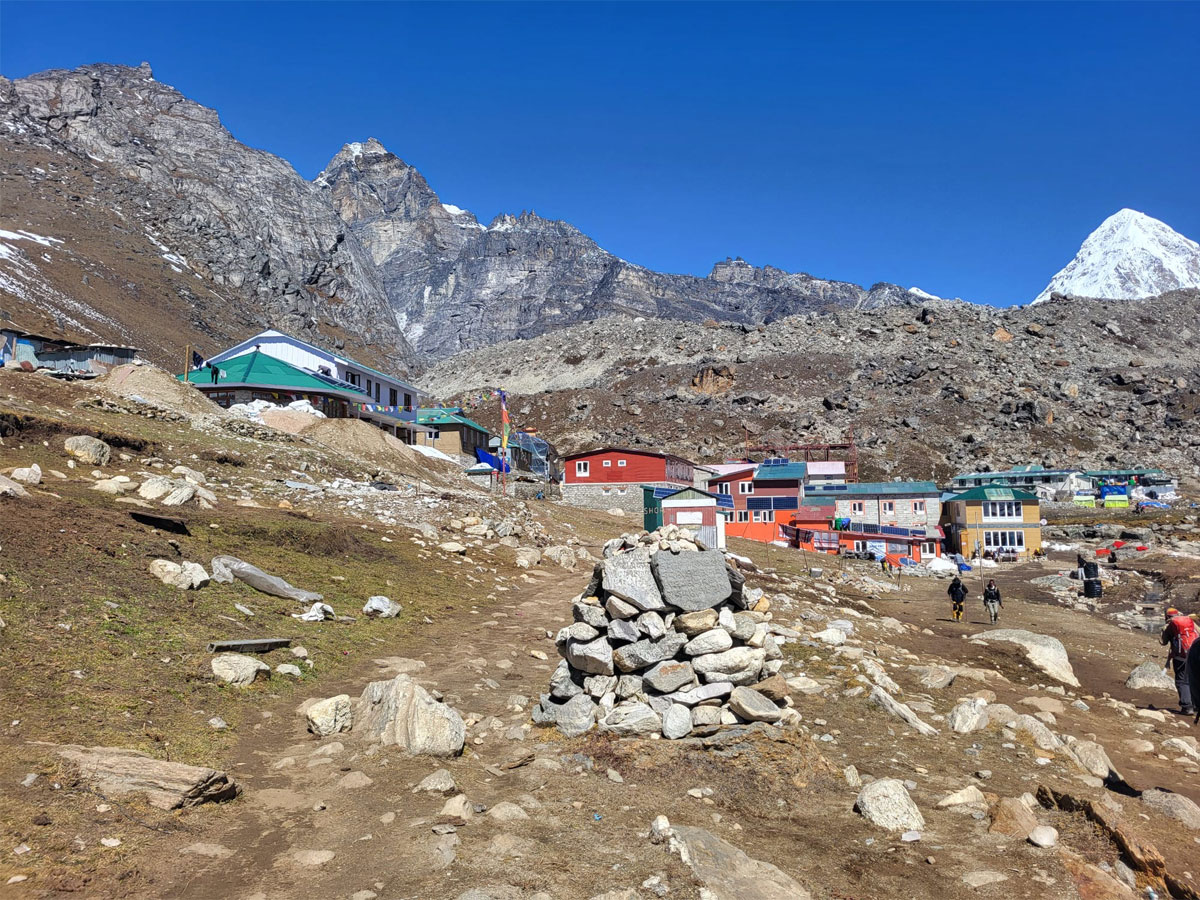
Accommodations along the route to EBC
Basic rooms often come with a bed, blanket, and shared or attached bathrooms. Some of the lodges provide hot showers at an extra charge. There is no heating in most rooms, except common dining rooms where a yak dung stove brings the heat in common dining rooms. Extra blankets cost USD 1-3 to rent. Phones or camera charging go for USD 2 to 5, depending on how high you are. Luxury lodges are also available that cost between USD 150 and USD 400 per night with private bathrooms, heating, and better services.
Meals and Beverages Cost
The higher you go up the route, the higher the prices of food are because all food has to be transported either by porters or yaks. Meals in lower villages such as Lukla and Phakding go for about USD 3 to 6 per person. The same meals will cost you USD 7 to 12 when you get to even higher locations such as Lobuche and Gorak Shep. Yes!
The staple that is most eaten by trekkers is dal bhat for USD 3 to 7, but the good thing is it comes with unlimited refills! The fried noodles, fried rice, momos (dumplings), soup, and simple pasta are other popular foods. Most teahouses have similar menus. Breakfast options comprise porridge, eggs, toast, pancakes, and Tibetan bread, which cost USD 3 to 7.
A cup of hot drinks such as tea and coffee costs USD 1 to 3, with the price increasing as you go up. The cost of bottled water in low regions is USD 1, and it can rise to USD 3 to 4 at Everest Base Camp. A snack such as a chocolate bar may cost USD 3 to 6 in high altitu s, which is triple its normal price!
Option To Upgrade Accommodation
If these basic teahouses do not appeal to you, some of the villages have enhanced accommodation facilities that may enable you to have a more pleasant journey to Everest. These better lodges go for USD 40 to 100 per night (far more than normal teahouses), but additional comforts are plentiful. The pricing may even reach over $ 100 per room, if it's peak season, especially when you are hiking independently, the cost for the EBC Trek, due to just accommodation, might cross thousands of dollars.
Yeti Mountain Home chain and Everest Summit Lodges provide the most luxurious accommodations, including Lukla, Phakding, Namche Bazaar, and Thame. These upgraded lodges will have proper beds with heavy mattresses, hot showers in private bathrooms, electric blankets, and heated rooms. Their dining rooms provide better food with an increase in Western options and even some fresh vegetables and fruits.
The best lodges will also provide extras such as free tea and coffee/wifi, towels, and sometimes hot water bottles for your bed at night. Others have solar-powered charging points for all your gadgets at no additional charge. Such better places can only be found in lower villages (less than 4000 meters). When you are at higher altitudes, such as in Dingboche, Lobuche, and Gorak Shep, everyone stays in simple teahouses because there is no luxury accommodation up there.
Cost of Hiring a Guide
An experienced guide for the Everest Base Camp Trip normally receives between USD 30 and 50 a day. Such local guides, knowing the trails, the local environment, and safety considerations beforehand, add to the security and fun of your trek. They assist in navigation and make arrangements for permits, and the staff is there to support you when you encounter any difficulties, especially at high altitudes. If you are going to go for a standard 12- 14 day trek, then be prepared to spend about USD 360 to 700 for an excellent guide. Their skills are invaluable, particularly for beginners or those who are not familiar with the area. If you are opting for a package, then the guide is included in your overall total cost that you pay for the trip.
Cost of Hiring a Porter
The daily rate of a porter is usually between USD 20 and USD 30. Porters will come along carrying your heavy bags (typically 20–25 kg), which not only makes moving easier but also less tiring. If it is a 12-day trek, porter fees are approximately USD 240 to 360. Porters and guides are traditionally tipped at the end of the trek when they have helped to do all the heavy lifting for the trekking clients, with the appreciation being in the form of money. Standard tips are 10 to 15 percent of the bill or $5 to $10 a day for porters and $10 to $15 a day for guides. Good tipping encourages them to provide excellent services and improve their lives.
Gears and Equipment Cost: Renting Vs Purchasing
A proper gear is crucial when it comes to planning and prepping for the expedition, and significantly contributes to the overall cost of the Everest Trek at the same time. The total cost of the gears and essentials can cost somewhere between $ 100 $ 150, if only considering the basic items. Meanwhile, if sleeping bags and crampons are included, then it can cost like $ 200 to $ 300, depending on the quality of the gear. If you are not hiking in winter cold seasons, then these things can be excluded; however depends on your preference. At proper times, you might not require technical gear, just buy basic items, like T-shirts, comfortable shorts and pants, warm jackets, and windproof jackets, and most importantly, a hiking backpack of 25 L to 40 L.
Whereas, for renting gears, the cost is way less cheaper, 2 times, half of the buying gear cost, you can find ample of options, to rent gears at Thamel or Lukla - Namche Bazaar, that can be rent in the cost in between USD 20 to USD 40 for a week, excluding sleeping bags. Sleeping bags might cost USD 2 per day, if rented, which is understandable.
Personal Expenses: Extra Spending
While many hikers might perceive it the wrong way, or slightly be mistaken or confused whether the personal spendings are included in the package or not, then, no! You have to bear the personal expenses on your own, as the trip cost included in the packages doesn't include personal spending. Therefore, the cost of the Mount Everest Base Camp Trek is highly affected by other extra money that you might require to spend on the trailhead. Here are some of the personal expenses to expect on the route.
Tips For Guides And Porters
Tipping guides and porters is traditional, but does not take into account the Everest Base Camp Trek price included in the packages. Guides charge approximately USD 10 -15 a day and porters USD 5 -10 a day according to service level and length of trek. For a 14-day standard package, the tips for guides can range between USD 120 and 180, and for a porter between USD 60 to 120. Tipping is paying them for their efforts and a reward for good service. It is advisable to carry small amounts of cash to pay as tips when the trek ends.
Internet Services
While the internet might sound like it must be included in the package, please take note that such basic things like internet or WIFI services become a luxury in the mountain areas, where even basic items are like a fortune. While being in Namche, you might get wifi accessibility for free; however, after taking an ascent from Namche- 3820 meters, the wifi charges depend on an hourly basis, costing somewhere between $ 2 $ 5 per day in total. Also, please take note that it is only available in the dining area.
Gadgets Charging
Another major factor tends to be the charging the gadgets, as the electric sockets are not available along the route, you must go to the dining area just to recharge the gadgets, and wait in line. It might cost you from $ 2 to $ 5, depending on the hourly rate.
Travel Insurance
Travel insurance is very important, though not included, in packages for the Everest Base Camp Tour. It should include high-altitude trekking, emergency evacuation, medical treatment, and trip cancellations. Insurance prices are dependent on age, coverage, and trekking period, ranging from approximately USD 80 to USD 300. It will be defined as good travel insurance for any unforeseen accident, such as altitude sickness, injury, or delayed flights. It is highly recommended!
Hot Shower and Laundry Services
If you are opting for premium services, like a hot shower, then, ofcourse! It will cost you hundreds of dollars that might exceed your budget for the Everest Trek, as the hot shower prices are based on the no. of buckets used to shower, costing somewhere between $ 5 to $ 10 per bucket of hot water, it might even exceed USD 20, at the base camp, if you are sleeping in the camp. Whereas, for the laundry services, the pricing also depend highly on number of litres of water used with an extra charges for washing by hand as well based on kgs, which might cost you in between USD 5 to USD 10.
EBC Trek Cost by Package Type: Budget, Standard, and Luxury
As there are many routes and trailheads to reach the EBC and Kala Patthar, the cost varies depending on the package types, distance covered, route, and itineraries you are opting for. You can find a sample of packages within this territory from short to long expeditions to combined trips. Hence, here are some of the package variations of the Everest Trek, which highly influence the cost of the adventure for 2025, 2026, and 2027:
Classic Everest Base Camp Trek: 12 Days
The standard Everest Base Camp trek costs between USD 1,800 and 2,500 per person. This middle-range option offers you a nice balance of comfort and price. You will fly instead of using the long bus and jeep journey to Lukla. You will have your guide and normally a porter to carry your heavy bags for every two trekkers. The trek follows the normal 12-14 day route, giving time for your body to adapt to the high altitudes.
You’ll have nicer teahouses with private rooms, but shared bathrooms are common. Your package offers three meals a day, normally breakfast and dinner at your teahouse, and lunch during the trail. You may also receive a few hot showers added, and some low-altitude teahouses will have basic heating in the common areas. Your trekking agency organizes permits, transportation, and guide services. This traditional choice allows you to get a comfortable and safe experience while not paying too much.
Budget Everest Base Camp Trek: 12 days
Do you want to go on the Everest Region trek, but maybe just a little bit low on a budget? A budget plan for an Everest Trek is approximately USD 1,200 to 1,500 per person. This cheaper alternative comes at the price of making a few easy choices. You will be in basic teahouses with simple rooms and shared bathrooms. The majority of rooms are equipped with thin mattresses, pillows, and blankets, but you are still recommended to bring a sleeping bag for an extra degree of warmth. You will consume dal bhat (rice and lentils) and other local foods, which are not fancy, even though they are filling. You may team up with a bigger group to split guide costs, or you may trek without a guide.
In the Everest Budget trek, you carry your backpack or share a porter with another trekker. If you don’t fly, you are going to use local jeeps or buses to get to Lukla. This easy means of trekking enables you to view the amazing mountains without spending much money.
Everest Base Camp Luxury Trek: With Heli Return
Looking for a premium treatment that offers a lot of special comforts? It costs around USD 4,000 to 6,000 per person to go on a Luxury EBC trek, and sometimes it is even more expensive. Instead of walking the entire distance, you may ride a helicopter one way, saving you days of hiking. You will be accommodated in the best lodges, such as Yeti Mountain Home or Everest Summit Lodges, with better rooms, warm showers daily, heated rooms, and better food, vegetables, and some Western meals.
In a luxury trek, you enjoy the services of a personal guide as well as a porter. Some of the fancy packages even provide oxygen supplies that you can use in case the thin air affects you. Your package covers all the meals and snacks, hot drinks, and sometimes charges for the battery for the phone and camera. The luxury experience implies small groups or even private treks, only for you and your friends. Although much more expensive, Luxury treks take care to make the trek to Everest Base Camp (EBC) as comfortable as it can be while still providing an amazing mountain experience.
EBC Trek Cost for Short and Extended Routes
Some might want to extend their trek by adding other trekking routes into a single journey. While it provided more opportunities for exploration, at the same time added additional cost for the EBC Trek.
Everest Base Camp Trek via Gokyo Lake
Everest Base Camp Trek via Gokyo Lake is one of the most popular 15-day treks as it incorporates a little of the classic EBC trek with the Gokyo Lakes and the challenging climb of the Cho La pass. It is this trek that provides a special experience as it will follow a different path and not take the same roads, and provide the trekkers with less-crowded tracks and diversified landscapes. The trek circles six holy frozen lakes, Upper Gokyo Lake(the largest freshwater lake in the Himalayas), crosses Ngozumpa Glacier(the largest in the Himalayas), and from the summits of Gokyo Ri ( 5,357m).
Having more area covered, with additional views such as the Gokyo Lakes and Cho La Pass, is naturally higher in cost than the usual EBC trek. The price is anywhere from about 1200 to 1750 USD per person, depending on the time of the year, size of the group, and services. The additional cost is mainly contributed by the additional cost of the extra permits and the extra days for accommodation and food, the additional cost of the guide and porter for the extra days. This combo trip will suit you best if you need a better adventure with even better natural beauty and fewer crowds.
Everest Three Passes Trek
The Everest Three Passes Trek is a longer and more difficult one, as it usually takes 18-20 days. It crosses over three high mountain passes. Renjo La Pass, Cho La Pass, and Kongma La Pass. This trek is the traditional EBC route through high passes and presents trekkers with stunning but less congested trails.
Due to the extended time, its challenging nature, and additional logistics, the price of this trek is more than that of the regular EBC or even the Gokyo Lake route. Prices are usually between USD 1,400 and USD 1,800 and even higher. The extra cost covers extra permits, more days in accommodation and food, and bigger guide and porter costs. This trek is suitable for pro trekkers who seek a tough trek that will reward the trekkers with breathtaking views of mountains and few trekkers.
Everest Cho La Pass Gokyo Lake Trek
Everest Cho La Pass Gokyo Lake Trek refers to a combined trek that involves the beautiful Gokyo lakes and crossing over the Cho La Pass and the traditional Everest Base Camp. It is a trek that can take up to 16 to 18 days, and it is a combination of magnificent lakes, and glaciers, and there are some mountain passes.
As for the price, the cost for this trek ranges from USD 1,300 to 1,750, depending on the trekking season, the size of the group, and the kind of service. The price is higher compared to the classic EBC because the trek is quite longer on days, more permits are needed, and more support in the form of a guide and porters is also required. This trek is suitable for trekkers looking for the best of nature that the Everest region has to offer, which includes high passes and sacred lakes, but without going through the long trek to Three Passes.
Everest View Trek
Do you want to take a view of Everest without necessarily trekking to the Everest Base Camp? It is the Everest View Trek! It is a short and straightforward trek that can be completed in 5-7 days and is ideal for beginners and for travellers who have no time to waste. It provides a beautiful flight to Lukla, a tour of Namche Bazaar, and a walk to the viewpoints, such as Kala Patthar or Everest View Hotel, for majestic views of the peaks without a painful ascent to the base camp. It is normally less costly than the long ones and costs between USD 600 to USD 900, depending on the services and number of groups.
How do the Season and Timing vary on the Everest Trek cost?
The costs will vary greatly depending on what season you choose for the trek to EBC. To put it simply, spring (March to May) and autumn (September to November) are the most favorite seasons as the weather is favorable during these seasons. However, everything is more expensive during these busy periods. Flights to Lukla are pricier, teahouses ask for higher prices for rooms, and guides request to pay more money. In spring, you will be able to enjoy the beautiful bloom of flowers along the trail. Days become warmer as you trek and numerous climbing teams base at the Base Camp, which would be noisy and fun. During the fall, when the summer rains stop, the air is very clear and quite photogenic for picturesque mountains.
If you are trekking during off-seasons, such as winter (December to February) and monsoon (June to August), then you can save a huge amount of money. Winter is very cold, though it has the most spectacular views of the mountains. In monsoon, the number of people is reduced and prices come down by 20-30%. Despite all of this, however, rain can block mountain views, trails become muddy and slippery, and there is a greater possibility of flight delays. Remember, some of the teahouses also shut down during the periods.
EBC Trek Solo vs Group Trek Cost
Trekking on your own or in a group alters costs. When you get into a group of almost 8 people, most costs are shared for the Mount Everest Base Camp Hike. The guide fee, which can be USD 25 to 30 per day, is shared with each person. Porter's costs are also mutual (about $20 per day). There are many times that groups can score better deals on rooms at teahouses when the area is busy.
In a group, you also split the cost of transporting you to and from Lukla if you decide to take the land instead of the flight. Some trekking agencies even offer a discount for larger groups, which can save each person USD 100-200 on a two-week trek. Solo trekking means paying all these costs by yourself. You will have to hire your guide and porter or carry all the things by yourself. There are times when solo trekkers find it hard to get a room in popular villages during the busy seasons, especially if they arrive late in the day.
Independent Trek vs Trekking Agency: How the Pricing Varies?
Independent trekking is when you plan everything on your own. You can hire your guide and porter if necessary, book your flights, pay for your permits, and select teahouses along the way. This is an option that allows you to have control over your spending to the greatest extent. There are options for cheap places to eat and affordable rooms in which you can bargain for prices. Independent trekkers many a time spend less between $200 and $400 as compared to trekkers who depend on agencies.
However, planning everything requires much time and research. You must know which permits to purchase and where to purchase them. You also have to make your arrangements for Lukla flights, which can be troublesome during high seasons. The use of a trekking agency makes it all easier but more expensive. The agency will procure your permits, flights, guide, porters, and sometimes even secure meals and rooms for you. If you want a hassle-free trek, opt for a teaming with a local trekking agency.
Everest Trek Cost for Nepalese Citizens
The cost for the trek to Mount Everest Base Camp, for Nepalese, which means for the national citizens, is mostly on the cheaper side, because it excludes, the nepal visa fee, a decrease in the permit cost, and most importantly, for the transportation cost, as many Nepalese local prefer to go through bike ride to either Salleri and proceeds the further trek avoiding the Lukla flight. Hence, the EBC Trek cost for Nepalese is far cheaper, costing somewhere between NPR 70,000 to NPR 1,00,000, for a straight 14-day (2-week journey), if hiked with a guide; however, the pricing varies greatly on the route and itinerary of the expedition.
Everest Base Camp (EBC) Trek Cost for Indian Citizens
The Everest Base Camp cost for Indian citizens probably falls on the cheaper side, the affordable ones, because there will be minimization of the cost on several aspects like visa arrival fees, permit cost, and the international flight as well, as the India and Nepal border are connected and many Indians can avoid the int'l flight and visit Nepal just by train that highly cuts off the transportation fee at the same time. However, the cost also highly depends on how much money (personal expenses) is spent on personal expenses like meals, lodgings, gear, and others, which the trekking agency simply doesn't bear. Apart from the permits, guides, transportation, meals, lodgings, and other expenses that are included in the package, one must take care of personal spending to ensure you do not go over the estimated cost.
In total, the guided trekking agencies can charge for the EBC Trek to Indians from USD 1000 to USD 1400 (INR 80,000 to INR 1,20,000 per head), for the standard itinerary covering every essential, which takes the full accountability of logistics, required throughout the journey, excluding personal expenses.
Budgeting Tips to Save Money on the EBC Trek
While it might sound too much and costlier for the expedition, costing thousands of dollars, there are several ways to minimize the total cost of the Everest Base Camp (EBC) Trek, by spending less amount of money and hiking smartly like a pro, without burning thousands of bucks. Here are some of the tips that minimize the total expenses and let you hike with a free mind, without going overboard and overcharging yourself.
Pack Smartly and Intelligently
It is possible to save hundreds of dollars and manage the overall Everest Base Camp price by simply having the right gear from home. It is very expensive to purchase or hire equipment in Kathmandu and the costs are far higher when one wants quality items. Bring light and warm layers rather than a heavy jacket. Pack a sleeping bag that is not heavy and is good for cold climates (-15°C) to avoid paying $2-$5 a day to hire one. Pack your own water purification tablets or filter bottles to avoid spending $5-10 every day on bottled water. And trekking poles, headlamps, and extra batteries all come cheaper from home. Don’t forget medicines such as pain pills, pills against high-altitude sickness, which are three times more expensive in mountain settlements.
Grab Early Bird Discounts
If you organize your Mt Everest Base Camp Trek well in advance, it can save a lot of money. It is a good idea to book flights to Lukla early as one may save $30-50 per person since the prices hike near trekking season. Several trekking agencies provide early bird offers, a 10-15% discount for booking your trek at least 6-8 months in advance! Accommodations in Kathmandu also have better rates when one books early ahead of time and sometimes free airport pickup. The best budget teahouses become full during peak seasons (April-May and October-November) and late bookers are left with quite pricy ones. Travel insurance is also much less expensive if you have time to acquire it long before your trip. By booking early, you not only get more time to keep an eye out for the best flight deals to Nepal but also stand to save hundreds on international airfare.
Trek with Regulated Local Agency
Selecting a trekking agency that meets the regulations might seem costly initially, but it will save money in the long run. Good agencies are well-established with fixed prices that will not present you with surprises while trekking. They register with the Trekking Agencies Association of Nepal (TAAN) and act on the guidelines of fair salary for guides and porters. Regulated agencies will also provide proper insurance for staff, so you won’t have unexpected bills in case your porter gets sick or hurt. Their guides are aware of where they can get good prices at the teahouses and wouldn’t be tempted to take you to expensive places for commissions. These agencies have contacts with lodge owners and sometimes get rooms even when everything appears full, rescuing you from expensive helicopter trips down if you fail to find accommodation during the busy periods.
Why Is Destination Himalaya Treks and Expedition the Right Choice for You?
We at Destination Himalaya Treks have been on this adventure journey as a leading tour operator of Nepal for more than 3 decades till now, touching the milestone of hundreds of hikers on the trailhead, we are professionals, and carry highly experienced teams, from the region itself and other parts of region of Nepal, blending every corner in once; from highly considering your budgets to crafting the packages, itineraries, as per your vision to assisting you safely throughout the journey, we are focused on making or enhancing your expedition one level up. All of our departure dates are fixed and have a 100% success rate to date, for every high-elevation expedition.
As we have observed, prices are very different from USD 1,200 for budget treks to USD 6,000 for the luxury adventures, there are high fluctuation rates and hidden charges, which is why we offer fixed rates, not more or lesser than that costing from USD 700 to USD 1500 per head for the Everest Base Camp Trek, that include transportation options, permits, accommodation, experienced guides and porters, foods, and others with several other additional benefits at the same time, whether you do the trek alone or in a group.
We at Destination Himalaya Treks and Expedition, offer a wide variety of packaes that starts from being budget friendly and goes to even luxury trips with side expedition extensions, covering every essential from beginning till the end, highly taking care of your safety and comfort on the other hand, with the assistance of pro expert teams. If you have any further queries, then feel free to contact us via WhatsApp at +977 9851016814 or just mail us at [email protected].
FAQS
How much does the Everest Base Camp Trek cost on average?
The cost of EBC Trek varies depending on several factors, and first and foremost, the thing to consider is what kind of packages you are opting for, as there are 3 categories of packages: from budget to standard ones to luxury. However, the average cost for a standard package starts from $ 700 to $ 1200, which simply covers everything required for the trip in general, excluding personal expenses.
Can I trek EBC on a budget?
YES! If the standard itinerary or package of the Everest Trek doesn't fit your estimated budget, then you can opt for the Everest Base Camp Budget Trek, which is a 12-day trek and costs less than USD 1000 per person.
Are there any hidden charges included in the Everest Base Camp Trekking cost?
Excluding the fact that you might require personal spending on your own, however, for the general requirements, there are no such hidden charges, just to make sure to check the cost includes and excludes section before you book the trip.
What are the cost differences between peak and off-season for the Everest Trek?
The costing does vary on a seasonal basis, as at the peak season (Spring and Autumn), the price tends to be slightly higher due to an increase of air fare, accommodations, and other charges at the trailhead. Meanwhile, the cost won’t be much different, just a few dollars down in the off-season as the permit cost and other costs remain the same.
Which one is more expensive, Annapurna Base Camp or EBC Trek?
As compared to EBC, Annapurna Base Camp Trek tends to be on the less costly side, and also demands a less number of days, with top of being easily accessible at the same time. Someone who is a newbie, and having doubts, whether they could complete the Everest Trek or not definitely looks forward for the Annapurna Trek.