Accommodation and Duration
The Round Dhaulagiri Trek is a camping trek. Mostly, the days are spent in the tented camps. For the accommodation, the best quality tents for the kitchen, dining, sleeping, & toilets, a gas stove for cooking meals & necessary cooking utensils, towels, hand wash soaps, toilet papers, and dining chairs & tables for eating are provided. The facilities are basic, but the assurance of providing quality equipment makes the trip experience memorable. The trek duration is 16 days. Besides, in tented camps, rest days are spent in the best hotels with maximum facilities.
Meals
During the camping treks, three-course full meals are provided, and only breakfast is provided during your stay in the hotels. The experienced chef prepares healthy and hygienic food with high nutritional value to keep us energized throughout the trek. The staple diet of Nepali dal-bhat, vegetable curry, soups, eggs, bread, jam, porridge, herbal tea, ginger tea, coffee, noodles, seasonal vegetables, salads, etc., is served. You can enjoy continental cuisine during your stay in hotels and near city areas.
Drinking water
Drinking water during the trek is natural spring water directly from the mountains. During the camping treks, boiled water is provided. Carry a handy water bottle and bring some water purification solutions or a SteriPEN to purify the water.
Communication
Round Dhaulagiri Trek is a complete camping trek. Thus, there is little or no chance of communication facilities. Communication, like phone or Wi-Fi signals, is available in the cities, but there is no internet access during the trek. The remoteness and no communication for longer days make this trek experience unique for trekkers. Spend some quality time far from the busy world, and connect in the lap of the mountains and in the vicinity of nature. Bring solar power banks for charging the camera and phone.
Starting and Ending points
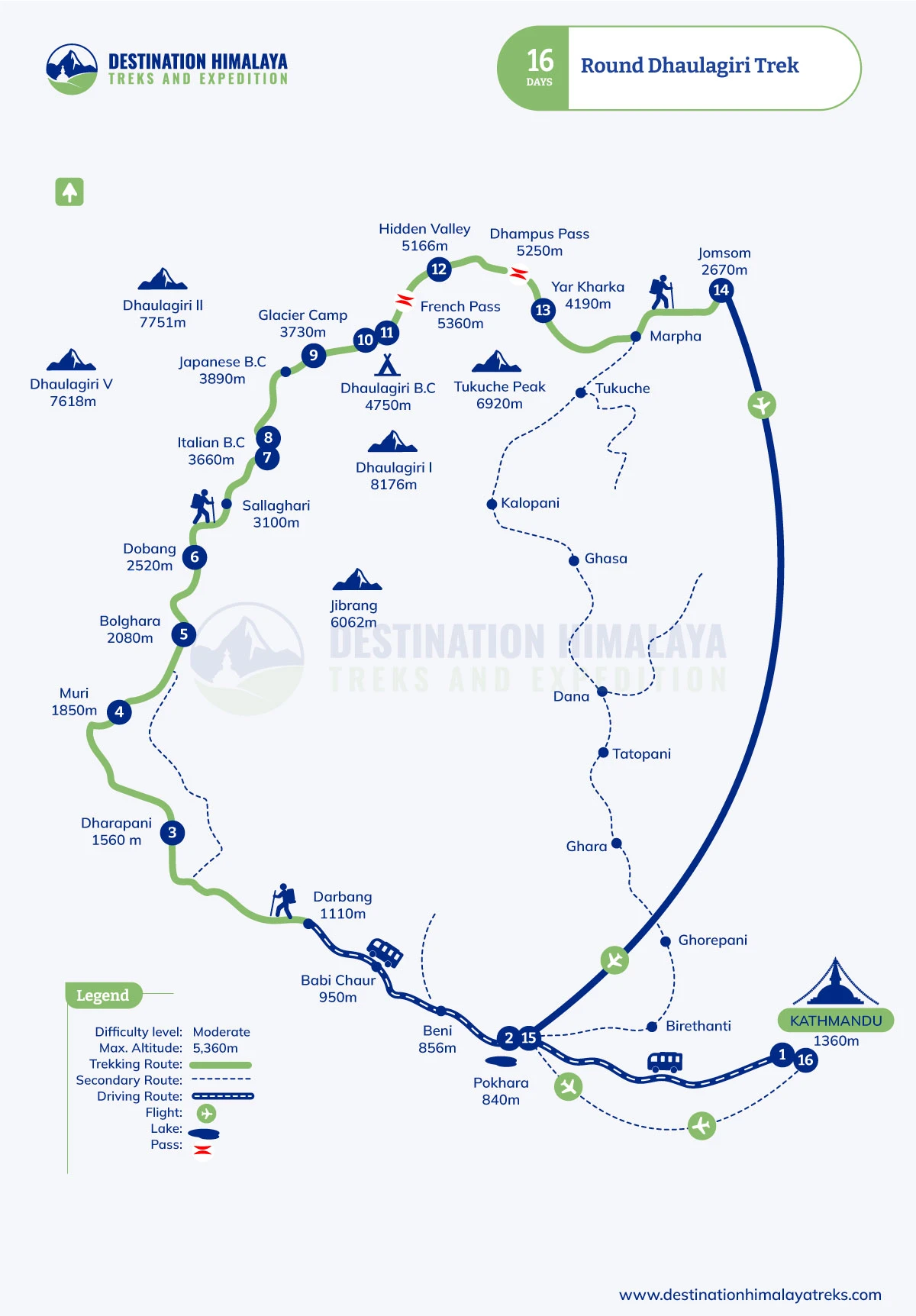
Darbang Village is the starting point of the trek after a short drive from Beni. The ending part of the trek is Jomsom. From Jomsom, return to Kathmandu or Pokhara by flight.
Permits Required
All treks in the mountains of Nepal require permits. ACAP and TIMS permits are required for the Round Dhaulagiri Trek.
- ACAP permit cost: NPR 3000 (Foreigners), NPR 1000 (SAARC)
- TIMS permit cost: NPR 2000 (Foreigners), NPR 600 (SAARC)
Travel Insurance
Travel Insurance is a safeguarding tool for all travelers/trekkers. The insurance must cover all medical emergencies, helicopter rescue, air ambulance, flight cancellations, loss/theft of luggage, personal expenses, repatriation, evacuations, and altitude sickness. Get travel insurance from a trusted insurance company for easy future claims. It helps trekkers in unforeseen emergencies. Bring yourself a copy of the insurance and provide us with a copy for quick arrangements in case of emergencies.
Safety and our guides
We assure you 100% when it comes to safety. Our clients’ safety is our main concern. Our guides are certified and well-trained with years of expertise in this field. They are technically competent and have excelled in safety performance. They always carry essential safety equipment, gear, and first-aid kits. For the safety of our trekkers, the itinerary is properly scheduled, and acclimatisation rest days are properly set up to adjust to the high altitude and prevent altitude sickness. If any queries concerning safety, feel free to share them with our guides. We are always there for your service.
Best time to do the Round Dhaulagiri Trek
The summer and autumn seasons are the best for the Round Dhaulagiri Trek. Since most of the days are spent in a tent camp, Sep-mid Nov and Mar-May months are suitable for trekking. The Round Dhaulagiri Trek is challenging and requires good physical fitness and appropriate months to accomplish the trek. Winter and Monsoon seasons are off-season, and only a few trekkers dare to trek during these months. These seasons are not favorable as the climatic conditions change drastically and are full of risks. We recommend trekking only during the season to experience great weather, stunning views, blossoming flora, and clear blue skies.
Round Dhaulagiri Trek Difficulty
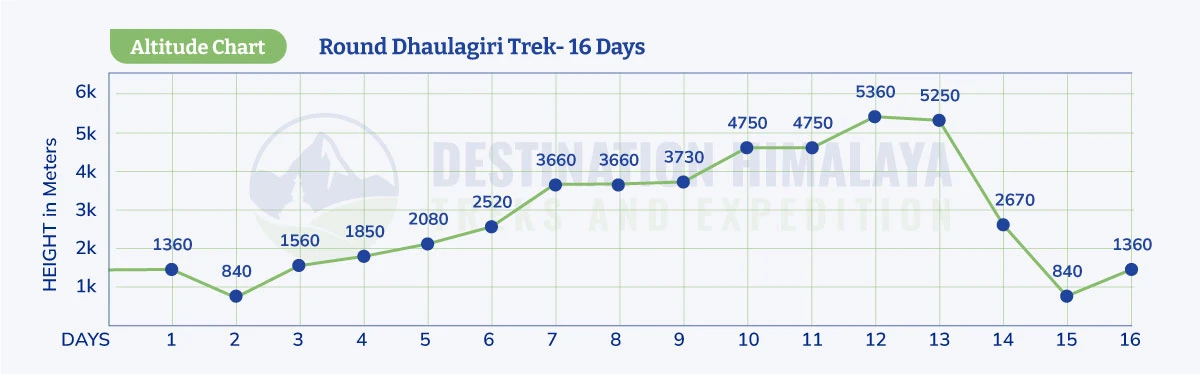
Round Dhaulagiri Trek has several challenges of high altitude, steep ascent and descent, rough terrain, rocky trails, and frequent climatic changes, making it tough for trekkers. During this trek, the highest pass to traverse is French Pass at an elevation of 5360m. The trek is difficult due to the high passes at high altitudes, and it is a fully camping trek. Also, the trekking route is remote and the least crowded compared to the Everest and Annapurna treks. Thus, this region has very limited facilities. It is better to be prepared mentally and trained physically for months before starting the Round Dhaulagiri Trek. Consult with a doctor and be in good health. Start training yourself with physical exercises like swimming, cycling, running, day hiking, etc., and be physically fit and mentally sound. Eat a healthy diet besides physical exercise.
Acclimatisation and Altitude Sickness on the Round Dhaulagiri Trek
The Round Dhaulagiri Trek is a challenging trek. Thus, there is a high chance of getting altitude sickness as trekkers must pass several high passes above 3000m. Italian Base Camp (3660m) and Dhaulagiri Base Camp (4750m) are scheduled as rest/acclimatization days. Altitude sickness is normal above 3000m, and proper precautions must be taken.
Symptoms of Altitude Sickness
Primary: Headache, nausea, gasping, appetite & sleep loss, dizziness, fatigue, vomiting
Extreme: primary symptoms and hallucinations & unconsciousness
Preventive Guidelines
- Immediately inform the guide
- Warm up and body stretch before the trekking journey
- Drink water and hydrate yourself at regular intervals
- Frequent urination throughout the journey
- Ascend slowly and gradually
- Take plenty of rest and sleep
- Avoid salty foods, alcohol, and smoking
- Descend immediately when it’s difficult/uneasy
- Take medicine, consulting a guide
Luggage limitation for Porter
The luggage limitation per person is a maximum of 15 kg. One porter carries the luggage of two trekkers. The luggage limitation is set considering the health of the porters.
Packing Lists
- Food: Energy bars, light snacks (cookies, Snickers, etc.), Energy drink mix
- Essential Documents: Passport, Travel Permits
- Shoes: Pair of hiking boots, Rubber sandals, Camp shoes
- Clothes: Windcheater jacket, Thermals, Insulating Down Jacket, Fleece, long-sleeve shirts, Gloves, Towels, Inner garments, Trekking pants, Trousers, Shorts, Socks, Raincoat, Balaclava, Bandana, Gaiters
- Accessories: Sunglasses, Hats/Caps, Sunscreen, Lip Balm, Water bottles, Pocket Knife, Solar chargers, Batteries, Torch, Umbrella, Sewing kit, Water Purifying solution/Steripen
- Equipment & Gear: Warm Sleeping bags, Map, Trekking poles, Duffel bag, Carabiners, Crampons, Tapes/Slings, Ice Screws, ice axe, Harness, Rope, Spikes
- Medicine: First-Aid Kit, Altitude sickness medicines, Insect repellents
- Rainy season: Waterproof clothes, boots, Raincoat, Anti-leech socks
- Winter Season: Woollen clothing items (light)
- Personal Hygiene Kit: Hand sanitiser, wet wipes, napkins, sachet shampoo, moisturiser, hand wash/soaps, toothbrush, toothpaste, comb/brush, razor, and for ladies (tampons/sanitary pads/menstrual cups)
- It is best to bring the clothes and essential equipment from your home according to the provided checklist. Also, you can buy or rent equipment and clothes in Kathmandu. Don’t forget to carry 2- 4 extra reusable bags to separate used/dirty and clean clothes.