14 days annapurna circuit
annapurna circuit tea house
14 days annapurna circuit trek

Annapurna Circuit Trek - 14 Days

295 reviews in TripAdvisor
27 reviews in Google Reviews
Recommended by 99% of travelers
Duration14 Days
Trip GradeModerate
Maximum Altitude5416m (17796 ft)
ActivitiesTrekking
Group SizeAny
StartsKathmandu
EndsKathmandu
Best TimeMarch - May & Sep - Nov

A two-week trek into the classic trails of the Annapurna region that unravels the magnificent beauty of highlands, through sub-tropical forests to Tibetan plateau landscapes, to the highland alpine villages of Tibetan Buddhism. A spiritual, adrenaline-boosting, and cultural retreat awaits you within the Annapurna region, which rewards you with panoramic mountain views and scenic nature wonders.

Annapurna Circuit Trek 14 Days - Overview

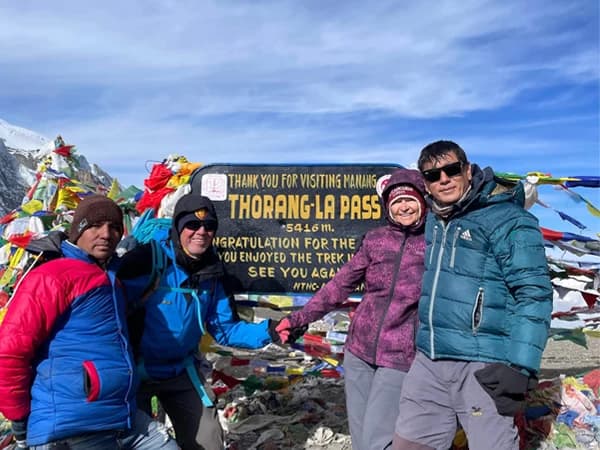
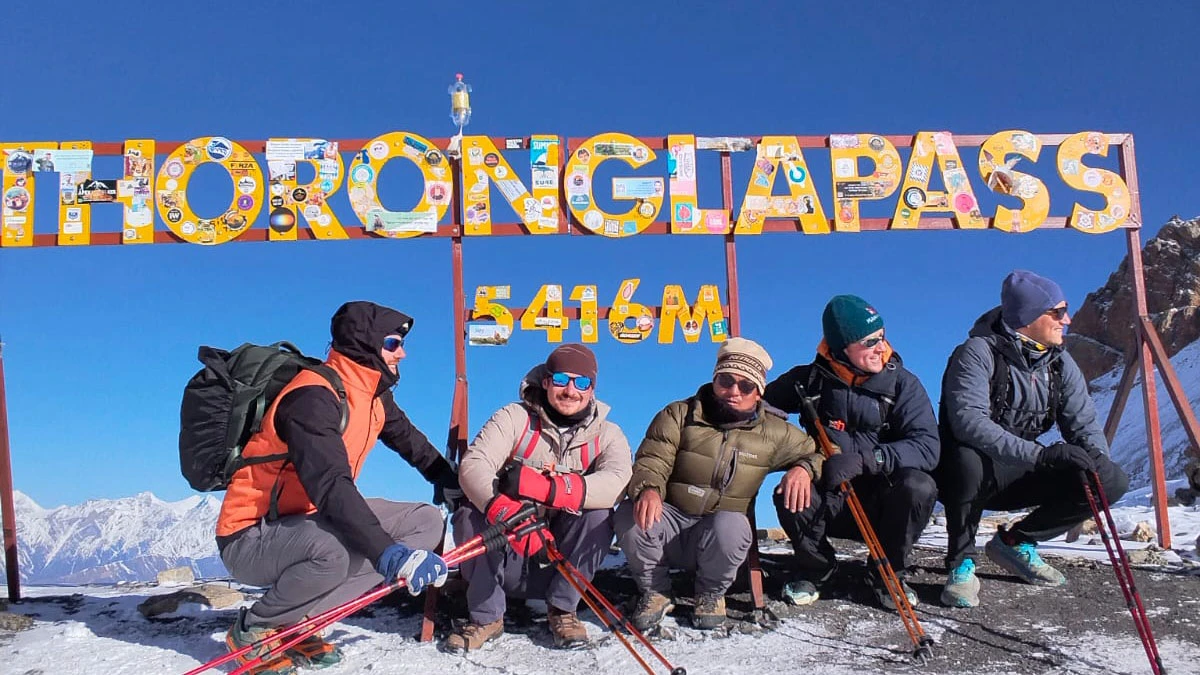
The Annapurna Circuit is one of the most iconic Himalayan treks in Nepal, offering close-up views of the Annapurna and Dhaulagiri ranges. Open to trekkers since the 1970s, it has become a global benchmark for long-distance trekking, combining lush green valleys, river gorges, high mountain passes, dry alpine landscapes, and traditional Himalayan villages shaped by centuries of culture. Along the way, the trail reveals remarkable geographical contrasts, from the deep Kali Gandaki Gorge at the end of the journey, and attains the world's highest pass, Thorong La, perched at 5416 meters, the highest of the trek.

Unlike in-and-out treks, like ABC or EBC, it circumnavigates around the entire Annapurna range, completing a massive 230 km loop, offering a pure sense of Himalayan adventure. The Annapurna Circuit Trek 14 Days itinerary has been thoughtfully planned with acclimatisation in mind, giving trekkers additional time to adjust to the altitude and enjoy a safer, more comfortable trekking experience. Because of the long distance and rising altitude, the trek can be somewhat demanding. Still, the 14-day version is ideal for beginners and families, offering a moderate pace and a more manageable trekking experience even for those without a prior trekking background.

The journey starts with a drive from Kathmandu to Tal, accompanied by scenic views of the countryside, roaring rivers, busy towns, and remote villages, until reaching the starting point of the trek. The route then continues through several key stops, including Danaque, Chame, Upper Pisang, and Manang, giving you an insight into the transition in climatic zones, landscapes, and settlements.

Before ascending above 4,000 meters, an acclimatisation day is set in Manang, with a side trip to Ice Lake or Gangapurna Lake, allowing you time to adjust to the thinning air and stretch your legs in a relaxed way. Continuing along the trail, you pass Yak Kharka and Phedi before reaching the challenging Thorong La Pass. 

After crossing the pass, the trail descends to Muktinath Temple alongside the striking Kali Gandaki Valley before a scenic drive to Marpha, the Apple Capital of Nepal, known for its beautiful apple orchards. The journey then wraps up with a drive from Marpha to Pokhara and onward to Kathmandu. It is a complete fusion of nature, diverse ecosystems, and cultures that leads you through the scenic valley of Manang and the Mustang region of Nepal, where the distinct ethnic groups, Magar, Gurung, Thakali, Sherpa, and Manangi people reside.

Highlights

  • Experience mountain cultures, traditions and local community life 
  • Befriend close-up views of Himalayan peaks, including Annapurna I, II, III, IV, Dhaulagiri, Gangapurna, Macchapuchare, Nilgiri and Manaslu
  • Unveil the Mustang's traditional village, Marpha, known for vibrant apple orchards, whitewashed architecture, and traditional Thakali hospitality
  • Explore the vibrant Manang village, surrounded by arid mountain landscapes and giant alpines
  • Enjoy an optional side hike to Ice Lake or Gangapurna Lake during a rest day
  • Witness the changing landscapes, from sub-tropical forests to alpine desert terrain

Why Choose the 14-Day Annapurna Circuit Trek?

The 14-day Annapurna Circuit Trek is the best choice for hikers who want to experience the classic circuit at a comfortable pace without feeling rushed or exhausted. Unlike shorter or faster itineraries, this two-week version gives you enough time to enjoy the changing landscapes, from subtropical valleys and terraced fields to the arid, high-altitude Tibetan plateau and centuries-old settlements.

One of the main advantages of the 14-day itinerary is proper acclimatisation. The extra days, especially around Manang, allow your body to adjust gradually to the rising elevation before crossing the iconic Thorong La Pass at 5,416 meters. This makes the trek safer, more manageable, and more enjoyable for beginners, families, and even experienced trekkers who prefer a steadier pace.

It also allows you to experience the trek more deeply rather than simply moving from one stop to the next. You will have more time to explore traditional villages such as Chame, Pisang, Manang, Marpha, and Muktinath, interact with local communities, and experience the rich culture and spirituality of the Manang and Mustang regions. In this way, the trek becomes more than just a journey; it becomes a full Himalayan experience filled with scenery, culture, and the achievement of crossing one of Nepal’s most famous passes.

While shorter itineraries may save time and money, they often compromise comfort, acclimatisation, and opportunities for exploration. The 14-day version strikes the perfect balance between adventure and relaxation, giving you a more complete and rewarding Annapurna Circuit experience. Along the way, you can enjoy scenic rest stops, local settlements, and sacred sites like Muktinath without feeling pressured by a tight schedule.

Additional Benefits with Destination Himalayas Treks

  • Experienced, Licensed, Medically Trained and Equipped Trekking Guides
  • Pro expert teams, best to customise your trip and guidance for a safe and successful adventure
  • Personalised Itineraries, as per your time and budget and 100% confirmed departure dates as scheduled (can be altered, or changes as per your preference)
  • Online Briefing before the trip and In-Person Briefing upon your arrival 
  • Easy Payment System and Multichannel communication like Viber, Instagram, WhatsApp, IMO, E-mail, Zoom, and Telegram are available
  • 2-3 Nights Extra Accommodations as a complimentary, at Kathmandu, tourism hub Thamel, before or after the trek
  • Transparency with no hidden cost
  • Basic First Aid Kits with an oximeter to check the pulse rate and a water purification tablet to purify the water
  • Emergency Helicopter rescue assistance in case of any worst situations (covered by your travel insurance)

Itinerary

Day 1: Arrival in Kathmandu, capital city of Nepal (1360 m/ 4528 ft), Transfer to Hotel via private vehicle

Day 2: Drive from Kathmandu to Tal, the starting point of the trip (1700m/ 5574 ft)

Day 3: Trek from Tal to Danaque (2200 m/ 7214 ft)

Day 4: Danaque to Chame (2652 m/ 8687 ft)

Day 5: Chame to Upper Pisang (3300 m/ 10826 ft)

Day 6: Hike to Manang, the resting key stop (3519 m/ 11546 ft)

Day 7: Acclimatization at Manang, Optional Side Trips to Ice Lake or Gangapurna Lake

Day 8: Manang to Yak Kharka (4040 m/ 13286 ft)

Day 9: Yak Kharka to Thorong Phedi (4450 m/ 14594 ft)

Day 10: Cross Thorong La Pass, and downhill walk to Muktinath Temple (3710 m/ 12464 ft)

Day 11: Muktinath to Maprpha (2650 m/ 8704 ft)

Day 12: Drive to Pokhara from Marpha

Day 13: Drive back to Kathmandu from Pokhara by deluxe tourist bus

Day 14: Final Departure Day

Itinerary
Trip PlanExpand all
Max Altitude: 1360 m/ 4528 ft Meals: Breakfast, and Welcome DinnerAccommodation: Standard Hotel
Max Altitude: 1700m/ 5574 ft Meals: Breakfast, Lunch and DinnerAccommodation: Tea houseDuration: 8 hoursDistance: 215 km
Max Altitude: 2200 m/ 7214 ft Meals: Breakfast, Lunch and DinnerAccommodation: Tea houseDuration: 5-6 hoursDistance: 14 km
Max Altitude: 2652 m/ 8687 ft Meals: Breakfast, Lunch and DinnerAccommodation: Tea houseDuration: 4-5 hoursDistance: 10 km
Max Altitude: 3300 m/ 10826 ft Meals: Breakfast, Lunch and DinnerAccommodation: Tea houseDuration: 5-6 hoursDistance: 13.5 km
Max Altitude: 3519 m/ 11546 ft Meals: Breakfast, Lunch and DinnerAccommodation: Tea houseDuration: 6-7 hoursDistance: 14.8 km
Max Altitude: 3519 m/ 11546 ft Meals: Breakfast, Lunch and DinnerAccommodation: Tea house
Max Altitude: 4040 m/ 13286 ft Meals: Breakfast, Lunch and DinnerAccommodation: Tea houseDuration: 4-5 hoursDistance: 11 km
Max Altitude: 4450 m/ 14594 ft Meals: Breakfast, Lunch and DinnerAccommodation: Tea houseDuration: 3-4 hoursDistance: 7.2 km
Max Altitude: 3710 m/ 12464 ft Meals: Breakfast, Lunch and DinnerAccommodation: Tea houseDuration: 9-10 hoursDistance: 18 km
Max Altitude: 2650 m/ 8704 ft Meals: Breakfast, Lunch and DinnerAccommodation: Tea houseDuration: 2 hoursDistance: 19 km
Max Altitude: 830 m Meals: Breakfast, Lunch and DinnerAccommodation: Tea houseDuration: 5-6 hoursDistance: 140 km
Max Altitude: 1360 m/ 4528 ft Meals: Breakfast, and DinnerAccommodation: Standard HotelDuration: 8 hoursDistance: 220 km
Meals: Breakfast
Cost Details
Includes
  • Airport Shuttle, during the arrival and departure dates
  • Local Bus Transportation from Kathmandu to Besisahar and a local shared jeep to Tal village, the starting point
  • Local Jeep Sharing from Marpha to Pokhara
  • Tourist Bus Transportation from Pokhara to Kathmandu
  • 2 Nights Accommodations at Kathmandu (Standard Hotel), with BB Breakfast
  • 1 Night Accommodation at Pokhara
  • Accommodations throughout the trek
  • Standard Meals, Breakfast, Lunch and Dinner, with a cup of tea or coffee during the trek
  • All required permits, ACAP and TIMS Card
  • Government-licensed English-speaking trekking guide, medically trained and equipped, including his salary, food, equipment and gears
  • Sleeping Bag and Duffel Bag (if required, must be returned after the trip)
  • Basic First Aid Kit and Water Purification Tablet
  • Luggage storage, while you are on the trail, and extra items that are needed
  • Official Expenses, Government TAX, VAT and local entry fees
Excludes
  • International Flight Ticket
  • Nepal Entry Visa
  • Lunch and Dinner in Kathmandu and Pokhara
  • All the Beverage bills and personal expenses (Hot water, Hot shower, Wifi charge, battery recharge, bottled water, Laundry charge, etc)
  • Pokhara - Kathmandu Flight: USD 120 per person
  • Porter Cost: USD 250 per head (can be shared between 2 trekkers; one porter can carry up to 22 kgs)
  • Private Jeep Cost: Kathmandu to Tal (USD 220) and Marpha to Pokhara (USD 220) - fits up to 6 passengers with a guide 
  • Tips for the guide and porter
  • Travel Insurance
Essential Information

Best time to visit the Annapurna Circuit in Nepal

The best seasons for the Annapurna Circuit Trek are throughout the year; meanwhile, the ideal seasons are Spring (March to May) and Autumn (mid-September to November). 

Spring (March to May)

Spring, known in Nepal as Basanta Ritu, is one of the best seasons for trekking the Annapurna Circuit. Temperatures are mild, humidity is moderate, and the weather is generally stable, making high-altitude walking comfortable. Rhododendrons and other alpine flowers bloom across the trails, and clear skies offer excellent mountain views. One of the major perks of trailing along this timeframe is that the daylight lasts for a longer time, till 6:00 PM; there is no darkness, so one can walk along at their own pace, without having to constantly worry about early darkness. With the colourful flora in the background blending with the unobstructed vista of the Himalayan giants, it stands out as one of the ideal times to explore the Annapurna region.

Autumn (September to November)

Autumn, from September to the end of November, is one of the best and busiest seasons to trek to the Annapurna Circuit. During this time, the trail sees a large number of trekkers from both Nepal and abroad. The main reason is Nepal’s major festivals, Dashain and Tihar, which make it a popular time for travel. Many international visitors come to experience the culture and celebrations, while Nepali trekkers also take advantage of the long holiday period, which offers an ideal time for hiking. It is perfect for those who want to explore the vibrant festivals of the Himalayas and clearly enjoy the majestic views of the Annapurna and Dhaulagiri ranges. As the season comes after the end of monsoon, the weather is dry and stable, with very little possibility of precipitation, making the trail stay dry and smooth to walk on.

Winter (December to February)

Winter stands out as one of the less crowded, quieter, and scenically captivating times to explore the Annapurna Circuit. The whole lush green valley is beautifully covered by the white, misty snow, with very few trekkers, letting you capture the unhindered views and more chances to connect with locals, all by yourself. However, one of the major drawbacks of winter is that temperatures drop to -15 to -22 degrees Celsius at higher altitudes, with heavy snowfall around Thorong La Pass, making the trail more challenging. Besides, sometimes, if there is a heavy cloudburst, the trekking route is closed for safety reasons, requiring an extra 2-3 days. Hence, this season is only suggested to experienced hikers and those who are well prepared or have extra contingency days, as two weeks only might not be enough in case of route blockage to the pass.

Monsoon (June to August)

The monsoon is considered the least favourable time for the Annapurna Circuit Trek, as it is the time when the trail experiences continuous rainfall in the lower terrains, making the terrain muddy, slippery, and prone to landslides. However, the trail is much less crowded during this season, and the landscapes become more lush and vibrant, with waterfalls and greenery at their peak. This season is generally recommended only for experienced trekkers who are comfortable walking on wet, unstable, and challenging trails. For most trekkers, spring and autumn remain the better choices for a safer and more rewarding Himalayan experience.

14 Days Annapurna Circuit Trek Difficulty

Trekking to the Annapurna Circuit comes under one of the challenging adventures that demands good physical stamina and sound medical health conditions, and some prior high-altitude experience as well. There are many other factors defining the overall difficulty of the trip, including duration, altitude, acclimatization point, and trip extension as well, and the same goes for this round trip as well.

The circuit demands almost 230 km, a loop-around walk, that can be completed within an 8- to 16-day timeframe depending on the itinerary. Hence, this 14-day Annapurna Circuit Trek itinerary is the easiest way that one can do the round expedition, as it is carefully planned, includes gradual ascent, a moderate pace of 4-6 hours max, and meaningful acclimatization days, which contribute to the success of crossing the pass of Thorong La.

However, trekkers should also be prepared for a few additional challenges. The route is not technical and does not involve especially dangerous sections, but it becomes demanding because of its varied terrain, including steep, rugged, and rocky trails with frequent ascents and descents.

Since this is a high-altitude trek, the trail typically gains around 300-500 meters in elevation each day, and the thinner air at higher altitudes can make the journey more strenuous. It is not suitable for everyone without preparation, but beginners can still complete it with proper training and planning. Previous trekking experience can certainly help, but it is not compulsory. With good fitness and preparation, the trek is achievable for both experienced trekkers and active beginners.

Altitude Sickness

The trek reaches its highest point at 5416 meters (17,769 ft) at Thorong La Pass, gaining high elevation above sea level each day; thus, the probability of altitude sickness is always there. However, as long as you follow the preventive guidelines, you are good to go. Just ensure you walk gently, with no rapid pace, have nutritious meals, and avoid smoking and drinking alcoholic beverages after crossing altitudes above 3000 meters, especially. Make sure to monitor the symptoms, like headaches, nausea, insomnia (loss of sleep or appetite), dizziness, and vomiting, and then inform the guide immediately.

Meanwhile, even if the two-week itinerary, that proceeds, gentle ascents help to extend level; ensure to be aware of the symptoms, and follow the safety measures throughout.

Foods and Accommodations for 14 days Annapurna Circuit Trek

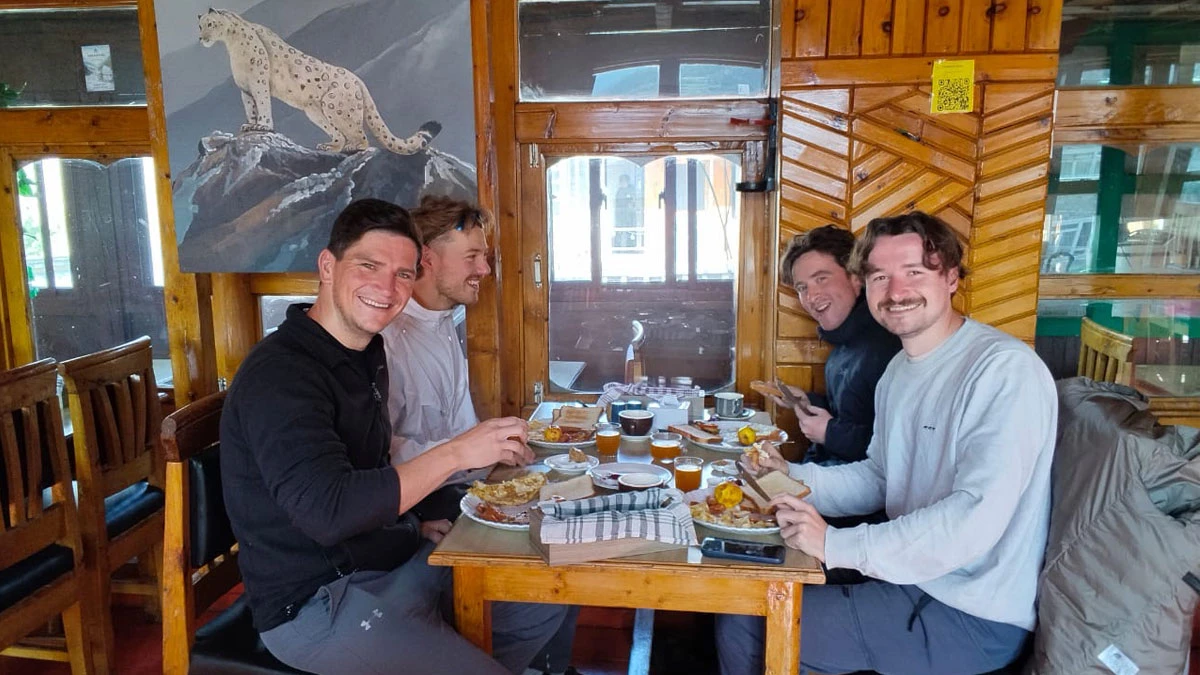
The 14-day Annapurna Circuit Trek provides comfortable tea houses/lodges, hosted by the local communities themselves, with a wide range of meal options throughout the journey. Even though the lodges are quite simple, they include all the basic amenities required and hygienically maintained rooms, making the stays cozy. In the lower regions, teahouses are on the premium side compared to higher regions; especially up to Manang, you will find private rooms with even attached bathrooms. Whereas, as you go higher, the rooms become more basic and simple, and only twin-sharing or group-sharing rooms are available, along with shared washrooms. Every tea house has essential logistics, wifi, charging access, laundry service, and a hot shower, with an extra fee.

On the other hand, the food along the circuit is vast and consists of wide variations, catering to the tastes of Western, Mexican, indian, asian, and continental hikers. From vegetarian to vegan to non-vegetarian options, you will find every kind; just ensure to customize the meals while ordering them if you are allergic to any ingredients. Along with that, there is a wide range of options in beverages as well, from hot soups to hot drinks, that keep you warm and cozy. Hence, the great availability of meals and accommodations makes the trek hassle-free and relaxed.

Travel Insurance

Travel Insurance is one hundred percent crucial to trek the Annapurna Circuit, as it is a fully remote and high-altitude trek. As the trek reaches its highest point at 5416 meters at Thorong La Pass, and the trail is isolated, with no quick access to medical help in case of an emergency, make sure that the policy covers heli evacuation up to 6000 meters and financial medical protection. Besides, unexpected situations, such as altitude sickness, injuries, flight delays, and cancellations, can occur anytime, so having insurance comes to your rescue to save money and cover emergency expenditures. Make sure to carry a copy of the insurance policy and contact details while traveling along the trail as well.

Trekking Permits

To trek along the Annapurna Circuit, there are two requirements that must be obtained through a registered local travel agency of Nepal. As the trail passes by the protected Annapurna Conservation Area, the Annapurna Conservation Area Permit (ACAP) is mandatory, and the permit cost directly goes to the sustainability and preservation of wildlife and local communities. Another permit is the TIMS Card (Trekkers Information Management System Card), which tracks the inflow and outflow of trekkers and helps in evacuation as well, in case of uncertain situations. All the required permits and paperwork are handled by us at Destination Himalaya Treks and are included in our package itself.

Booking Procedure

Destination Himalaya is affiliated with TAAN and NMA and has been operating as a local travel and trekking agency for more than 20 years. With our experienced team of trekking experts, we are committed to making your journey safe, smooth, and hassle-free.

To confirm your trip, you only need to pay 20% of the total trek cost as an advance. The remaining balance can be paid after you arrive in Nepal, either in cash or by credit/debit card. For now, you can complete the advance payment directly through our website by clicking “Book This Trip.” Once the payment is made, you will receive a confirmation notification for your trek. For any queries, feel free to contact us via WhatsApp or by direct call at +977 9851016814, or by email at [email protected].

FAQs

The Annapurna Circuit is considered one of the most strenuous and challenging treks in the Himalayas. It demands navigation through diverse terrains and rocky sections with several ups and downs. Besides, it involves several isolated sections, with teahouses and villages in distant areas, which can affect the trail and make it a bit challenging. 

The best months for the Annapurna Circuit Trek are October and November, which fall in the autumn season, and springtime, which falls in March, April, and May. During this timeframe, the weather is expected to be clear, with less chance of precipitation, and the trail tends to be dry and stable, making the trek smooth and easy to cross the pass as well.

Annapurna Conservation Area Permit (ACAP) and TIMS Card (Trekkers Information Management System Card) are mandatory for the 14-day Annapurna Circuit trek.

Having prior experience always makes the trek easier and plays a vital role role to succeed the journey. However, it is not mandatory to be experienced; physically fit beginners can complete the trek, with proper preparations, a well-planned itinerary, and acclimatization days.

Along the route, you will find accommodation on a local teahouse basis, run by the local people themselves; expect them to be simple, yet comfortable. Every room includes a good, comfortable bed, hot drinks, a wide menu of options, and a heated dining room.

The trek offers impeccable, expansive views of iconic ranges, including the Annapurna, Dhaulagiri, and Manaslu, along with over 40 Himalayan peaks.

Yes, wi-fi and an electric socket for charging gadgets are available throughout the trip, with an additional fee. The wi-fi maybe slow after crossing Yak Kharka near Thorong La Pass; other than that, along the route on the lower trails, there won't be any internet issues. The charging cost is on an hourly basis; for example, if you charge your phone/camera for an hour, then it costs you around USD 2-4 per hour, or maybe less. Due to limited electric sources and heavy flow of trekkers during peak season, waiting in a queue just to charge may be hectic, so it is always suggested to carry 2 power banks as a backup.

The Annapurna Circuit Trek is generally known as one of the safest trekking trails when handled by a local travel agency and tends to be a guided trek. Meanwhile, as it is a high-altitude adventure, there are some risks that are always present, such as weather uncertainty, challenging terrain, and the possible risk of altitude sickness. We at Destination Himalaya Treks ensure all the logistics are handled in an efficient way, and our package includes all the necessities, like accommodations, meals, transportation access, and the assistance of our expert teams and experienced, licensed, medically trained trekking guides.

The adventure kicks off with a drive from Kathmandu. The budget-friendly option involves taking a local bus to Besisahar and switching to a shared local jeep to reach Tal, where you'll hit the trail. If you prefer a more comfortable and seamless journey, you can easily upgrade to a private 4WD jeep or car straight from Kathmandu to Tal.

The daily walking hours depend on the trekking route and itinerary. As the 14-day Annapurna Circuit Trek focuses on a gentle walk and gradual ascent, you only need to cover 10-14 km per day, lasting for 5-6 hours.

Yes, if you are a beginner, then training or prepping your body before the trek always helps to make the journey smooth. Engage in cardiovascular exercises, such as running, walking, or any strength training workouts, focusing on core and legs, to make long hours of walking easier. However, if you do not have time but have been quite active back home, then prior training is not required, as long as you are fit and confident for the trek.

You can store your extra luggage in our office, in the storage room, which has CCTV in the room, ensuring your baggage is safely kept. Or else, you can just keep it at your hotel, as well, free of charge.

Yes, the Annapurna Circuit Trek is known to be one of the safest trails for solo females as well, as the route is well marked, well-known, and it is not isolated, unlike other trails like Dolpo or Kanchenjunga. You will meet many trekkers and locals along the way, with many tea houses in the villages, so you won't feel being scheduled or lost along the route. Our experienced guide ensures safe, smooth navigation; they handle all the logistics and are well trained and experienced, ensuring your safety and remaining alert for any uncertainties, if any occur, and helping in communicating with locals as well.

No, there are no official age restrictions or limitations to trek the Annapurna Circuit, as of now. It is suggested to check online anyway, as it may change in the future by any chance. However, as it is a high-altitude and challenging journey, the trek is suitable for children above 12 years old and seniors up to only 75 years old, depending on the individual's fitness and health conditions. Before heading on the trek, it is suggested to take a proper medical check-up a day before and review the itinerary properly, ensuring that you can handle such a remote trek.

As it takes an ascent above 3000 meters every day, each day, gaining 400-500 meters in altitude and reaching the highest point at Thorong La Pass (5416 m), it can be largely avoided and doesn't affect everyone. The challenge is highly manageable as our itinerary includes built-in acclimatization days and a gradual ascent, letting your body adapt to the rising elevation. Make sure to follow safety guidelines, be aware of the symptoms, and walk along with the trekking guide.

Need Help? Talk to Expert!
min gurung
Min Gurung
+977 9851016814
What Our Guests Say?
You May Also Like
Annapurna Circuit Tilicho Lake Trek
Starting from
US$1049US$1299
Thorong La Pass
Starting from
US$699US$1299
Trekker's Choice
manaslu circuit annapurna circuit trek
Starting from
US$1299US$1799
Need Help? Call Us+977 9851016814