Jiri Everest Base Camp Trek
Everest Base Camp Trek
Jiri to Everest Base Camp Trek - 18 days

Jiri to Everest Base Camp Trek - 18 days

314 reviews in TripAdvisor
27 reviews in Google Reviews
Recommended by 99% of travelers
Duration18 Days
Trip GradeStrenuous
Maximum Altitude5,545 meters
ActivitiesTrekking
Group SizeAny
StartsKathmandu
EndsKathmandu
Best TimeAll seasons

Overview 

Driving from Kathmandu to Jiri (2,100m) takes about 6 hours. The trek to Everest Base Camp (EBC) follows the traditional route taken by the early Everest expeditions and still serves as the main artery to the roadless Sagarmatha (Everest) region. Known as the Solukhumbu it is the home of the Sherpas. This relatively tiny society of 8,000 people is the best-known and most admired of all Nepal's ethnic groups. According to their oral history, Sherpas migrated to high valleys south of Mt. Everest from eastern Tibet about 450 years ago, hence the name Sherpa, "peoples of the east." Many families along this route have converted their homes into trekkers' lodges catering to foreign hikers.

Trekking through the Sherpa villages, we share many of their hearths and enjoy their generous hospitality. Trekking from Jiri has the advantage of helping you to acclimatise on route. This trek is about 190km/120 miles long, and the total altitude gained on the innumerable uphill portions totals 9000m - much higher even than Mt. Everest! After Namche, we follow the main trail to the base camp with all its attractions. Legendary trekking to a legendary destination - Everest Base Camp in Nepal.

Highlights

  • Scenic view on the way to Jiri
  • Pristine terraced farmlands, Himalayan scenery, and the beautiful Dudh Koshi River
  • Alpine forests, ice-cold rivers, astonishing rhododendron, and pine forests
  • Magnificent mountains, high passes, attractive monasteries, and meeting friendly local people
  • Plentiful time to spend on the extended pastures, yak farms, glaciers, and adequate time to acclimatise en route
  • The native land of the Sherpa people, their culture, lifestyle, and picturesque villages
  • Stunning beauty of the Khumbu Glaciers and Khumbu Icefalls
  • Relish the stunning sunrise view and witness the intense panoramic mountain views of Mt. Everest, Mt. Nuptse, Mt. Lhotse, Mt. Pumori, and Mt. Ama Dablam from Kalapatthar

Day-to-day Itinerary for Jiri Everest Base Camp Trek

Day 01: Arrival in Kathmandu

Day 02: Kathmandu to Jiri (by bus), Jeep drive to Bhandar (2250 m.)

Day 03: Bhandar to Sete (2520m.)

Day 04: Sete to Junbesi (2580 m.)

Day 05: Junbesi to Nunthala (2200 m.)

Day 06: Nunthala to Bupsa (2360m.)

Day 07: Bupsa to Cheplung (2700 m.)

Day 08: Cheplung to Namche Bazaar (3440 m.)

Day 09: Acclimatisation day

Day 10: Namche to Tengboche (3940m.)

Day 11: Trek to Dingboche (4350 m.)

Day 12: Acclimatisation Day

Day 13: Dingboche to Lobuche (4910 m.)

Day 14: Lobuche to Everest Base Camp (5364 m.), back to Gorakshep

Day 15: Kalapatthar hike (5644.5 m.), trek down to Pheriche (4200 m.)

Day 16: Trek to Namche Bazaar (3440 m.)

Day 17: Trek to Lukla (2860 m.)

Day 18: Flight from Lukla to Kathmandu

Jiri to EBC Trek informations 

Accommodation

Accommodation in the Himalayas is mostly teahouses or lodges operated by locals. They are comfortable and simple with basic facilities. Extra facilities like hot showers, Wi-Fi, charging of electronic devices, and laundries are available for an additional charge. Room sharing is common during the peak seasons and at high altitudes. So, prepared for it. Washrooms are mostly outside the teahouse or lodge.

Meals

We provide only breakfast in Kathmandu, and 3 meals (breakfast, lunch, dinner) a day are provided during the entire trek. Meals are provided from the teahouses or lodges, which are simple but organic and healthy. Nepali Dal Bhat is a chief dish with fresh green vegetable curry. Besides, noodles, soup, bread, roti, Sherpa stew, and hot drinks are also available. You can try continental cuisine at Namche at your own expense.

Drinking Water

Drinking water in the Himalayas is pure and fresh. One can directly drink the natural freshwater stream from the Himalayas. Or fill up the boiled water in a water bottle in the teahouses, paying an extra charge. Always carry water purifying solutions for proper water treatment and to be safe. Drink plenty of water and keep yourself hydrated to prevent altitude sickness.

Internet connectivity & Mobile Network

Everest Link’s Wi-Fi card provides internet all over the Everest region. So, internet connectivity is easily available and stable in the lower regions. Mobile Network is also stable in the lower regions. You can also purchase a Sim and use mobile data from it. In higher altitudes, internet connectivity and mobile networks are difficult to find.

Jiri to EBC Trek Starting Point

Bhandar is the starting point of the trek from Jiri. A drive from Kathmandu to Jiri commences. Then, a short jeep ride to Bhandar from Jiri commences. The trek journey officially starts from Bhandar.

Bhandar-Sete-Junbesi-Nunthala-Bupsa-Cheplung-Namche-Tengboche-Dingboche-Lobuche-EBC-Gorakshep-Kalapatthar-Pheriche-Lukla

What permits are required for Jiri to EBC trekking?

Permits are mandatory in the Himalayas of Nepal. Our required permits are the Khumbu Pasang Lhamu Rural Entrance Permit and Sagarmatha National Park Permit (SNP).

1. Khumbu permit costs: NPR 3000 (Foreigners), NPR 3000 (SAARC)

3. Gaurishankar Conservation Park permit 

2. SNP permit costs: NPR 3000 (Foreigners), NPR 1500 (SAARC)

"DH Treks issues all the required permits for its clients."

Travel Insurance

Travel Insurance is quintessential in the Himalayas. It must cover all emergency evacuations, medical emergencies, luggage loss/theft, flight cancellations, altitude above 4000m, etc. Thus, arrange travel insurance from a reputed agency as it is compulsory.

Safety and our guides

We assure you 100% when it comes to safety. Our client’s safety is our main concern. Our guides are certified and well-trained with years of expertise in this field. They are technically competent and have excelled in safety performance. They always carry essential safety equipment, gear, and first-aid kits. For the safety of our trekkers, the itinerary is properly scheduled, and acclimatisation rest days are properly set up to adjust to the high altitude and prevent altitude sickness. If any queries concerning safety, feel free to share them with our guides. We are always there for your services.

When is the best time for Jiri to go on the Everest Base Camp Trek? 

The best time to trek is the peak season for safety and to enjoy the spectacular and clear views. Spring and Autumn seasons are the best time followed by the summer season. The winter season is risky, and only a few adventurous dare to climb. We recommend you plan carefully if you want to trek during the off-season.

How difficult from Jiri to EBC Trek?

The Jiri to EBC Trek is full of challenges due to its long trek route, high elevations, and physical demands. With the proper assistance and guidance of experts, it is achievable. When it comes to the Jiri to EBC Trek, experience in trekking at high altitudes is a bonus. Besides this, trekkers must be in good health and physically & mentally fit, as it is physically demanding. So, we recommend you participate in exercises and physical training months before starting the trek. Also, take necessary health tests before trekking to high altitudes. You can completely trust our assistance and guidelines throughout the trekking journey.

Altitude Sickness & Acclimatisation

Altitude sickness is common in mountains above an altitude of 3000m. The trek starts from Bhandar (2250m) and the altitude rises to Kalapatthar (5,644.5m) during the trek. Namche and Dingboche are acclimatisation resting places to adjust to the altitude and prevent altitude sickness.

Symptoms of Altitude Sickness

Primary: Headache, nausea, gasping, appetite & sleep loss, dizziness, fatigue, vomiting

Extreme: primary symptoms and hallucinations & unconsciousness

Preventive Guidelines

  • Immediately inform the guide
  • Warm up and body stretch before the trekking journey
  • Drink water and hydrate yourself at regular intervals
  • Frequent urination throughout the journey
  • Ascend slowly and gradually
  • Take plenty of rest and sleep
  • Avoid salty foods, alcohol, and smoking
  • Descend immediately when it’s difficult/uneasy
  • Take medicine consulting a guide

Equipment

  • Shoes:

  • Trekking shoes, crampons, base camp shoes, and rubber sandals
  • Clothes:

  • Windcheater jacket, Thermals, Down Jacket, Base Layers, Fleece, Long sleeve shirts, Gloves, Towels, Inner garments, Trekking pants, Trousers, Shorts, Socks
  • Accessories:

  • Sunglasses, Ski Goggles, Hats/Caps, Beanie, Sunscreen, Lip Balm, Head Lamp, Pocket Knife, Personal Hygiene &Toiletries
  • Sleeping:

  • Warm and light weight Sleeping bags
  • Travel Bag:

  • Duffel bag, a day pack, and a pack cover
  • Medicine Kit:

  • Wash Kit, First-Aid Kit, Blister Repair Kit, Medicines for preventing Altitude sickness, Prescribed Medicines (Personal use)
  • Extras:

  • Heat/Leak proof water bottles, Water Purifying solution (Iodine based), Water filters, Insulated cup/flask, Map, Binoculars, Travel Documents, Sewing kit, Cash, Extra batteries, Power bank, Pen, Diary, Book, Reusable (spoon, cup, plate), Reusable bags, Large Waterproof Disposable Bags, Snacks (Choco-bars, Mints, Nuts, Granola Bars)

Note: Customise and rent the above list as a necessity.

Itinerary
Trip PlanExpand all

Upon your arrival at the Tribhuvan International Airport, the representative of Destination Himalaya treks gives you a warm welcome in the adventurous Himalayan country of Nepal. Transfer to the hotel for an overnight stay.

Max Altitude: 1,360 meters Accommodation: Hotel

We take a scenic ride from Kathmandu to Jiri, enjoying the countryside’s natural views, rivers, green hills, diverse landscapes, terraced fields, and snow-covered mountains. Arrive at Jiri and adore its picturesque beauty. From there, take a jeep ride to Bhandara, where we stay overnight.

Max Altitude: 2,2250 meters Meals: Breakfast-Lunch-Dinner (BLD)Accommodation: Lodge

We descend to Likhu Khola, traversing a bridge, and reach Kinja. Pass through beautiful terrace fields, enjoy the surrounding scenery, and arrive at Sete. Overnight stay in this beautiful Sherpa village.

Max Altitude: 2,520 meters Meals: BLDAccommodation: Lodge

We climb uphill and traverse through the highest pass between Jiri and Namche i.e. Lamjura La Pass (3,530m). Then, walk through the lovely rhododendron forest and walk downhill to Junbesi. Overnight stay in Junbesi.


Max Altitude: 2,580 meters Meals: BLDAccommodation: Lodge

We walk uphill, leaving Junbesi, and follow the trail that takes us to Salleri. On the way, get the first glimpse of Mt. Everest. Then, traversing Ringmo Khol, we ascend further to Nunthala for an overnight stay.

Max Altitude: 2,200 meters Meals: BLDAccommodation: Lodge

We traverse a suspension bridge over the Dudh Koshi river enjoying the beautiful scenery. Then, head north and continue trekking. Ascend on a steep trail and reach Bupsa. Overnight in Bupsa.

Max Altitude: 2,360 meters

We begin our walk through the pine and oak trees forest. Enjoy the chirping sounds of birds and take a trail through Paiya village and arrive at Surke. From there, walk for 2 hours more to reach Cheplung. Overnight in Cheplung.

Max Altitude: 2,700 meters Meals: BLDAccommodation: Lodge

We enjoy walking on the flat trails passing through the pine forest. Pass through Monjo and show the Sagarmatha National Park Permit to enter Namche. Traverse a suspension bridge and ascend for a few hours to reach the vibrant Sherpa capital, Namche Bazaar. Overnight in Namche.

Max Altitude: 3,440 metrs Meals: BLDAccommodation: LodgeDuration: 5-6 hours

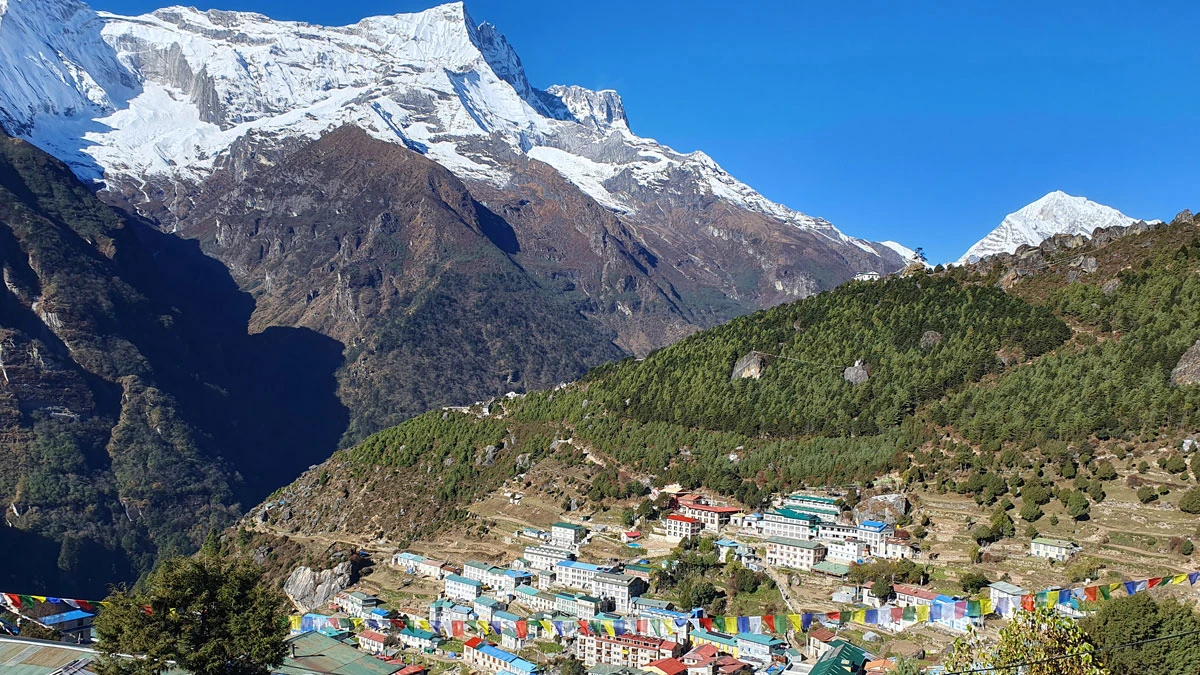
Namche is the first acclimatization place of our trek. Namche Bazaar is famous for many things. Most of the government offices lie in Namche. Furthermore, it is the doorway to the total Everest region. Namche Bazaar is surrounded by snowy peaks and mountains, which can be seen from the various hotels situated in Namche. Tourist visitor centers and long, old monasteries are the attractions of Namche. Email, internet, ATMs, grocery shops, bakeries, and restaurants are easily available in Namche Bazaar. We take a rest at Namche bazaar visiting the surrounding places. Namche is the Sherpa village where we can interact with them and get knowledge of their culture and lifestyle. On this day, we also visit another Sherpa village, Khumjung, near Namche. There, we also visit the Buddhist monastery. Overnight in Namche.

Max Altitude: 3,880 meters Meals: BLDAccommodation: LodgeDuration: 4-5 hours

After one day’s acclimatization in Namche, today we continue our trek after breakfast. For some time, we walk on the plain path to Kenjoma through the forest, enjoying the panoramic views of the mountains like Mt. Everest, Ama Dablam, Nuptse, Thamserku, and Lhotse. From Kenjoma, we trek down to the small settlement of Phortse Tenga, where we take lunch. Then we climb to Tengboche, a Sherpa village with the world’s highest Tengboche monastery. There, we visit the monastery and interact with the Buddhist monks and nuns. From there, we see the excellent panorama of Mt. Everest, Lhotse, Ama Dablam, Nuptse, and Thamserku. Overnight in Tengboche.

Max Altitude: 3,940 meters Meals: BLDAccommodation: LodgeDuration: 5-6 hours

Today, we descend downhill to Douche with the scene of countless rhododendrons. We cross the suspension bridge that lies over the Imja Khola. We walk through the valley to Pangboche. On the way, we see Mani's stone walls. We finally climb up to Dingboche, where we stay overnight. Still, you can see the close-up view of Aba Dablam.

Max Altitude: 4,350 meters Meals: BLDAccommodation: LodgeDuration: 6-7 hours

Dingboche is our second place for acclimatization. We spend the day hiking to Chhukung Ri (5,550m) by ascending on a rocky trail. Pass through moraines to reach the summit. From the summit, admire the panoramic views of snow-covered mountains Ama Dablam, Lhotse, Nuptse, and other surrounding peaks. Descend to Dingboche for an overnight stay.

Max Altitude: 5,5546 meters (Chhukung Ri) Meals: BLDAccommodation: LodgeDuration: 6-7 hours

From Dingboche, we walk on a gradually ascending path with a view of Mt. Tawache, Nuptse, Ama Dablam, as well as Pokalde. We can see Pheriche village from Dingboche. Then we climb down to Pheriche village and head to Dughla. We cross the bridge on the Khumbu glacier and then we continue walking up a steep hill and finally reach Lobuche. Overnight in Lobuche.

Max Altitude: 4,910 meters Meals: BLDAccommodation: LodgeDuration: 4-5 hours

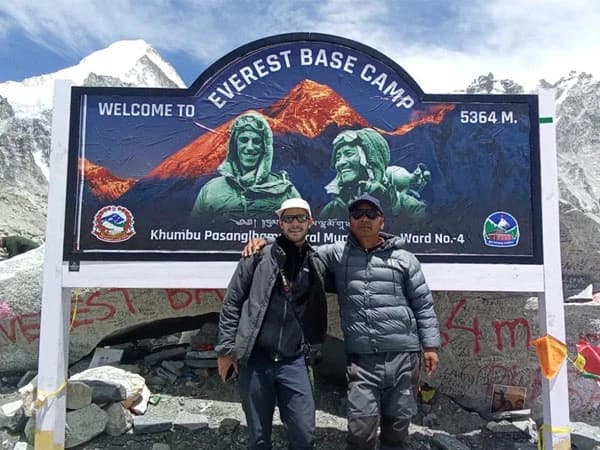
Today we achieve our goal of putting our foot on the Everest base camp. From Lobuche, we walk up a rocky moraine path with a view of the Khumbu glacier. Then we descend to Gorakshep, where we take lunch. Then we head to Everest Base Camp. At Everest Base Camp, we stay for some time and observe the view of the surrounding mountains, including Lhotse, Nuptse, Cho Oyu, and others. Then, we return to Gorakshep, where we stay overnight.
 

Max Altitude: 5,364 meters Meals: BLDAccommodation: LodgeDuration: 6-7 hours

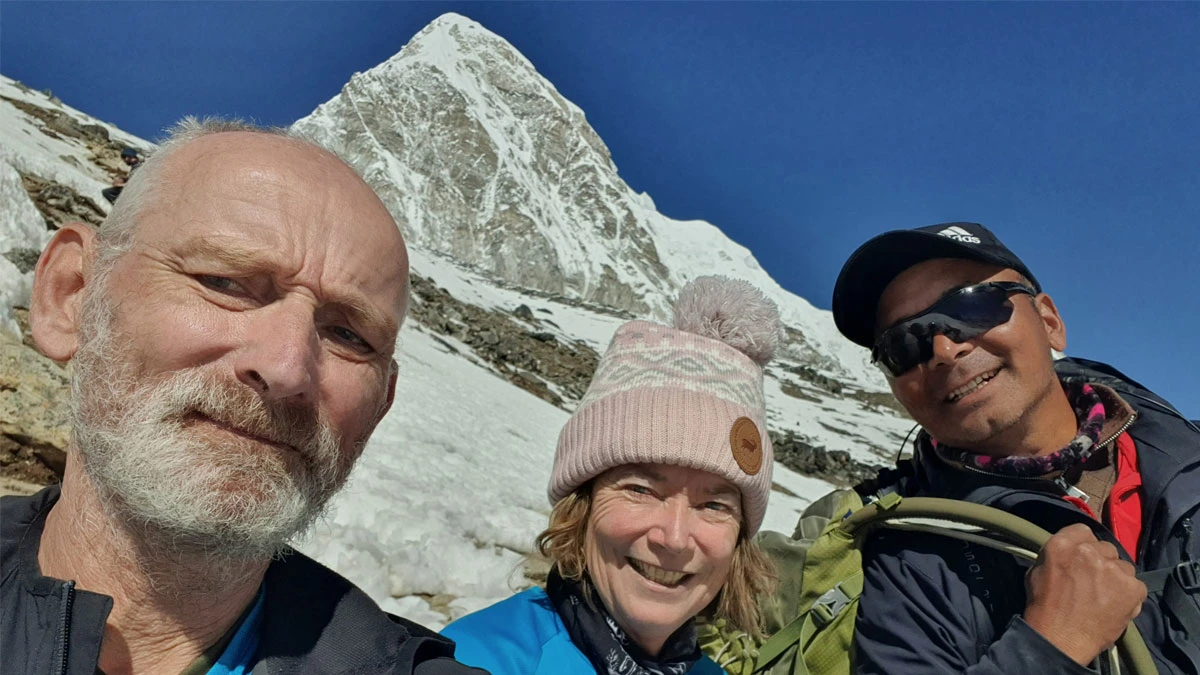
This day in the morning, we hike to Kalapatthar to view the panorama of Mt. Everest. Kalapatthar is the perfect vantage point of the Everest region for Mountain View. From there, we observe the panoramic view of Mt. Everest and other mountains of the Everest region like Mt. Lhotse, Mt. Pumori, Mt. Ama Dablam, Mt. Khumbutse, Mt. Nuptse, Mt. Thamserku, etc. We return to Gorakshep and take lunch. Then, trek down to Pheriche for an overnight stay.

Max Altitude: 5,545 meters Meals: BLDAccommodation: LodgeDuration: 6-7 hours

The trek becomes easier as the altitude declines. Walk down the steep trail, which is rough, too. We move towards the ending sections of the trek along the increasingly less strenuous trail. The cautious trail provides the trekkers with wildlife such as snow leopards, mountain goats, and colorful pheasants, as well as the rich, dense forest. The conjunction of the Imja River and Dudh Koshi River near Phortse Tenga, the oldest monastery of the region at Pangboche, the famous Tengboche Monastery at Tengboche, are the major highlights of the trekking trail to the unofficial capital of the Khumbu region, Namche Bazaar. Overnight stay in Namche.

Max Altitude: 3,440 meters Meals: BLDAccommodation: LodgeDuration: 6-7 hours

We descend the trail slowly and cautiously due to the steep path and the shaky legs, owing to the long trek we had. The magic of nature unfolds through the colorful rhododendron and pine forests, plains, and the amazing view of the snow-capped mountains that seem to be overlooking the trekking route. Sherpa villages, Buddhist culture reflected through the prayer flags, prayer stones, and Gompas, and lush vegetation make the trek an enriching one. We stretch ourselves in this Sherpa town and recall the experiences gained during the strenuous yet amazing trekking experience. Overnight stay in Lukla.

Max Altitude: 2;890 metyers Meals: BLDAccommodation: Lodge

Our trekking comes to an end today. We fly back to Kathmandu, and you are transferred to the hotel of your stay before you depart for your respective destinations. Spend the day taking a rest. Or do some shopping or explore the streets of Kathmandu. You may want to buy some souvenirs for your near and dear ones back in your native place. Overnight in a hotel.

Max Altitude: 1,360 meters Meals: BreakfastAccommodation: HotelDuration: 4-5 hours
Cost Details
Includes
  • All required land transportation as mentioned in the itinerary
  • Hotel in Kathmandu with breakfast
  • Hotel in Kathmandu one night before and 1 night after the trek
  • Domestic flight Lukla-KTM
  • Sightseeing tour in Kathmandu Valley
  • Foods and accommodation in trekking
  • well-equipped English-speaking guide, necessary
  • supporting Sherpa or Porters.
  • All allowances for supporting crews, including their insurance
  • Trekkers Information Management System TIMS (Trekking permit), National Park permit, or Conservation permit
  • Emergency evacuation service in case needed
  • All Official taxes and service charges.
Excludes
  • Your personal gears and expenses
  • Foods in Kathmandu
  • Tip to Nepalese support crews
  • Emergency rescue fee in case
Dates & Availability
Select your preferred date
Mar 2026
Apr 2026
May 2026
Jun 2026
Aug 2026
Sep 2026
Oct 2026
Nov 2026
Dec 2026
Date and Days
Price
Status
Date & Days
Mar 07, 2026 - Mar 24, 202618 Days
Price
US$1299US$1899
Save US$600
Status
Guaranteed
Date & Days
Mar 28, 2026 - Apr 14, 202618 Days
Price
US$1299US$1899
Save US$600
Status
Guaranteed
Need Help? Talk to Expert!
min gurung
Min Gurung
+977 9851016814
Adventure of a lifetime: Trekking to the Everest Basecamp

My wife and I did a trek to the EBC together with a guide and a porter. Everything was really well organized. Our guide was super nice and took care...

read more +
P
P B
April 12, 2025
Trip to the EBC

My husband and I did a trek to the everest basecamp. It was our first time in Nepal.
Our trip was really great! It was quite an adventure!
...

read more +
C
Celine W
April 11, 2025
January solo EBC Trek

My experience with this company was amazing! I did the EBC trek solo during winter with one of their guides, Karma Sherpa. He was very professional and knew the trek...

read more +
J
JLF
November 03, 2024
Need Help? Call Us+977 9851016814