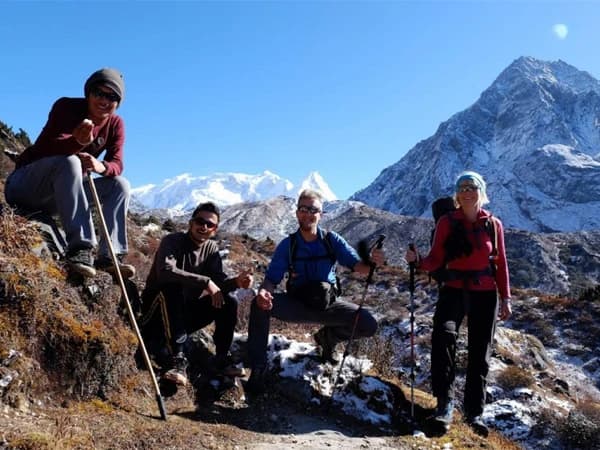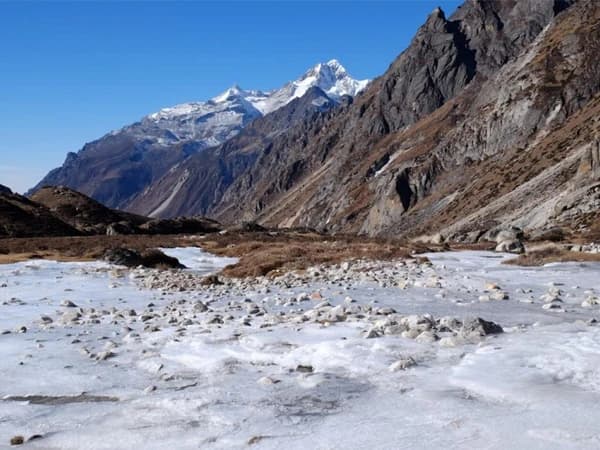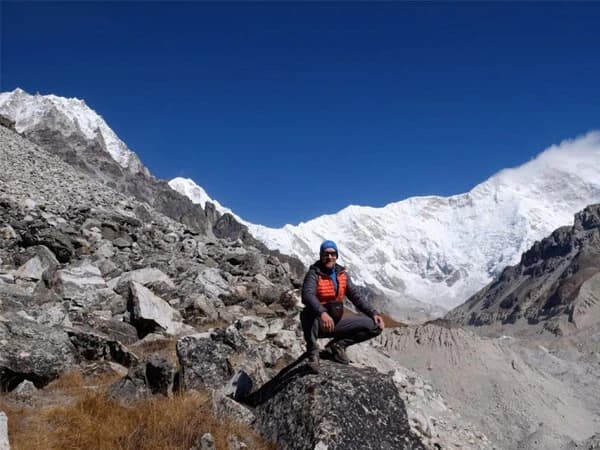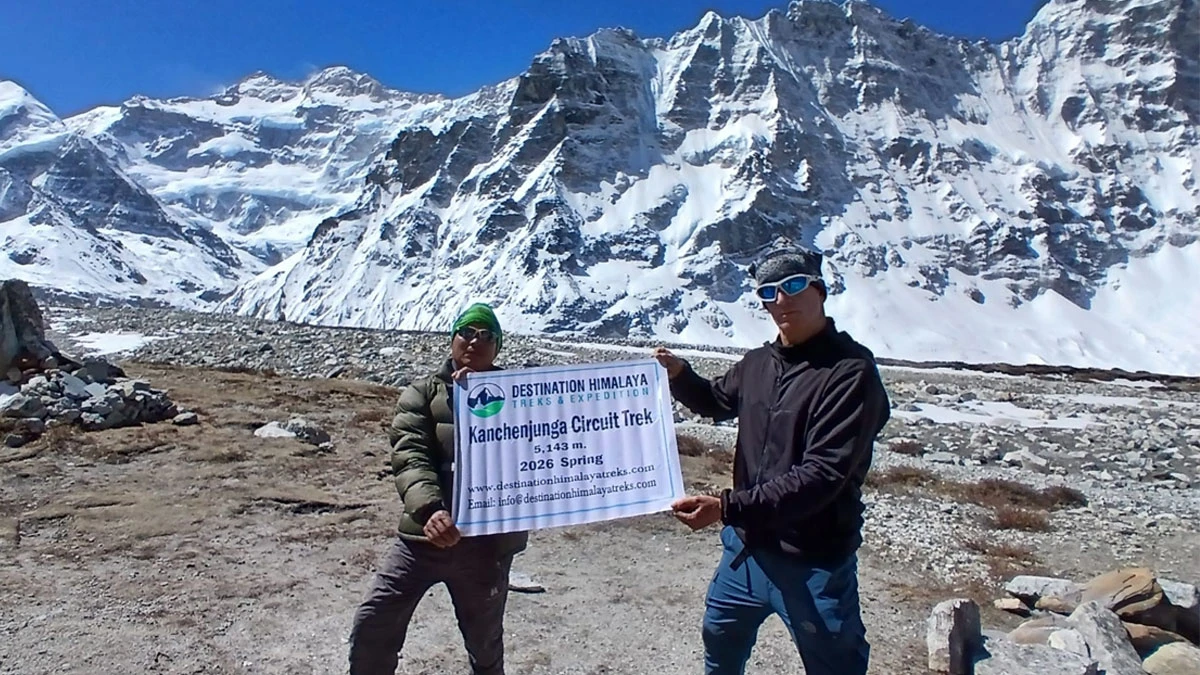
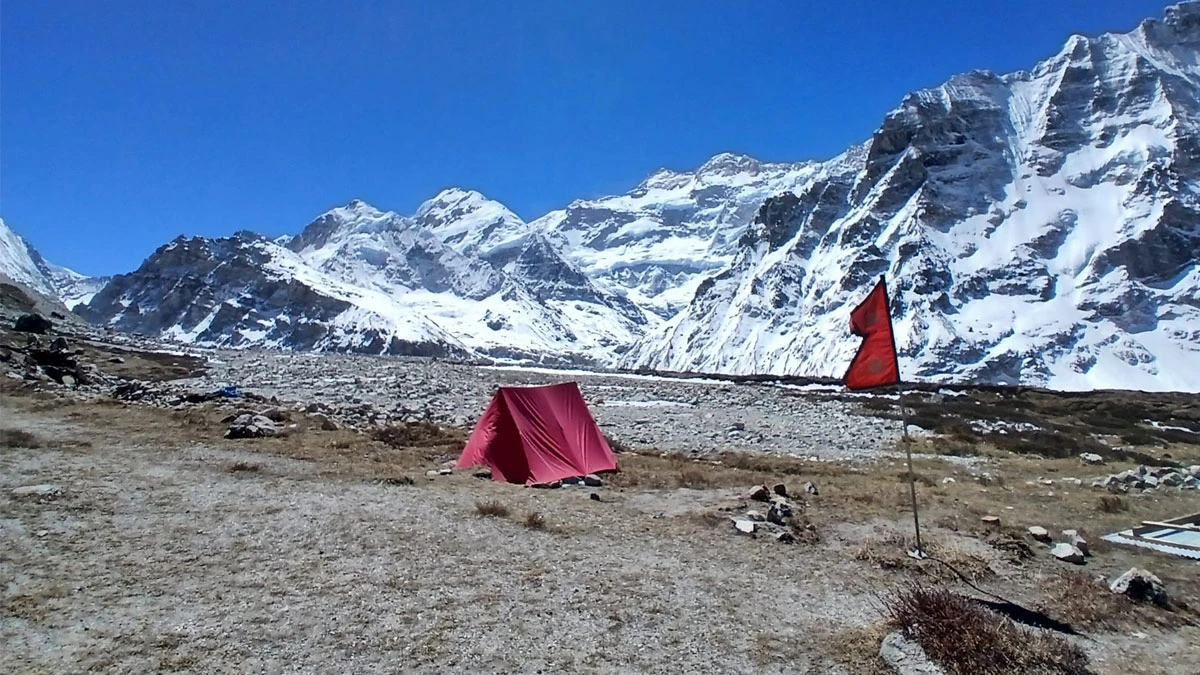
The unspoiled region, off-beaten trail, pristine beauty of flora and fauna, and a great myth with a high spiritual connection. This is the Kanchenjunga Circuit Trek in Nepal, a heaven-like beauty on earth.
Embark on this unforgettable adventure in Nepal, where majestic views depict the tranquillity of the Himalayas, showcase the enduring Tibetan culture of the Sherpa and Lepcha communities, and reveal remote trails that pass ancient tea houses and untamed landmarks.
Highlights
- Witness the first-hand panoramic vista over the mountains and landscapes throughout the flight from Kathmandu to Bhadrapur - a kick start to the expedition
- Explore the hidden corner covering every aspect and trailhead surrounding the world's third-highest peak - Mt. Kanchenjunga
- Make your way through the less-trodden path and wild terrains from woodlands to the rugged terrains to local villages to the alpine valleys and the highly towering mountains
- Attain both the north and south base camps of Kanchenjunga, also known as Pang Pema and Oktang, over 4000 meters
- Interact and gaze at the unchanged lifestyle of locals of diverse communities, such as Lepcha, Rai, Limbu, Sherpa, and others
- Cross the legendary high mountain passes and feel the adventure, such as Sele La Pass (4482 meters) and Sinion La (4646 meters)
- Meander through the woodlands that thrived in the colourful rhododendrons at lower elevation and Himalayan poppy wild flowers over 3000 meters
- Visit several monasteries, temples, and other spiritual landmarks where meditation, prayers, and chants are hosted, along with other boasting festivals
- Unveil the beauty of Himalayan flora and fauna spanning through the Kanchenjunga Conservation Area, right from the beginning to the end
- Take a chance to spot the untamed, rare wildlife species such as blue sheep (Chyangra), snow leopard, and Himalayan tahr en route
- Surround yourself with the almighty peaks, also some eight-thousanders such as Mt. Everest, Makalu, along with the Yalung Glacier as well
Kanchenjunga Circuit Trek Overview
Located in the far eastern part of Nepal, bordering Sikkim in India, Kanchenjunga stands out as an untouched Himalayan jewel, with few footprints, as it demands special trekking permits to enter the remote natural vault. When you compare any other adventures, the trekking route of the Kanchenjunga circuit is far more remote, isolated and strenuous, which keeps away heavy flow of hikers, and keeps the region pristine.
If you are craving to undertake one of the most adventurous journeys, in 2026 and 2027, then, undoubtedly, the Kanchenjunga Circuit Trek must be your go-to option, which pushes your limits and rewards you with an impeccable panorama of mountain views, distinct landscapes, wildlife, flora and untamed culture.
The Kanchenjunga Trek leads you to both the North and South Base Camps of Kanchenjunga that showcase multiple-angle views of the third-highest mountain in the world, Mt. Kanchenjunga soaring at the height of 8586 meters within Kanchenjunga Conservation Area. This thrilling trip explores the unique perspective of the iconic Himalayan peaks and navigates through secluded terrains, marking it as an one of the treasures in the Eastern Himalayas, that stands out being one of the most pristine off beaten adventure in Nepal, just to let you know it also connects The Great Himalayan Trail - hence, one can imagine how varied landscapes one gets to navigate through during this trek.
The 19-day Kanchenjunga Circuit Trek visits north (Pang Pema) and south (Oktang) base camps with acclimatisation hikes for safe altitude adjustment. Our well-customised itinerary includes side trips to Janu Himal Base Camp (4700 m) and Nupchu Pokhari (4954 m), before attaining the base camps, so that you get to gradually adapt to the rising elevation without any risk of Acute Mountain Sickness (AMS).
Located at the eastern side of the country, the route lies within a restricted area, with limited (basic) amenities, which comprise several ascents and descents and cross over the high mountain passes of Sele La (4482 meters) and Sinion La (4646 meters), showing the ice walls, glaciers, pristine lakes, and alpine surroundings. The scenery shifts to the rugged beauty of Alpine tundra, leading you to the spectacular close-up views of several glaciers, including the famous Yalung Glacier and the Kanchenjunga massif, which highly resembles Gautam Buddha in a meditative pose from many sides.
Daily, the Kanchenjunga Circuit Trekking Nepal demands 5 to 7 hours of hiking, through diverse terrains, rugged sections, and high passes as well, hence one must have prior experience of high elevation treks. On top of that, it requires a special permit to get through this restricted area, making it an unexplored trek and keeping away large crowds of trekkers from this hidden gem. Also, do not get confused, as this trek is also popularly known as "Kanchenjunga Base Camp," and the trailhead remains the same.
Besides the breathtaking views, it is also believed that many peaks that reside here are highly protected by the Yeti (snow monster) from any dangers. The locals worship Mount Kanchenjunga as five celestial Tathagatas (Buddhist deities). So, no one ever dares to touch the summit point of this mountain, and the remaining 5 feet below the sentimental values of people. These mythological and many other spiritual insights add a unique experience to the trek.
The Kanchenjunga route was closed to trekkers until mid-1980, whereas in the present day, the region is protected by the Kanchenjunga Conservation Area project, where beautiful fauna and flora are still in their natural state today. To get through the trek, a restricted area entry permit is mandatory, provided by the Ministry of Nepal Immigration Department.
With the perfect infusion of the rich tapestry of Tibetan communities such as Lepcha, Rai, and Sherpa, off-beaten wilderness, and varied landscapes where ancient villages, mountains, Himalayan flora, and fauna reside, it would be no debate to mention Kanchenjunga as one of the most preserved gems worth more than diamonds, in the eastern Himalayas, Nepal.
Why 2026 is Peak Kanchenjunga Season?
- Prime Spring and Autumn Weather Conditions: The seasons of March-May (Spring) and Autumn, starting from September to mid-November, deliver stable climate conditions, dry terrains to navigate, and mild temperatures, 8-14°C days. The whole lush green valley thrives in the red rhododendrons, and crystal-clear views unmatched by other seasons.
- Updated Infrastructure: In 2025, the trails will have been a bit upgraded, focusing on 2026 and upcoming hikers' comfort and accessibility, which means upgraded tea houses, bridges and better logistics availability.
- Permits Rules Simplified: The TIMS card permit is no longer necessary for this trip; however, the restricted and conservation area permit is still required with a mandatory trekking guide, which boosts safety on high mountain passes and walking trailheads.
- Low Crowds, More Peace: Unlike other trips, such as popular EBCs that experience 50,000+ annual trekkers, the Kanchenjunga's restricted permits cap 2026, limiting the hikers, giving a pristine Pang Pema and Oktang soltitude.
- Lhosar Festival Alignment: Spring 2026 Sherpa New Year falls between Feb and March, where you get to learn how such cultures are celebrated, engage in Mani Rimdu dances, and gain insight into the monks' prayers in the monasteries.
- Enhanced Rescue Protocols: New 2026 helicopter stations at Suketar cut evacuation times 40%, critical for 5,100m North Base Camp exposure.
- Conservation Success: Better insights into snow leopard, rare, elusive red pandas, and blue sheep sightings, through alpine zones.
- Connects the Great Himalayan Trail (GHT), connecting Kanchenjunga seamlessly, opening multi-peak panoramas (Everest, Makalu) from high passes.
What to expect from the Kanchenjunga Circuit Trekking in 2026 and 2027?
This 19-day Kanchenjunga adventure traverses through the traditional villages of Ghunsa, Amjilosa, Ghyabala, Khambachen, Lhonak, and attains the North and South Base Camps at the same time. The side trips explore the hidden treasures of Jannu Base Camp, Nupchu Pokhari, and reach the height of 6100 meters - Drohmo Ri, and cross the high mountain passes of Sele La Pass, hence, Kanchenjunga Tea house Trek is an once in a once-in-a-lifetime opportunity to unveil the beauty of the rugged landscapes and the unchanged culture without compromising the panorama of the mountains.
Thus, the following are the major highlights that add an extra touch to captivating trekkers to embark on this journey of the Kanchenjunga Trek:
Experience the Off-Beaten Adventure and Ancient Tea House Comfort
Being surrounded by the towering mountains and glaciers, Kanchenjunga Conservation Area is one of the most protected and restricted territories of Nepal, which requires a special permit, limiting the footprints in the trailhead. That defines that, if you are opting for this trek, then you will be rewarded with an opportunity to pass through the untamed beauty of the highlands, exploring the rugged, remote beauty, and one of the treasures of the Himalayas. Unlike other popular routes here in Nepal, like the Annapurna Base Camp or the EBC, you can expect a less crowded trailhead throughout the journey, providing a realm of peace at the same time, without being modernly influenced by civilisation.
Throughout the journey, this trek traverses through the ancient tea houses that remained unchanged and passed through inheritance with the slatted roofs, old mystic designs, colourful stones, and is surrounded by the colourful prayer flags signifying its Tibetan culture. While other routes are being heavily invested in with different routes and developed rapidly, this hidden gem of the Kanchenjunga remains the same, opening a gateway to every explorer who loves to seek unblemished trails with a distinct cultural mosaic.
Impeccable Mountain Views
From the first day of the Kanchenjunga Trek, you’ll be surrounded by stunning landscapes with the majestic vista of Kanchenjunga massifs and Kumbhakarna Range from our first stop, Taplejung, even if it’s from far away. After leaving the forests and entering the alpine zone (middle sections), you’ll see clear views of Kanchenjunga Mountain with several glaciers, including the Yalung Glacier, which is the largest in the region.
Along the way, you’ll trail through high-altitude passes like Sele La at 4290 meters and Sinion La (4500 meters), from where panoramic views of Mt. Everest, Makalu, and many more can be seen. Upon reaching the North and South Base Camps, you will witness the majestic views of Kanchenjunga face-to-face with the stunning glaciers falling from the peaks, along the dramatic ice wall.
Hike to the iconic Kanchenjunga North Base Camp (Pang Pema) at 5140 meters
Without attaining the base camp of the northern side, the adventure remains incomplete, which begins from Lhonak to Pang Pema, surrounded by ice walls, rocks, and sparkling glaciers. After reaching the Kanchenjunga North Base Camp, the highly towering peaks of the northern face - Mount Kanchenjunga at 8586 meters, which stretches to other Himalayan peaks such as Nepal Peak, Pyramid Peak, Kirat Chuli, Twin Peaks, Tengkoma, and many others. Meanwhile, along the route, if luck is in your favour, then you might witness the rare, elusive snow leopard, through the remote and raw landscapes, making the Kanchenjunga Trekking more wild.
Meaningful Side Trips to Janu Himal Base Camp (4701 m) and Nupchu Lake at 4954 meters
One of the major perks of the Kanchenjunga Trek is the side excursion from Khambachen (4050 meters) to the Janu Himal Base Camp located at a height of 4700 meters, which takes almost 6 to 7 hours round trip; however, it acts as a preparation to ascend to higher elevations on the following day,s adopting the increasing altitude.
The trek begins with the stone, rugged trailhead, and slowly, the landscapes gradually open up, with the glacier (a huge one), just at the right side, and the Tibetan hamlet (like a monastery), dotted with colorful prayer flags, and Tibetan mantras, where hikers, locals, and monks do prayers and seek blessings before heading to the sacred holy Jannu Himal - considered as a deity in Buddhism. After reaching Jannu Base Camp (4700 meters), the adjacent Mount Jannu (7710 meters) surrounds you with towering high cliffs, valleys, ice walls, and the panoramic vista of Mt Jannu (Kumbhakarna), and other holy mountains as well.
At the same time, if you still have strength and want to boost your adrenaline level, then you can continue the hike to Nupchu Pokhari - one of the highest glacial lakes of Kanchenjunga that soars at a height of 4954 meters. Starting from a gradual ascent, rugged terrains, and crossing over glacial rock sides and alpine valleys, you will be encircled by the panorama of the Jannu Himal, Ghabur Himal, Nupchu Peak, Sarphu Peak, and the Pholesobithonje range at 360 degrees as well. Whereas, the holy glacier lakes, sprinkle and reflect the high mountains, along the colourful Buddhist prayer flags, flapping in the wind.
Hike to Kanchenjunga South Base Camp (Oktang) - 4732 meters
After covering the northern side of the base camp, the trail follows toward Kanchenjunga South Base Camp from Ramche, also known as Oktang, at an elevation of 4732 meters, which demonstrates the pristine landmarks from terraced fields, to high mountain yak pastures where yaks graze, and the shiny glacial moraines, through some rocky and icy sections. Then, after reaching the base camp, the southern face of the almighty Mt. Kanchenjunga stands right in the front with other peaks such as Kabru Range, Talung, and the shiny Yalung Glacier. If you've arrived earlier, then the sunrise view over the mountains will leave you speechless.
Unravel the Eastern Culture, Traditions, and Celebrate their Festivals Thrivingly
If you have ever had the urge to experience the rich culture of remote areas, then trekking to Kanchenjunga is the perfect one for you. Besides being best at its natural diversity, it shows you the way of livelihood of different ethnic groups like Sherpa, Rai, Bhutia, Lepcha, and many more. At the beginning of this trek, you’ll see great insights into the Rai and Lepcha's famous rituals and beliefs, where they perform songs and dances celebrating their connection with nature. The Lepcha community is something distinct from others that can only be found in Kanchenjunga. They wholeheartedly respect and worship the rivers, mountains, and landscapes as deities of the Gods. It is also said that they communicate with nature and maintain shamanistic practices to get blessings. Sounds fascinating, right?
While moving to the middle to upper regions, you’ll witness the communities of Sherpa and Bhutia residing in the lap of stunning landscapes and mountains. Staying at their lodges or tea houses, you’ll get the warmth of hospitality even at such high altitudes, out of genuine respect and love that offers a homely feeling here. From the starting point to the ending point, this Himalayan odyssey presents a wide range of customs, traditions, regional languages, local foods, etc., where you’ll stay, rest, see their culture, and interact with them.
Here are some of the festivals that you will explore, at the peak seasons of spring and autumn in the trail:
- Mani Rimdu: Celebrated in Autumn (peak seasons), in between October and November, it is one of the major festivals of Sherpa communities, full of colors and vibrant celebrations, done in the form of mask dances, playing ancient musical instruments, which represent the victory over negative energies (evil) by good forces, hosted in monasteries and local kanchenjunga vital corridors as well. Date: Oct 28-Nov 5, 2026, lunar
- Lhosar (Tibetan New Year): Known as the Tibetan New Year, that is celebrated in Spring season (Feb - Early May), that highly depends on the lunar calendar, and the beginning of the new year, it is hosted in himalayan buddhist communities; including the Sherpa, Tamang, across Tibet, Bhutan and Nepal as well especially, at the himalayan side.
- Dumje Festival: Celebrated among the Sherpa and Tibetan communities, including the Kanchenjunga landmark itself, it is an annual event hosted every year, dedicated to the birth of the Padmasambhava (Guru Rinpoche), the Buddhist master who himself introduced and spread the Vajrayana Buddhism throughout the Himalayas.
- Buddha Jayanti: One of the major festivals, also known as Buddha Purnima, is celebrated in Nepal and throughout the world following the Buddhist spirituality, which commemorates the 3 significant events of Buddha's Life - Birth, Enlightenment, and Death of Lord Buddha between April and May (springtime).
With the perfect influx of scenic views, diverse landscapes of six climatic zones, and the rich tapestry of culture, this trip marks its name as one of the most pristine and wild adventures in the Himalayas.
Kanchenjunga Circuit Trek Cost for 2026 and 2027
Our 19-day Kanchenjunga Trekking package starts from USD 1299 and goes up to USD 1850, which completely depends on the number. of the pax that your group holds, and the facilities you are opting for. However, if you have a relatively larger number of hikers in your group, then the cost will be minimised, and the price will be relatively higher if you want a private, secluded trip.
Our standard Kanchenjunga adventure cost is USD 1850 for solo trekkers, which covers all your requirements, such as restricted area permit fees, accommodations, meals, guides, and all their expenses (insurance, meals, equipment), transportation facilities ensuring the journey becomes a hassle-free expedition.
Here is the detailed outline of the pricing depending on the number. of hikers, especially customised for the years 2026 and 2027:
| No. of Hikers | Starting Price (USD) |
| 1-1 | USD 2099 |
| 2-2 | USD 1799 |
| 3-3 | USD 1749 |
| 4-5 | USD 1699 |
| 6-10 | USD 1649 |
5% off Deal for Early Comers for Spring and Autumn 2026: Early Bird Offers
Also, on a good note, we offer the early bird price for the Kanchenjunga Circuit Trek in 2026, with USD 1750 per head, whereas the offer is valid till the end of 2026, where the bookings must be done prior to 1 month before your trip starts for early bird catches.
On the other hand, for the group bookings, we also present 10% off discounts, with extra complimentary, to elevate your trip, and this deal remains also still, for the international tour dealers.
Why Trek with Destination Himalayan Treks and Expedition?
With our above 15 years of experience in providing trekking services to people all around the globe, we can deliver safe and trustworthy expeditions. To date, we’ve more than a 98% satisfaction rate, making us a reliable partner for your next destination. We’ve carefully tailored this Kanchenjunga Circuit Trek itinerary with the most affordable price possible in the market, and one of the most amazing parts about us is that you can easily customise the itinerary to your preference and duration with the help of our expert company member.
When it comes to our guides and porters, they have been serving many trekkers in the region, and on top of that, you’ll be trekking with an English-speaking guide who knows this trail pretty well. At every point of the trek, he’ll describe to you the specialities, famous myths, and stories of this trek. Regarding our trekking company, we charge you only the trekking fees that have been mentioned; there are no hidden charges.
To enhance your journey even more, we offer additional benefits to make the overall journey even more fascinating, such as:
- 2-3 days staycation at our "Hotel Bihani" standard tourist-based hotel if you are staying for more days here in Nepal.
- UNESCO World Heritage Sites Seeing Tour in Kathmandu and the Patan valley, upon arrival or after the trip.
- Free Airport Shuttle (Airport Pickup and Drop off) via private vehicle
- 24-hour communication along the trail via WhatsApp, Viber, or direct call at +977 9851016814
- Online Trip Briefing before the trip and In-Person Briefing on arrival
- Safe and Easy Booking and Secure Payment System
- Oximeter- to keep track of how your pulse rate is working and ensure that your body is adapting to the rising elevation
- Free Luggage Excess Storage even after the trip gets completed if in case you don't have the place to fit or keep your luggage safe