Search for the best treks in Nepal, and the two treks that show up everywhere are the iconic Everest Base Camp and Annapurna Base Camp Trek routes that lead you to the six climatic zones of the Himalayas and the rich cultures of diverse ethnic groups. These two mountain adventures are considered worthy to be labeled as "must-do adventures in Nepal, and also recognized as the best recommended treks by enthusiastic hikers across the globe.
While the Everest Base Camp Trek leads you to the foothill of the world's highest peak, the legendary Mount Everest (8848.88 m), and reaches the highest point of Kala Patthar at 5545 meters, whereas, the Annapurna Base Camp Trek is a roller coaster adventure that takes you to the world's 10th-tallest mountain (Mt. Annapurna I), also known as the deadliest peak to exist and attains the highest altitude of 4130 meters only.
Even though both Everest Base Camp and Annapurna Base Camp might sound similar, as both reach the base camps of the Himalayan peaks, they are far from each other, having their own perks and distinct characteristics. With that, it is surely confusing which trek to go to, Everest Base Camp or Annapurna Base Camp? That's the big question every trekking enthusiast has.
To quench your queries, this guide gives a detailed insight into the comparison of the Annapurna Base Camp vs Everest Base Camp Trek, in terms of location, difficulty, duration, accessibility, cost, mountain, and cultural experience, along with several other features, to help you choose one adventure that suits your fitness requirements and estimated budget.
Why are both Annapurna Base Camp and Everest Base Camp compared?
It is natural to wonder why people always mention Annapurna Base Camp versus Everest Base Camp together and compare them. There are very good reasons for this Himalayan adventure comparison. First, both are considered the best trails in Nepal and stand at the top for adventure holiday choices in Nepal. Whenever somebody puts in a query about great mountain trails in Nepal, these two will always come together. Both give mind-blowing panoramic mountain views and offer the rustic adventure and experience of staying in local mountain lodges.
This contrast gains popularity because the two lie directly at the center of the Himalayas in totally different ways. The Annapurna Base Camp provides the backdrop of the most beautiful Annapurna Conservation Area in the Annapurna Sanctuary, but the Everest Base Camp trail goes through Sagarmatha National Park, which is also considered a UNESCO World Heritage Site, both of which are protected territories, thriving in the pristine woodland with blooming Himalayan flora, where several wild species and distinct indigenous communities reside, surrunded by massive himalayan peaks and landscapes.
These places are compared so that the traveler may decide which base camp suits him better. Some prefer a shorter ABC route with its colorful forest and easier acclimatization. Others love the famous EBC route that takes you a little farther to the highest mountain in the world. Travelers want to be told of the highlights of the Annapurna trek and those of the Everest trek, and also wonder which one is the best, that caters to their preferences and experiences.
One way to compare Annapurna Base Camp versus Everest Base Camp is how travelers select the route apt for their dream adventure, whether they are looking for an easier way, more culture, or really high mountains. This is why people always pit these two magnificent scenic trekking routes against one another in Nepal, and often become involved in tense situations, such as deciding which one to go first, or whether combining both the trips is possible or not, in one single adventure, which is impossible, as EBC lies in the mid eastern side of Nepal, whereas the ABC lies, at the far north mid west part of Nepal.
However, you can do this trip, solely, after one gets completed, and if time remains questionable for you, then this blog is created for you with the assistance of experienced hikers and guides, which will give you a detailed comparison, so you can decide which one to go first, with some recommended routes and standard itineraries as well.
Everest Base Camp vs Annapurna Base Camp Trek: A Quick Comparison
If you do not have time to look at a detailed overview, then here is a comparison of the EBC vs ABC Treks, based on varied features, with distinct, unique, and similar insights:
Characteristics
Everest Base Camp (EBC) Trek
Annapurna Base Camp (ABC) Trek
Location
Situated within the Khumbu-Everest region, at the eastern part of Nepal, located in the Sagarmatha National Park, which is also known as one of the UNESCO Heritage Sites
Located within the Annapurna region, in the Central part of Nepal, it is highly preserved by the Annapurna Conservation Area Project
Difficulty
Moderately Challenging, which demands proper preparation and gear for all seasonal variations
Easy to Moderate - suits all paces of hikers, from beginners to families with kids as well
Starting Point
Begins with Lukla Flight, or Jiri (Salleri), if opting for roadway transportation
Pokhara city usually begins from Hille, or Ghandruk, and highly depends on your itinerary
Highest Elevation
Kala Patthar - 5545 meters (18194 feet)
Annapurna Base Camp itself (4130 meters/13540 ft) or Thorong La Pass at 5416 m/17764 ft
Length and Distance
Approx. 132 km (in and out) with 6-7 hours hike per day
Approx. 92 km, with a 4-6-hour hike daily
Ideal Seasons
Best in the pre-monsoon time, starting from March till the very last of May, and the post-monsoon season, from September to November; however, it can be attained during winter times as well, but one must be well prepared to bypass the harsh cold temperature, and heavy snowfall
Same season as EBC, which remains to be Spring and Autumn, but can be easily attempted during the winter season, in mid-January and December; however, it is not suggested during monsoon time
Views
Unparalleled views of the iconic eight thousanders, such as Makalu, Nuptse, Cho Oyu, and Mount Everest itself, with many other peaks
The untamed beauty of the distinct landscapes, terraced fields of villages, remote tea houses, and the giant view of Mount Fishtail (Machhapuchare) and the Annapurna massif
Crowds
High during Spring and Autumn, however, it is less crowded during the off-season time
Comparatively less crowded
Accommodations
Available from basic, standard, to luxury ones, even 5-star with well-facilitated amenities, with a different price range
Standard tea houses, comparatively more basic
Duration
At least 12 to 14 days with proper acclimatization days included
At least 5 to 7 days, starting from Pokhara
Difference Between Everest Base Camp Trek and Annapurna Base Camp Trek: Overview and Major Attractions
Everest Base Camp Trek (EBC)
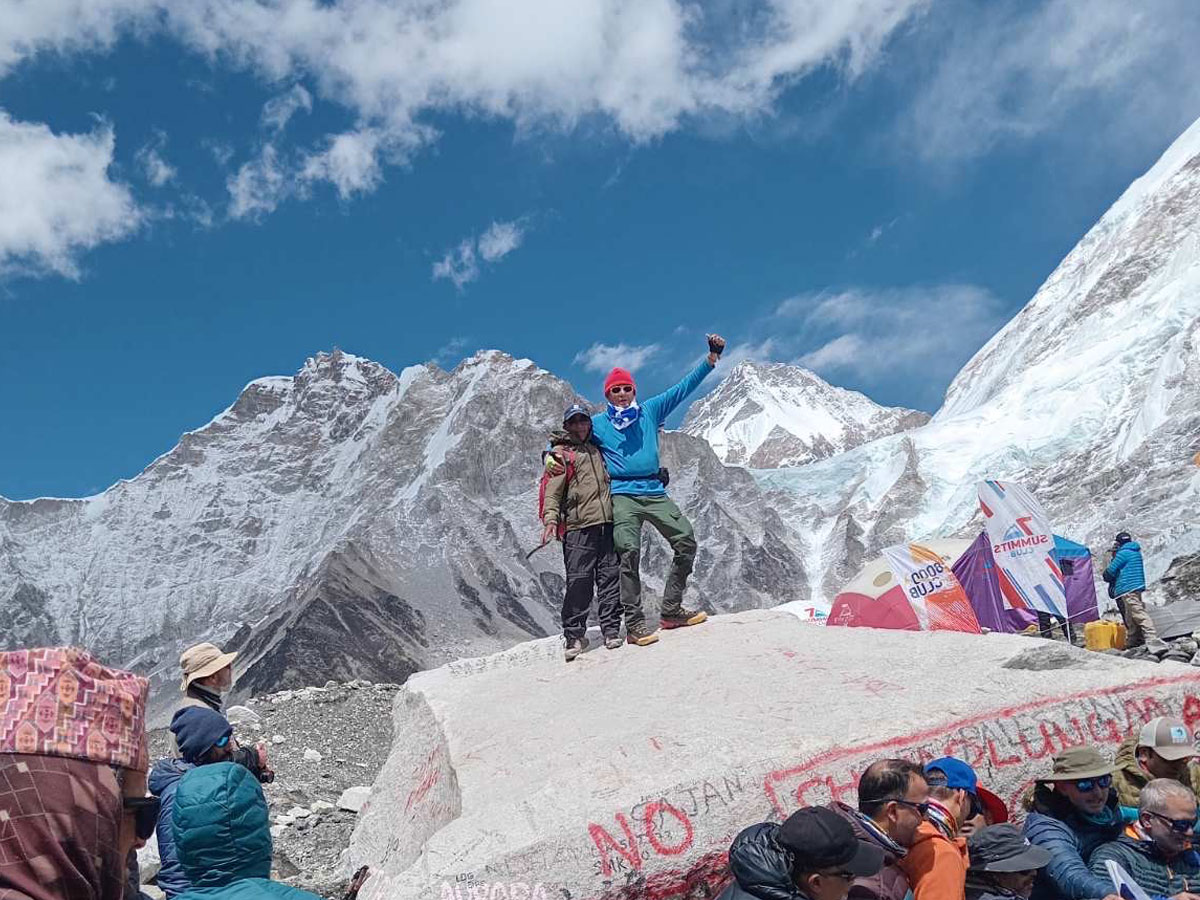
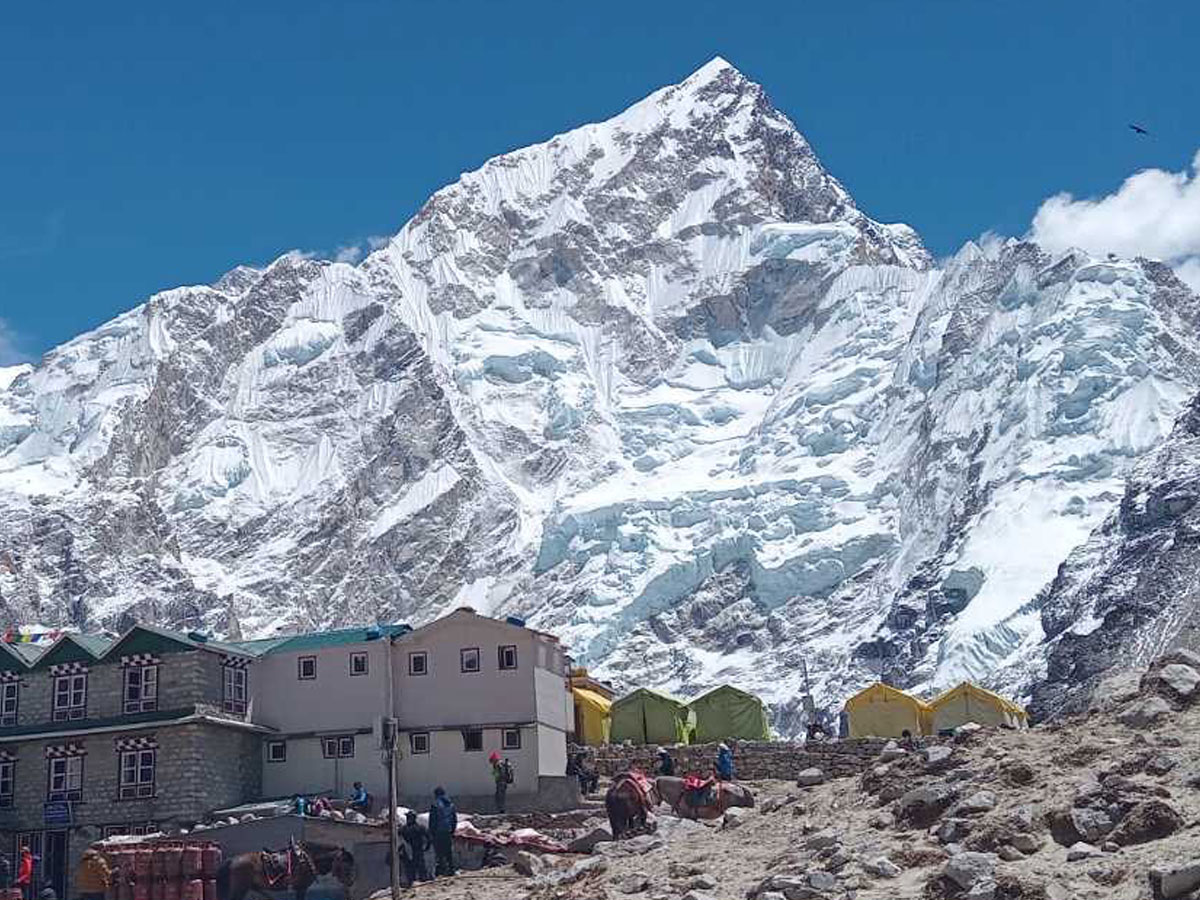
Everest Base Camp Trek marks its name as one of the best treks in the world, because this Himalayan adventure leads you to the launchpad of the tallest mountain in the world - Mt. Everest. While many consider, this trip takes you to the highest point to the Everest Base Camp (EBC), tha highest point is the almighty Kala Patthar, that soars at an elevation of 5545 meters, with the breataking sunrise view over the iconic Mount Everest, with other surrounding peaks, such as Makalu, Cho Oyu, Nuptshe, Lhotse, Tharmseku, along the sparkling Khumbu Glacier. Besides, the main highlight stands out to be the Sherpa cultures and traditions, residing in the Khumbu region, and the Tibetan monasteries, villages, mani walls, and chortens, where the history and glimpse of ancient lifestyle can still be seen in the present day.
Foothill of the world's highest peak - Mount Everest
This Himalayan adventure meanders through the world's UNESCO Heritage Site - Sagarmatha National Park, and showcases the untamed beauty of nature, glaciers, Himalayan flora and wild species, diverse landscapes, and other mountain views like Mt. Ama Dablam, Tharmseku, Nangpai Gosum, Baruntse, etc, in each step. Starting the journey with a Lukla Flight, the route follows the pathway to Namche Bazaar, where the world's highest situated 5-star hotel - Everest View Hotel is situated, which is visited during acclimatization day, and continues the pathway toward Tengboche Monastery, Dingboche, Lobuche, and Gorakshep, before ascending to the almighty EBC and Kala Patthar.
Major Highlights
Learn about the distinct lifestyle of the Sherpa cultures and traditions, and witness the historical architecture and arts within the ancient Tengboche and Khumjung monasteries.
Gain insight into the rich Himalayan flora and fauna residing within the iconic Sagarmatha National Park, showing the six climatic zones and the distinct landscape overview.
Reach the vantage tip point of the iconic Kala Patthar, and the launchpad of the world's highest mountain - the almighty Everest Base Camp, showing the breathtaking vista of the Khumbu glacier.
Get the breathtaking aerial view over the massive Himalayan range during a 35 to 40-minute Lukla flight.
Annapurna Base Camp Trek (ABC)
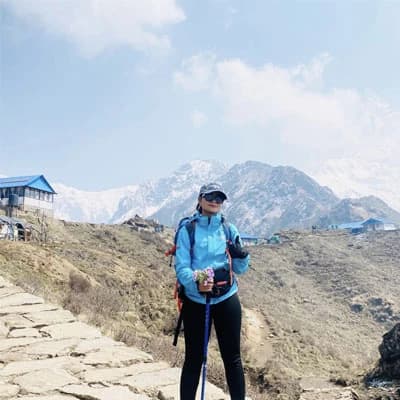
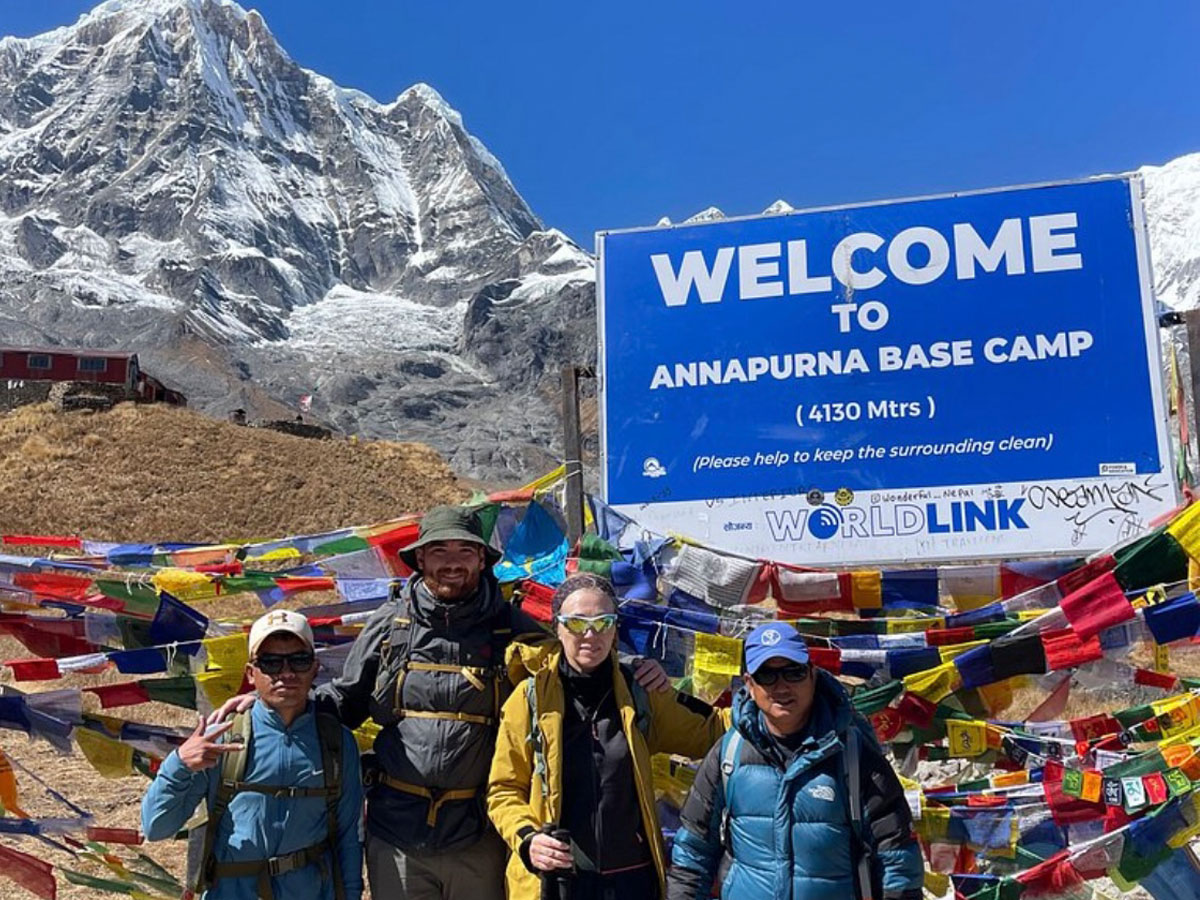
On the other hand, the Annapurna Base Camp Trek is one of a kind adventure, which combines the distinct culture, diverse landscapes, villages, alpine valleys, and the unmatched view of the Himalayan peaks, leading you to the base camp of the world's deadliest peak - Mt Annapurna I (8091 m). This trip takes you to the highest elevation of 4130 meters, passing through the Macchapuchare Base Camp - the foothill of Mount Fishtail, leading you to the 2 base camps in one single adventure. Unlike EBC, which shows you only the culture of Sherpa communities, you will basically get an overview of a variety of ethnic communities, and learn their lifestyle, including Magar, Gurung, and Tamang cultures, passing through less developed tea houses, giving you a raw adventure.
Annapurna Base Camp (ABC)
Throughout the journey, several mountains, including the Himchuli, Gangapurna, Macchapuchare, along with Annapurna and Dhaulagiri massif, the world's 7th and 8th highest Himalayan ranges, will accompany you in each step. This Himalayan adventure kicks off through several notable villages, such as Ghandruk, Jhinu Danda (also known as Hot Spring), and even Ghorepani - the famous Gurung village, if the Ghorepani Poon Hill Trek is combined in the itinerary.
Major Highlights
Unveil the unique culture of the diverse ethnic groups, and know how they sustain their life in such a remote mountain place
Reach the two legendary base camps in one single adventure: Machhapuchare Base Camp (MBC) and Annapurna Base Camp (ABC)
Relish in the breathtaking panoramic views of the Annapurna and Dhaulagiri massif, right from the start
Take a dip at the natural hot spring of Jhinu Danda- said to cure disease and tired muscles
How can I reach Annapurna Vs Everest Base Camp? Transportation Accessibility
There are alternative ways to reach the starting points through the Everest Base Camp and the Annapurna Base Camp route. In terms of budget and time, you can either use road transport, which is cheaper, or take flights, which show the breathtaking views over the Himalayan range.
Roadway
Annapurna Base Camp route access by road is quite easy and cheap. Kathmandu and Pokhara are linked by a tourist bus line along the picturesque Prithvi Highway in 6-7 hours. The bus ride itself is an experience in Nepal mountain adventure, viewing the beautiful hills and rivers. From Pokhara, a jeep drive is needed to reach the starting place of the ABC route. The main points of entry where the real mountain walking begins are places such as Nayapul or Phedi. Accessibility to the Annapurna region is not a problem since road access to the region is well-developed, where you would get a glimpse of the normal life in Nepal.
The overland route to the Everest Base Camp is longer, yet it covers a lot of wonderful sights! There are several routes and entry points to reach the Khumbu region, such as Phaplu, Jiri, Salleri, and others. This opens up more options to plan your adventure in the Everest region. One popular option that serves as a jeep drive to the Everest Base Camp is a must-see for anybody interested in road journeys near the Everest region. This is increasingly becoming popular since it is a much cheaper alternative to flying to Lukla. You can check out detailed information about this route at various Nepal adventure travel websites.
Then there is the classic Jiri to Everest Base Camproute, which was, in fact, the original route used by early mountaineers. More days are added to your trip on account of this road access, but it offers a more full-fledged high-altitude experience. The road journey is great for some sights of rural Nepal, plus better acclimatization as you slowly but surely gain altitude passing through various villages and landscapes.
Airway transportation
From the flight side, if you want to start the route towards Annapurna Base Camp, then the flight to Pokhara is the best option. The 25-30-minute flight from Kathmandu gives excellent mountain views on clear days. You could see the peaks of the Annapurna region from the airplane window, setting the spirit for the forthcoming trek! Upon reaching Pokhara, you need to hire ground transport yet again to go to the actual point from where your route begins. For those with limited time or keen on avoiding long bus rides, this option should be an utmost consideration. The flight prices come at pretty cheap rates, and the time saved is mostly appreciated by any Nepal adventure traveler.
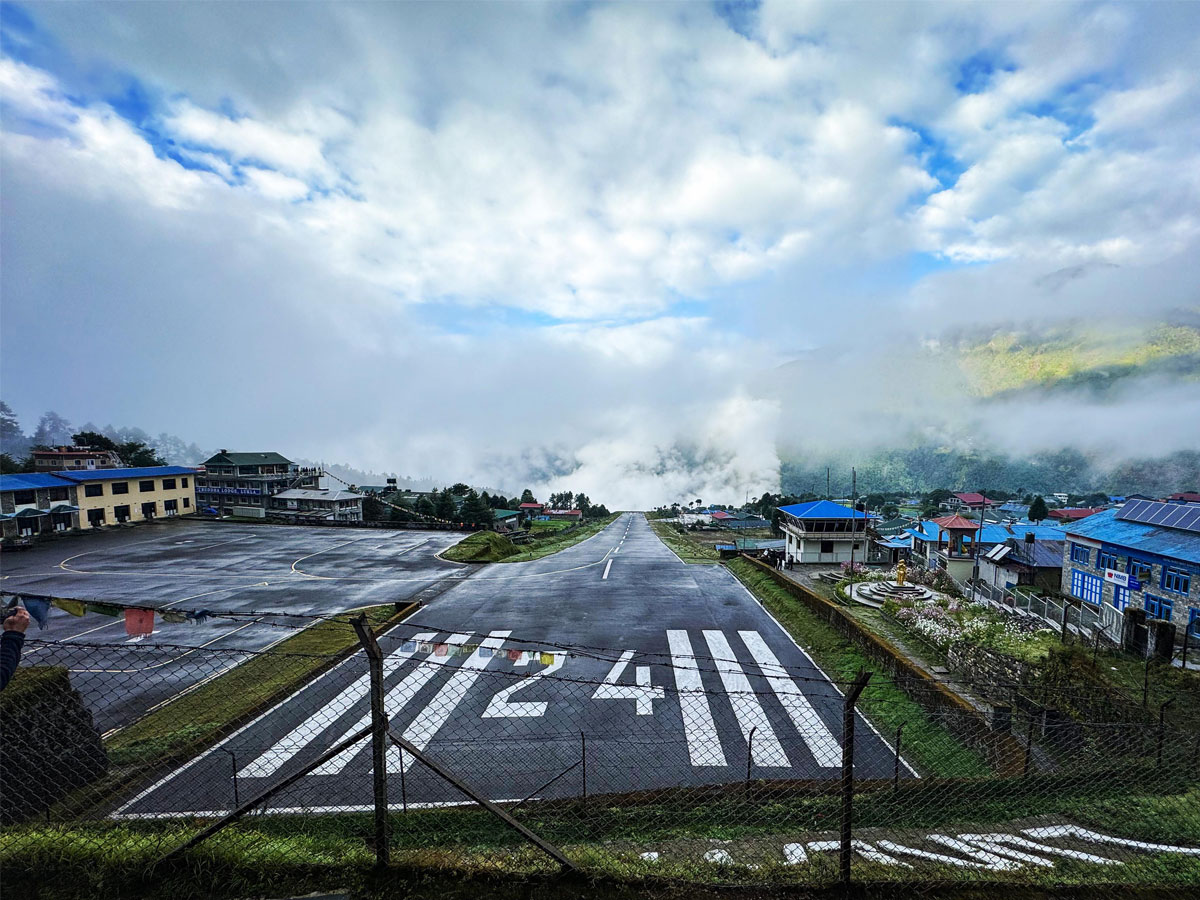
world's dangerous flight - Lukla Airport
Usually being considered the most exciting way to start your EBC trek, the flight to Lukla is known as one of the most thrilling airports worldwide due to its short runway and mountainous location. It takes about 30-35 minutes from Kathmandu and lands you right in the heart of the Khumbu area. The flight to Lukla cuts away several days of road travel and gets you directly into the Everest Region. Meanwhile, if you want to save time, then opting for the Helicopter Tour to Everest Base Camp would be a better option, that leads, you directly to the foothill of the almighty peak, in one day, or just fly to Lukla, via Heli ride, and proceed the hike further, heli ride, avoids the hassle of delay of lukla flight, and also provide you front row view of the mountains, privately.
Which Trek Everest Base Camp or Annapurna Base Camp covers more distance?
TheAnnapurna Base Camp distance covers approximately 110 kilometers (68 miles) from start to finish. A much shorter time is taken for the view of beautiful forests and villages offered by this ABC route. Conversely, the distance covered to EBC offers a much longer walking distance of around 130 kilometers (81 miles). The longer walks take one deep into the Khumbu region.
The interesting thing about distance is that the ABC route seems shorter because you walk through changing terrains. You view red rhododendron forests, rice fields, mountain villages, etc., making the walk casual and enjoyable. The walking distance for the EBC route involves more high-altitude walking on rocky terrain. Everest trails are longer but more popular in that you are walking toward a living legend-grade mountain, the tallest on earth. Both trekking routes offer superb panoramic views of the mountain ranges, but differ depending on physical fitness preparation.
While the Annapurna Base Camp demands 5 to 8 days of total duration following a standard route, with 5-6 hours of walking distance per day, the almighty Everest Base Camp requires at least 12 to 14 days to complete the round trip, with 6 to 7 hours of trailhead coverage per day. Comparatively, the route to EBC covers more distance and demands a long walking trail on a daily basis.
Between ABC vs EBC, which trek is more difficult?
ABC Trek
For novices on high-altitude trekking, the trek to Annapurna Base Camp presents an easier option in comparison to EBC. With a height of 4,130 meters, the danger of getting altitude sickness is greatly reduced for this route, hence a more comfortable acclimatization for the hikers to the thin air. The footpath is home to some very well-kept trails with excellent teahouse facilities all the way. From teahouses, trekkers enjoy a warm dinner and lodging, and the common room provides a place to sit and mingle with other hikers. In this way, it is suitable for family adventurers wishing to try Himalayan trekking very lightly.
On the other hand, getting to Everest Base Campis definitely a little bit more demanding with regard to preparation, both physical and mental. At an altitude of 5,364 meters, the breathing difficulty is such that you should take careful acclimatization for a couple of days. On the other side, the tumbled and irregular rocky terrains of the Khumbu region are much rougher on feet and legs, requiring strong endurance in tough boots. Weather can be more extreme and more unpredictable, with temperature drops setting in suddenly and with storms developing out of nowhere, hampering visibility and turning dangerous for the trek. The major difference is that compared to the Annapurna region, the Everest region demands utmost caution for altitude and weather conditions.
To know more, check our updated blog posted in 2025, Everest Base Camp difficulty, which shows possible challenges and detailed guidelines to be prepared accordingly.
Which trek is longer: Annapurna Base Camp or Everest Base Camp Trek?
Another big difference between the popular routes of Everest Base Camp and Annapurna Base Camp Treks is the difference in duration. Whereas the Annapurna Base Camp route essentially takes anything between 7 and 12 days, depending on your starting point and walking speed, this shorter timeframe makes it more convenient for anyone who cannot take a long leave. You can make it shorter if you are really prepared. The minimum time it takes to complete the Everest Base Camp route safely must be 12-16 days.
The longer duration is due to higher altitudes and the days required for proper acclimatization. Therefore, the EBC route includes mandatory rest days at Namche Bazaar and Dingboche. It's a treat with that additional time afforded by the Everest region journey because of the deeper cultural encounters with the Sherpa communities and the more fantastic mountain vistas. Time-wise, the longer stretches increase the price points for accommodation, food, and guide services involved in the teahouse experience.
Everest vs Annapurna Base Camp: Route Variations and Impact on Highlights
Everest Base Camp (EBC) Route
There are other exciting options along the way to give your adventure in the Khumbu region a special flair. Each variant will offer different experiences at varying levels of challenge in the realm of high altitude.
One of the most breathtaking options to bypass the normal classic is the Everest Base Camp trek via Gokyo Lake. It is an extremely scenic variation; the Himalayan land passages go to the glistening turquoise Gokyo Lakes before Everest Base Camp. In this part, you will trek up to Gokyo Ri (5,357m) and see one of the most panoramic scenes of peak Everest, Cho Oyu, Lhotse, and Makalu. The main EBC way gets too crowded during the trekking months, while Gokyo Valley remains very peaceful and quiet as far as the teahouse experience goes.
For the fit and adventurous, it is the ultimate challenge, the Three Passes Trek. You also cross three high passes: Kongma La (5,535 m), Cho La (5,420 m) and Renjo La (5,340 m). It is a trek that only visits Everest Base Camp and Gokyo Lakes in just one fitting itinerary. This journey takes 18-21 days; those willing should be in excellent physical condition and have considerable previous high-altitude trekking experience. The Three Passes offers a complete Everest region experience of contrasting landscapes and demanding terrains.
The Everest Base Camp Trek with Helicopter Return will take an average of 13 days, and it is the best alternative to those who may want to save time and energy. In the classical variant, you go on foot to Everest Base Camp and then fly back by helicopter, which gives a wonderful overview of the clouds and the Himalayas and saves 3-4 days of trekking. The flight is an adventure in itself with bird-eye views of Everest, Lhotse and Khumbu Icefall. This alternative is best suited for those with little or no time to spare who want to enjoy a full base camp experience without that long walk back.
Annapurna Base Camp (ABC) Route
The Annapurna Base Camp Trek also has wonderful variations that add more taste to one's Annapurna region adventure. These alternatives provide you with different options and mountain experiences inside the gorgeous Annapurna Conservation Area.
Combining the Annapurna Base Camp and Mardi Himal Trek routes is becoming a very go-getter-adventurer's dream. This option takes you to three different base camps in one journey. Mardi Himal Base Camp is situated at 4500 meters, with the nearest views of Machhapuchhre and Annapurna South. The Mardi Himal side is less touristy and more primal than the ABC. From the rhododendron forest to the alpine meadow, just a bunch of landscapes you get to see!
Short Annapurna Base Camp Trek routes are suitable for trekkers with time restrictions. This variation allows 5-7 days, concentrating on a swift arrival at Annapurna Base Camp without any extra detours. Starting in Pokhara, this is a direct route that passes through Ghandruk and Chhomrong. Those who want to have an ABC experience but cannot take a long holiday would go for this. The shorter time lowers costs on accommodation and guides while still offering beautiful views of the Annapurna Sanctuary.
The Annapurna Base Camp with Poon Hill is one of the most popular variations as it combines sunrise views. It is perhaps the better-known variation, mixing the sunrise views with base camp adventure. At 3,210 meters, Poon Hill is world-famous as millions would watch the sunrise over the Annapurna and Dhaulagiri Himalayas. From here, the basis of your adventure becomes even richer as you pass through the traditional Gurung and Magar villages. The Poon Hill part is very easy and comfortable for many visiting families and beginners who want to build confidence in the lower altitude area before going on to the higher altitude sections of the ABC route.
Ideal Seasons and Best Time to visit both the base camps
An appropriate time for a Nepal adventure is an important ingredient for a successful mountain experience. The seasons for trekking to the Everest Base Camp and the Annapurna Base Camp are very much alike, but there are striking contrasts worth highlighting.
Spring (March to May) and Autumn (September to November) are thebest seasons to visit Annapurna Base Camp because the Annapurna region turns into a botanical park in the spring with rhododendron flowers in clear red, pink, and white. The days are not too hot, and it has mild temperatures. Autumn holds some of the clearest panoramic mountain views, rather stable weather, and almost no rain. That is when the Annapurna Conservation Area looks its best, with a clearer blue sky and big snow-covered giants and an almost invisible trace of mist clinging to the mountains. It is one peak season favored by ABC trekkers because of perfect visibility and good cultural immersion in Gurung and Magar villages.
On the other hand, the Everest Base Camp Trek follows the same seasons to be the best time, which are Spring and Autumn, whereas the weather and temperature are more unpredictable in the Khumbu region. The weather in the Everest region is characterized by stronger winds and colder temperatures, particularly at higher altitudes. Spring and Autumn bring the most stable weather, wherein conditions are ideal for acclimatizing and walking.
Heavy frost descends during winter (December to February) on either of those base camp locations, working up different risks of altitude sickness, while monsoon showers in summer fall heavily among them, obscuring mountain views. Trails become slippery and tough to navigate as well. Comfortable high-altitude conditions during the best seasons, however, will turn your Himalayan tour into a pleasant and safe expedition.
Which one offers the best mountain views: ABC Trek vs EBC Trek?
Both of the routes are awe-inspiring in the panoramas of mountains, but both portray completely different mountain characters and features. The Annapurna Base Camp trek brings you into the most popular Annapurna Sanctuary, which is like a theatre of nature, providing an excellent 360-degree view of colossal mountains such as Annapurna I, Annapurna South, Annapurna III, and the beautiful Machapuchare (6,993m) or Fishtail Mountain. The three mountains that you will also view are Hiunchuli, Gangapurna, Annapurna IV, and Tharpu Chuli (5,663m). Mountain scenery on the ABC route is more personal and full of color because one is surrounded by mountains in the natural form of a bowl.
As we proceed, on the Everest Base Camp side, you get views of the world's tallest mountains, Mount Everest, Lhotse, Nuptse, and Cho Oyu. They will also have views of Ama Dablam, Thamserku, Island Peak, Pumori, and Lingtren from this side. You get to admire the giant Khumbu Glacier and further make a visit to the popular Tengboche Monastery of ancient times.
The Everest region shows more dramatic and rugged mountain views with huge glaciers and icefalls. Both routes offer world-class mountain photography opportunities, yet the choice depends on whether one wants more personal, colorful views or rather majestic, big mountains and world record peak views.
Which one is more beginner-friendly? Annapurna Base Camp or Everest Base Camp?
In the case you are planning your very first adventure in the highlands of Nepal, the Annapurna Base Camp trail is most certainly the easier one. And this is why it will not be such a bad idea among novice Himalayan experiencers. The ABC route is located at 4,130 meters and is considerably lower than the EBC, which is also located at 5,364 meters. With this altitude difference, there is a very low probability of altitude sickness and less strain to your body to perform the acclimatization process. Most people can tolerate the height of the Annapurna region without extreme difficulty in breathing or agonizing headaches.
ABC Trek takes 7-12 days against the EBC Trek, which requires a minimum of 12-16 days. Speaking of short, the ABC is perfect for beginners who want to test their abilities in mountain walking without committing to a very long journey.
Teahouse accommodation in the Annapurna Conservation Area is excellent as teahouse facilities are equipped with comfortable beds, good food, and warm hospitality. The routes are also very well paved with stepping stones most of the way, and thus make the experience less stressful on your legs and joints. Yet the EBC one could still be made by the beginners in reasonably good shape if they have the time to acclimatize adequately. The Khumbu region has world-class facilities and experienced Sherpa guides to assist newcomers in altitude adjustment.
For a first-time Nepal adventure travel experience, the majority of beginners go for the ABC trail as it provides a real taste of Himalayan splendor and cultural encounters, yet without the harsh demands of the Everest Region. To conclude, comparing both Annapurna Vs Everest Treks, Everest Base Camp is more challenging in terms of distance coverage and varied terrains navigation. Meanwhile, Annapurna Base Camp falls more under beginner and family-friendly adventure, demanding shorter distances and duration coverage on a daily and total basis.
Accommodation and Amenities: Which One Is Better?
On accommodation and facilities, both Annapurna Base Camp and Everest Base Camp offer comfortable stays, but there are some points about which you should be aware. Theaccommodation along the ABC routeoffers great teahouse facilities with a more varied choice of accommodation. Most lodges in the Annapurna Conservation Area have single rooms with comfortable beds, clean blankets and even attached toilets and hot showers are available for a small fee. Good WiFi internet is available in most villages along the route.
Everest Trek Accommodation includes some of the best teahouse accommodation available in the world, particularly in the popular villages such as Namche Bazaar and Dingboche. On the EBC route, lodges are generally expensive, though they provide comfort levels similar to other places. Facilities grow quite basic; however, the nearer you get to Everest Base Camp at the higher the altitude. The Khumbu region teahouses serve delicious mountain food, and many are well-equipped in terms of heating for the cold nights. Both routes provide authentic mountain accommodation experiences cushioned with warm hospitality.
Cultural Differences and Indigenous Communities
On a comparative note, the cultural offerings of these two routes are different yet equally charming. Thus, knowing these differences will determine which Nepal mountain adventure strikes your interest.
Culture of Everest Base Camp Trek
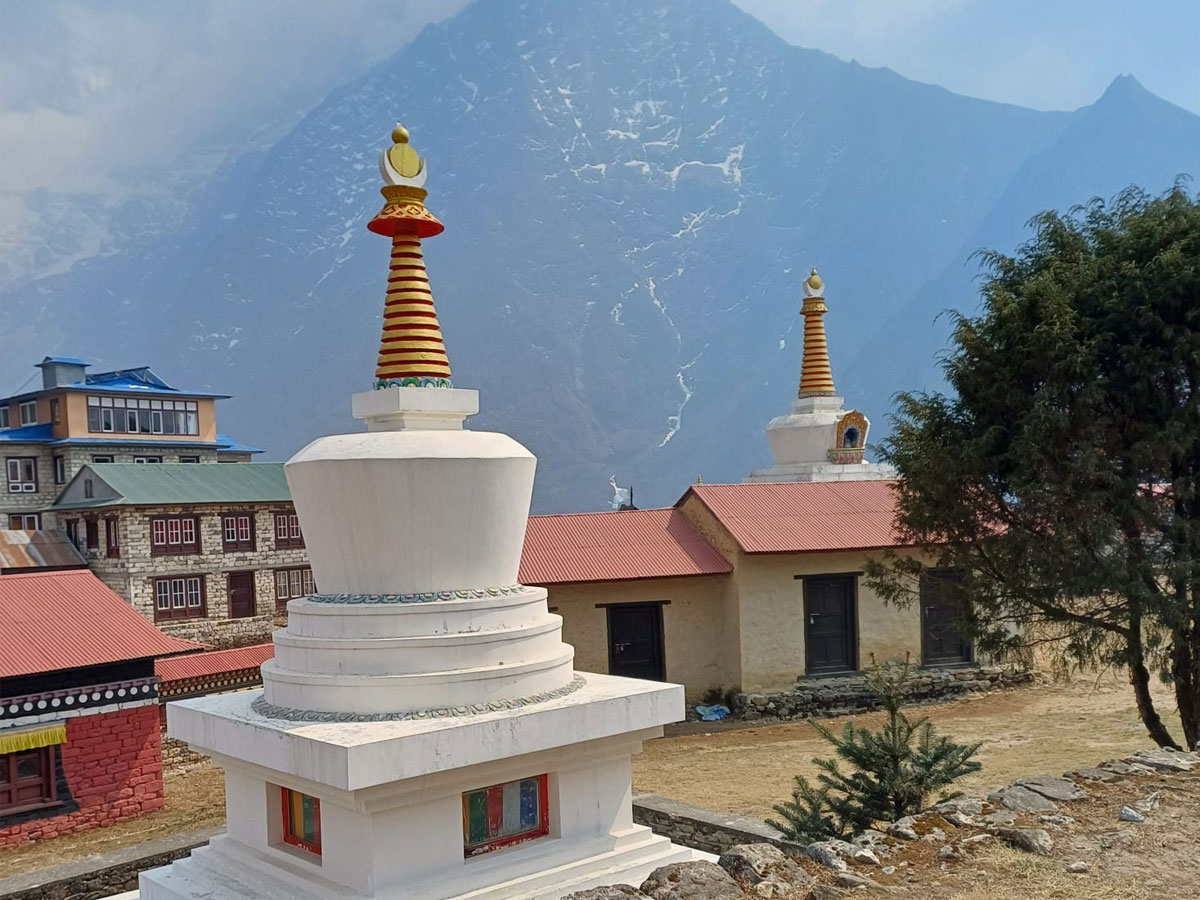
The Everest Base Camp route exposes you to Sherpa culture in the Khumbu region. The Sherpa communities are well known as hospitable people, and the belief was that they had evolved their lives and cultures here in these high altitudes over thousands of years. You shall see beautiful Buddhist monasteries, colorful prayer flags all around, and perhaps you will even hear the soft sounds produced by prayer wheels.
The Sherpa communities are known to be very hospitable, and it is believed that they have developed their life and cultures here at these high altitudes over the last thousands of years. Then you can visit them and see how they live, enjoy their cuisine, such as Tsampa and yak cheese, and be aware of their extreme spiritual connection to the mountain at either Namche Bazaar or at Tengboche.
Culture of Annapurna Base Camp Trek
When trekking toward Annapurna Base Camp, one gets a wider scope of cultural experiences. You enter the villages of different ethnic groups of Gurung, Magar, Brahmin, and Chhetri communities. Each of these groups has a tradition, language, and culture. In the Annapurna area, one observes how multi-ethnic communities live together in the mountains. You go through a Hindu temple, learn about traditional methods of farming, and join local festivals depending on the month.
Both routes give fantastic cultural experiences while in Nepal, but the EBC one lets you delve deeper into a particular culture, whereas the ABC one gives you a wider range of cultures.
Cost Differences of Annapurna Base Camp Trek Vs Everest Base Camp Trek
Everest Base Camp (EBC) Trek Cost
In comparison, Everest Base Camp falls under a more expensive trip, considering several factors, such as Lukla Flight, expensive accommodations, experienced guides, durations, and several other factors. The main reason that makes this trip more expensive is the Lukla Flight, which alone costs approximately USD 500 to USD 550, to reach and come back to Kathmandu, which highly increases the cost on the costlier side. As there is a wide range of options regarding the lodges themselves, on the basis of standard and luxury with modern amenities, it costs approximately. USD 10 to USD 150, depending on the luxury or basic ones, whereas the food options, somehow, cost from USD 5 to USD 10 per meal. Meanwhile, the guided trek to Everest Base Camp costs range from $1300 to $ 2500, depending on the no. of hikers in your group.
Annapurna Base Camp (ABC) Trek Cost
As compared to EBC, the trek to Annapurna Base Camp costs are more on the cheaper side, ranging from USD 500 to USD 1200, which highly depends on how your itinerary has been set and the total duration of the trip. As the trip is shorter, and cheaper in terms of meals and accommodations, you can undertake this trek in a budget-friendly way and save the extra personal spendings as well by opting for roadway accessibility to reach Pokhara, rather than opting for a flight to Pokhara, which cost over USD 100 during the peak time. The guided trek to ABC starts from USD 499 and goes up to USD 999 per head, which covers all your requirements from basic logistics, to every requirement such as permits, experienced guides, transportation, meals, and accommodation cost being covered.
Transportation Cost to reach Everest Base Camp and Annapurna Base Camp
The transport cost of reaching these destinations of the base camps differs widely depending on which direction you go in on your Nepal mountain adventure.
The mode of transportation to Annapurna Base Camp is likely to be the cheapest mode of transport, which will include a Tourist Bus transportation to Pokhara, which costs almost USD 8 to USD 12. There, you will need to rent one of the jeeps, which costs approximately USD 30-50 per group. Flying to Pokhara is the faster method and consequently costs USD 80-120 for a domestic flight. So transport will cost you anywhere between USD 40-170 in the Annapurna Base Camp route, depending on your choices.
On the other side, Everest Base Camp transportation options tend to be pricier. The famed flight to Lukla is USD 180-250 per person, making it your most significant expense even before you start thrusting. An alternative provided is a helicopter ride that comes at an expense of anywhere between USD 1,000 and USD 1,500 per trip, one way from Lukla or from Everest Base Camp back to Kathmandu. The bus tickets to Jiri, or Phaplu, cost around USD 15-25, but you will be spending more days and more accommodation costs from there, through the road option. Road option saves your flight money but takes away your time and adds to your lodging expenses.
The earlier observation points out how the Annapurna region allows cheaper transportation options, whereas, for the Everest region, more upfront transportation investment is required.
Guide and Porter Cost: Which Trek is cheaper to hire supporting crews?
The guide and porter expenses for this Nepal mountain adventure would depend on the route you choose and the level of services required. For Annapurna Base Camp, experienced guides charge something between USD 25 and USD 35 a day, while porters range from USD 20 to USD 25 per day. They are well-versed with the entire Annapurna area and assist with cultural encounters as well as navigation.
But the guide services on the territory of the Everest Base Camp are slightly higher because of the altitude challenges. The cost of hiring a guide is USD 30-40 per day in the Khumbu region, where the Sherpas are highly specialized and have prior knowledge of high-altitude pressures and acclimatization methods. Porters for the EBC route cost USD 22-28 per day. Note that tipping is expected, generally around USD 3-5 a day for guides and USD 2-3 for porters.
Many Nepal adventure travel companies, such as Destination Himalaya Treks, provide full-service packages that include the guide fees, porter service, and their food and accommodation; insurance is also included in the package.
Permits Cost for Annapurna Base Camp Vs Everest Base Camp Treks
If you're going for the trek to the Annapurna Base Camp, two permits must be secured before embarking on any trekking activities. One is called the Annapurna Conservation Area Permit, or ACAP. If a foreigner is from outside the SAARC region, the charge is USD 30 or approximately 3,000 Nepali rupees. It is discounted for those coming from SAARC countries at USD 15 or 1,500 rupees. The second passport you require is the TIMS card, standing for the Trekkers Information Management System. For most foreigners, USD 20 or 2,000 rupees is the price, and for SAARC nationals, USD 6 or 600 rupees.
Coming to permit for Everest Base Camp, they're different. A foreigner will be required to come into the Sagarmatha National Park first and the fee to enter it is USD 30 or 3000 rupees, but when it comes to SAARC visitors, they are required to pay USD 15 or 1500 rupees. Another permit is a local municipal permit at the Khumbu Pasang Lhamu Rural Municipality that costs USD 20 (2,000 rupees) to foreigners and USD 10 (1,000 rupees), to people of the SAARC countries. Do take care of all these permits before you actually start trekking or you might find yourself in trouble at the checkpoint.
Which Trek possesses more challenges in terms of altitude sickness?
Knowledge about high-altitude reaction helps one in preparation to stay safe during the adventure in the Himalayas.
The ABC route goes up to 4,130 meters, high enough to cause mild symptoms of altitude sickness in some. In contrast, most travellers do well at this altitude with proper acclimatization. The ABC route is actually good for your acclimatization, owing to its gentle climb profile. You might get very minor headaches or a touch of breathlessness, but that would be about it for major altitude problems on the ABC route.
From the point of view of altitude challenges, the Everest Base Camp trail ranks much higher, attaining an altitude of 5,364 meters. Oxygen levels are about half at this altitude compared to sea level. Altitude sickness is more frequent and very serious on the EBC route. The signs of altitude sickness include severe headache, nausea, dizziness, and difficulty sleeping.
The Khumbu Region demands days of acclimatization to the condition of your body as, say, in Namche Bazaar or Dingboche. That is why the path to the Everest Base Camp should be taken more seriously in terms of the risks associated with the height and appropriate preparation. So for beginners in high-altitude experiences, the Annapurna region sure has more advantage. The EBC route requires better physical fitness and understanding of symptoms of altitude sickness for a safe and successful Nepal adventure travel experience.
Packing and Preparation Tips for both expeditions
Make sure you bring layers with you as it gets very cold in higher altitudes in both EBC and ABC trails! Put moisture-wicking clothing against your skin, then layer it with something more insulating like a fleece or down jacket and finally a layer of a rainproof jacket.
You should carry a down sleeping bag suitable for temperatures down to -10°C to -15°C because the teahouses are usually not heated except in areas used by all. For your big crossing day, you really wouldn't want to be shivering all night
Your feet will take you over rocky terrain, through snow, and over some demanding ground. They must possess water resistance, an insulated sole, and grip. Break-in duration is essential before your trek. High-ankle boots are better for support on uneven terrain.
Going uphill, trekking poles act as assistance in pushing and downhill, they take the weight off the knees and help prevent falls. Here on a pass crossing day, when you are tired and the ground might be icy and rocky, those few extra seconds of balance can well become a lifesaver.
High sun reflection off snow and ice at high altitudes comes in burning. You would want to slap on high SPF sunscreen (SPF 50 minimum), wear good quality sunglasses that offer UV protection, and maybe even wear a sun hat. Glacier sunglasses would work best.
There should be blister bandages, pain medicine, stomach medicine and altitude sickness pills in the first aid kit. More importantly, if recommended by your doctor, consider taking altitude sickness medicine such as Diamox. Put in common medicines for headaches, stomach problems, and cuts.
Carry a 2-3 liter capacity drinking water bottle and keep water purification tablets or purchase a filter for your water before your journey.
For best results, start working out at least 4-6 months ahead of your trek. The body must go through getting stronger and more stamina slowly. You must start training early, since rushing can cause injuries.
Each weekend, go on a hike with a full backpack. Spend about 3 to 4 hours for your first day and slowly increase to 8 to 10 hours. This makes your body easier to carry your backpack over long distances.
Try squats, lunges and step-ups three times a week in your workout. Having powerful leg muscles will support your movement on the climb and safeguard your knees when you move down the slope. The strength of your legs determines much of your success during this trek.
Whether you run, swim, cycle or do another cardio exercise, you should do it for at least 30 minutes, at least 4 or 5 days each week. Good heart health enables you to breathe normally at places where there’s less oxygen in the air.
Focus on positivity during moments when things are hard. Don’t let challenges during training make you quit. Tell yourself that you are capable. Learn from the experiences of mountain climbers by reading books about their mental challenges.
How to Choose Between the Annapurna and Everest Trek?
With all the things that you are supposed to consider when trying to decide which path to take between the Annapurna Base Camp Vs the Everest Base Camp Trek, you may just find yourself overwhelmed and not knowing what to do. The good news is that with either route, it is an amazing adventure into the mountains of Nepal, and the memories made will last a lifetime.
Based On Time
Time is one factor that most people consider while choosing their Nepal adventures in travel. If one has few vacation days for their Himalayan adventure, ABC is the best route. The ABC route takes 7-12 days in total, which makes it good for busy work schedules or short holiday breaks. For physically fit individuals, the mountain route can be finished in one week if one follows the shorter itinerary options.
The EBC route requires 12-16 days minimum to be safely completed. It has lengthier durations with the days set aside for acclimatization in the Khumbu region for one's body adjustment to high-altitude conditions. One cannot rush the EBC route for altitude safety.
Based On Cost
Your budget is a huge consideration for both of these spectacular base camp destinations. Basically, Annapurna Base Camp trekking is much cheaper for most travelers opting to do Nepal adventure travel. The cost for ABC trekking is low because of the cheap bus transport to Pokhara. Teahouse accommodations in the Annapurna region are quite reasonably priced, and food costs are manageable throughout your journey.
The Everest Base Camp route is substantially more expensive, primarily due to the cost of the flight to Lukla. Teahouse facilities in the Khumbu region tend to charge ever-higher amounts as you get closer to Everest Base Camp. Guide and porter services are slightly higher costing for the EBC due to the altitude expertise requirement. If budget is a major concern for you, the Annapurna Base Camp route is far more cost-effective and still manages to provide you with a real Himalayan adventure experience.
Based On Experience
Making the choice between the two great Nepalese mountain alternatives should be dictated mainly by your particular mountain experience. Both adventures give you the potential of experiencing totally different kinds of thrills. Go for the Annapurna Base Camp route if you seek countless landscapes, dense colored forests, and multi-ethnic cultural encounters; the ABC route presents more intimate mountain sights located in a natural amphitheater and is less taxing in terms of altitude.
It is at the Everest Base Camp that you find the highest mountain in the world, with the chance to interact with the Sherpa culture. The mountain scenery and the experience of standing at Everest Base Camp on foot are dramatic and the mountain views all almost more rewarding for those who have past trekking experiences.
A newbie high-altitude enthusiast will find the Annapurna region worth thinking over, as a softer introduction to the Himalaya. The more experienced trekkers would be attracted by the high-altitude conditions of the Khumbu region.
Conclusion: Which One Is Better?
So, in comparison to the Annapurna Base Camp versus the Everest Base Camp adventure, which one wins the battle? Honestly, there is no clear winner since both the Annapurna Base Camp route and the Everest Base Camp route offer breathtaking yet very different adventures. If you want a short and easy option with different mountain scenery and multi-ethnic culture, then ABC is your answer. It is best suited for first-timers to high altitude and would like the panoramic mountain views without much hassle.
If your dream is to set foot on the world's highest mountain's base and experience genuine Sherpa culture, take the EBC route. It gives legendary Himalayan adventures and takes extra time and altitude challenges with ease.
Both routes offer marvelous teahouse experiences, mountain views that disappear in time, and memories that last forever. Time available for options, budget, adventure goals, and fitness level- all these factors will decide the best among the two. Keep in mind that either one would do good to your heart and soul. Both are among the best trekking routes that Nepal has to offer and will provide you with the true Nepal adventure experience that you will cherish forever! Willing to head over either of these base camp adventures in Nepal, then, we at Destination Himalaya Treks are all set to welcome you to the land of the Himalayas, where our pro-expert teams will craft your packages, as per your choice and budget ,and throughout the trip, get ready to be assisted by a highly experienced trekking guide. Contact us, for more details.