Three Passes Trek Difficulty
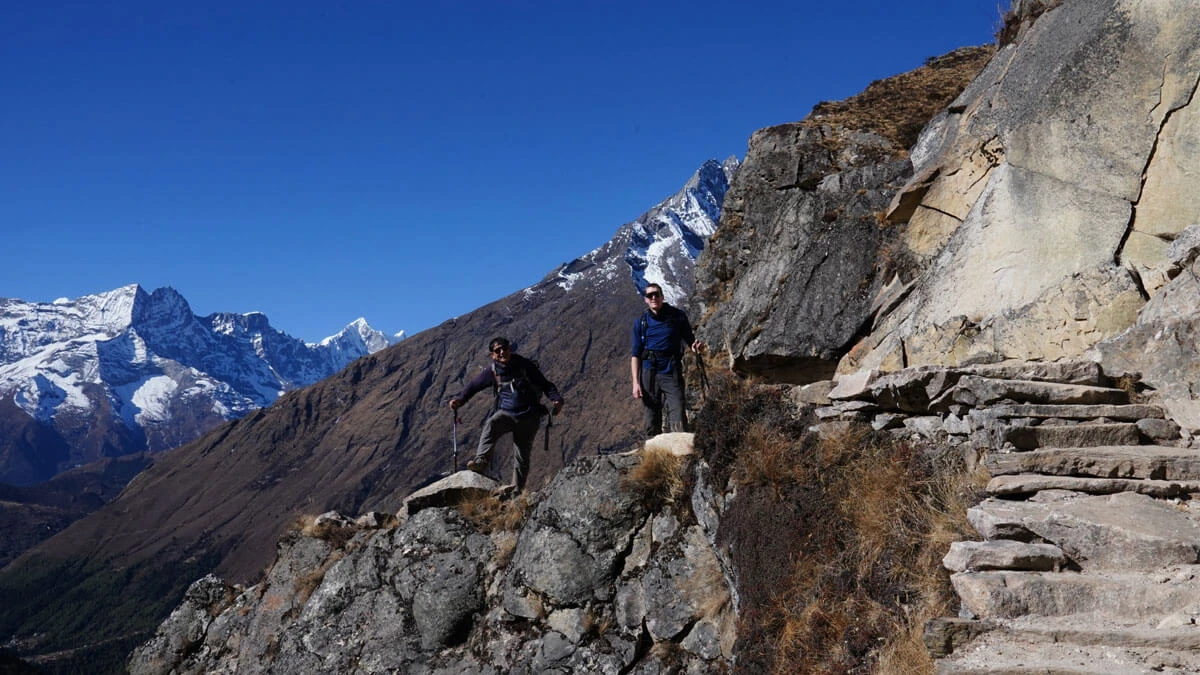
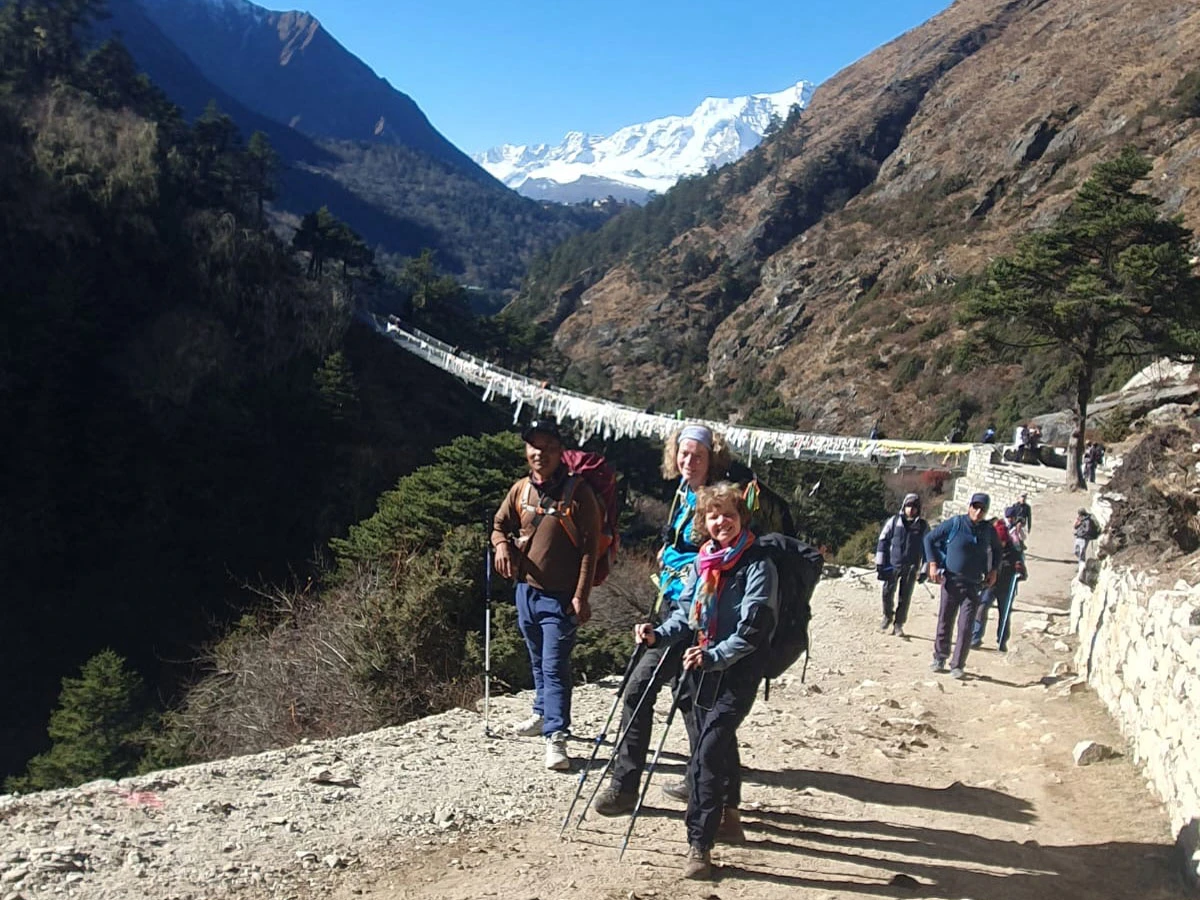
The 3 Passes Trek is one of the most challenging hikes among all the trekking adventures in the Khumbu region. Generally, we walk 4-6 hours on most days. The strenuous section comes while making our way through the snowy trails during the crossing and after descending the high passes, as we trail by the snowy, rocky, steep sections, and not to forget! glacier moraines.
The most challenging section is an uphill walk to Kongma La Pass, at an altitude of 5535 meters above sea level, which stands out as the highest among all the high passes, and includes frequent descents. Whereas the Cho La Pass might be a bit strenuous for some to pass through, as it requires navigation through several glaciers and slippery icy terrains, especially during winter and early spring. You will find the cross over to Renjo La (5360 m) easier, which is the last pass that you will navigate through.
If you don't have any prior experience, then you might feel mild symptoms of high altitude sickness if you aren't well prepared enough. We do not want that, do we? So, please do some kind of basic physical training just to boost your stamina. Nonetheless, as the Everest Three Passes Trek doesn't feature any technical climbing or prior mountaineering experience, it can be completed with proper preparations and physical training.
Altitude Sickness and Acclimatization
Heading to any expedition in mountain areas at high altitudes brings the risk of AMS (Acute Mountain Sickness), no matter how pro-hiker/trekker we are. If you are feeling some sort of difficulty/uncomfortable breathing, then report the guide immediately, as it is a mild symptom of AMS.
Firstly, monitor the symptoms: dizziness, fatigue, tiredness, nausea (feeling like vomiting), difficulty breathing, or a severe headache. Secondly, check your oxygen level with the oximeter given to you at every stopping point. Thirdly, please make sure that you are not overdoing your physical endurance, take patience, and don't rush; if it gets a bit frustrating, take a leisurely day's rest.
Here are the preventive guidelines for the trek:
- Walk at your own pace along the guide; do not panic! Please remember that a gradual ascent is the key to succeeding at the summit. Do not overspeed yourself, which can be both mentally and physically tiring.
- Hydrate yourself right from the start of the trip, as it increases your stamina level and avoids dryness in your mouth that could sometimes lead to increased headaches and fatigue, leading to altitude sickness.
- Drink hot ginger soups or dry ginger that are available in every tea house along the route of the Everest region, which boosts energy and increases the warmth of the body.
- Avoid smoking and drinking hard drinks, which significantly cause rapid feelings of an increasing heartbeat and lead to dehydration and dryness.
- Inform the guide and lodges beforehand if you are allergic to some foods, like lactose intolerance or vegan, as they might not know your health condition. So, it is always best to remind the guide as well.
- Have hot soupy foods such as Thukpa, noodles, and, if possible, try to avoid cold beverages.
- If you are too allergic to coldness, then please inform us beforehand so we can arrange 1 sleeping bag per person for the trek. Sometimes, it becomes too unbearable in high sections that can cause AMS, so make yourself warm and cosy by carrying warm fur clothes.
Best time for Everest Three Passes Trek
The ideal seasons to explore the Everest region stand out to be Spring and Autumn, as during this span of the peak seasons, the weather generally remains stable with mild temperatures, ranging from 5 to 12 degrees Celsius. While the Spring offers thriving blooming rhododendrons in the forest area, with clear views of mountains thundering in every stride, and the possibility of encountering Himalayan migrant birds at the same time.
Whereas the Autumn season, on the other hand, makes the route surprisingly captivating with the golden, crusty leaves in the green hills, seasonal vegetation, along with the vibrant celebration of the major festivals of Dashain and Tihar, which fall under this time frame.
During these peak times, the weather and temperature usually remain stable, ranging from 5 to 18 degrees Celsius during the daytime, with a lower chance of precipitation (snowfall and rainfall), and might fall below 0 to 5 degrees Celsius in higher sections above 3000 meters, offering mild humidity for hiking and ascending higher. On the other hand, the weather and temperature near Everest Base Camp range from -5 °C to -10 °C at night, which is still bearable and considered suitable, because we attain the elevation above 5000 meters in Spring and Autumn.
Meanwhile, the trek in winter and monsoon brings high snowfall, with rapid fluctuations in temperature, and is expected to fall below - 15 to -22 degrees Celsius near the base camp and high passes, making the route 10x times more strenuous due to the high level of snowfall at the same time. Due to the heavy precipitation, the route and access to the upper sections might get blocked, along with the Lukla Flight being cancelled for several days.
The views and the trailhead also get disturbed and hidden due to cloud fogginess, muddiness, and slippery on the forested area, due to the continuous rainfall, with the high possibility of trek disruption in between.
Nonetheless, if your time doesn't fit with the peak trekking season, then this adventurous adventure can surely be achieved in the off-season as well, with gradual ascent, minimum elevation gain per day, suitable gear, and an equipment packing list. However, ensure that you have prior experience of high-elevation Himalayan adventure to tackle the weather challenges and challenging route in winter and monsoon. On the other hand, beginners should opt for lower elevation treks like Everest View Trek or Peaky Peak Trek if considering the off-season time of the year.
Distance and Elevation Gain
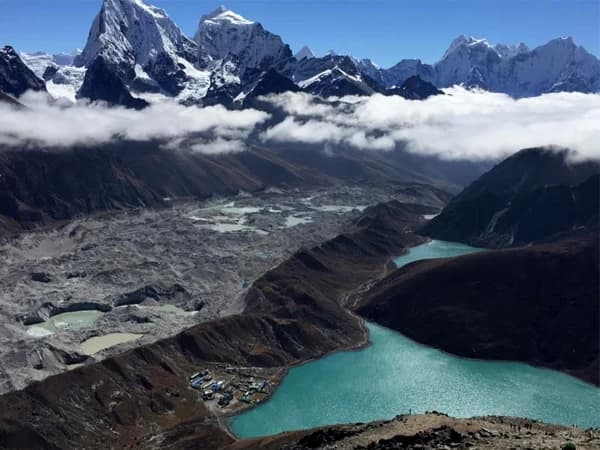
The total distance that this trek covers is approximately 192.5 kilometres (118 miles), reaching the highest elevation of 5545 meters at Kala Patthar, with a daily distance of 8 to 12 kilometres per day through varied kinds of terrain and trailheads. Reaching the Tenzing-Hillary Airport (2830 m) from Kathmandu (1360 m) in 35 minutes via Lukla Flight, with an elevation gain of 1200 meters, then crosses the first high pass of Renjo La (5360 m), following the route of Thame (3770 m), Lungden (4550 m), and Gokyo Lake (4746 m).
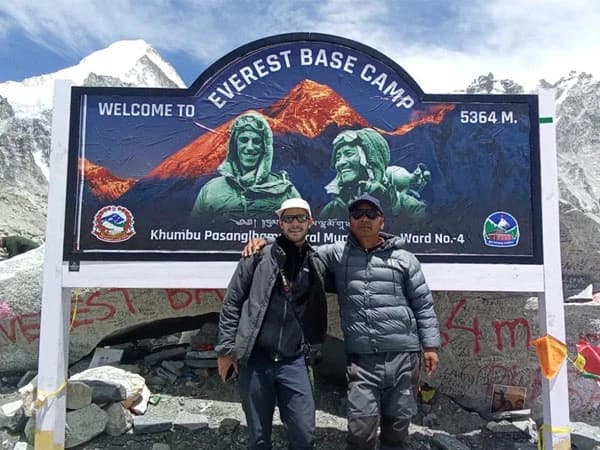
Then, continuing with the hike further, with an uphill walk to the second high pass of Cho La - 5420 meters, then rejoins the regular route to EBC, touching the iconic spot of Lobuche at 4910 m, and takes an ascent to the Kalapatthar (5545 meters) via Everest Base Camp (5364 m). Continuing ahead, the trail leads you to Lobuche (4910 m), to Chhukung, and then crosses the final pass of Kongma La (5535 m).
Descending, with a downhill walk to Chhukung (4760 meters), Monjo (2835 m), and Namche Bazaar, with a visit to Tengboche monastery and the world's highest 5-star Everest View Hotel, and then the trip concludes with a Lukla Flight back to Kathmandu, with an elevation gain and loss of approximately 6800 meters (22450 feet).
Transportation and Trailhead Access
All transportation costs or fees, and all the required arrangements are included in the package, which means when you are booking your expedition with us, all the requirements are managed accordingly. To begin/start the journey, the first and foremost thing is your arrival here, in Nepal. Soon after you arrive, you will be picked up via private vehicle from the airport to the hotel. To reach the trailhead, the trek begins with flying a board from Kathmandu to Lukla, then the expedition begins on foot (walking trail).
Both in-and-out transportation includes air charter; however, during peak seasons, it might get delayed due to air traffic contingency and bad weather conditions. If you want to enhance the odyssey overall, then you can also add a helicopter pickup from Gorak Shep or Gokyo to get back to Kathmandu for USD 999, or just reach Luka by heli, adding USD 499. If you are short on time, either way, your adventure will surely be enhanced.
Hiking from Jiri to the Everest Region: Alternative Access to the Starting Point
If you are afraid of flights or worried about the delay of the Lukla Flight, and seeking a roadway option, then you can consider starting the adventure with a bus/jeep or private car drive to Jiri or Salleri, and start from Phakding, giving an extra 1 week, or only 3-4 days. In case you are short on time, you can choose the Phaplu Salleri route, whereas for a more remote classic trailhead, consider the Jiri trailhead. For the roadway drive, we can provide you with a 4WD Jeep that fits up to 6 passengers. If you are travelling with a group or 2-3 hikers, then it is a great option and tends to be budget-friendly, with shared costs.
Instead of flying, the ground-way route gives you peace of mind and assurance of reaching the starting point, or getting back to Kathmandu on time without much of a hassle.
Lukla Flight Information for 2026 Hikers
Please take note that the Lukla Flight, due to the heavy traffic flow and weather disturbances in peak seasons, might get delayed or cancelled for a few 1-2 days, so set an extra day, leaving 3-4 days of leisure time back home. In the meantime, during March, April, May, October, and November, the flight to Lukla might be diverted to Manthali/Ramechhap due to high air traffic. If that happens, then we will take a 5-6-hour roadway drive in the early morning, approximately at 3 AM, on the planned day, and take a flight to Tenzing-Hillary Lukla Airport.
Alternatively, if you prefer, we can take a helicopter ride directly to Lukla and continue the trek, following the route to Phakding, Namche Bazaar, and then the 3-pass route from Thame to Gokyo Lake. This way, you can save time and also enjoy the breathtaking aerial view over the Himalayan range, in comfort; however, there is an additional cost of USD 450 to USD 550 per head, sharing the heli ride with 5 other passengers.
Travel Insurance
We highly recommend you get travel insurance for this trip, as we are ascending each day at high altitudes with some risk of altitude sickness. By mentioning risk, we don't mean that it is a dangerous hike, but as we know that we will be on the trail in mountainous areas, there is always risk circulating around.
However, this Three Passes Trek itinerary is set with 2 proper acclimatisation days, so there is less chance of major altitude sickness. But, as it is said, "It is better to be prepared than regret."Insurance acts as our safety net to hike more freely without worrying much about medical services. On top of that, Nepal medical emergency evacuation can cost hundreds of dollars, so make sure that your travel insurance includes emergency evacuation and medical services over 4500 meters.
Accommodations
For this expedition, you'll be provided with the best of the best tea houses/lodges available in the Khumbu region. As we know, this route is famous as it serves many other expeditions, so they are built with modern amenities. However, standard rooms don't mean they are decorated with luxury items, but yes, highly basic rooms made out of wood that seem like a Swiss style with cosy blankets, pillows, comfortable mattresses, and an attached bathroom (if possible).
However, please do not expect room-attached toilets/washrooms in some sections of the trek, as some areas have a limited tea house where we don't have too many options to choose from. If you are 2 heads of travellers, then you must share rooms in 2-3 lodges. However, if you are a solo traveller or willing to stay alone, then we can manage a single bedroom.
In Kathmandu, you will be lodged at a 4-star hotel with furnished rooms, or you can also be given options of similar kinds of hotels (if you have anything in mind).
Foods and Drinking Water
Throughout the trek, you’ll get a full-course meal served and cooked by the local people of this region, a variety of Western and local cuisines. There are many food options available on the menu that you can choose from. However, as you reach a higher elevation, the wide range of the menu gets limited.
Morning (Breakfast): In the morning, you are offered a menu to choose from. Starting from local breakfasts like Tibetan bread with curry, Khapse (made out of wheat and sugar), and Puri (oily chapati) with vegetable curry, with many others, to modern breakfasts such as porridge, oatmeal, muesli, toast with eggs and butter jam, etc., are served.
Lunch and Dinner: For both sections of meals, the foods are even more delightful and fulfilling. The diverse sections of the menu consist of Momo, Pizza, Sandwiches, Ramen, Nepali noodles, Thukpa (made out of wheat, flour, and stew), soups (veg and non-veg), Spring rolls, french fries, and everyone’s favourite, the ultimate Dal Bhat (served with rice straight out of farms, tomato pickle, spinach, green vegetables, lentil soup). The amazing part is that this can be refilled as much as you want without any additional cost. It is highly recommended as it is fulfilling yet appetising to indulge in.
Meanwhile, for the drinking facilities, from the cold beverages to the hot ones, you will find every kind. For the cold drinks, the famous options like Diet Cokes, energy drinks, and lemon soda are available, whereas for the hot beverages, consider drinking tea, coffee, or any kind of protein and nutritious soups, like tomato soup or ginger garlic soups. For bottled water, the price is generally on the higher side, costing approximately $ 0.85 to $ 1; however, for cheaper options, you can find tap water supplies or access to hot drinking water in tea houses, which you might get charged on a bottle-to-kettle basis.
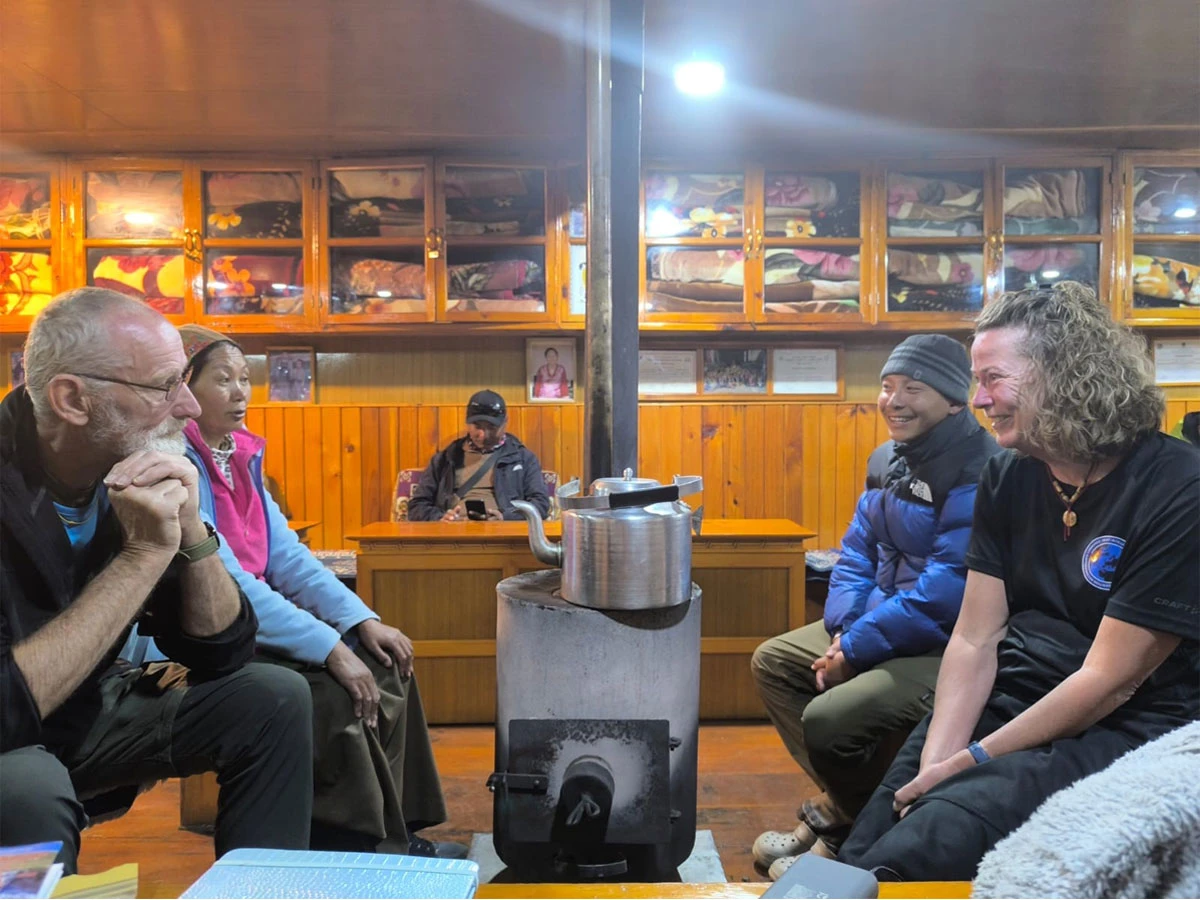
Note: While having these foods, don’t forget to dine in the kitchen area, where there is a traditional heater used to warm the lodges. These wide varieties of foods and comfortable lodges make your trip truly easy to complete without any fuss. All these meals are included in our package and are managed hygienically.
Is the Everest Three Passes Trek beginner-friendly?
If you are a beginner and have no prior experience of a high-altitude expedition, then the journey might be a bit challenging for you, as it takes you over 4000 meters each day and crosses 5000 meters at the maximum level. Crossing the high passes surely demands a strenuous ascent through rugged and steep terrain, which is surely not a beginner-friendly task.
If you have zero experience with even short hikes, then we highly recommend that you not undertake the trek without any preparations. You must be physically prepared and set the itinerary as per your pace, so the hiking duration won't be much of an issue at the peak heights. Besides all of these, packing the right gear is crucial; at the same time, make sure to carry essentials accordingly. Whereas, if you are an experienced hiker, then it is highly suggested to follow preventive guidelines, as altitude sickness might hit anyone despite of experience.
Why Destination Himalaya's Three Passes Trek Package Solves All Your Trekking Worries?
Destination Himalaya’s Everest Three Passes Trek Package solves your trekking worries by removing the stress of logistics, time, safety, and cultural depth, so you can focus on the adventure itself.
1. “I am overwhelmed by trek planning hassles”
From the moment you land in Kathmandu, every trip logistics is handled for you: airport pickup, 4‑star hotel stays in Kathmandu, Lukla flight arrangements, trekking permits, acclimatisation planning, and a carefully designed day‑by‑day itinerary. Along the route, we pre‑book the most comfortable tea houses and assign experienced Sherpa guides who lead you safely over the high passes, making the whole journey genuinely hassle‑free.
2. “I don’t have more than 20 days in Nepal”
Our customised 19‑day plan fits easily into a standard holiday window while still covering Everest Base Camp plus all three high passes. You spend 17 days on the trail and 2 days for arrival and departure, with two acclimatisation days built in to help you adjust safely before crossing the 5,000 m+ passes.
3. “What if flights to Lukla get delayed or passes close?”
The itinerary includes buffer days to absorb common weather delays, especially around Lukla and the high passes. If conditions cause longer disruptions, you have the option to return by helicopter from key points like Gorakshep back to Kathmandu, typically supported by your travel insurance coverage.
4. “Will altitude or pace exhaust me at 5,500 m as a senior or beginner?”
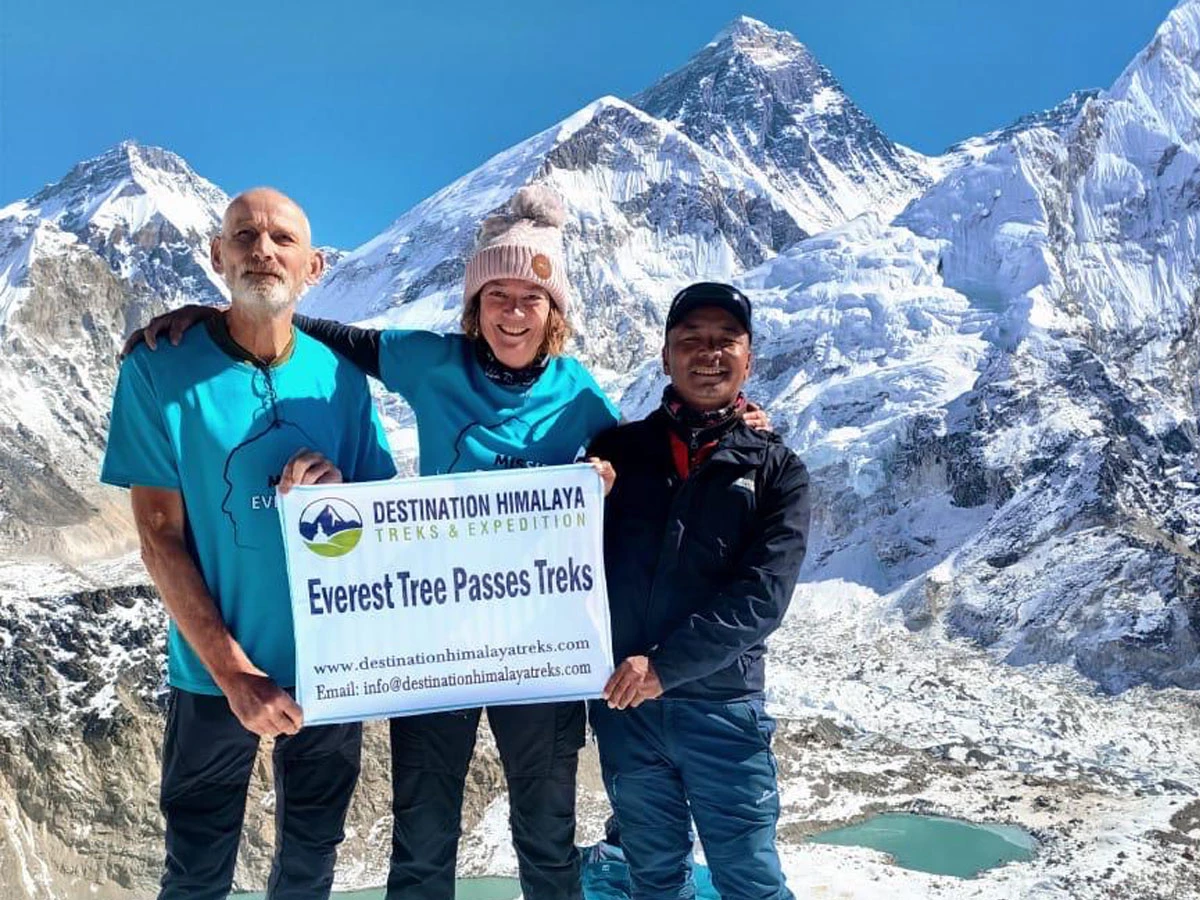
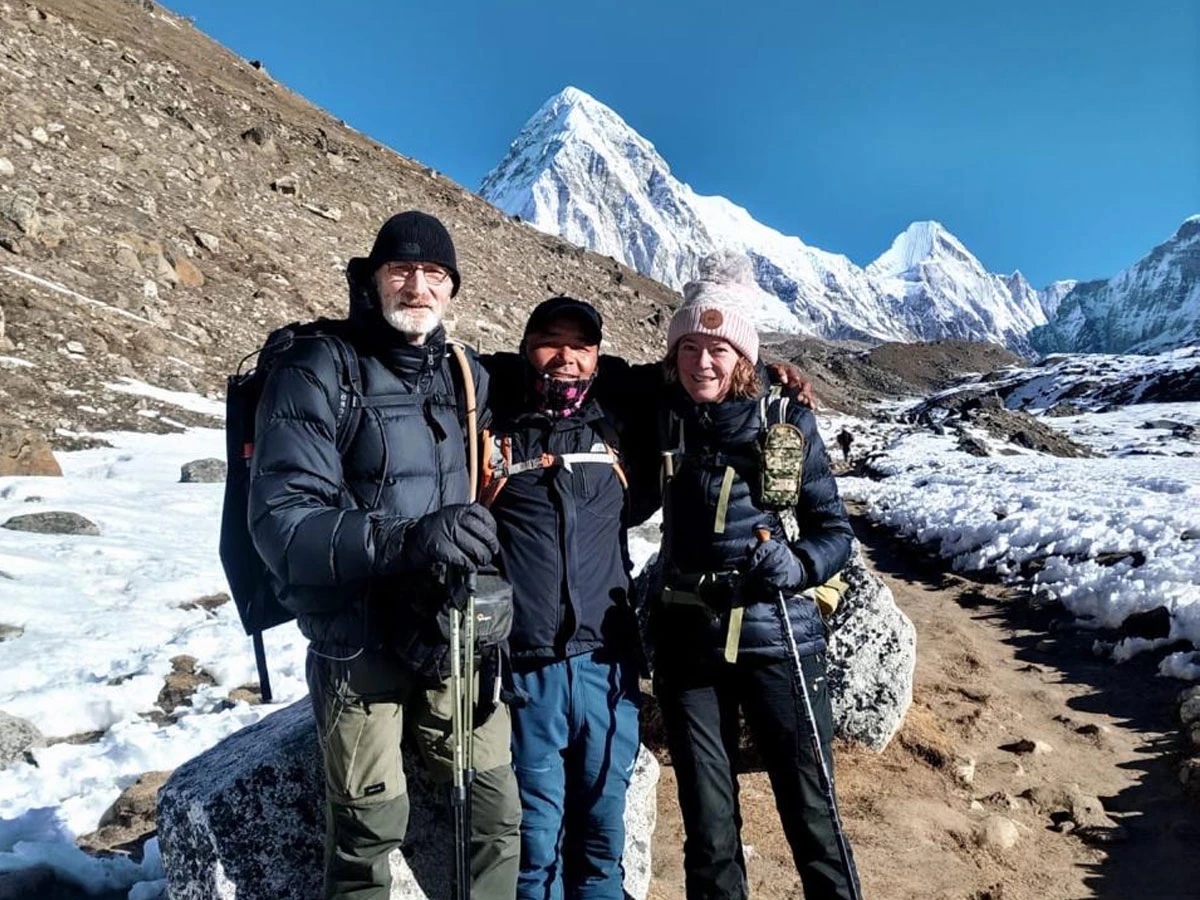
The route passes medical posts at major stops such as Namche, Pheriche, and Gorakshep, and your guide keeps a close eye on how you’re coping with the altitude. Using a pacing system with regular rest days and health monitoring via oximeter, even trekkers in their 60s—like Monique Gerfen, who crossed Kongma La in 2025 on her fifth successful EBC trek- have completed the Three Passes safely and comfortably.
5. “I want authentic Sherpa culture, not just safe passage”
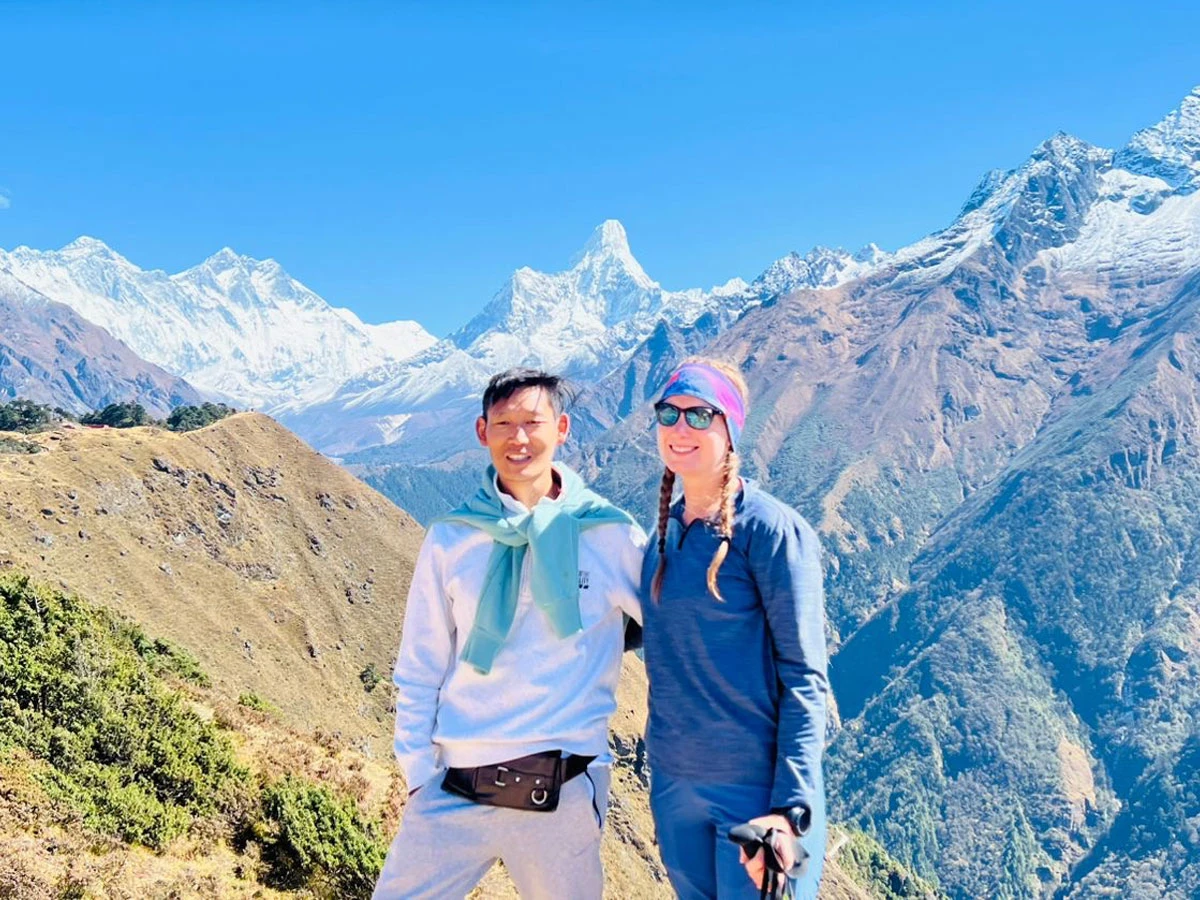
Your local Sherpa guide doesn’t just lead the way; they open doors to monasteries and communities in Khumjung, Tengboche, and Pangboche. You meet Sherpa families, explore lesser‑known monasteries, and gain a deeper understanding of the region’s culture, turning the trek into a rich, meaningful odyssey rather than a simple route march.
6. “Can I return faster after Three Passes?”
If you need to get back quickly after completing the passes and visiting Everest Base Camp and the Khumbu Icefall, you can choose a helicopter flight from Gorakshep directly to Kathmandu. This lets you finish the trek strong and still catch your international flight on time.
7. So, what’s your excuse now?
The chaos in your head, logistics, time pressure, altitude fears, weather worries, and desire for culture are exactly what this package is designed to solve. With logistics managed, a smart 19‑day plan, safety‑first pacing, cultural immersion, and flexible return options, the Three Passes Trek becomes far less of a hassle than you imagine, and far more of the Himalayan adventure you actually want.
Packing Lists
Here are some of the checklists that one should consider for a safe Himalayan adventure, considering all the seasonal variations.
Clothings
- Moisture-wicking dry fit T-shirts (5-6 pairs) for day hike
- Light-weight Hiking Pants (consider dry fit)
- Hiking shorts (comfortable and easy to wear)
- Long-sleeved T-shirt (to wear on sunny days)
- Thermal Inner Wear and Thermal Vests - required for temperatures below 5 degrees Celsius
- Down Jacket or Puffer Jacket (for higher altitudes)
Foot Wear
- Hiking Boots (waterproof and strong grip)
- Flip Flops (to wear in at tea houses)
- Comfortable sports shoes (alternative to hiking boots for lower elevation)
- Hiking socks (wool or synthetic - avoid cotton socks)
Bagpack
- Duffle Bag 20 L to 35 L to stuff in all your clothes (carried by porter)
- Sleeping Bag (-5 to -10 rated)
- Waist Bag (to fit in the personal items for a day hike)
- 15 to 20 L Dat Bagpack
Personal and Miscellaneous Items
- Travel Documents: Permits, Passport-sized photos, photocopy of travel insurance
- Power Bank with extra batteries for quick charging
- Head Torch and Torch Light
- 1 Pair of Trekking Poles - adjustable ones
- Brimmed Hat or Cap, or Light Scarves
- Gloves (screen-touchable) and warm gloves - 1 pair
- Water Bottle - practice sustainability
- First Aid Kit - including oximeter, water purification tablet
- Toiletries Items: Towels (2), Soaps, Shampoos, Toilet Paper, etc.
- Skin care - moisturiser, SPF sunscreen 40 +, lip balm, etc.
Permits Required
To do this hike, there are only two permits required: firstly, the Sagarmatha National Park permit, and another, which tends to be the Khumbu Pasang Lhamu Rural Municipality Entrance Permit, which can be obtained from Kathmandu - Nepal Tourism Board or in the village of Monjo. It is checked at many stopping points and also registered at the beginning of your expedition, which tracks your well-being throughout the expedition, boosts the economic growth of locals, and conserves the untamed beauty of this territory.
- Khumbu Pasang Lhamu Rural Municipality Entrance Permit cost: NPR 3000 per person
- Sagarmatha National Park permit cost: NPR 2800 per person
After your booking is made with us, all the required permits will be arranged by us with ease before you arrive here in Nepal, as it is included in our fee; there is no extra cost.
Travel Tips
- Please make sure to check all the trekking gear and equipment, and if you have forgotten any, we can provide you with some, or you can simply buy them here at Thamel or Namche Bazaar with the help of a guide.
- It is highly suggested to wear hiking shoes beforehand, many times just for practice, if they're new. Also, please avoid wearing/buying too tight shoes if possible; buy 1 size bigger, but not too loose shoes. That would be perfect after we wear thick climbing socks.
- There might be heavy snowfall on some of the sections, so make sure to carry crampons (please do not miss out on this); hiking boots are not enough to navigate the snowy trails.
- You can get electric sockets in Namche, Lukla, and Phakding (lower sections), but in most of the sections, the electric sockets are in the dining area, which will cost you approximately USD 3 to 4. So, please carry a power bank to charge your gadgets.
- There are zero ATM services or credit card services after passing Lukla and Namche, so make sure to withdraw money beforehand, as credit cards don't work in remote trails.
- Do not forget to carry dry garlic (which helps warm up the body), granola, and protein bars for a quick snack time. Someday, we must hike 7 hours straight, which can weaken our bodies. There are tea houses in between, but it costs you triple the price in remote areas.
- Carry a small backpack with you that fits all your basic and important items, even though you are hiring a porter. If possible, carry your daily medicines, chargers, water bottle, and phones by yourself.
- This package covers all your meals and accommodation, or you can say all the expenses required for the expedition, except the tips. Our Three Passes Trek cost doesn't include your tips. It's not necessary, but if you are satisfied with their hardworking services, then it would be a great gesture.
- If possible, please carry a trash bag to decompose the waste, as we don't want to spoil Mother Nature, do we? This small initiative can turn out to be a big protection of the pristine nature of the Khumbu region.
Booking Procedure
To secure your Everest 3 Passes Trek with us, you just have to pay 10% of the total trip cost in advance, if you haven't arrived in Nepal, via the bank transfer that is provided on our site. However, if you are already here, then you can just pay in cash by visiting our office.
Make sure to go through a detailed procedure while booking your expedition, as being affiliated with TAAN (Trekkers Association Agency of Nepal) and NMA (Nepal Mountaineering Association), your booking is fully secured. After your booking is made, we will send you a notification with a receipt of your name, company's name, and amount paid, ensuring you are tension-free knowing that your booking has been securely made. The remaining amount can be paid, 90% after you arrive here in Nepal, in person.
Please send your passport photocopy, 2 passport-sized photos, and travel insurance paper (if you have one), so we can make arrangements accordingly.