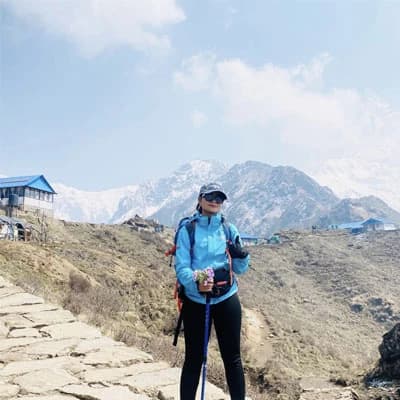
Have you ever dreamed about being just beside massive snow-capped mountains? Well, a charm is stored for you in Nepal. The Annapurna region is a little magical, with skies stretching up into the tall mountains and adventures on each step. Hike through beautiful forests, greeted by friendly people, and then, all of a sudden, turn a corner to be met with such amazing mountain scenery in the Annapurna region. The region boasts some of the most panoramic mountain tops on the planet, and, fortunately enough, you do not have to be a sports person to enjoy the panorama.
Fascinating, isn't it! You must have heard of the very famous Annapurna Base Camp Trek, yet there are two other really cool, beginner- and family-friendly treks in the region: the short yet fascinating adventures Poon Hill Trek and the Mardi Himal Trek. While these are both treks that are often considered the same experiences, views, time duration, and starting points, with many similarities, there are still some differences that make both the trailheads unique.
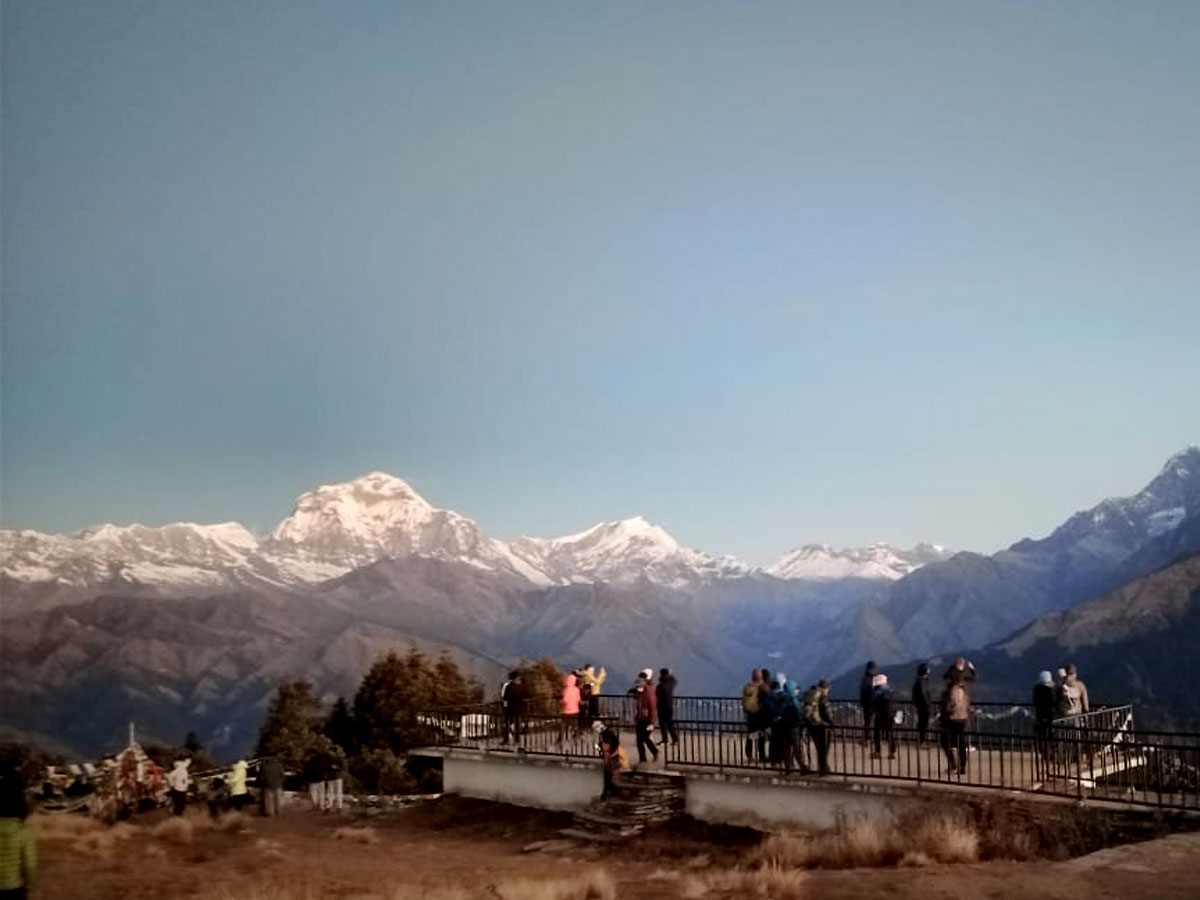
The Ghorepani Poon Hill Trek happens to be the shortest and easiest, and so it fits those who are just beginning or have time limitations. The trek is about four days and offers sights of some of the biggest mountains, including Annapurna and Machhapuchhre (Fishtail), most notably at sunrise from the Poon Hill vantage point. You walk through forests, small villages, and sights of rivers and waterfalls. As this trek is very popular, it attracts fellow travelers in masses, so comfortable tea houses are expected.
The trail to Mardi Himal, in its turn, is a little longer and would typically take 5-6 days, as well as ascending higher into the hills. It is quite a lot further out of the busyness, more tranquil, passing rhododendron groves and silent stone villages. This trek runs closer to the famous Machhapuchhre mountain, providing 360-degree views of the Himalayas. A little tricky, but an experience that makes one go local and natural.
The starting point of both the treks is marked as Phedi, which can be reached via a short drive from Pokhara by bus or local jeep, whereas the starting walking trail is different. The route to Poon Hill diverges towards Nayapul; on the other hand, for Mardi Himal, you need to take a drive to Kande. Both adventures do not last more than a week, but if taken solely, both are short, easy, and budget-friendly, which allows us to get to iconic vantage points of the Annapurna Conservation Area, unveiling distinct cultural exploration, and the panoramic mountain giants. This blog is entitled Poon Hill Trek vs Mardi Himal Trek, which overviews difficulty, duration, mountain views, terrain kinds, and cost for 2026 trekkers.
Mardi Himal Trek Vs Poon Hill Trek: Quick Differences
The choice between the Poon Hill Trek and the Mardi Himal Trek is a kind of decision that many trekkers find themselves confronted with while trekking in Nepal. Both treks give superb mountain views of the Annapurna range but offer distinct trekking experiences.
Hikers compare these because they are ideal for someone wanting great views without getting into the really high altitude in a short time, and with less effort. Poon Hill is also renowned for viewing wide sunrises and also for walking through the villages of Gurungs, Magars, and Mardi Himal, which descend down into the depths of the forest to the proximity of the mountain's base at the base camp of Mardi Himal.
The two trekking routes share the very same starting point near Pokhara, which makes them easily comparable. One almost guarantees socializing with a lot of other trekkers in a short time, while the other one showers you with peaceful walks through lush forests. Hence, really a point of debate whether that is the best adventure for a first mountain adventure.
To let you understand more in detail, here is a quick comparison between Mardi Himal vs Poon Hill, that extensively keeps them to be completely different and similar as well, to each other.
Features
Poon Hill Trek
Mardi Himal Trek
Duration
It takes 4 to 5 days, including arrival and departure dates from Kathmandu; however, if started from Pokhara, then it can be completed just within 3 days of timeframe.
It is slightly longer, which lasts a minimum of 7 days (a week) to 11 days from Kathmandu, whereas it takes shorter, 5 days from Pokhara
Difficulty Level
Considered as a beginner and family-friendly adventure, an easy trail, with slow, gradual ascent and descent through well-marked terrains - accessible for every kind of trekkers.
Considered as moderate to challenging, which demands prior experience and requires a basic level of physical fitness.
Best For
Ideal for beginners who are seeking a short and easy adventure, with an easy trail, and well maintained pathway, rich cultural exploration, covering a daily distance of 3-4 hours, that passes through a forested area.
It suits adventure seekers, who seek more varied terrains, trailheads, and proceed off beaten pathways, with more focused mountain and landscape views.
Maximum Altitude
Reaches Poon Hill at 3210 meters, lower altitude gain
Attains the highest at Mardi Himal Base Camp (4500 meters) with higher altitude gain.
Views
Annapurna and Dhaulagiri panoramic 360-degree views, with 10 other himalayan peaks
More mountain panorama vista including Macchapuchare (Mount Fishtail), Annapurna I, II, IV, South, along the alpine meadows and dramatic landscapes
Crowds
Crowded
More Quiet
Cost
Budget Friendly
Comparatively, more expensive
Accommodations
More expensive, standard lodges
Focused on tea houses and homestays
Guide Required
Optional
Mandatory
Best Time
All year-round trek
Spring (March to May) and Autumn (Sep - Nov)
Difficulty and Duration Comparison
Distance Covered
Distance really matters when you are planning a trekking experience. This actually sounds rather far-fetched, yet virtually the entirety of it is in multiple days. The hike begins at Nayapul, and the villages that you go through are Tikhedhunga, Ulleri, Ghorepani, and lastly, just above Ghandruk, which is where the hike ends. You have to walk these trails through wonderful forests and broken mountain ranges at a very easy pace, passing by Gurung and Magar villages. Mardi Trek is a little longer by 48 kilometers. But it takes you all the way deeper into the forest at the foot of Mardi Himal. These two trekking trails are just the right place to be in case a person desires to sightsee some incredibly beautiful views of mountains without having to walk hundreds of miles.
Difficulty
Here's the truth about difficulty levels. Since you are not going to a very high altitude in the Poon Hill adventure, it is a fairly easy one (the highest point being 3,210 meters). It is ideally suited for beginners or families requiring their first mountain adventure experience. These trails are well-marked and mostly easy, with plenty of quaint teahouses to stop by. Mardi Himal trip, on the other hand, is a bit more technical. You gain a much higher altitude, with the high camp sitting at 4,500 meters. The trails are much steeper and rougher; you'll need better fitness and some experience with mountain walking. Both treks offer awesome close-up views of the Annapurna range, but enabling more from your body and mind is Mardi Himal.
Duration
Time always plays a prominent role in selecting the Nepal treks. The standard Ghorepani Poon Hill Trek can be completed in about 4 days, or you can squeeze it into a 3-day Poon Hill itinerary from Pokhara when you are short of time. Mardi Himal Trek is a 6-7 day trek with a daily 4-6 hour walk, or there is the Short Mardi Trail, which is 5 days for those with a short time. Some combine some or all of the experiences, going for a 10-day combined with 5-7 hours of walking per day. Duration really depends on how much time one has and whether one wants panoramic sunrise views or a much deeper wilderness experience.
Altitude and Acclimatization Difference
Altitude is a big point of difference when considering the difference. Your body needs time to adjust to high altitude, and this adjustment will influence the trek route that you should choose. Therefore, it's time we see the altitude so that your body and experience can justifiably select the venture.
Maximum Altitude: Poon Hill at 3,210 Meters Vs Mardi Himal at 4,500 Meters
Altitude differences between these treks in Nepal are quite high. Poon Hill is at an altitude of 3,210 meters, giving a feeling of climbing a very high hill while enjoying normal breaths with magnificent views of Annapurna and Dhaulagiri at sunrise. There is hardly any time spent at this altitude, mostly just enough to see the sunrise. Mostly, the trek remains at a lower altitude, so the body works less to acclimate to the thin air. But on the other hand, the Mardi Himal Base Camp is located at quite an extreme height of approximately about 4500 meters. After an altitude of around 3,500 meters, the trail steepens, thus exposing you to the high altitude for a longer time. Slowing down and allowing time for adjustment is necessary, lest you feel sick. As you go higher, there is less oxygen, hence the Mardi trek is harder and needs more planning when it comes to acclimatization.
Risk of AMS: Which one is easier?
The truth of altitude sickness or Acute Mountain Sickness (AMS) is that Poon Hill has a low risk and does not face any serious altitude problems because you remain below 3,300 meters during trekking. You might find your energy level a little down, but most people usually can complete this trek quite easily, as this is not too high a point, and the ascent is hardly that strenuous. Extra days for acclimatization are usually not needed. But, due to the high altitude of Mardi Himal, if you walk too fast or do not take the needed rest, headaches could be possible, you may feel dizzy, or extremely tired. For beginners to mountain-style trekking, Poon Hill trekking is by far the safer route. But if you have been on other high-altitude treks like Annapurna Base Camp Trekking, then with some preparation, Mardi Himal becomes an easy proposition.
Which one offers more mountain and landscape views?
Despite the two treks having an incredible view of the mountains, one displays the Annapurna range in one form and the other in another. What scenery would make your heart miss a beat? Just think about that when deciding which way to go. Would you prefer big sweeping vistas or close-up mountain magic?
Sunrise View from Poon Hill View Point
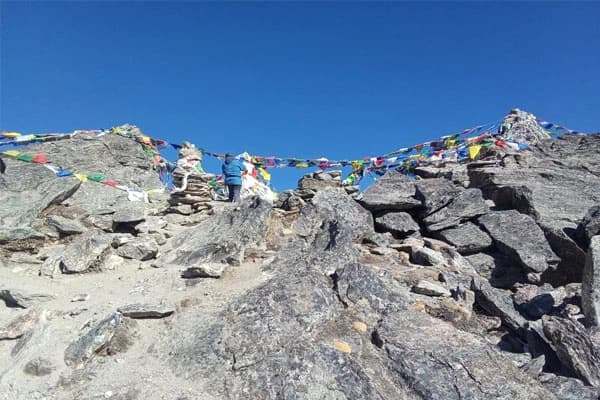
Nothing can compare with getting up early and heading to the top of Poon Hill to witness those legendary panoramic sunrise views. The Dhaulagiri and Annapurna ranges appear extremely heavenly, kissed by the golden hue of the sunlight, stretching to a close-up view of Annapurna South and Annapurna I, greeting us with a splendid display. With Machhapuchhre peaks with its fishtail shape, Hiunchuli, Mardi Himal, Tukuche Peak, Lamjung Himal, and Nilgiri adding layers to the magnificence, this view is overwhelming. This awesome mountain spectacle with nearly 19 iconic peaks is entrenched in our hearts forever, assuring us that heaven exists on earth at this side of the Himalayas.
Mountain and Landscape view from Poon Hill Vantage Point
Close-Up Mountain Views from Mardi Himal Base Camp / View Point
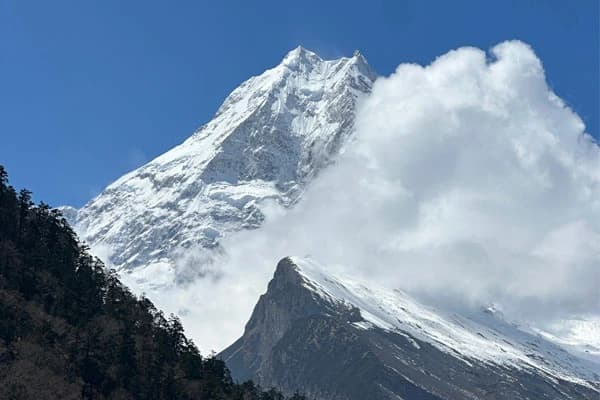
The Mardi Himal route is something different; the mountains are close enough that you want to reach out and touch them. The mountains are simply immaculate as you ascend the dense wood up to Mardi Himal Base Camp, with one looking up to the mega mountains as it progressively covers all of your sight.
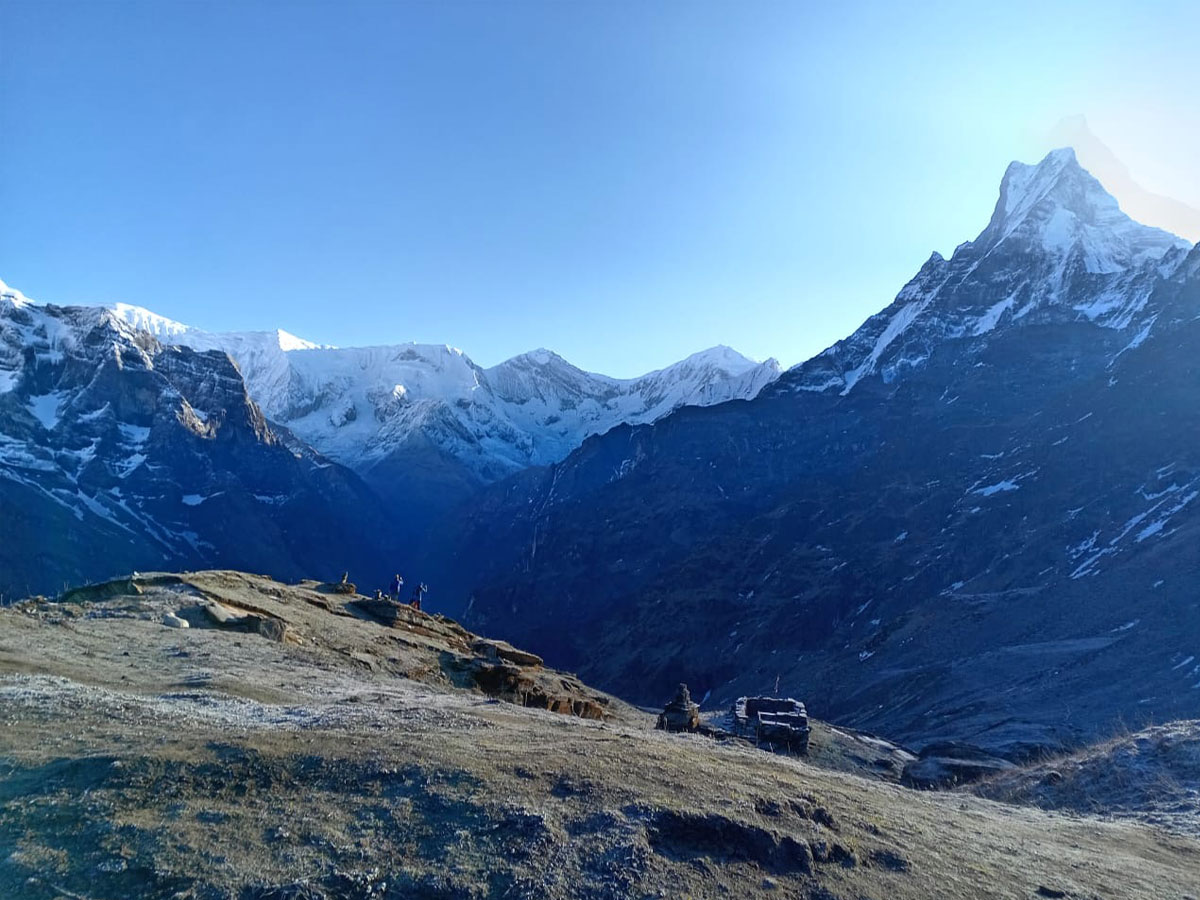
Mount Fishtail Panorama View from Mardi Himal Base Camp
At high camp, you will be up close and personal with Machapuchare just overhead, looming over you like a huge white pyramid, along with Mardi Himal. These close-up views of the Annapurna I, II, III, and Annapurna South with Dhaulagiri massif of Dhaulagiri I, II, plus other popular mountains like Tukuche Peak, Lamjung Himal, Singha Chuli with Gangapurna are breathtaking as you're almost sitting in the lap of these mountains. The trek gives a view that can make you feel hollowed but amazed at the same time.
Both offer the Rhododendron Forest
Both treks have incredible rhododendron woods that almost seem to host a grand nature party. During spring visits (March to May), the two routes become a tunnel of red, pink, and white blossoms. The National Flower of Nepal is Rhododendron, and it is a wonderful surprise to trek to see them in full flower. The treks will provide you with dense forests of these beautiful trees, which colour the adventure of the mountain views. In the Poon Hill trek, the visits to the Gurung and Magar villages go hand in hand with the rhododendron forests, combining culture and nature, but in the Mardi Himal trek, the rhododendron forests are much wilder, and you may not see any other human footprint for hours, or perhaps even the whole day. The two treks provide you with the magical flower experience; yet Mardi provides you with loads of solitude, whereas Poon Hill provides you with the flower experience along with an easy walk through dense forests.
Diverse Terrain
Landscapes are all about variety, and the Mardi Himal trail is a ten out of ten. Everything is basically your trekking experience! You begin the trek by walking through thick green subtropical forests full of rhododendrons, ferns, and mosses; there are almost four worlds in a single package. As you get higher, it pierces the alpine pasture, blooming like many colorful alpine flowers and broad open grass fields. Then it gets rocky and steep at the high camps, which is followed by walking across rivers, ridgelines, and entirely different ecosystems as you ascend higher. Day after day, you just climb up further onto these hills, new sights and scenery just keep appearing and making the entire journey exciting.
If you are someone who seek for great, enchanting views, you do not have to compromise for more than 2 weeks, and a moderate trail to proceed, then consider opting for combining Mardi Himal and ABC Trek, which lasts for 13 days, reaching three base camps at a time, including Annapurna Sanctuary.
When is the best time to explore both routes?
Poon Hill trail has the best time to visit either during Spring (March-May) or Autumn (September-November). These seasons have mild weather with perfect climatic conditions to have an easy and safe trek with stunning views. During the autumn season, the climate suits the very lined-up panoramic sunrise views of Annapurna and the Dhaulagiri range, giving extremely crisp mountain views under clear blue skies. The sky becomes exceptionally blue and clean, and all mountains appear as postcards. Spring is also very beautiful since the forest is full of colorful flowers as rhododendron. Winter (December to February) can also be alright, but cold. That requires warmer clothing! A challenging time would be during monsoons (June to August) when clouds hide mountainous views, and the paths are downright muddy and slushy. So, spring and autumn are the most suitable months to provide the most appropriate atmosphere with incredible scenery.
This hike to the Mardi Himal is supposed to be undertaken during spring and autumn because the seasons offer favorable trekking conditions, as it rains only a few times a day and the trails are dry and easy to follow. The months also have clear skies to make hikes and have a view of the mountain, and are pleasant so as to enjoy that hike. The spring season witnesses the red, pink, and white blossoms of rhododendron forests with a colorful trail, which makes everything better. Autumn has steady weather with crisp air and offers spectacular views of Annapurna and Machhapuchhre. Not so popular are the monsoon months when the rain can make the trail slippery and dangerous, and hence difficult to walk on, especially in remote trail situations. It snows in winter, keeping most regions snowy and chilly, and it makes trekking difficult due to slippery and snow-filled surfaces that are difficult to access and traverse. Hence, spring and autumn are the safest seasons and the most enjoyable seasons to trek in Mardi Himal.
Cost Comparison: Which one is more budget-friendly?
Estimated Budget for Poon Hill
Poon Hill trekking is considered a budget trek compared to other trekking routes, including Mardi as well, perfect for people who want to see beautiful mountains without heavy expenses. If you are going independent, then with permits, food, accommodation in tea houses, and maybe a guide (if you want one), it costs between USD 300 and 500 for 4 to 6 days; it is much cheaper if you go in a group. If you trek for a short duration of 3 days from Pokhara, prices will go down to around USD 200-300. Food is fairly cheap, and transportation from Pokhara is also quite cheap, so that makes this trek one of the more economical ones in Nepal to go for those panoramic sunrise views.
Cost Factor for Mardi Himal
Since you go to remote, higher-altitude places, the Mardi Himal Trail experience is a little more expensive. Full trekking around the area will cost you anything from USD 400 to 500, more so if you consider the longer versions with the Short Mardi Himal Base Camp Trek. With more days, the trek goes higher up and is less crowded, making guides and porters charge more for their services. The permit and transport are, however, quite fair, but accommodation and food will set you back a little, as the tea-houses are very few within the dense forests and near the high camp. Group treks would be cheaper compared to the privately organized ones. Value for money if you do not want to fall on the usual tourist paths!
Poon Hill is the trek for beginners who want their first mountain adventure experience in Nepal. It is an appropriate hiking route to bring or accompany children, older citizens, or anybody who is not yet comfortable with hiking, since it is not physically demanding. Thus, having those amazing panoramic views of sunrise and nice strolls through Gurung and Magar villages, there is no danger of high altitude creeping on you. If you are left with just about 3 or 4 days to see the Annapurna range, then this trek is perfect in delivering the greatest mountain views for your time. For someone who enjoys socializing, this is the right trekking route where a trekker will be able to engage in rich conversations with travelers from all over the world in the cozy tea houses. For those who like good food and comfy beds on a budget better than camping trips, this is a well-suited trek.
Who Should Opt for the Mardi Himal?
The Mardi Himal Base Camp Trek beckons all those who love remote and peaceful adventures away from the crowds. It would be suitable for anyone who has had some hiking experience and is in good fitness, who now wants to take on the challenge of a high-altitude trek. If you are the kind who gets excited walking through thick forests to alpine meadows, the kind of wilderness adventures await you with this trek. If you are fit, enjoy being in quiet environments, and want to go up close to mountains, this trek is for you. This trek will be heaven for nature photographers as there are beautiful close-ups of the Annapurna range, as well as a chance of photography right at the High Camp.
Summary: Matching Trek Choice to Experience Level and Interests
Here's the simple truth about choosing between these epic treks in Nepal. Go for Poon Hill if you want an easy, social adventure with views of the mountains and some cultural experiences in a few local villages, and you are a beginner looking for an easy start. Go for Mardi Himal if you are ready for a more serious challenge involving higher altitude hiking and would prefer quiet trails meandering through lush forests. Your fitness level, available time, and what kind of trekking experience excites you most should determine your choice. Both of them offer beautiful mountain views of the Annapurna and Dhaulagiri ranges, but Poon Hill offers wide panoramic sunrise views, whereas Mardi Himal gives you closer and more intimate views of the mountains. There is only the basis of different adventures waiting for different types of mountain lovers in this beautiful region.
Combine Both Poon Hill and Mardi Himal for a Better Experience
Why settle for one when you can go for both adventures? The Ghorepani Poon Hill with Mardi Himal Trek offers a perfect blend of what each of these treks in Nepal offers. After enjoying those panoramic sunrise views from Poon Hill in the first half, you are set to venture into the wilderness for some close-up sights of the Machhapuchhre at Mardi Himal base camp.
This combined trekking experience takes around 10-12 days and offers the best of both worlds. You get the social, cultural experience at Poon Hill's tea houses, followed by the silence and challenges of trekking through dense forest to high camp on Mardi Himal. So, in a sense, you are given completely contrasting views of the mountains and trekking experiences in one mega trip.
It costs understandably more and takes longer than doing a single trek, but on the flip side, you are halfway across the world in Nepal anyway. So why not make it the adventure of your life? The combined route lets you experience the full gamut of what the Annapurna region has in store, from thick forests to high-altitude mountain terrain. Trekkers often say that this combo trek is the perfect way to get introduced to serious mountain adventures while being physically manageable for people with moderate levels of fitness.
Why wait? Contact us, Destination Himalaya Trek and Expedition, to plan a perfect Annapurna region trek for you!