Why choose your perfect route to Everest Base Camp?
Selecting the perfect Everest Base Camp trek route remains crucial for choosing the ideal time, estimating the overall cost, safe acclimatisation, daily walking pace, and the kind of adventure you are seeking. As already mentioned, there are many trekking routes, alternative pathway diversion, or combining options, starting points, which highly impact your overall adventure experiences.
Firstly, when you select the route, knowing the daily pace of the hike, daily altitude gain, and terrain variations is necessary, which impacts the safety and himalayan exposure. For instance, if you select the standard route of EBC, however, you got a limited time, and seek to complete this trip, within 10-11 days, with no acclimatization day, then, it is no lesser than inviting dangers on your own, where the risk of altitude sickness, and the possibility of disruption of the trek, in between is significantly high, especially, when you got zero experiences and high altitude knowledge.
Meanwhile, if you undertake this hike, on a reguar pace, with 1 or 2 acclimatization days in between with moderate altitude gain, within 14 days (2 weeks), starting and ending with a Lukla Flight, then, you get time to rest, explore more out of the region, with side trips, and take an easy, seemless ascend, without draining yourself physcially out.
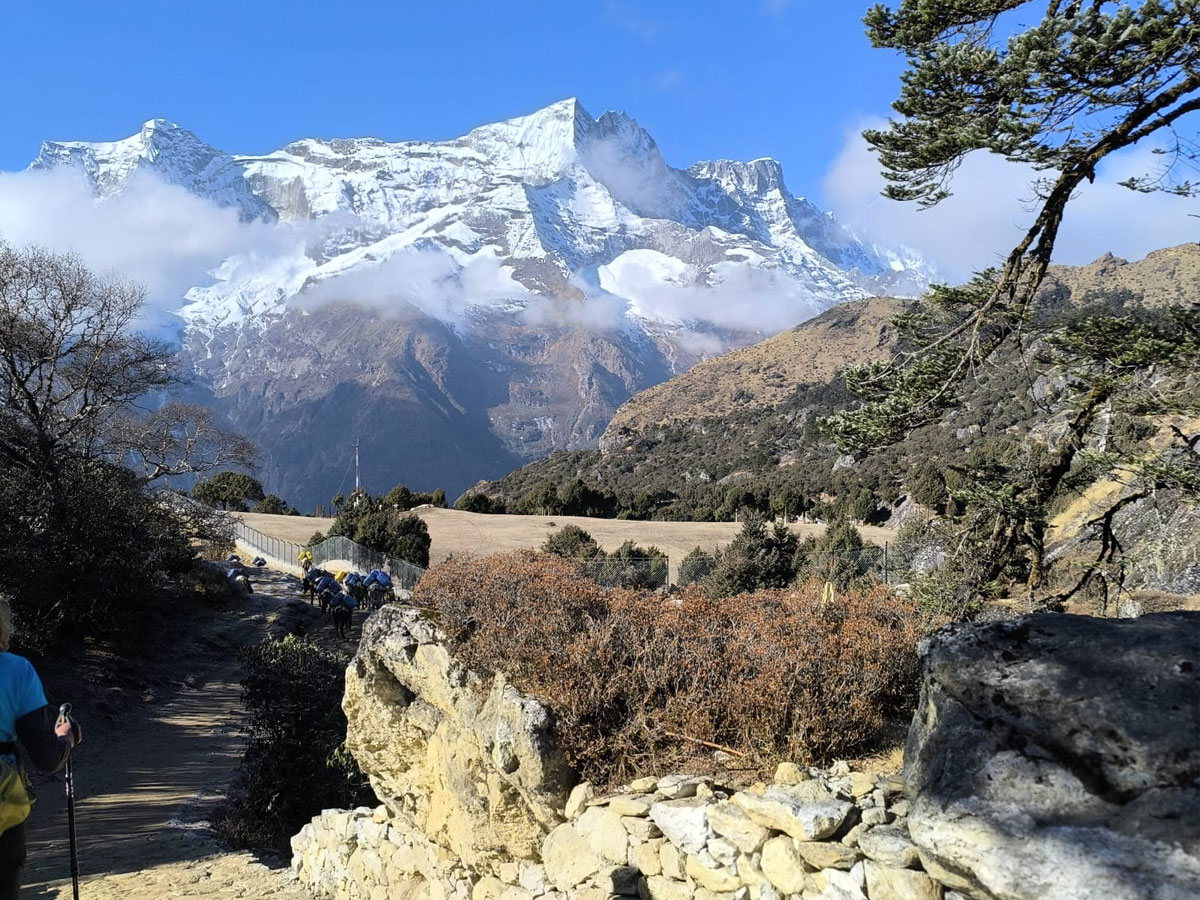
On the other hand, other slow and gradual ascents, that begins with a road drive to Jiri, or Salleri, add extra days, meaning extra time to acclimatise, extra days to explore the cultures and classic routes, without any hectic flights, avoiding the chances of delays or cancellation for few days, which is a win win situation for those, who seek more walking days, got more than 14 days to trail along the himalayas, and skip the daring flight. While the pro experienced hikers can easily trail through a rapid pace hike, for beginners, it is suggested to follow either the 14-day standard trail route, or the hike starting from Jiri or Salleri, where the longer days help you to acclimatise well, before ascending such great heights.
Secondly, while selecting the route, with a wide variation of the trekking trail, the trip cost also fluctuates according to your route selection. If you do not want to spend hundreds of dollars just to fly to Lukla Airport, then the roadway option through Jiri or Phaplu Salleri could be your go-to starting trail choice, but the thing is, as the Jiri route takes an extra 7 days (1 week), the money goes on to the meals, accommodations, guide fees, and private jeep transportation, as an alternative, one can select Phaplu Salleri, which only takes 2 - 3 days extra, to touch the regular route from Phakding - EBC, which falls, more on the budget friendly side, and skipping the flight. Thus, choosing the route options must consider the price ranges as well.
Thirdly, if you choose a more extended route, to the wetland of Gokyo valley, Everest Three Pinnacles, or any one of the high passes, along with a trail to EBC, by combining them all in one, then, for sure! It is going to be one of the most thrilling adventures to commence on, where you get to explore more, build your confidence, push your limits, achieve new heights, and gain distinct perspectives on mountain views, landscapes, and the cultures of the Sherpa. However, the real question is: Are you up for longer hiking days and more challenges, or do you have prior experience, especially for the 3 passes, where you must attain 3 pinnacles above 5000 meters, in one single adventure? If so! Then, you won't regret combining all this trip in one.
Lastly, expectations regarding cultures and mountain views, which differ from trail to trail, while following the standard EBC trailhead, the accommodations (lodges) are more focused on the facilitated side, more on a modernised form, when compared to other trailheads, with no deeper interaction or the Sherpa cultures or traditions. Whereas, the starting point of Jiri, or the extended route to Gokyo valley, lets you experience the cultures, traditions, and lifestyles of the diverse ethnic groups of Rai, Sherpa, Tamang, Gurung, with tea houses, just as in ancient days, and the untamed lifestyle of mountain people. Hence, if you want to explore more of the cultural side and the distinct, unique side of the peaks vista, then choosing the longer days might suit you the best.
Thus, the right routes depend on person to person, depending on costing, experiences, cultural diversity, physical fitness level, acclimatisation days, which ensures the summit success and safety as well, which are the major factors that must be considered beforehand, before choosing one specific route to Everest Base Camp.
Best Everest Base Camp Trekking Routes: 5 Hand-Picked Adventure Comparison
Discover the 5 Best Everest Base Camp routes, hand-picked for every trekker, from first-timers to high-pass thrill-seekers. This comparison breaks down duration, difficulty, cost, and unique highlights of each trail, giving you the perfect overview to choose your dream EBC adventure at a glance.
Standard Regular Everest Base Camp Trek: Lukla Route (14 Days)
The 14-day trek to Everest Base Camp is marked as one of the most common, popular, and standard routes, which entails a gradual hiking pace, with acclimatisation days included, covering every corner of the Everest-Khumbu region, unveiling the views of the himalayan peaks in each step, and spectacular himalayan scenery. and attains the iconic Everest viewpoints, for an unmatched panoramic vista. The journey basically lasts for 2 weeks, where you get enough time to acclimatise, with a gradual ascent of 300-500 meters only, minimising the risk of altitude sickness, and also follows the route, with a daily hiking pace that suits beginners to experienced hikers.
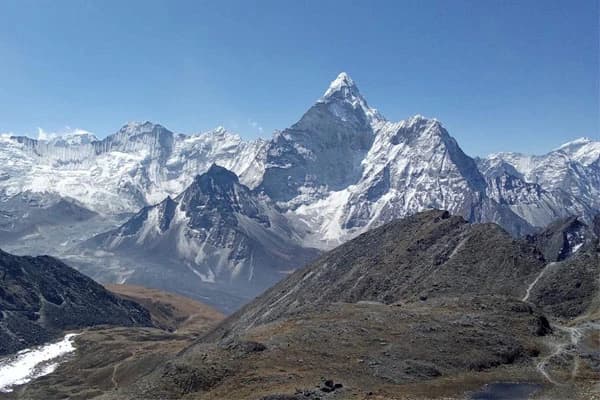
The adventure begins with a 30-minute flight to Lukla, where the walking trail proceeds towards Phakding (2612 m), Namche Bazaar (3440 m), Tengboche (3860 m), Dingboche (4410 m), touching higher altitudes to Lobuche (4910 m), Gorakshep (5164 m) and then finally to Kala Patthat at 5545 meters, the highest via the Everest's foothill - Everest Base Camp (EBC). Following this route, two acclimatisation days are included at Namche Bazaar, with a side trip to the Everest View Hotel, or Khumjung village or monastery and at Dingboche, with a hike to Nangkartshang Peak at 5100 meters. Throughout the odyssey, several mountains such as Ama Dablam, Tharmseku, Lotshe, Nuptshe, Makalu, Cho Oyu, and the almighty Everest accompany you in each stride.
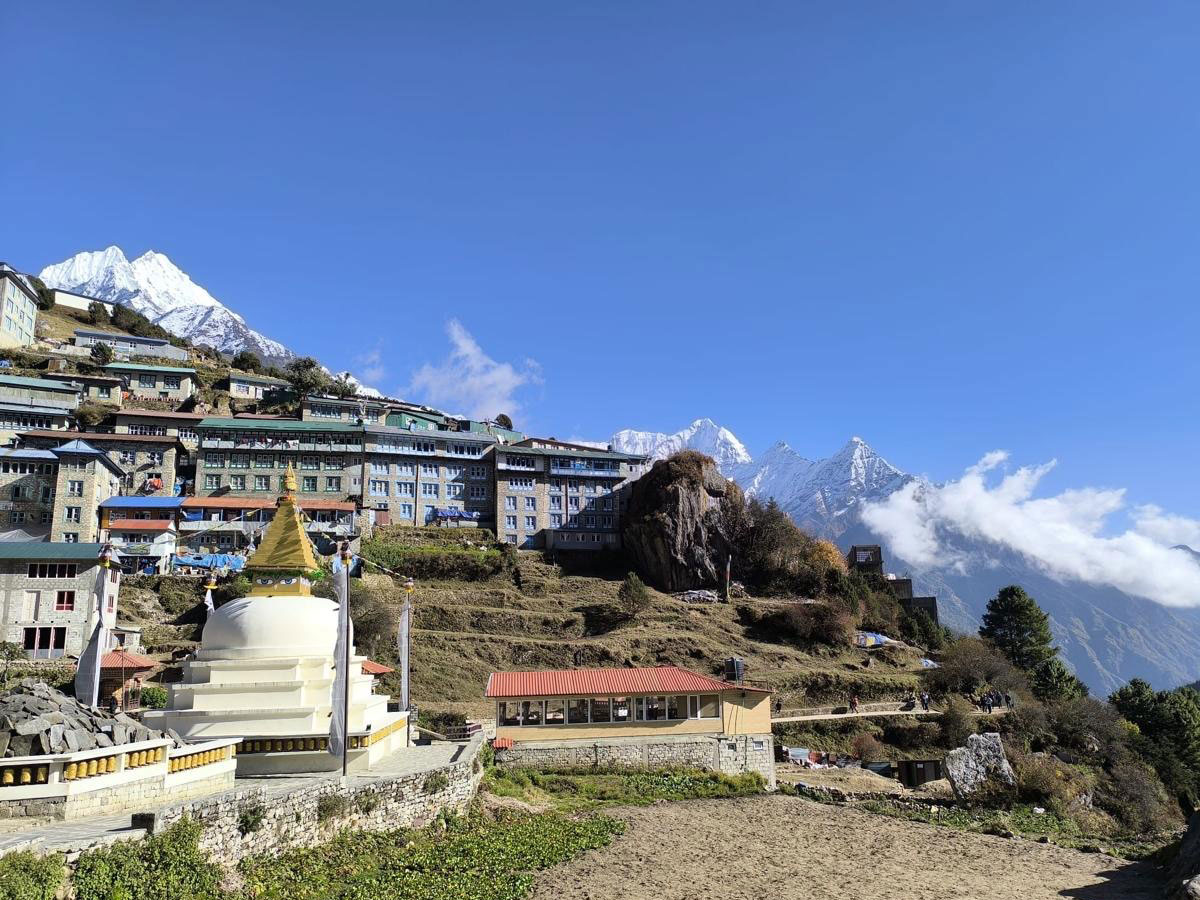
Followed by the Lukla Flight, entails saving time to reach the starting point, and facilitates luxury lodges, and well maintained trail, at lower sections, which can be undertaken easily by beginners as well, for 14 days of navigation. Meanwhile, the route might be crowded, and the possibility of the delay of the flight to and from Lukla Airport is significantly high at peak seasons, Spring and Autumn, and there is less availability of flight tickets, which demands prior preparation, guided trekking and an advance booking.
- Duration: 14 days (5 to 6 hours per day)
- Cost: USD 1199 to USD 1399 per pax
- Best For: Beginners and Moderate Pace Hikers
- Trail Conditions: Remains Busy at peak seasons
- Difficulty: Moderate
Jiri Classic Route: Road Drive (19 to 22 Days)
Kicking off the journey with a scenic bus or jeep ride to Jiri for 8 hours, the Everest Base Camp Trek via Jiri stands out as the classical trailhead, followed by the first ascender to the world's tallest mountain, Sir Edmund Hillary and Tenzing Norgay Sherpa, along with many other legends. This route offers a "pure nostalgia" vibe to the hikers, as the main highlight of this route is navigating the untamed, varied himalayan terrain, ancient Sherpa cultures and traditions, with tea houses, still more on the slatted roofed tops, with an insight into other Tibetan cultures, residing here, including Rai, Tamang, Magar, Sherpa, perserving still their historical roots, and ancient living style.
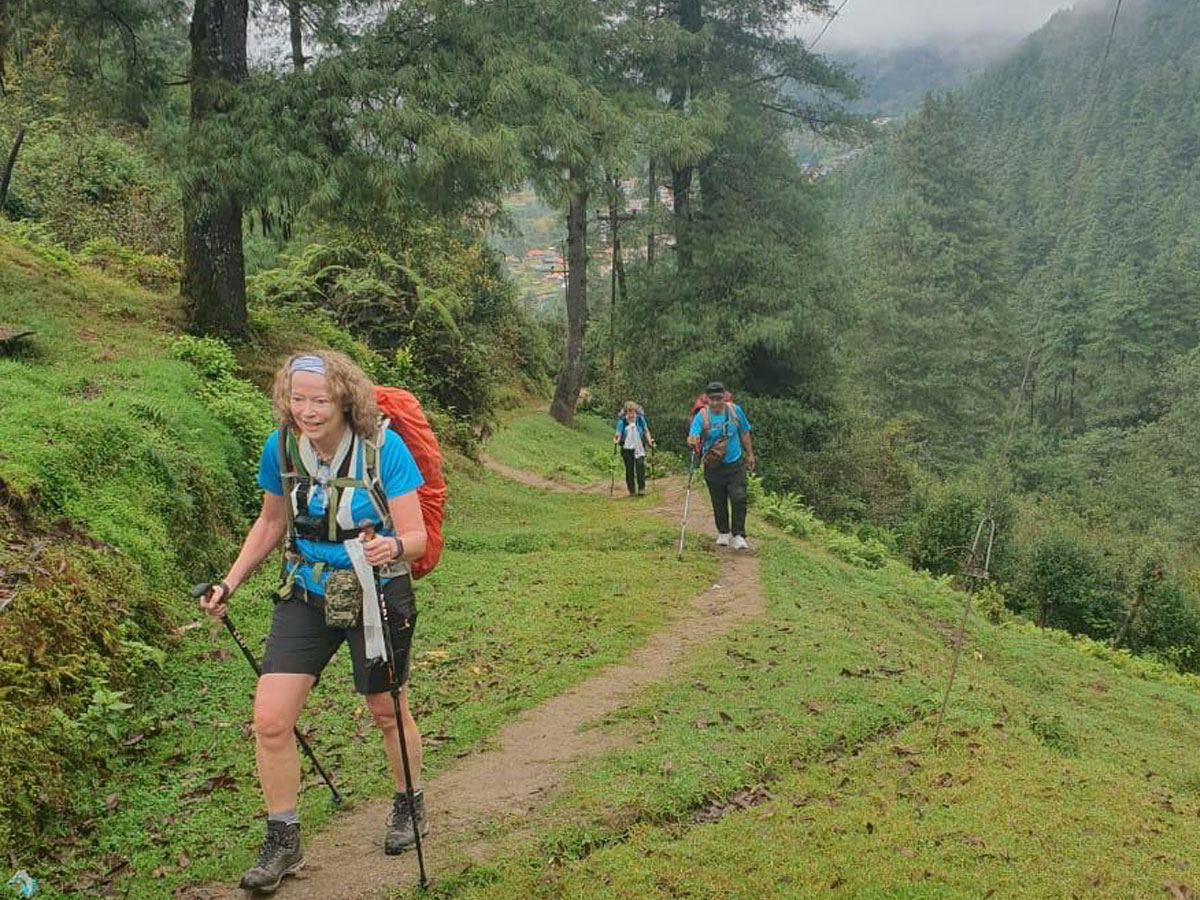
This classic route pathway extends the regular trail of EBC, for almost a week, through the lower part of the Solukhumbu district, the Everest region, navigating along diverse trails, through ancient hamlets, agricultural farms, and locally cooked meals. In the first half of the trail, it passes through the vital key points at Bhandar, Jiri, Sete, Junbesi, Nunthala, Bupsa, Cheplung, for 7 days, below 3000 meters, before touching the route of the regular path, from Namche Bazaar.
The classic Jiri route also suits perfectly those individuals who are newbies, and want a gradual climb, rather than speeding up the itinerary, as the flight to Lukla takes you at a direct altitude above 3000 meters, on the other hand, the Jiri trail, entails a slow, hike and ascend, letting you hike at a more relaxed and gradual pace hike. Thus, if you are someone who seeks to also explore less crowded trails, a more authentic himalayan experience, and also skip the flight to Lukla, and explore the more rugged and remote side of the Everest region, then EBC via Jiri hits the right spot for you.
Quick Comparison Table: Regular Lukla Trail Vs Jiri Route
| Features |
Lukla Route |
Jiri Route |
| Difficulty |
Easier |
More Challenging due to extra hiking days |
| Cost |
Higher Flight Cost |
Lower Transport Cost, Higher Daily Spendings, whereas the package cost is between (USD 1299 to USD 1599) |
| Crowd |
High |
Less on the lower trekking trail, for a week |
| Culture |
Sherpa only, Limited Experiences |
More Cultural Experiences: Rai, Tamang, Sherpa, Gurung, etc |
| Best For |
Limited Time |
Authentic Experience and Fit hikers |
Three High Passes Route: Ultimate Circuit (19 Days)
The Everest Three High Pass Trek is one of the most challenging, exciting, and adreliane boasting trekking routes to Everest Base Camp, which is also named the Everest Circuit Trail, which explores the highlighted destinations, within Khumbu region, combining, Gokyo Lakes, Gokyo Ri, EBC, Kala Patthar, and three pinnacles of Cho La Pass, Renjo La Pass, and Kong Ma La Pass all in one.
The adventure, in total, lasts for 19 to 22 days, which passes through varied kinds of terrains, from lush green forest areas, of blooming, thriving red rhododendrons, pines, firs, to the Sherpa ancient hamlets, more remote and hidden trailheads, gazing into six lakes of Gokyo, via Ngozumpa glacier, and the famous vantage point of Everest, Gokyo Ri View Point (5457 meters). Then, attains the top of the iconic mountain passes of Renjo La Pass (5320 meters), Cho La Pass (5420 meters) and Kong Ma La Pass at 5535 meters, and covers the standard route of EBC as well, before reaching the highest mountain pass of Kong La. Those who have already done the regular EBC trek can simply avoid the Everest Base Camp and only proceed to the 3 passes and Gokyo valley route instead.
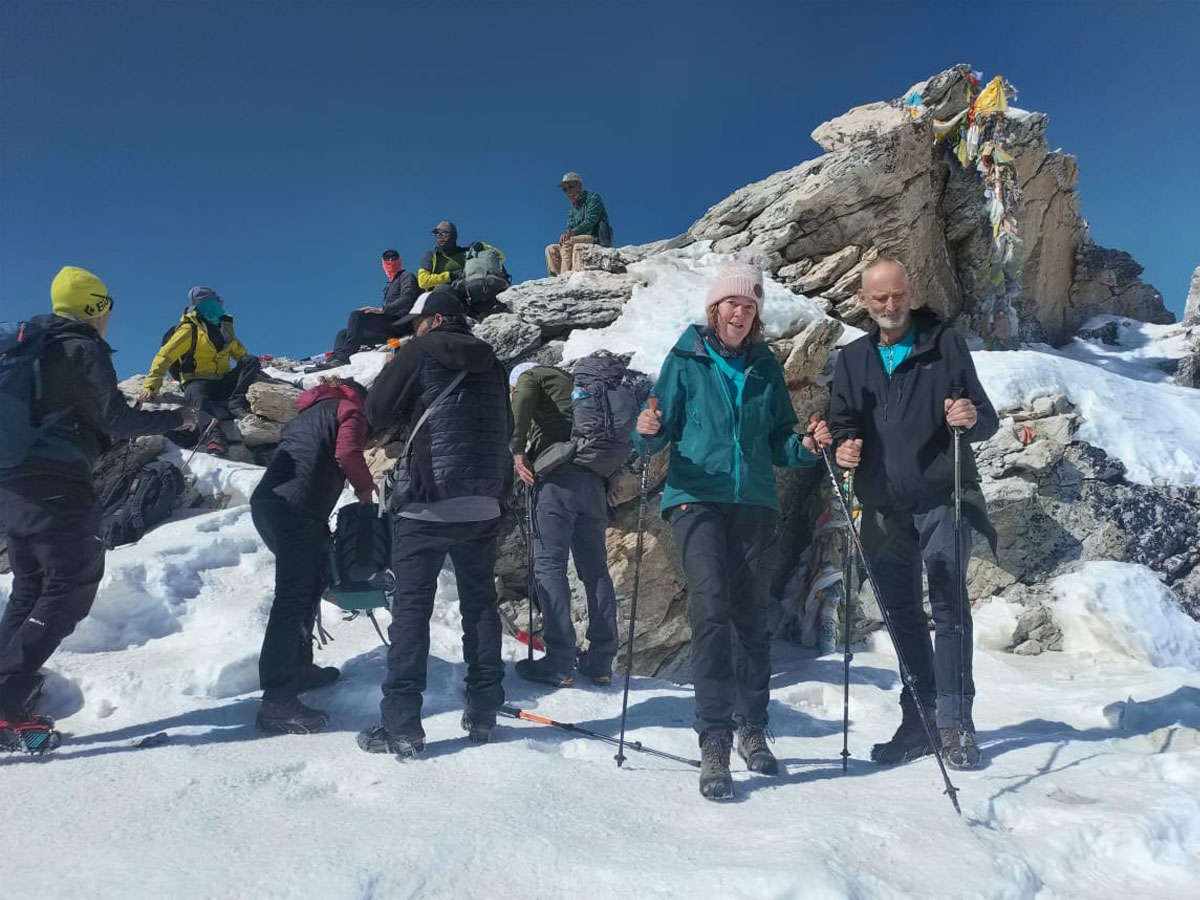
This trekking route is suggested for the experienced hikers only, as the continous daily hike, through several ascend and descend via rugged, steep section and even icy terrains, can be physically challenging to beginners, however, can be a great choice to those, who seek more challenges, got proper time for preparedness and training, seeking soltitude and root for diverse exposure of the Khumbu region.
Quick Comparison Table: Classic Lukla Route Vs Three Passes Route
| Features |
Lukla Route |
Three High Passes Circuit Route |
| Difficulty |
Easier |
3 x challenging, yet attain iconic rewardable vantage points |
| Cost |
Lower Cost |
Higher Cost ranging between USD 1199 and USD 1499 per head |
| Crowd |
High |
Off beaten himalayan experience with fewer crowds |
| Culture |
Sherpa cultures |
Ancient Tea House is more focused on the tea house experience and the ancient Sherpa culture |
| Best For |
Every kind of hikers (Beginners, Family Friendly) |
Experienced Hikers with Prior Experience |
Gokyo Lake to Everest Base Camp: Sacred Lakes and Cho La Pass (15 Days)
The Everest Base Camp and Gokyo Lakes Trek is one of the most popular Everest Base Camp Trekking routes, which extends the standard EBC Trail, with Gokyo Valley, Gokyo Ri View Point and a cross over of one of the thrilling high passes; Cho La Pass. This trailhead, serves as the perfect himalayan adventure, who do not want strenuously challenging hike, or commence all the 3 passes, still willing to experience the thrill of attaining the high pass and the foothill of the Mount Everest, which is more on a moderately wild trip, easier, than, Three Pass Trail, yet an scenic odyssey and adreliane boasting trip, compared to basic regular EBC.
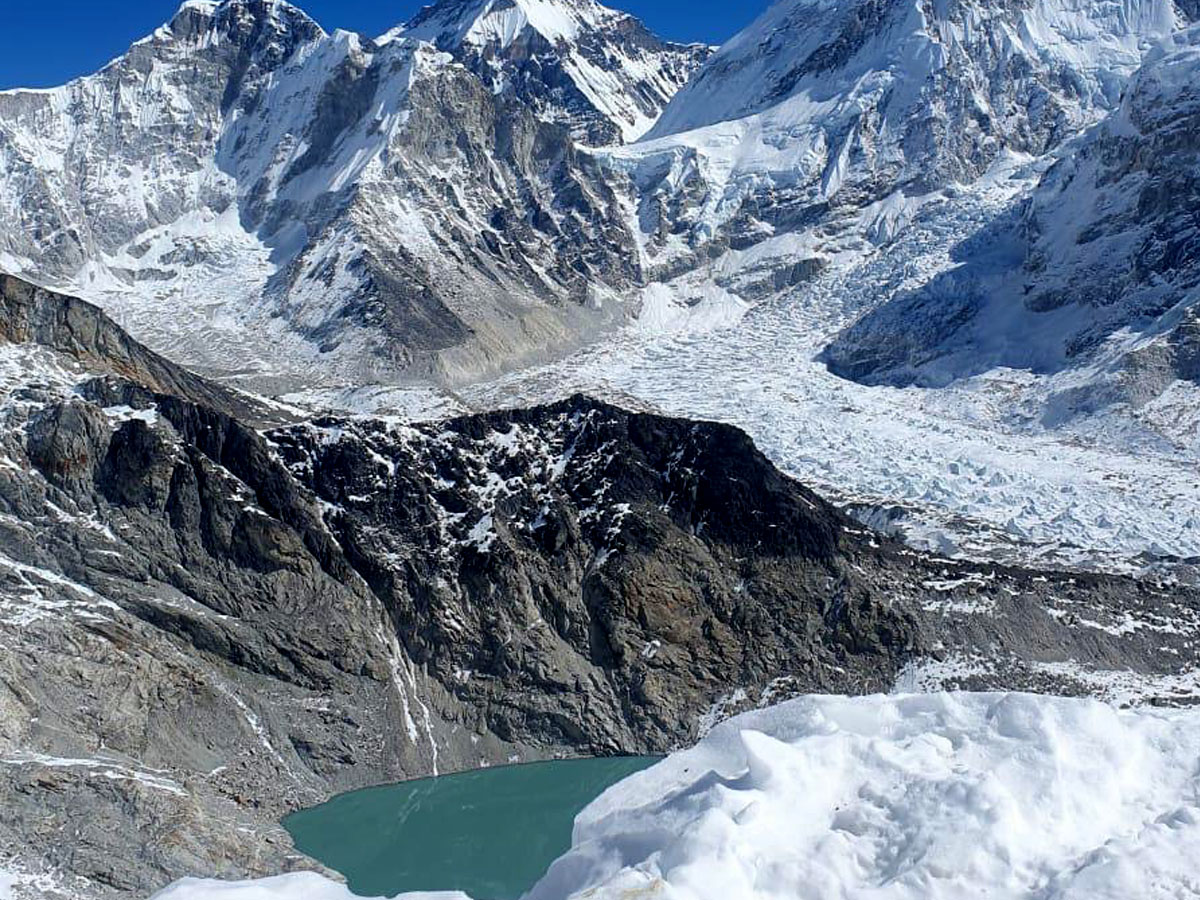
Starting with a Lukla Flight, followed by Phakding and Namche Bazaar, the route takes a diversion to the Gokyo route, passing through ancient Sherpa settlements and remote terrains via Dole, Machermo, and then six series of Gokyo lakes, Ngozumpa glacier, before reaching the vantage point of Gokyo Ri (5400 meters) and then, continues to Thagnak, Dzongla via Cho la Pass. The first half of the trailhead traverses via remote Sherpa villages, a less crowded trail, offering more like an off beaten experiences, with unique scenic panorama mountain views and landscapes, and then, touches the route of the Everest Base Camp route, letting you still experience a sense of accomplishment of reaching the iconic EBC and Kala Patthar.
Quick Comparison Table: Regular Lukla Route Vs EBC, Gokyo and Cho La Pass Route
| Features |
Lukla Route |
Three High Passes Circuit Route |
| Difficulty |
Easy to Moderate |
More challenging |
| Cost |
Lower Cost (Standard regular rate) |
Higher Cost ranging between USD 1299 and USD 1499 per head |
| Crowd |
High at peak seasons |
Off beaten himalayan experience, Lower crowd |
| Culture |
Sherpa cultures |
Ancient Tea House is more focused on the tea house experience and the ancient Sherpa culture |
| Best For |
Every kind of hikers (Beginners, Family Friendly) |
Experienced Hikers or even beginners with proper preparedness |
Short EBC Trek with Helicopter Return: Aerial Exit Adventure, Shorter Time (11 Days)
The Everest Base Camp with Heli Return Trek is one of the luxury, premium, and distinct, unique experiences to get rewarded during the journey to EBC, the lap of the world's highest peak, and Kalapatthar, which is more convenient, smooth and also fits every kind of hikers, from beginners, to family adventures to challenging treks. This trekking route is marked as a popular trail for those who have limited time, or do not want to retrace a similar trekking pathway, and are willing to explore more mountainous and landscape views, through the heli return ride from Everest Base Camp or Kala Patthar, or Gorakshep, as you prefer.
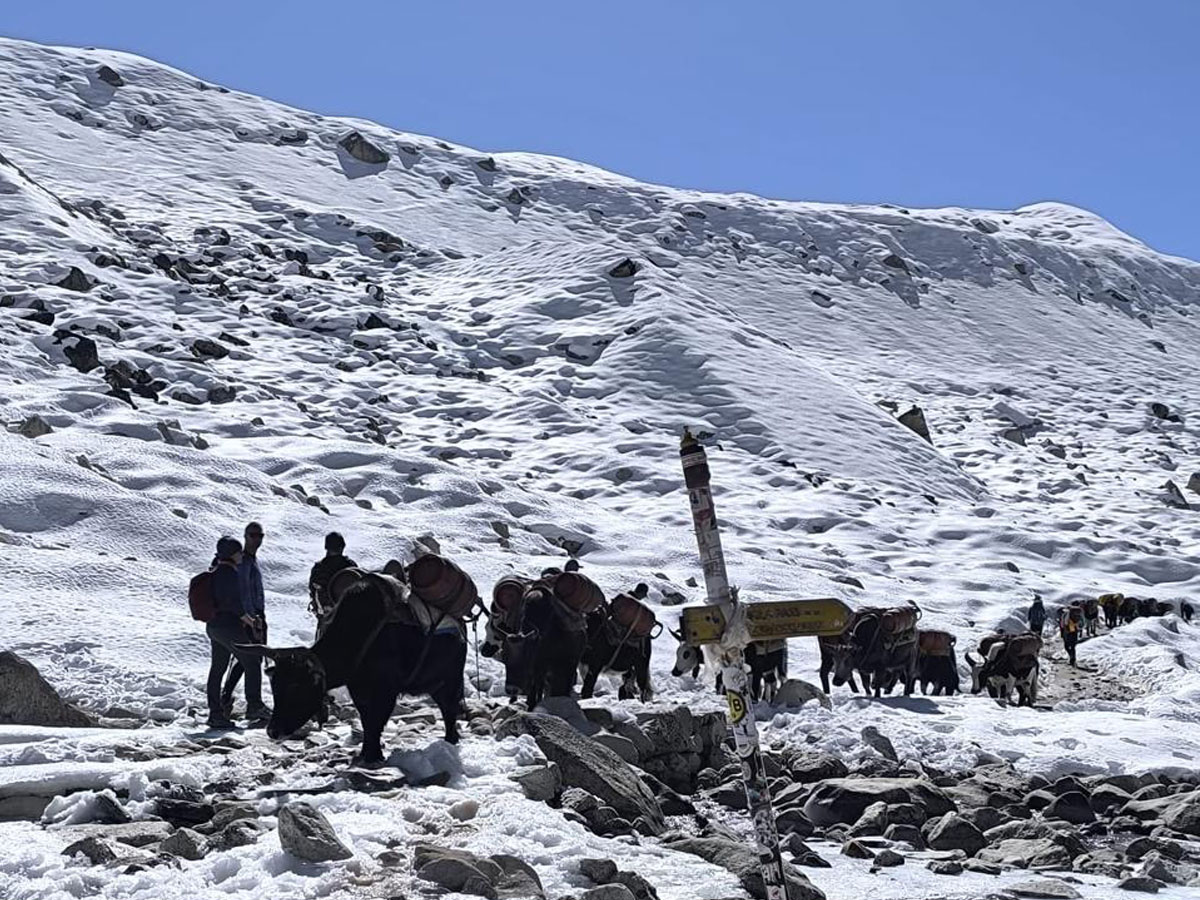
This EBC Trek and Heli Return Trip follows the same standard regular trail that begins with a 30-minute flight to Lukla, and traverses through Namche Bazaar, Tengboche, Dingboche, Lobuche, Gorakshep and then to the base camp and the Kalapathar summit at 5545 meters, and rather than, following same pathway, instead it takes a direct helicopter ride back to Lukla/Kathmandu on the very same day.
Quick Comparison Table: Standard EBC Vs Heli Return Route
| Features |
Standard EBC Route |
Helicopter Return Route |
| Difficulty |
Easy to Moderate |
Easy, and beginner-friendly (Less Walking) |
| Cost |
Lower Cost |
Luxury Cost ranging between USD 2396 and 3295 per hiker |
| Crowd |
High at peak seasons |
Same |
| Culture |
Sherpa cultures |
Same |
| Best For |
Basic Physical Fitness |
Every kind of hiker, time-bound hikers, and family-friendly trips |
Which Route to Everest Base Camp suits you?
Best for Beginners
For the first timers, who have no prior experience, require a gradual ascent, great acclimatisation dates, with the best accommodations to settle in, and the moderate pace of the hike, for sure, thus, keeping in mind all these considerations, the regular 14-day EBC Trail marks as an ideal choice for beginners. So, why do we suggest this especifically, the main reasons are that following the standard trekking trail ensures a gradual ascent of 300-400 meters daily altitude gain, with intelligently set acclimatisation days at Namche Bazaar and Dingboche, so that you get to adapt to the rising high altitude, minimising the risk of altitude sickness. Unlike other EBC Trekking routes, the standard Lukla to EBC Trail navigates through well maintained trail, a wide variety of tea houses, and a moderate pace of hike of only 5 to 6 hours, which suits beginners perfectly.
Why Beginners Choose Classic Lukla - EBC Trail?
- 98% successfull rate to reach Kala Patthar safely, with basic physical preparedness and planning
- Gradual ascent, 300-500 meters with 2 acclimatisation days at Namche and Phakding
- Wide variation of tea houses, meal options, from standard to luxury choices
- Budget-friendly with all costs inclusive
- Do not require any experience, if the itinerary is planned with 5-6 hrs daily
Best for Adventure Seekers
Those who seek to level up the challenges, push their limits to new heights, and ace the greatest pinnacles, then one of the best Everest Base Camp Trekking routes that you can choose from stands out as the epic 3 passes trek. This route promises to be an electrifying himalayan odyssey that attains the pinnacles of the iconic mountain passes of Renjo La - Cho La, Kong Ma La, along with EBC and Gokyo, every destination reaching above 5000 meters, with the mind blowing panorama mountain views. Unlike just following the regular trail of the Everest, it navigates via technical, varied, rugged, remote and isolated sections, and some challenging terrains of glacier, icy moraines, and covers the less-hiker-frequented trail, off-beaten route, and the ancient Sherpa villages, which captivates the experienced hikers for sure!
Why adventure seekers love the 3 Passes?
- Passes through diverse walking terrains, glacier scrambles, icy morains, rechnical thrills - great thrill to pro hikers
- Acing 5 top-notch viewpoints of Everest: Renjo La (5360 m), Cho La (5420 m), Kongma La at 5536 m, EBC, Kala Patthar (5545 m), Gokyo Ri (5457 meters)
- Remote and Isolated Trails, with a less crowded route, almost 80% fewer than the classic trail
Best for Budget Travellers & Authentic Culture
- Skips the $350 to $ 400 flight cost, if you proceed with the hike, starting with a bus or jeep ride to Jiri, where the overall trip can be completed with the cost between USD 1299 and USD 1499
- No possibility of the delay of the trip, where the delay usually happens, because of huge air traffic flow during peak seasons, which saves your overall personal expenses, on trail, including guide fees or accommodation extra cost
- 7 Bonus days, where you get to explore more ethnic villages, with diverse villages at lower Solukhumbu district, below 3000 meters
- Slow and Easy Ascend, with a very low possibility of altitude sickness risk
Conclusion
With many variations of the Everest Base Camp Trek route, choosing one that's the best is a debatable topic for sure, as it varies for individuals, major considerations on time, budget, prior experience, fitness level, route expectations, cultural and view points interest. In this article, we've covered a complete overview and comparison of the routes based on difficulty, cost, interests, and many more, so that you can ideally choose one that matches your preferences and choices. If you want to know more regarding foods, accommodations, logistics, availabilities, trail conditions, weather, seasonal patterns, and permits, take a look at our detailed blog on the recently updated iconic Everest Base Camp Trek (EBC) guide recently updated, focusing on 2026 and 2027 adventures.
If you want any further assistance, then feel free to reach out to us via WhatsApp, direct call or Viber at +977 9851016814 or email at [email protected] anytime.