Major Attractions of Everest Base Camp Trek in April: Why this Month stands out?
- April is the best month to venture out on the trail to the Everest region, due to the stable weather and climatic conditions, contributing highly to the drier terrains and free from being muddy, slippery, or icy, welcoming hikers from all across the globe, no matter whether they are beginner or experienced trekkers, due to the smooth trailhead.
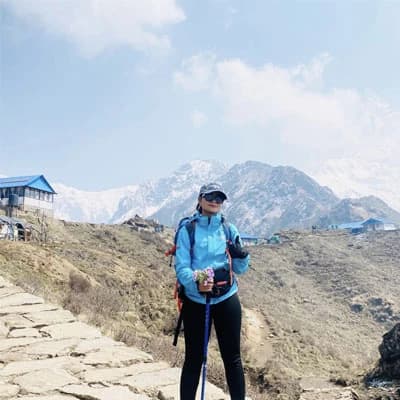
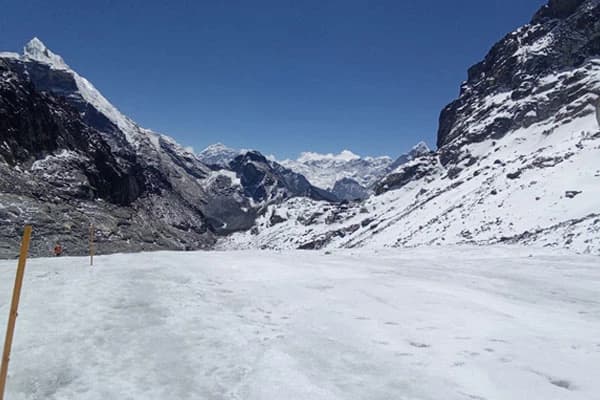
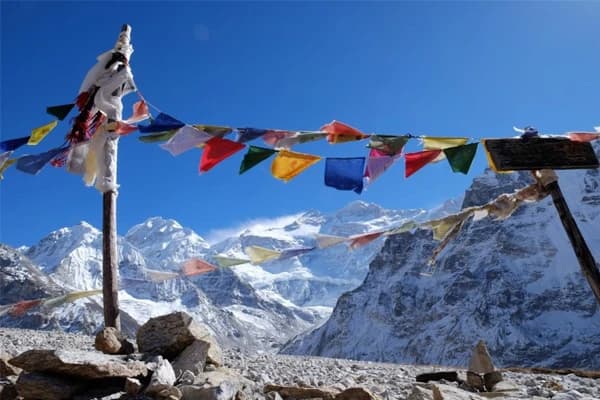
- As the spring season comes after the end of the winter season (high precipitation), the chances of rainfall or snowfall are minimal, offering the crystal clear views of the mountains and surrounding landscapes, at the same time, making the journey truly noteworthy, where the thundering peaks accompany you in every stride.
- As April falls between the peak springtime, Nepal's national flower, rhododendrons, thrives beautifully in the shades of red and pink, with the picturesque background of snowy mountains, creating a beautiful contrast for the instagram snap shots.
- The daylight lasts for a long time upto 11 to 12+ hours, with a sunrise, starting from 5 AM, and remaining till 6 - 6:30 PM, which means you can gradually pace the hike, without speeding up, to avoid the night darkness, where beginners can comfortably pace the hike.
- As this span of the year marks the peak trekking season, the trailhead experiences a high number of trekkers, offering an impeccable chance to interact with other fellow hikers, and also, get to know about their cultures, make new friends, navigate along with them, creating lifelong memories.
- As April coincides with the iconic mountaineering Everest expeditions, where the base camps are covered with colourful tent camps (temporary housing), with climbers, engaging in prior trainee sessions, you can get a motivational insight and also, witness, their cheerful celebrations, after acing the pinnacle of the world's highest peak - Mount Everest, boasting your energy to the fullest level.
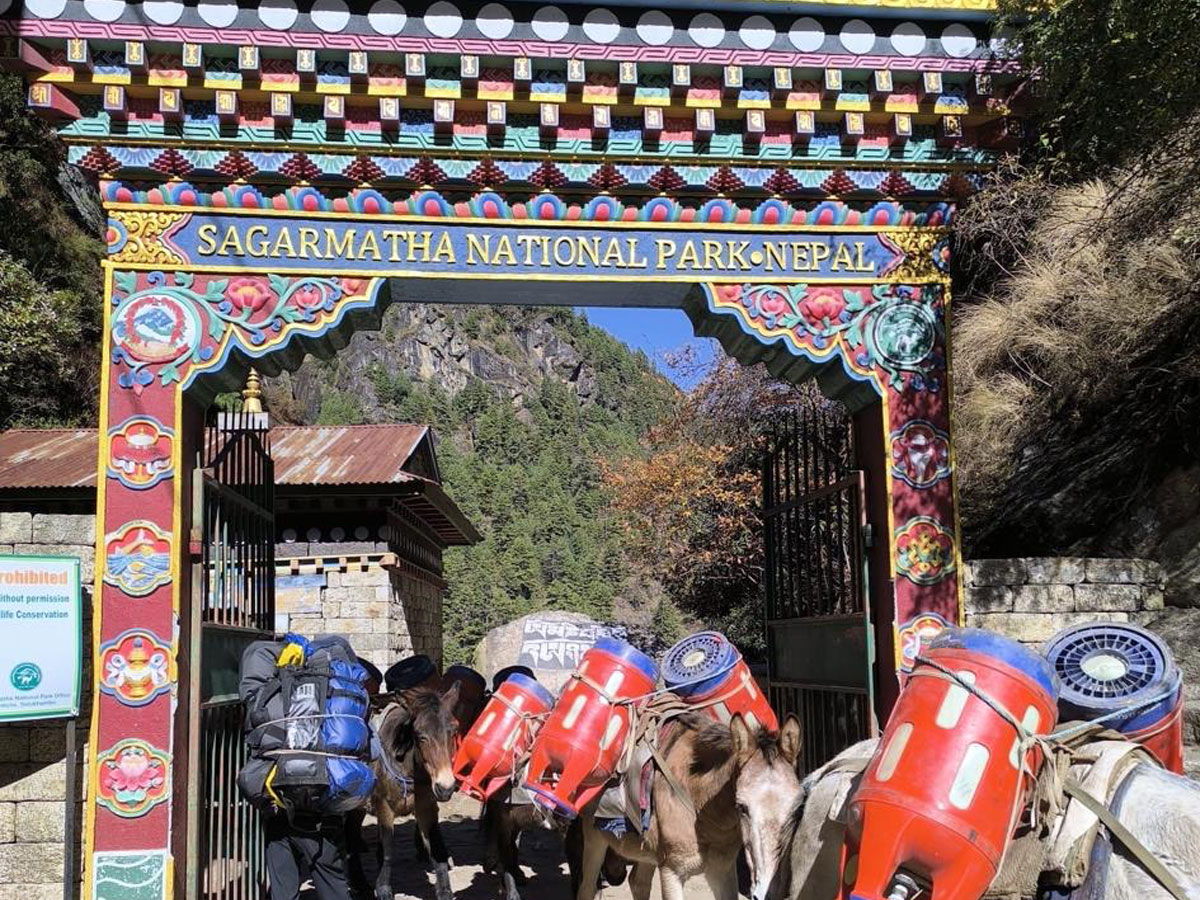
- The iconic Sagarmatha National Park, a UNESCO World Heritage gem, captivates with over 200 Himalayan bird species like the vibrant blood pheasant and national bird Himalayan monal (Danfe), plus rare glimpses of elusive red pandas and snow leopards, transforming the trek into an unforgettable wildlife and birdwatching paradise beyond just reaching base camp.
- Due to the stable weather conditions, the possibility of delay of Lukla Flight remains pretty low, as compared to monsoon or winter seasons, or late Spring, so it is a perfect timing, if you have a limited time frame as well.
- The major festivals, such as the Nepali New Year, fall in April, where you can celebrate the new beginning of the year with locals, and also, the city of Kathmandu has several jatras (Newari Festivals), such as Indra Jatra, Sindure Jatra, Bhote Jatra, which you can attend before or after the trek.
Everest Trek Weather and Temperature during April: What to Expect?
Weather Conditions
April falls under the spring season (March, April and May), which falls under the peak time for any himalayan adventure, and also, stands out as an idyllic season for Everest Base Camp, where the weather and climatic conditions remain stable, with moderate and mild temperatures.
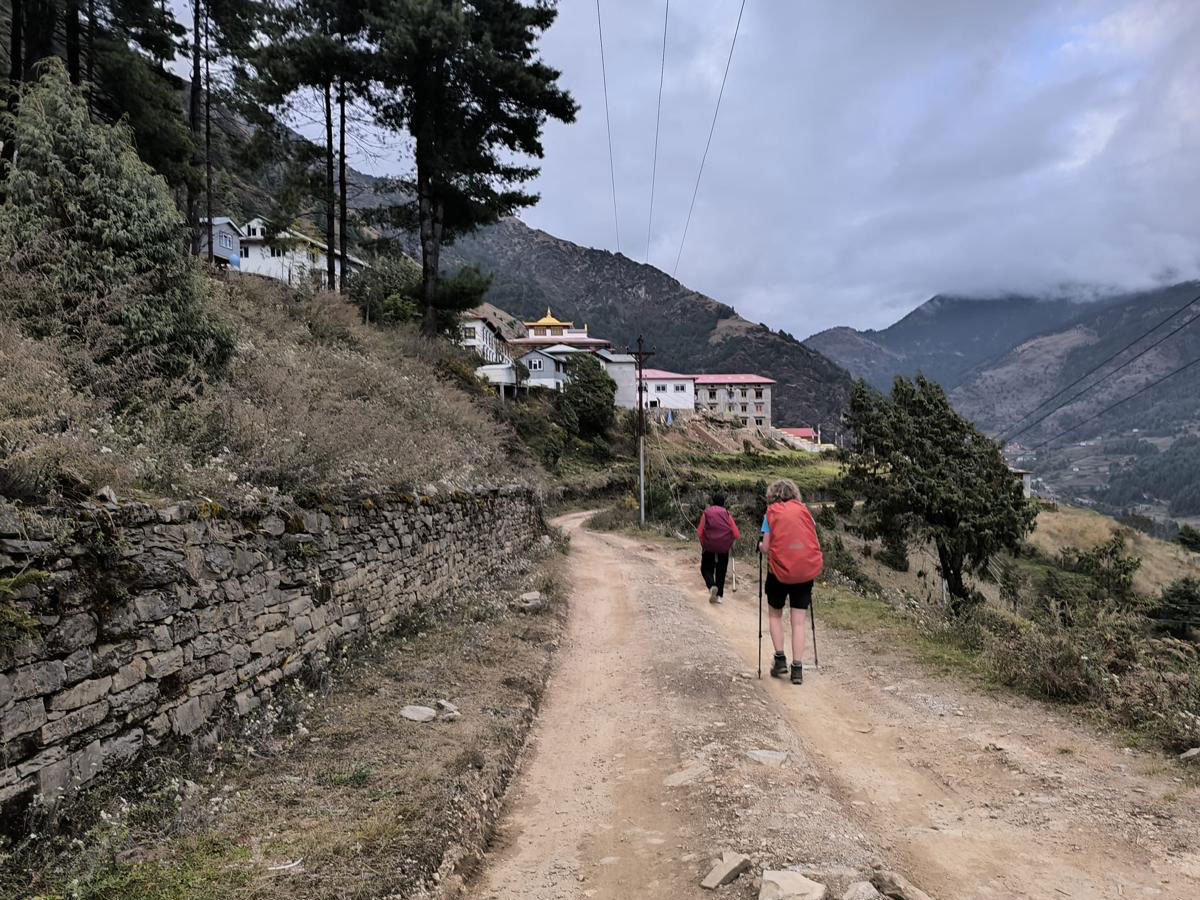
Spring marks a season in nature's wonders within the Khumbu region, with the thriving blooming red and pink rhododendrons, white orchids, and the lush green valley, and the migrated himalayan birds and fauna, all boasting in this iconic territory. Due to the crystal clear vista and surroundings, the panoramic mountain 360-degree vista accompanies you in each stride, with the beautiful melody of the himalayan birds chirping all along and the views of the himalayan peaks, wrapped with white snowy flakes. The chances of rainfall or snowfall remain minimal, as this season comes after the end of the winter season, washing away the possibility of a cloud burst, due to which the trail conditions are smooth and dry to undertake, which can be easily navigated by any kind of hikers, from beginners to experienced ones, to any age group as well.
Temperature Ranges
April is marked as one of the best peak trekking months, where the temperature becomes moderate, with the temperature ranging from 8 to 15 degrees Celsius, in the daytime, at the lower elevation below Namche Bazaar (3440 meters), whereas, at mid elevation, it ranges between 0 and 5 degrees Celsius, and falls upto -12 to -6 degrees celsius near base camp at the night time. While the humidity is pretty moderate, cozy and warm, at lower and mid elevation below 4000 meters, soon after you reach the altitude above Dingboche, and get near Gorakshep, or you can say the base camp, it is the coldest point, that you will have to face, during the trip, however, as compared to other seasons, it is still, warm, and also, you can settle in comfortably, with the heating dining area, however, a sleeping bag is still suggested for a cozy sleep.
| Elevation |
Day Time Average Temperature |
Night Time Average Temperature |
What to Expect? |
| Lukla and Phakding |
15 to 22 degrees Celsius |
0 to 5 degree celsius |
Warm days and chill nights |
| Namche Bazaar to Lobuche (below 4000 m) |
10 to 16 degrees Celsius |
-5 to 2 degrees Celsius |
Moderate weather, windy evenings and cold nights |
| Gorakshep and EBC (above 4800 m - 5364 m) |
-2 to -6 degrees Celsius |
-15 to -6 degrees Celsius |
Cold Nights, Windy Days, and maybe minimal snowfall (possible) |
Everest Base Camp April Itinerary: Safe 12 Days Classic Route
The trek to Everest Base Camp during April is considered safe and smooth to commence through, with dry terrains to proceed (navigate) and stable weather conditions; however, the real question becomes the possible risk of AMS (Acute Mountain Sickness), if you are not gradually ascending and speeding up the itinerary, increasing the very possible risk of mountain sickness. Hence, here is an outline itinerary suggested for hikers who are seeking a 12-14 days of timeframe to hike along, considering a gradual ascent, and coveting highlighted aspects:
Day 1: Reach the starting point of the trekking trail, Lukla, with a morning flight from Kathmandu and start the hike towards Phakding from Lukla Airport
Day 2: Ascend to the bustling town - capital city of Khumbu, Namche Bazaar, with 5-6 hours of hiking
Day 3: Acclimatize at Namche Bazaar, with the option of the best side trip to the Everest View Hotel, or Khumjung village
Day 4: Trek to Tengboche, visit the iconic monastery insighting the panoramic mountain views, Dudh Koshi valley and Sherpa sculptures, arts, artifacts, history, etc
Day 5: Hike to Dingboche (terrains gets changed, and becomes quite demanding) time: 6-7 hrs
Day 6: Rest - Acclimatize at Dingboche, with a side hike to Nangkartshang Peak (acclimatization is a must; however, it can be skipped if you are short on time)
Day 7: Hike to Lobuche, crossing Thukla Pass, and Memorial of Past Summitters, time: 5-6 hrs
Day 8: Reach Gorakshep (last tea house point to EBC), and then trek to Everest Base Camp (5364 m) and then get back to Gorak Shep lodge
Day 9: Ascend to the highest vantage point, Kala Patthar, and then descend to Pheriche
Day 10: Reach Namche Bazaar
Day 11: Descend to Lukla Airport/ village, and stay overnight, resting your feet
Day 12: Get back to Kathmandu via Lukla Flight
Foods and Accommodations while trekking to Everest Base Camp during April
Foods and Accommodations during the EBC Trek in April have a wide variety of options, with all the tea houses fully resumed after the conclusion of the winter season. As the Khumbu region stands out as one of the most popular and most visited trekking trails in Nepal, it has many options, from budget to standard to luxury lodges, to get settled in, with comfortable rooms, and heated bedding configuration having twin or private or 4-5 beds in one single room, which will be served as per your demand. While at the lower section, you can find rooms with shared attached flushable bathrooms.
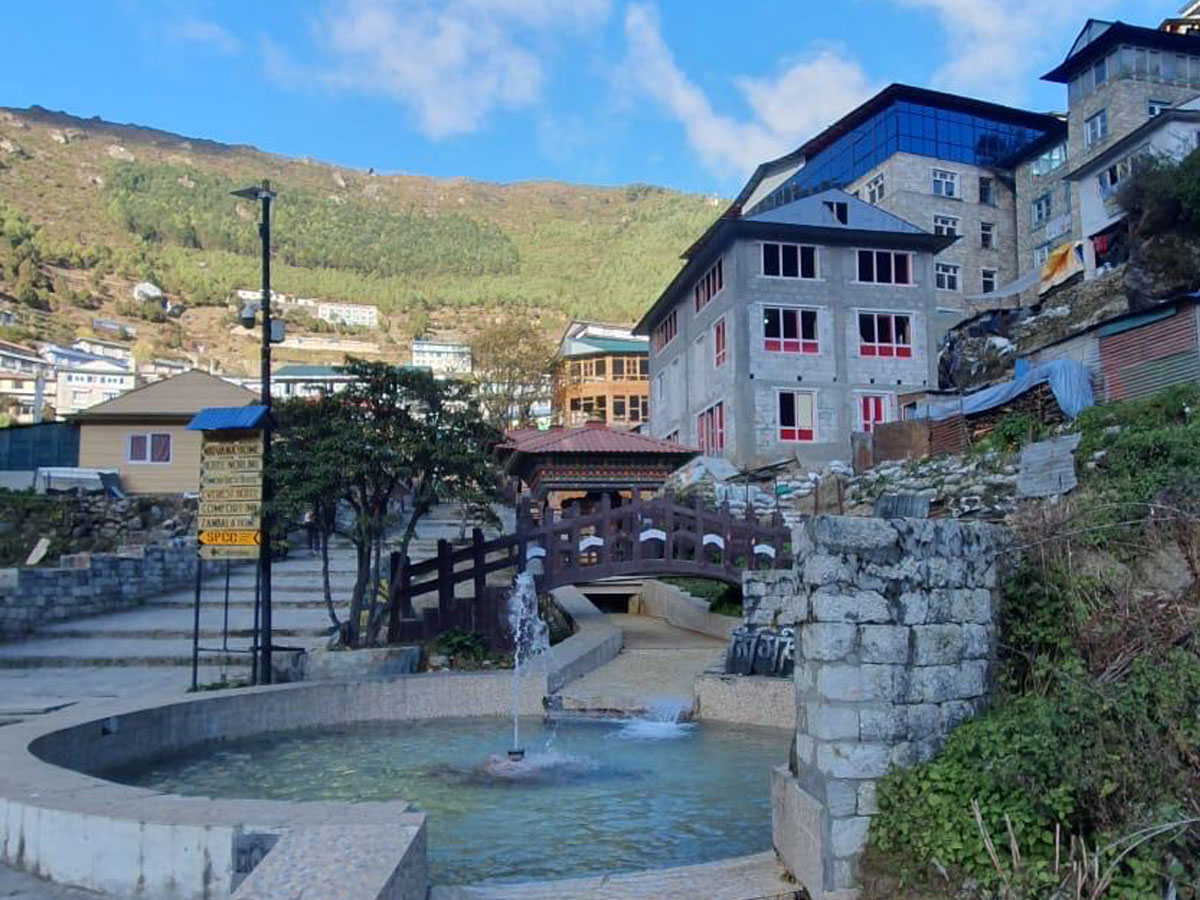
After going above 3000 meters, or you can say Namche Bazaar, every tea houses, are on the shared washroom side; however, it depends on what kind of accommodations you are seeking, either budget-friendly, standard ones, or luxury, catering to the budget and comfort of everyone. Even though the rooms are simple, every tea house includes the facilities of wifi, internet, telephone calls, laundry services, hot water shower, etc, so you can say the accommodations are more on the luxury side.
Accommodations
- The tea houses are run by the Sherpa locals themselves, so do not expect them to be luxurious, if you are seeking for budget friendly or affordable options
- The luxury premium lodges, like Everest View Hotel, Yeti Mountain Home, and many others, are available with attached washrooms costing almost USD 200 per night, so please, take an overview of the prices beforehand
- Even though the accommodations are included in the package itself, extra costs for personal spending, such as wifi, laundry, hot shower, beverages, and hot water shower, fall under the personal expenses, so carry the cash accordingly
- To charge your gadgets, the electric sockets are only available at the dining area, where you have to pay extra and wait in a queue, so it's better if you carry a power bank along with you for emergency charging.
Foods
- Every tea house has a wide range of categorized meals, from vegan to vegetarian to non-vegeterian option, that caters to the local or international cuisine taste, as the menu has varied options like western, indian, asian and local ones
- If you are allergic to some kind of food items, then make sure to inform the guide, so that the meals can be cooked accordingly
- Sometimes, at the peak seasonal trekking time, like April, or you can say Spring and Autumn seasons, the foods, are served later on, so carry the snacks to munch in
- At least consider having 1 Dal Bhat, once a day, that consists of every nutrient, with side dishes, which can be refilled, time and again, and keeps you full throughout the day.
Is EBC Trek Safe in April? Altitude Sickness Risks, Precautions & Emergency Protocols
April marks one of the best months to trek in Nepal, and remains the same in the Everest region, as well, with stable weather and climatic conditions, and a perfect fusion of moderate humidity; this trek can be best experienced in the month of April. Besides, the chances of precipitation (rainfall and snowfall) tend to be very minimal at this timeframe, which makes the terrains remain dry, and not slippery, or icy, which supports the fact that the route is surely safe and smooth enough to navigate even by beginners, with proper preparations, and assistance by the experienced local trekking guide.
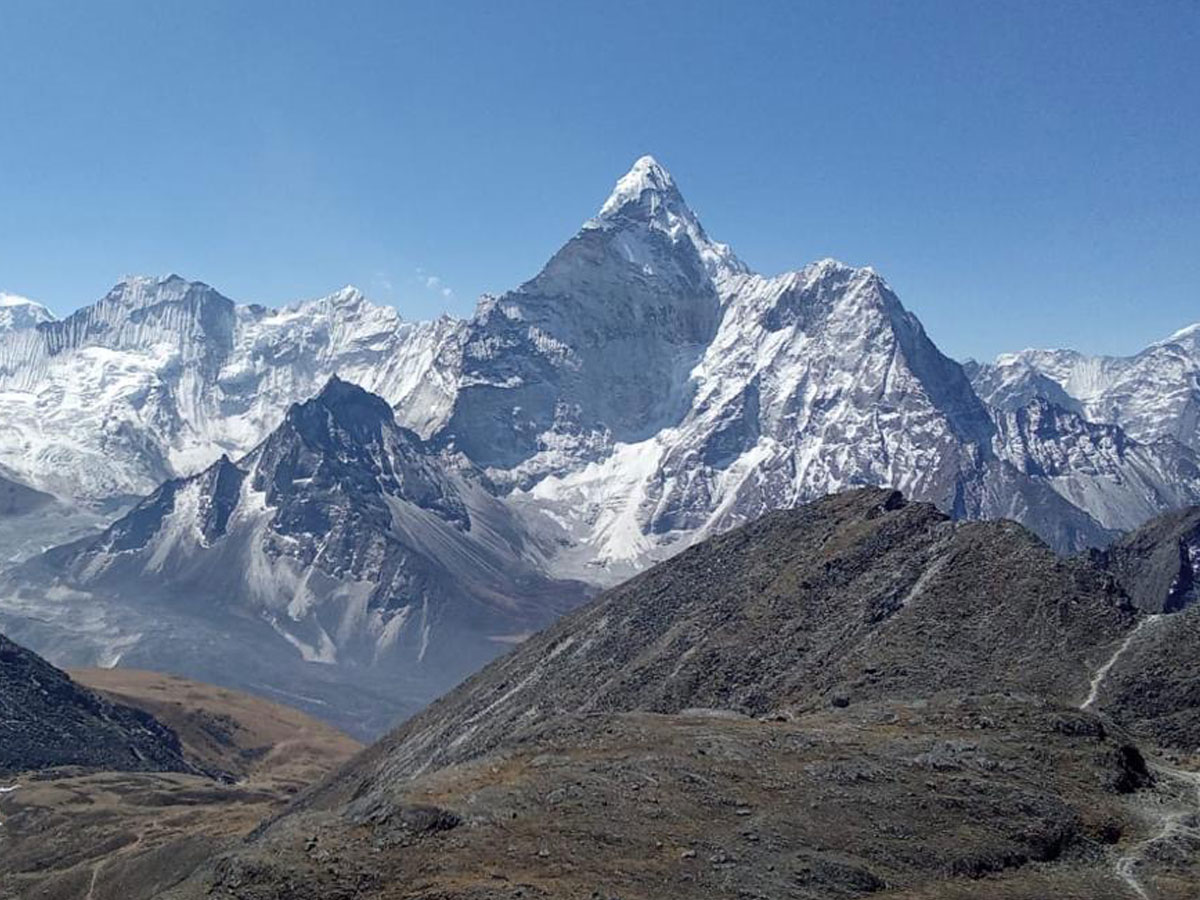
However, even though this month is marked as the peak trekking season, with no hazard situations like natural disasters - avalanches, landslides, and so on, the possible risk of altitude sickness is always there, and not only this particular himalayan adventure, but it remains the same for every trek if it exceeds the height of 3000 meters. As you ascend higher, the air gets thinner, especially above 4000 meters, where minor symptoms such as headaches or nausea hit 40-50% of trekkers if ascent is rushed, and acclimatization isn't done, so ensure to have a gradual ascent, with at least 1-2 acclimatization days at Namche Bazaar or Dingboche, before touching 5000 meters.
The risk of AMS is high if you do not follow the preventive guidelines from the very start, as this trek takes you to the highest elevation at 5545 meters (Kala Patthar), which is surely not a joke, so to avoid the risk, rather than, depending on the ideal trekking month- April or any peak seasons, solely, following safety measures remains must.
Precautions: Preventive Measures
- Make sure to hydrate yourself properly with 4-5 liters everyday, and try to stay warm and comfortable, consuming ginger garlic soups, lemon water, and avoid consuming cold beverages and cold water as much as possible.
- Avoid consuming alcohol beverages, caffeine, and smoking after ascending higher than 3000+ meters, especially after going beyond Namche Bazaar.
- Before starting the hike, or arriving in Nepal, do a full body health check-up, and get to know how your overall health is acting up recently, and follow the suggestions of the consultant doctor.
- Do not speed up your itinerary; always opt for a gradual ascent of 300-400 meters per day, let your body adapt to the rising high elevation, as speeding the ascent and rapid altitude gain is quite risky.
- Hire licensed local guides from operators like Destination Himalaya Treks, and pack layers for 25°C days dropping to -15°C nights.
Emergency Protocols
- At every stopping point, make sure to check your pulse rate via an oximeter, which is available at health posts, at Namche, or you can carry one on your own, and know how well your body is acting up recently at increasing altitude
- Watch out for the severe altitude symptoms, and if it is serious, then descend to a lower elevation, and opt for medical health at Namche, Pheriche or even at the Himalayan Rescue Association, where you can get free oxygen
- Guides carry the satellite phones; every time, if any severe conditions occur, then inform the guide immediately, for the helicopter evacuation, which is the possible way to get quick, serious medical assistance, so ensure good travel insurance beforehand.
Key Possible Challenges during the trek to Everest Base Camp in April
- The trek to EBC demands a long coverage distance, ranging from 12 to 14 days of timeframe, with 5 to 6 hours of navigation via varied terrains each day, via multiple ascents and descents, which can be physically demanding to some, especially if you are a beginner.
- While April is considered a peak trekking month, due to stable weather and climatic conditions, the chance of rainfall or snowfall is still there, demanding extra layerings, which most hikers are not well prepared for.
- As it stands out as one of the best months, the routes are filled with mass crowds, due to which there remains the possibility of finding rooms, flight tickets, and might disturb serenity and peacefulness for adventure or lone seekers.
- The risk of altitude sickness is always there, as ascending to such high elevation, unlike city life, is no joke, which leads you to the highest elevation of 5545 meters, if you are not well prepared and if safety guidelines are not followed.
- As the trailhead visits a high number of hikers (mass trekkers), even for basic amenities, the cost hits sky rocket price, which might be financially shocking to some, and also a shortage in the budget due to unexpected personal expenses.
Everest Base Camp Trek in April Cost: 2026 Budget Overview
The Everest Base Camp Trek cost during April remains constant, even though it is a peak seasonal time. The standard range starts from USD 1200 and goes upto USD 2400 per head, which highly depends on the group size and the duration of the hike (12 to 16 days) as well. If you opt for the guided trekking packages, then the cost becomes more on the cheaper and safer side, due to the booking and personal connection of the local travel agency, which makes the overall trip cost cheaper and also budget-friendly and hassle-free as well. With this price range, all essentials, such as the Lukla Flight cost, accommodations, standard meals (breakfast, lunch and dinner), supporting crews, guides, and porters, permits get covered, making the journey smooth.
Meanwhile, if you are seeking to travel, to trek independently, without opting for the guided package, and the assistance of a local-based travel agency, then the trip becomes more chaotic, as you have to make the arrangements all by yourself, like tickets of lukla flights, pre booking of lodges, which are basically already done, by the agencies, due to personal connection, so even the pre bookings of the logistics doesn't become reliable, at such huge flow of the hikers at the Everest region. Still, if you are considering trekking solo, independently, then it can cost you somewhere between USD 1500 and USD 2800 per head, with all the fares including Lukla flight included, which itself costs at least USD 500-600 per head, for a round trip, with taxes included.
Apart from these, there are many reasons why the cost might vary when you are opting for such a popular adventure, with distinct accessibility, standard to luxury amenities, and other means to get to the trailhead, so let's distinguish the EBC April Trek cost for 2026 and 2027, based on package type:
The standard package costs somewhere between USD 1300 and USD 1800 per person, which is a middle-range option, mainly focused on comfort, safety and also price, with the services included, such as Lukla flight (round trip), guide, porter, accommodations, meals, all included in the package. The rooms are on a private solo basis, if you are travelling alone; however, with the washrooms being shared, the rooms are more on the simple side.
Now, let's come to the Budget EBC Trek, which is the cheapest package that you can basically find, with all the facilities included, such as simple rooms, shared washrooms, and rooms equipped with comfortable mattresses, pillows, and blankets, however, you might have to share your room, if you are travelling along with group, or You may team up with a bigger group to split guide costs, meanwhile, the porter facilities are not included, with no accommodations included in Kathmandu as well, if you are willing to opt for budget package.
Meanwhile, on the other hand, the Luxury Everest Trekking is the most expensive package, that, you can find, with all the standard premium facilities included in the package, such as 5 star rated lodges such as Yeti Mountain Home or Everest Summit Lodges, with better rooms, warm showers daily, heated rooms, and better food, vegetables, and some Western meals. In this luxury package, all the services such as personal, guide, porters, oxygen supplies, medical supplies, and even one way private helicopter return trip are included, for a more distinct and unique experience of the air navigation.
The Luxury Premium Everest adventures feature intimate groups or fully private outings tailored for you and your friends. Despite the higher price tag, these journeys ensure top-tier comfort en route to EBC, all while delivering an unforgettable high-altitude adventure.
Ultimate Packing & Essentials List: Must-Have Gear You Can't Trek Without
The right clothing, gear, and essentials are a must-do list for the successful Everest Base Camp Trek in April, which plays a major role in how your trip will pass by, even the overall personal spending, and the quick layerings to do, if any uncertainties occur. Along with packing all the essentials and gears, as per the season, you also need to be well aware of packing smartly, due to the weight limitations, and long-hour journey, where you surely do not want to burn your back, or pay extra money, due to overpacking, do you? Here are the suggested packing gears and essentials, especially suggested for April in 2026 and 2027.
Non-Negotiable Layerings: Clothes Not to Miss Out
- Base Layers: Thermal wear (for higher altitude), sport bras (women), vest (men), bottoms wick sweat during long hour ascend, long sleeves thermal coat
- Mid Layers: Full sleeves Breathable T-shirt, Sweat-proof, Dry Fit t-shirts, Light-weight Hiking Pants (Dry Fitted ones), Fur T-shirt, and hiking shorts (for high altitude)
- Insulating Mid-Layers: Fleece pullovers + light puffy for Namche chill or acclimatization hike at Dingboche
- Waterproof Layers: Backpack rain cover, waterproof jackets, Gore-Tex jacket and pants, for the start of April (also If your trek touches the month of mid-May)
- Cold Protection: Down Jacket (-15 degree Celsius rated), Thick warm woollen hats, and socks, etc.
Trekking and Footwear Musts: Hike in Ease
- Comfortable Trekking Shoes, with a strong grip (acts as a substitute for hiking boots on lower trails)
- Adjustable Trekking poles, to avoid knee strain, and also navigate via wooden terrains, and also, comfortable ascent via rugged terrains above Dingboche
- Broken-in ankle boots with a strong grip (buy one size bigger shoes, so they can fit properly even after wearing thick shocks)
- 30-40L daypack and also a duffle bag (will be carried by porters)
Medical Aids and Sleeping Comfies
- 4 seasonal sleeping bags (must have, especially for beginners)
- First Aid Kit that includes Diamox, UV40 sunscreen, water purification tablet, oximeter, bandages, and your daily tablets, as suggested by doctors
- Headlamp, power bank (20,000mAh), energy gels, cash (USD 400+ for personal expenses)
Top 10 Essential Travel Tips: Major Things to Consider for April EBC Trek
- Please take note that the month of April marks one of the busiest trekking seasons, with a heavy inflow of hikers. Thus, if you are planning this adventure, then please consider opting for local based travel agency, guided packages, to avoid the extra cost and hassle of finding logistics at such a peak time.
- As April stands out as the finest time of the year, many people avoid engaging in physical preparedness. If you are also considering this, then, just to let you know, the weather and climate change every second, making the terrains transform. Thus, no matter whether you are a beginner or an experienced hiker, make sure to engage in physical preparedness, such as cardiovascular exercises, such as running, walking, cycling, jogging, and also engage in muscle-building workouts, to build and strengthen the muscles.
- Pack the gears and clothing, smartly yet very lightly, even if it is a spring season, ensure to pack the gears and essentials, matching all the seasonal variations, by fitting in the winter essentials such as crampons (might require), sleeping bags (for beginners), down jackets (for all), and not miss out rain cover, rain coats, or dry fitted jackets or cover up, considering the chance of percipitation as well.
- The Lukla Flight, weight limitation is only upto 15 kgs; if it goes beyond that, then an extra cost will be charged. So, even if you have a porter for your backpack support, do not consider overpacking and consider packing only those essentials that are required.
- The trail usually remains very crowded at such peak time, so, if you want to enjoy the best views, and get clear snap shots, then, start the day hike earlier of the day, for instance try to start the trek at 6:00 AM, while many usually head out at 7 or 8:00 AM, so, that you get to enjoy quieter routes and get the panorama views of mountains at view points.
- Maintain your pace level, and do not get influenced by others very easily, and follow the navigation, safety calls, and the guidance of the trekking guide throughout the trip.
- No matter whether you are a beginner or an experienced hiker, please set aside at least 1 or 2 acclimatization days before hitting 5000 meters, at Namche Bazaar, or Dingboche, to get adopted with the rising high altitude and avoid the possibility of altitude sickness at the same time.
- If you are a bit concerned about personal expenses spendings, for snacks, or water which cost, sky rocket at the trekking trail, then, the best thing that you can ever do is pack the snacks, to munch in, that gives you instant energy like snicker bars, granola, dry fruits (almonds, cashews), and carry carrying a water purification tablet, to avoid buying bottled water that cost above USD 1 to USD 2.
- At every stopping point, check how your body is doing, check pulse rate via oximeter, and ensure that everything is going well with your body, in terms of altitude sickness, and then ascend accordingly. If you feel any discomfort or any symptoms of altitude sickness, inform the guide ASAP!
- At the peak season time, when there is a high number of visitors, especially at spring season, due to air traffic congestion, there is always a high possibility of delay of the Lukla Flight that lasts for hours and even a day or two, so make sure to set 2 days buffer days, for such unexpected conditions.
FAQs (Your Questions, Expertly Answered)
What is the weather like at the base camp in April?
April brings prime trekking weather to trek to EBC (5364 meters), with warmer days than winter or March, and cozy nights. minimal chances of precipitation, and the moderate temperature (humid), ranging from 2 to 4 degrees Celsius, at the base camp or near Gorakshep, or Lobuche, and takes a drop to -8 to -10 degrees Celsius, with a chill weather at daytime.
How much does the Everest Base Camp trek cost in April 2026 for the guided package?
The cost for the EBC Trek during April, or any other seasonal time, remains the same if you are seeking a standard package, ranging somewhere between USD 1200 and USD 2200, depending on the standard, basic, or luxury packages, and also the duration and the number of hikers in your group.
We at Destination Himalaya Treks and Expedition offer packages for EBC, from standard to basic to luxury ones, ranging from 7 to 18 days' duration, ensuring that the itinerary and budget match everyone's preferences and estimated cost. However, the standard 14-day package costs for a private solo trip only cost USD 1450/- and are minimized the more hikers your group gets. Meanwhile, if it doesn't match as per your budget and timeframe, then it can be customized, as per your preferences, cost, and timeframe. Feel free to connect with us.
Does the cost of the packages remain transparent, or are there any hidden costs?
Yes, the cost surely remains transparent, and not hidden from whatever you see at the cost details (Inclusion/exclusion) section, you get that, there is no such thing called overcharging done by us, where every logistics, requirements, flight cost, supporting crews' fare, etc., are covered in the package.
What are the altitude sickness risks during the Everest Base Camp Trek in April, and how to avoid such conditions?
The possibility of the AMS (Acute Mountain Sickness) highly depends on the daily elevation gain, the individual's preparations, and whether the safety measures are implemented by the hikers, or not, along the trekking trail, rather than on external factors. However, as the temperature is pretty warm, and not unbearingly cold, in April, just because of the weather, there won't be any risk of AMS.
However, proper safety guidelines, must be applied from the very beginning of the journey, such as following a gradual ascent, setting at least 1-2 acclimatization days before hitting 5000 meters, hydrating well enough, avoiding caffeine, cigarettes, and alcoholic beverages, and following the assistance of the trekking guide, which elps in mitigating the risk of altitude sickness, thus, follow, the preventive measures from the very beginning till the end.
How crowded are the trails during April?
As April falls between the months of peak season time - Spring, the trailhead experiences a huge number of hikers along the route, the tea houses (accommodations) can be more crowded than usual, so make sure that you do the booking, pre-book the packages as well, to get the desired rooms, and start the hike earlier at 7:00 AM, or 6:00 AM, so that you get to slow ascend without rush, and also, enjoy the views and click great photographs, without any disturbance, by getting earier.
What are the chances of avalanches, landslides, or heavy cloud brust, at April?
April stands out as the best season, regarding the percipitation, where the chances of rainfall is pretty low, lower than 10%, as the span of the month comes after the end of winter, due to which the temperature also, tend to moderate, weather remaining clear, and the terrains becoming drier, than usual, as the winter conclusion, washes away all the snowy trails, before mid March.
Due to the lower chance of rain or snowfall, there is no chance of landslides or snowfall, even if it occurs, then it is a small one, and not a dangerous one, in the evening at the base camp, as the weather is always unpredictable. However, in comparison to March and May, April is hazard-free due to a lower chance of cloud bursts.
What is the possibility of the Kathmandu to Lukla flight schedule, cost, and delays in April?
Compared to off seasons (winter and monsoon), the chances of the delay of Lukla Flight tend to be very minimal, because of the stable weather and climatic conditions, and unobstructed and fog-free views, whereas the delay or cancellation of the flight, to be honest, still, remains questionable, as the air faces, a high number of air traffic congestion, due to which, the flight might sometimes get delayed, or transfered to Manthali - Ramechhap Airport, so, make sure to set 1 buffer day (extra day), for such uncertainties.
Meanwhile, the cost at the April peak trekking season ranges from USD 190 to 250 one way, and reaches upto USD 230 as well, with taxes included, and might hit USD 380 to USD 480 for a round trip: Kathmandu - Lukla - Kathmandu.
Can I trek EBC solo, or do I need a guide in April 2026?
As per the new rules of the Government of Nepal, initiated in 2025 A.D, one experienced licensed trekking guide must be hired by everyone, especially for the foreign trekkers, for safe navigation, communication with locals, and boosting the local economy. While those who are solo hikers can opt for a group join, or choose a solo private trek, as well.
How many days does it take for the EBC Trek in April?
The classic EBC itinerary follows the standard route over 12-14 days, incorporating essential acclimatization rest at Namche Bazaar and Dingboche for a safe, gradual ascent. Experienced trekkers with tight schedules can condense it to 10-12 days while maintaining caution.
If trekking to Everest during April is safe and not dangerous, can I skip obtaining travel insurance?
No, do not skip the travel insurance for the EBC April Trek, even though the season is considered a peak, ideal, and safe time, as venturing out to such high altitude is no joke, with the possible dangerous risks, always circulating 24 hours a day, especially the possibility of AMS (Acute Mountain Sickness), and unfortunate weather conditions. Thus, make sure to opt for the travel insurance that includes all the essentials, such as medical bills coverage, theft, trip cancellation or delays, and most importantly, the evacuation above 3000-6000 meters.
Conclusion: So, have you decided to trek to Everest during April 2026 yet?
Well, with this complete guide, overview, you might be well aware of the fact that April for the Everest Base Camp Trek stands out the most compared to other months or seasonal times, with the jaw-dropping views, warm hospitality of the Sherpa communities, easily accessible routes, and variations of accommodations, everything caters perfectly, with the weather and climatic conditions, making it the best time to explore the iconic Khumbu valley.
As mentioned, the best time to trek to Nepal is Spring (March to May) and Autumn (September to November). During this time span of the time duration, or anytime sooner in 2026, or later, then, we are happy to assist you, from planning your adventure, as per your budget, ensuring the best arrangements of logistics, and the assistance of the experienced supporting crews: guides, and porters, with our, 20+ years experiences, on travel, tours and treks in the himalayas, we are more than, blessed to serve you rightly!
While the Everest Base Camp Hike in April is a rewarding odyssey, itself, with the proper planning, correct preparation, packing gear, and the support of the local travelling crews, we at Destination Himalaya Treks and Expedition are fully determined to turn your dreamy adventure into reality. So, what are you waiting for? Kick off this year 2026, by embarking on one of the bestly rated trekking adventures in the world, with us. Pause your busy life for just 12-16 days, it's time to be disconnect with the hectic same-scheduled life, and time to reflect on yourself, by spending more time in nature and meet locals, in the mountains, lace your boots, and dust off your hiking backpacks, feel free to reach out to us anytime, as you can contact us, anytime, 24/7, we are available to guide you.