Major Highlights of the Annapurna Circuit Trek during Spring
The spring season is the second most popular season to do any trek in Nepal after the Autumn season. If you missed the chance to trek any region during the Autumn season, spring is one of the best backups for doing the trek, and another reason we recommend you trek the Annapurna region with Thorong La Pass is that there is less tourist traffic during the Spring season, unlike the Autumn season. We have enlisted even more reasons for you to do the Annapurna region's trek alongside the Thorong La Pass during the Spring season.
Rhododendron forests bloom during Spring
The national flower of Nepal; the Rhododendron start blooming fully during the Spring season, you can see the Rhododendron forests prominently starting from the lower regions then going upwards as the season starts moving forward. On the lower regions of the Annapurna Region, you walk through pink and subtle red forests with the entire Annapurna region behind the forests, making the trek truly memorable and it is also to be known that a sight like this cannot be experienced during the Autumn season in the Annapurna region.
Stable weather and clear mountain views
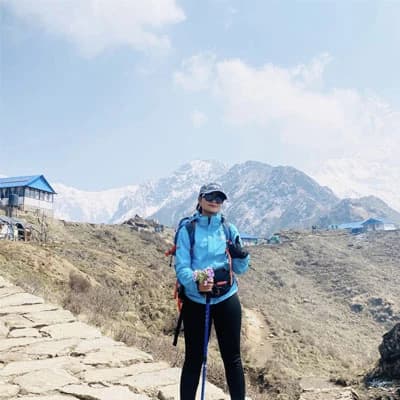
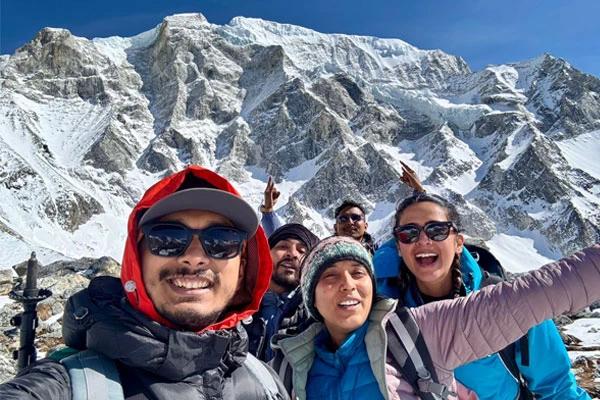
As the Spring season sits after the cold winter season, the dry period post-winter starts kicking in, and the weather is very stable around this season. The season is very calm and features multiple windows of excellent views of the entire Annapurna range, in combination with the stable weather and the comfortable temperatures. The early mornings are usually the clearest and the calmest; this is when you want to be on the trail and end off the trekking day with the evening sky's golden hue illuminating the Annapurna Range, making it perfect for taking photos of the range.
Warmer and Longer days
The days during the Spring feature excellent daytime duration to trek in comparison to the Autumn season, when the sun starts setting early on. The Spring season is also excellent in being able to provide the trekker with warmer temperatures throughout the day, making the entire trekking experience really smooth. This allows trekkers to take more rest between points to rest and take a break before continuing on with their trek. The lower sections of the trek have mild difficulty to trek in, so you can pack less then start moving, packing more as the trek progresses forward.
Higher Trails open up
As the Spring season starts, the higher sections of the region start becoming more accessible again, as most of the higher sections remain closed off during the winter season. In comparison to the Autumn season. As the Spring season is much warmer in comparison to the Autumn season, the trek is much easier to do, as the temperatures around the higher regions are not as extreme due to the warmer air starting to settle in during the Spring. For Thorong La Pass, we recommend the Spring season due to its warmer nature in comparison to the much colder Autumn season.
Fewer crowds than Autumn
As we mentioned before, the Spring season is the season that features excellent conditions for trekking in any region but has less tourist traffic in comparison to the Autumn season. If you want your trekking experience to be warmer and have longer daytime alongside less tourist traffic and crowds, we highly recommend the Spring season for trekking.
Annapurna Circuit Itinerary for Spring: Day-to-Day Insights
The complete Annapurna Circuit can be completed between 10-16 days, depending on the starting point, side trip extension, hiking pace, and itinerary. With more than 2 decades of our expertise in travel and tourism to the mountains, we've found that, rather than your physical endurance level and preparations, how your day-to-day itinerary has been set, and how long you are spending time to acclimatize matters more. We at Destination Himalaya Treks plan flexible spring itineraries for the hikers' comfort and safety, to avoid risky crossings of the pass and also experience every major highlight of the trail.
Here is the 14-day Annapurna Circuit Trek itinerary, taking a gradual ascent, great acclimatization days, and experiencing all of spring's attractions for 2027 and 2028:
- Day 1: Drive Kathmandu → Dharapani; the drive takes about 7–8 hours by bus or jeep
- Day 2: Dharapani → Chame (2630 m); walk follows the green Marsyangdi valley
- Day 3: Chame → Upper Pisang (3310 m); the trail climbs through pine forest into more open alpine terrain
- Day 4: Upper Pisang → Manang (3538 m); Arrive in Manang with time to rest
- Day 5: Acclimatization day in Manang; Either Hike to Gangapurna Lake or Lama Cave
- Day 6: Manang → Yak Kharka (4050 m), short day with a steady walk
- Day 7: Yak Kharka → Thorong Phedi (4450 m), Rest and Hydrate
- Day 8: Buffer or acclimatization day at Thorong Phedi (4450 m)
- Day 9: Thorong Phedi → Thorong La → Muktinath (5416 m at the pass, descending to 3800 m), starting at 3:30 AM, and descending before 2:00 PM
- Day 10: Muktinath → Jomsom, following Kali Gandaki gorge
- Day 11: Jomsom → Pokhara, either flight or driving options (flight, 25 minutes, drive 5 hrs)
- Day 12: Rest and Exploration in Pokhara
- Day 13: Pokhara → Kathmandu, Drive or Flight option
- Day 14: Departure Day
Important Note
- Pass-day buffer: Day 8 doubles as a weather buffer. The source also mentions blocked passes and suggests adding 2–3 contingency days in bad conditions.
- Flights: Mountain flights from Jomsom are often delayed or cancelled by wind. Days 12 and 14 give you slack.
- Early March: Trails can still be icy then. Late March to May is the safer window you recommended.
- Daily distances: The source puts typical days at 5–6 hours of walking and 8–12 km.
Spring vs Autumn: Which Season Suits Thorong La?
Both seasons are exceptional times to cross the Thorong La Pass; however, the Annapurna Circuit in Spring suits hikers for the warmer days, mild humidity, and quieter scenic trails. Whereas, Autumn, suits perfectly, for those who want to experience Nepal's major festivals, Dashain and Tihar in the mountains, and do not mind more crowded/companion hikers on the trail.
Quick comparison
| Factors |
Spring (March-May) |
Autumn (September-November) |
| Popularity |
Second popular season |
Most popular time |
| Crowds |
Fewer trekkers |
Busiest trails and crowded teahouses |
| Temperature |
Warmer days and milder at altitude |
Cooler, with colder nights near the pass |
| Daylight |
Longer days |
Shorter days with earlier sunsets |
| Weather |
Generally stable |
Stable and dry |
| Snow at pass |
Possible in early March; late March to May is the safest |
Usually clear; however, it still snows in late autumn |
| Scenery |
Rhododendron forests in full bloom and green lush valleys |
Crisp air and great scenic mountain views |
Why choose spring
Spring gives you longer, warmer days, which makes the long pass day more comfortable. The trails are also quieter than in autumn, and the rhododendron forests in the lower valleys are a sight you won't see in autumn. If you missed the autumn window, spring is a very good second choice.
Why choose autumn
Autumn is best known for the cultural exposure and busiest trails, especially on popular routes like the EBC, Annapurna, and Manaslu Circuit Treks, so it suits those who are okay with, or seek, more companionship along the trails. The weather is as good as spring, stable and with fewer chances of precipitation.
What do we recommend?
Choose spring, from late March to May, if you want warmer conditions, longer daylight and fewer crowds. Choose autumn if clear skies matter most to you, and you can book ahead. In either season, start the pass before dawn, acclimatize properly, and check conditions with your guide each day.
Annapurna Circuit in Spring: What to Expect on Trail
The entire Annapurna Circuit Trek during the Spring season usually takes around 13 - 21 days for most of the trekkers, depending on their pace of walking and also depends on the route that the trekkers take along the trek. Here is how the Spring season looks in terms of trekking the Annapurna Circuit.
The Lush Green Lower Valley
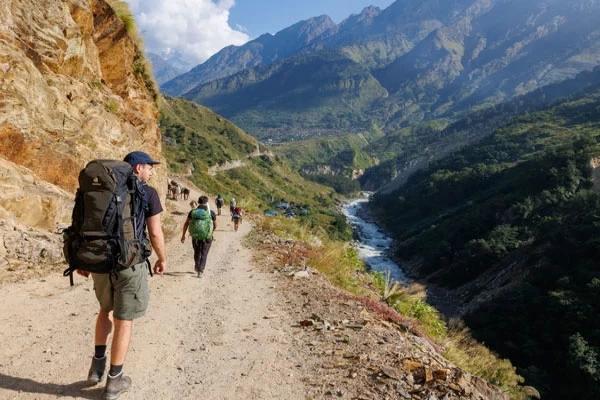
The trek begins off in the Lush Green valley of Marsyangdi, where there are fields of terraced grass and the forests are the greenest due to spring rolling in alongside the breathtaking waterfalls that you can see within the jungle. The change that the lower route has seen over the years is that the lower route now follows a road along the trekking route, making it even easier to trek for trekkers.
Manang and the Acclimatization Day
As the trek starts progressing forward and upward, you start climbing into Pine forests and open Alpine regions. After you finally cross the forest area, you reach the Manang Valley, which is situated at an altitude of approximately 3, 540 m of elevation. We recommend that you take a short hike after the day ends to help your body to start acclimatizing to the new temperature and altitude gain.
Over the pass to Muktinath
After spending a night at Thorong Phedi, you start the trek before sunrise and trek up to around 5, 416 m. The descent is quite long and serves as one of the first challenging phases of the trek. The long descent takes you to Muktinath, which is situated at an elevation of around 3, 800 m and serves as a sacred place with a lot of heritage and acts as a pilgrimage site for both Hindu and Buddhist people. Many people do the Annapurna trek for this site, as it is considered sacred by a lot of people.
Why is spring the best time to cross Thorong La Pass?
The Thorong La Pass is undoubtedly one of the main reasons as to why many trekkers choose to do this trek and according to us, the Spring season is the best season for any trekker to do the trek.
What makes Thorong La Pass special?
Thorong La Pass sits at an elevation of 5, 416 meters and is the highest point of the entire circuit, and it acts as a bridge between two experiences the trekkers get from the trek. Before you attempt to cross the pass, the trail takes you through lush, beautiful green valleys and an alpine landscape, with the entire massive Annapurna range in the background, accompanying you with every step you take through the trek. After this, the trek trail drops towards Muktinath in Mustang, where the land is open and dry, contrary to the lush green landscapes you trekked through beforehand to get up to this point.
The Pre-Dawn Start
Trekkers who attempt the Thorong La Pass usually start early and leave Thorong Phedi or High Camp between 3 and 5 a.m. because afternoon winds around the pass are very strong and limit walking. About 4 to 5 hours of steady trek and climb can be expected while ascending up to that point. Make sure that you have a headlamp and you are wearing multiple warm layers when attempting to do the pass.
Why Spring suits the pass
The Spring season brings warmer weather in comparison to the winter season and sits at the perfect spot, with the season not being too cold and not too warm. The warmer Spring conditions make the pass more manageable for trekkers planning on attempting the pass. Early March can still have much of the remaining snow in the region, so attempting the pass during late March or April is much better suited for a smoother experience.
The Muktinath Descent
Once you cross the pass, the descent to Muktinath begins. The Thorong La Pass is all about ascending, whereas Muktinath is all about descending and is the same difficulty as the ascent. Muktinath is a holy site sacred to both Buddhists and Hindus; as we mentioned before, make sure that you are respectful of the heritage of the people living in the area.
Annapurna Circuit in Spring: Conditions and Preparation
Spring season is a reliable and stable season in terms of the weather and temperature around the region during the season, but it still needs a lot of planning, and you need to pack well, especially for the pass.
Thorong La Snow: Best Spring Months to Cross
Snow can still be frozen in most of the walking trails around the region during early March; the trek can be quite exhausting if you attempt to do it during early March, but it can be a great trek if you do it around early April when most of the snow has completely melted off. Late March up to the month of May are the safest windows for attempting to do the trek with the pass. Make sure that you consult with your guide every day before starting the trek.
Altitude Safety: Acclimatizing for Thorong La
Thorong La Pass is the highest point of the Annapurna region, so make sure that when you are attempting the pass, you are trekking at a steady pace according to your experience of doing such passes. Acclimatization matters more than the pace of the trek during passes like these. If you get headaches, feel nauseous, or have poor sleep, make sure that you consult your guide and descend immediately if it worsens.
Fitness Training: Prepare 10–12 Weeks Ahead
Before attempting not just the Thorong La Pass but the entire Annapurna region as a whole, you need to make sure that your fitness levels are up to the point where you can handle walking 5 to 7 hours during most days, and if you cannot, we advise that you start training your stamina 10 to 12 weeks before departure. You can train your stamina by doing short hill walks while carrying a trekking backpack, stair climbing, or walking on a treadmill.
Annapurna Permits and Guide Rules for Foreigners
For foreign trekkers, the TAAN agency has mentioned that you need a licensed guide and that you must trek through a registered agency. For the permit, you need to make sure that you have an ACAP ( Annapurna Conservation Area Permit). There are permit changes that happen from time to time, so make sure that you consult your trekking agency for the permits and requirements needed for attempting the trek.
Spring Packing Lists
- Personal identification, such as insurance papers, passport, and permits.
- Make sure that you carry a handful of cash for any personal purchases you might want.
- Make sure that you have packed warm layers.
- Sturdy Trekking boots for the dry to slippery trails
- Crampons if you attempt to do the pass, depending on the month and snow in the pass.
- Warm Hat and Gloves
- Warm socks
- Trekking Poles
- Sunglasses for UV Protection
- Sunscreen with at least SPF 30
- Headlamp
FAQs (Frequently Asked Questions)
Is the spring season better than the autumn season for the Annapurna Circuit?
Both are great and offer comfortable weather and temperatures for the trek, but we suggest Spring if you missed trekking the region during the autumn and want to trek the region when it is warmer in comparison to the Autumn season and also has very little tourist traffic.
Which Spring month is the best for Thorong La Pass?
Late March up to the month of May are the months that we recommend you attempt to cross the Thorong La Pass in; April is the busiest Spring month, whereas the crowd starts becoming less during May.
How hard is it to do the Annapurna Circuit?
The Annapurna Circuit is not hard, but it is to be noted that it is still demanding for the length it has and also the altitude increase on the pass day, but if you have good stamina and have a steady pace of walking and combine that with good acclimatization, the trek becomes quite steady. If you are a beginner, we suggest that you do this trek with great preparation before attempting it.
How many days does the Annapurna Circuit Take?
The Full Annapurna Circuit takes around 14 to 21 days, depending on where you start and finish the trek and also the pace of walking the trekkers choose to trek at.
How difficult is the Annapurna Circuit?
The trek is moderately difficult to quite challenging in some areas, but if you have good fitness, most of the walk will feel mildly challenging rather than very challenging.
How many hours do you need to walk every day during the trek?
You need to walk around 5 to 7 hours every day for many days in a row, and we advise that you start training two or three months before the trek.
Should I trek clockwise or counter–clockwise?
We suggest that you trek counter-clockwise, as the trek begins from Besisahar and finishes near Muktinath, Jomsom, and then Pokhara.
How high does the Thorong La Pass sit?
The Thorong La Pass sits at about 5,416 meters, which makes it one of the highest trekking passes in the world.
Will there be snow on Thorong La Pass in Spring?
There are high chances of there being snow during March and sometimes also during early April.
What is the risk of Altitude Sickness?
The risk of Altitude sickness is high if you do not hydrate yourself well throughout the trekking days and if you do not take time to acclimatize in the region.
What are the signs of altitude sickness?
The early signs of Altitude sickness are headache, feeling nauseous, loss of appetite, and poor sleep.
How do I acclimatize properly?
We suggest that you take a rest day in Manang at about 3,500 meters and take a short walk to a viewpoint before returning to sleep at the point you initially started the hike from.
Should I take Diamox for Altitude?
A lot of trekkers take Diamox to help themselves in preventing getting Altitude sickness but it is still a medicine and make sure that you consult your doctor before taking it or any form of medicine.
What is the weather like in the pass?
The weather in the pass features clear and cold mornings and the wind often starts taking up its pace during late mornings, which is why we recommend you starting early.
What permits do I need for the Annapurna Circuit?
You primarily need an ACAP ( Annapurna Conservation Area Permit), and also RAP ( Restricted Area Permit) if you choose to trek up to higher points such as Nar Phu or Upper Mustang.
How much does the Annapurna Circuit cost?
The Annapurna Circuit Trek’s cost varies according to the number of people you are trekking alongside. Destination Himalayan Treks has the trek at a discounted amount of $ 699 to $ 1399 for early birds looking to book for Spring 2027, depending on the group size.
Do I need a guide or Porter?
Yes, we highly recommend that you have a porter with you to carry most of your stuff. As for the guide, Nepal’s government has stated that a guide is mandatory for doing the trek.
Do I need Travel Insurance?
Yes, you need travel insurance, and make sure that you carry a copy of it and its details when you arrive in Nepal.
Where do we stay along the route?
You stay in local teahouses and lodges run by families; the rooms are quite basic, with twin beds.
What food is available?
You get Dal Bhat, noodles, soups, fried rice, and eggs in most of the teahouse menus. Many pick the Dal Bhat due to its nutrition.
Is the water safe to drink?
We suggest you do not drink unfiltered water or stream water, but if you do, make sure that you use purification tablets in order to purify it before drinking it.
Do I need to pay extra for Wi-Fi?
Many teahouses charge extra for Wi-Fi, but fees may vary by teahouse.
What should I pack for the trek?
We recommend that you pack warm base layers, broken-in trekking boots for comfort, and a basic first aid kit. We've mentioned the other essentials in this blog.
Conclusion: Does Annapurna Circuit’s springtime stand out as the best season?
Spring is a wonderful time to experience the Annapurna Circuit, with pleasant weather, colorful rhododendron forests, greener valleys, and good conditions for crossing Thorong La Pass. April is often the best month, as it offers a comfortable balance of clear views, warmer days, and safer trail conditions. For trekkers who want both stunning Himalayan scenery and a rich cultural journey, spring is an ideal season for the Annapurna Circuit.
If you want to walk beneath towering peaks, experience Annapurna’s remarkable ecological and cultural diversity, and cross one of Nepal’s most famous high passes in favorable conditions, spring is an ideal season for the Annapurna Circuit. For a spring trek in 2027 or 20287, Destination Himalaya Treks and Expedition offers carefully designed itineraries, customizable options based on your time and budget, and experienced local teams to make your Himalayan adventure safe, memorable, and well-organized. Feel free to contact us if you want any kind of assistance with any Himalayan treks in Nepal; we are 24/7 hours available to guide you thoroughly.