Trekking in Nepal in November: What to Expect?
After the monsoon has fully cleared out and the autumn stands out to be in a full pace of rush and starts to settle, November marks the peak season to trek in Nepal. The weather conditions are remarkably stable, with skies being clear and dry terrain across the regions at passes or base camps, making the himalayan adventure easy and smooth. The mountain views and the golden shaded landscapes with some of the biggest festival celebrations contribute to your time in the mountains filled with pure joy and eye-appealing vistas. Daytime temperatures in the lower altitudes and mid elevations entail mild humidity, often around 10-21 degrees Celsius, whereas at night, on the other hand, it becomes colder, above 3000 meters; however, still adjustable, with cozy dining areas and good bedding and warm settings.
As it is peak time, the teahouses are fully operated and easily accessible, especially during the first week of November till mid, where you can be a bit selecting on choosung the lodges you want, single or group sharing. The biggest benefit is the combination of excellent weather and still-high infrastructure: you get the best visibility of the Himalayas with reliable services along the trail. The trail also experiences heavy flow of hikers; when compared to a month like December, you will be accompanied by other fellow hikers as well, making the treks a bit interesting rather than a boring solo walk. As long as you’re prepared for cold mornings and nights at altitude and accept that popular routes will be busy, November offers arguably the most reliable all-round trekking conditions in Nepal.
Nepal Trekking Weather in November
November is recognized as the best month for trekking in Nepal, providing the most stable and predictable weather, ensuring a successful departure and crystal clear views. After the monsoon concludes and the early autumn begins to settle in, the skies get clear, leaving fresh mountain air and unobstructed mountain visibility throughout the day.
In the lower altitudes, or beginning trails, around 800-2200 meters, the daytime temperature ranges between 15-21°C, comfortable weather to walk in, while night temperature drops to 5-8°C, which is great and not so cold when compared with other months.
Whereas at mid elevations (2200 m - 3500 m), where many teahouse treks spend most of their time, the day humidity is often sunny and pleasant, at 10-16°C; however, nights can drop between -5 and -15 °C, and late November can bring a bit of snowfall, especially at the high passes and base camps. Skies are sunny and bright, with minimal rainfall, and the air is dry and stable, which is why November is known for sharp, unobstructed, and long-range Himalayan views.
Why Choose Trekking in Nepal in November?
- November falls in the peak Autumn season, providing dry, unhindered himalayan views and minimal chances of rain or snowfall, particularly in the first half of the month.
- Low humidity and less cloudy gloominess offer a crisp, and panorama expansive vista, accompanying you throughout the journey.
- In the main trekking zones, from lower lands (1500 m) to upper lands (3500 m), days are often sunny and mild, contributing to a chill hike without extreme heat or draining you out or coldness.
- The pathways are well maintained, dry and stable, with no natural hazards like avalanches and landslides, entailing a safe journey.
- Wide options for transportation, logistics, and easy access to the trekking points.
- Nepal's major festivals, Dashain, Tihar, and Chhath, offering a local celebration joy, and an opportunity to immerse in the rich cultures and traditions.
- With clearer weather, domestic flights to Lukla, Jomsom, and other trekking trails are generally more dependable than in monsoon or wintertime.
Best Treks in Nepal in November
November is widely considered the best time to trek in Nepal. The month falls just after the monsoon ends, leaving the trails dry and firm across almost every trekking region in the country. The skies clear completely as the cooler months set in, and the valleys open up in full view.
This is also one of the most stable months of the year for weather and temperature, which is a large part of why November trekking in Nepal is so popular. Mountain ranges and landscapes stay visible from morning to evening, so both beginners and experienced trekkers get the views they came for. The scenery in this window is some of the finest all year within the trekking community; October and November are the two months that stand above the rest of the Nepal trekking season.
Everest Base Camp Trek
The Everest Base Camp Trekking is one of the most iconic trekking routes in the world, and rightfully so. It combines the Khumbu Valley with protected areas that few people ever see, taking you through traditional Sherpa villages, ancient Buddhist monasteries, and shifting alpine landscapes before you finally reach Base Camp itself.
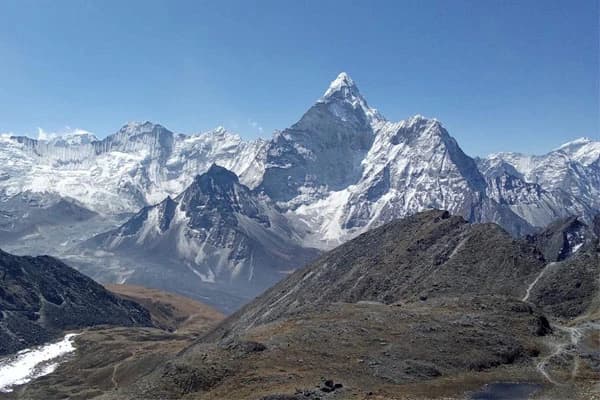
Trekking here in November means clear sightlines to the mountains surrounding the Everest region, Lhotse, Ama Dablam, and Nuptse among them. The highest point of the trek is Kala Patthar at around 5,545 m, and the full route takes roughly 12–14 days. It's rated moderate, so beginners with reasonable fitness can take it on and still experience its unmatched beauty.
Highlights
- Start the trek from the iconic Lukla Airport
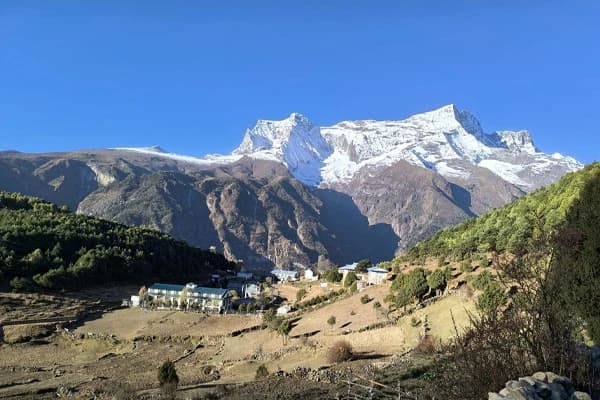
- Experience the cultural diversity of Namche Bazaar
- Walk through traditional Sherpa villages
- Climb to Kala Patthar
- Take in sweeping views of the Khumbu Valley
Upper Mustang Trek
Located in the rain shadow area, trekking to Upper Mustang is an all-rounder trek that can be best explored in late autumn and early winter, as November offers clear skies, fewer crowds, and the best insight into the desert-like landscapes. This adventure takes you highest at 3800 meters, Lo Manthang, famously known as the Forbidden Kingdom of Nepal, where the locals still follow polygamy and sky-burial traditions and also the monarchy system, you can say. The journey is more challenging than the high passes or even base camp treks, as the hikers encounter diverse terrain, cold climate, and heavy wind flow, which can often lead to altitude sickness if not prepared well, and is exclusively suggested for experienced hikers.
- Visit several monasteries, such as Ghar Gompa, sky caves, colorful rocks, and Tibetan arid landscapes
- Experience the Loba cultures highly affiliated with the oldest Buddhist tradition, the Bon religion
- Great panorama of the Annapurna and Dhaulagiri range
Annapurna Circuit Trek
The Annapurna Circuit is another of Nepal's most popular treks, and it earns that reputation through sheer variety; the terrain and landscapes shift dramatically from one stage to the next. Part of what draws trekkers here is the biodiversity: the route passes through rare flora and fauna, some of it found nowhere outside the Annapurna region. Along the way you'll meet ethnic communities such as the Gurung and Thakali, whose villages line the valley, which makes the circuit as much a cultural journey as a physical one.
The Annapurna Circuit suits moderate to experienced trekkers, though it isn't especially technical or demanding. Most people complete it in 14–18 days, and the highest point is Thorong La Pass at around 5,416 m, which offers the most commanding view on the entire route.
Highlights
- Crossing Thorong La Pass
- Experiencing the region's biodiversity
- Exploring Gurung and Thakali villages
- Visiting centuries-old monasteries
Manaslu Circuit Trek
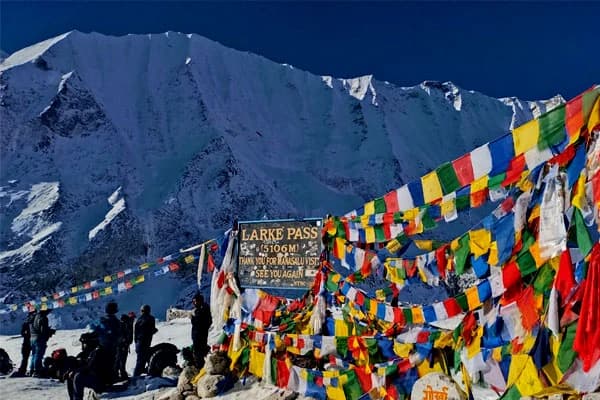
The Manaslu Circuit Trail sees far fewer trekkers than Everest or Annapurna, which makes it a strong choice if you want quiet trails and no rush. The region was restricted for years and only opened to trekkers later, and that long closure preserved it remarkably well: Buddhist villages, monasteries, and lush alpine valleys much as they were a century ago. Because the area remains protected, a special restricted-area permit is required.
The circuit takes around 14–18 days depending on your pace, with a maximum altitude of about 5,106 m. It's rated moderately challenging, as several sections are steeper and more demanding than those on the more commercial routes.
Highlights
- Quiet trails with far fewer trekkers
- Authentic, well-preserved cultural heritage
- Ancient monasteries
- Crossing Larkya La Pass
Langtang Valley Trek
The Langtang Trek is one of Nepal's shortest yet most rewarding routes. The region sits close to Kathmandu, so the trek begins almost as soon as you leave the capital. Glaciers, rivers, and forests come together in a single valley, and the Tamang culture here, shaped by deep Tibetan Buddhist roots, gives the trek real depth. The standout moment is reaching Kyanjin Gompa, where the valley opens into one of the finest views in the country.
The trek usually takes 7–10 days and isn't difficult at all, which makes it one of the most beginner-friendly options in Nepal. The highest elevation is around 4,984 m, and its combination of big views and easy access from Kathmandu keeps it a favourite.
Highlights
- Visiting Kyanjin Gompa monastery
- Scenic Langtang Valley views from multiple viewpoints
- Walking beside glacial moraine
- Stopping at the local yak cheese factory
Mardi Himal Trek
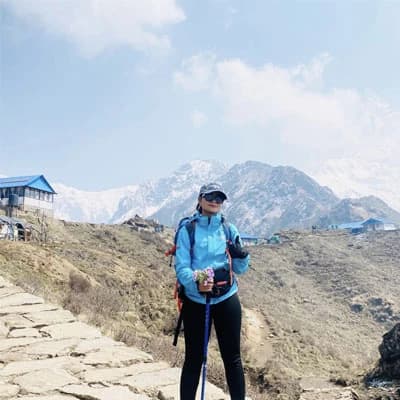
Trekking to Mardi Himal is the go-to trek for anyone wanting an up-close view of Machhapuchhre. It's arguably the easiest route for trekkers new to multi-day trails, and it holds plenty for experienced walkers too. The trail delivers one scenic stretch after another, not only of Machhapuchhre, but Annapurna and the surrounding ranges as well, winding through dense rhododendron forest and past quiet teahouses along the way.
At just 4–6 days, this is one of the shortest treks in Nepal and one of the most rewarding for the time invested. The high point sits at around 4,500 m at Mardi Himal View Point, making it ideal for anyone who wants an authentic Himalayan experience on a tight schedule.
Highlights
- Walking through dense rhododendron forest
- Close-up mountain views
- Trekking along open ridgelines
- Short in length, big on experience
Poon Hill Trek
Alongside Mardi Himal, Poon Hill Trek ranks among the shortest and most beginner-friendly treks anyone can do. It's known for spectacular sunrises and sunsets over Annapurna and Dhaulagiri, seen from the hill's open ridgeline. This one works especially well for families travelling with children and for anyone who wants serious views without a long time commitment.
The trek runs just 3–5 days, and the highest point is 3,210 m. It's gentle enough for complete non-trekkers looking to start somewhere, which is exactly why it stays busy through November.
Highlights
- Experiencing authentic Gurung village culture
- Sunrise views of Dhaulagiri and Annapurna
- Comfortable homestays and lodges
- Walking through forests thick with rhododendron and wildflowers
Annapurna Base Camp (ABC) Trek
Often listed as one of the top November treks, ABC Trek is shorter, includes no technical climbs, has an easier trail to follow, and is typically completed within 7-10 days. It is at a lower altitude than the EBC Trek, a perfect alternative for beginners with a limited timeframe, since you do not have to constantly worry about flight delays or cancellations, as the starting point can be reached by road. It reaches its highest at Annapurna I, 8091 meters, a foothill known as Base Camp, or Annapurna Sanctuary, through the villages of Gurung and Magar communities.
Highlights
- Easy walk into the protected trail of Annapurna Conservation Area
- Reaches Machhapuchhare Base Camp and Annapurna Base Camp at once
- Rich cultures and traditions of the diverse ethnic groups
Packing List for November Adventures
Clothing Layering System
- Moisture-capturing base layers
- Warm thermals
- Trekking apparels
- Waterproof jackets
- Trekking Pants
- Warm cap/beanie and sun hat or cap
- Inner gloves + insulated outer gloves
- Trekking socks, long and short ones (consider both)
Footwear
- Sturdy, trekking boots
- Camp shoes, or sandals for lodges
- Simple basic comfy shoes
Gears and Equipment
- Personal medications (precautions by the doctor)
- 1 pair of trekking poles
- Sunscreen at least SPF 40+
- 30–40 L daypack (with rain cover if possible)
- Sleeping bag (if you hire a porter with you)
Electronics and documents
- Powerbank (20,000 mAh), and charging cables
- Camera and Phone with spare memory cards
- Passport, copies of trekking permits, travel insurance documents, and cash in Nepali rupees
Safety and Altitude Tips
Even though November is the safest and most ideal time to undertake trekking in Nepal, altitude remains the main challenging part when it comes to high-altitude adventures. The weather is usually predictable; however, the climate changes significantly at high altitudes, hence acclimatizing well and following safety guidelines plays a vital role for a safe adventure in the mountains.
Acclimatization Rules
- Ascend gradually, following a moderate pace; do not gain altitude above 400- 500 m per day, and plan 1-2 acclimatization days, depending on the trip nature.
- Follow the climb high and sleep low rule: climb to the higher elevation during the day, and come back to the lower-altitude village to sleep, and adapt to the rising altitude.
- Build in proper acclimatization days, for instance, extra days in Namche Bazaar (Everest), Annapurna Circuit (Manang), Manaslu (Samdo or Samagaun), with short 3-4 hours hikes to higher vantage points, before continuing further at higher altitude.
- Keep moving at a steady, comfortable pace; rushing or overtiring yourself increases the risk of Acute Mountain Sickness.
Recognizing and responding to altitude sickness
- Know the symptoms of altitude sickness, such as nausea, vomiting, dizziness, fatigue, and insomnia (loss of sleep and appetite), which often occur after crossing an altitude of 3000 meters.
- Watch for danger signs like dizziness, difficulty breathing, constant cough, blood vomiting, or exhaustion; these are the symptoms of severe altitude sickness, often risking life, so inform the guide and take immediate descent.
- Carry a basic first aid kit and also do not miss out on altitude medication like Diamox and acetazolamide, with a precaution from the doctor, before the trek.
November-specific safety considerations
- Above 4,000 m, nights often drop far below zero; without proper gear and rest, frostbite and hypothermia can set in quickly.
- Only about 10–11 hours of light; late starts can force you to walk in darkness and cold.
- Teahouses and routes fill fast in November; rooms and hot water can run out on busy days.
- By late November, high passes and camps may get snow and ice, making crossings tougher and slower.
- Cold, dry air dehydrates you fast; drinking too little worsens fatigue, altitude issues, and cold sensitivity.
FAQs (Frequently Asked Questions)
Is November a good time to go trekking in Nepal?
Yes, undoubtedly it is, as November offers the best views and scenery and gives the best experience possible to people. This month falls after the post-autumn monsoon season and brings one of the driest months, clear skies, stable conditions, and excellent mountain visibility.
What is the weather like in November?
During November, the weather and the landscape of the region you are choosing to trek are usually very dry, sunny, and stable. Throughout the day, trekking is one of the most stable and easy to trek in, whereas the cold can start setting in very quickly after sunset.
How cold is Nepal in November while trekking?
The temperature fairly depends on the region you are in and the elevation that you are standing at during the trek, but most of the time, the lower elevation drops to roughly around 10 - 20 degrees during the day, and at high-altitude elevations it can also drop to 0 degree celcius, and during the night it can fall to -10 degrees or even lower.
Does it snow on Nepal's Trekking routes in November?
Mainly on high-elevation treks, it can snow, but keep in mind that November is not considered a snowy month in terms of how heavily it can snow. Higher elevations do receive snowfall, especially towards the end of November; snowfall starts coming in and becomes more prominent across multiple regions.
How much rain can you expect during November?
The rain that can be expected in November is very little in comparison to the rain in Monsoon, but it is important to keep in mind that, as it is a colder month, if it rains even a little, the entire region will face extreme cold so make sure you pack accordingly to that and keping in mind that the chances of rain are less but it can end up raining even a little.
Are the Himalayan views clear during November?
Yes, they are absolutely one of the clearest during those months, as it is one of the best windows to do a trek and offers the best views of the mountain ranges, and to experience the views of the circuit you are doing the trek in. As November is a month post-monsoon, the skies are fully open, giving the best window of opportunity to experience the views of the Himalayan peaks.
What are the trail conditions in Nepal during November?
Trail conditions in Nepal around the time of November are some of the most suitable trail conditions to do the trek in, as this window offers the best dry trails and land. This is post-monsoon, and the skies are fully clear, and the weather is one of the most stable around this time, so you don't have to worry about the trail conditions around the region you are choosing to trek in.
Which is the best trek in Nepal in November?
Any trek that you do around November is said to be one of the best in terms of the experience you get, but if we had to suggest some treks, they would be: Everest Base Camp trek, Annapurna Circuit Trek, Annapurna Base Camp Trek, Manaslu Circuit Trek, Langtang Valley Trek, Mardi Himal Trek and Ghorepani Poon Hill Trek.
Is the Everest Base Camp Trek possible in November?
Yes, the Everest Base Camp trek is absolutely possible to do during November, and the views of Kala Patthar and the Khumbu Valley are some of the best around this time, as the region is completely open and the circuit has some of the most scenic views around the time frame of November.
Is the Annapurna Circuit and Annapurna Base Camp Trek possible in November?
Yes, without a single doubt, the Annapurna Circuit and Annapurna Base Camp Trek are possible in November, as this month holds the most stable weather conditions alongside having the most open and scenic views possible for any trek, and as the trail is dry and the alpine meadows of Annapurna fully open up, doing the trek in November is one of the best.
Can the Manaslu Circuit Trek be done during November?
Yes, even tho Manaslu Circuit Trek is considered to be a relatively challenging trek to do due to its demanding nature, the month of November becomes the best month to do the trek as it offers the best terrain conditions, making it the best month possible to do the Manaslu Circuit Trek for any trekker choosing to take it on.
Is the Langtang Valley Trek open during November?
Yes, the Langtang Valley Trek is fully open during November for any trekker planning to trek through the valley. The valley is one of the most beautiful and culturally rich experiences for any person who wants to take up the trek and also has the best viewpoint of Kyanjin Ri, which offers the best view in all of the Langtang Valley.
Is the Mardi Himal trek suitable for November?
Yes, the Mardi Himal Trek is suitable for November as this trek encompasses the closest views of Mt. Macchapucchre and also the mountain region like Annapurna and Dhaulagiri. When done in the right month with the best windows for getting the most scenic views, this is an unforgettable experience for any trekker taking it on.
Is the Ghorepani Poon Hill trek good for beginners in November?
Yes, absolutely. As the trek is mostly taken up by beginners, the trek becomes the best to do even during November, as the weather is stable and the views are immaculate, and the region of the Poon Hill Trek is not demanding at all and does not require technical skills for the trek, making it the best for beginners.