Why Annapurna Region have the Best Viewpoint in Nepal?
The Annapurna Region is considered the place with the finest Annapurna trekking viewpoints in Nepal. The trekking trail holds some of the best scenic viewpoints for visiting from the Mardi Himal viewpoint, Ghorepani Poon Hill, and Thorong La Pass for a view of the Annapurna range, enabling visitors to see many snow peaks, including Annapurna I, Annapurna II, and even the splendid Tilicho Lake. People love to rise early to catch the best viewpoint for a sunrise sight during the Annapurna region trekking; the sky turns pinkish-orange, and the views from the mountains are marvelous. The special part about the Annapurna trek is crossing through Himalayan cultural villages, where you get to learn some local culture and traditions. One other beautiful side of Annapurna is that there are some unknown viewpoints for solitude seekers.
Annapurna Conservation Area highlights encompass diverse ecosystems beyond peaks to include untamed forests, rushing rivers, and abundant wildlife. It is a region par excellence for Himalayan landscape photography, with certain off-the-beaten-path viewpoints in the Annapurna region for nature lovers. Everyone has breathtaking view experiences, either trekking to the viewpoints of the Annapurna region, including Mardi Himal and Khopra Ridge, or just soaking in views of the Annapurna massif. The viewpoints of Annapurna offer breathtaking scenery.
Best Viewpoints of the Annapurna Region
Here are the Best Annapurna viewpoints in Nepal that offer completely different experiences and show the Annapurna range from unique angles that carry a story and uniqueness behind every perspective. Get ready to explore the best Annapurna Panorama Points and enjoy the stunning Annapurna Mountain Views that make Nepal a special place for everyone.
Poon Hill (3210 meters/10531 feet)
Poon Hill is a world-famous vantage point of the Annapurna region where you can witness a golden sunrise. Hundreds of trekkers climb the stone steps in pitch darkness every morning, only to be rewarded by so many in coinciding moments at sunset; the whole panorama of the Annapurna mountain turns golden orange and pink, which comes as pure magic in a moment that lingers in the heart forever. This vantage point of 3210 meters can only be attained through Poon Hill Trek, or some of the routes, like the standard ABC Trek via Poon Hill, include this iconic viewpoint, and later reach the lap of the world's tenth highest peak of Mount Annapurna - 8091 meters.
Ghorepani to Poon Hill could take approximately 45 minutes. The trail is well maintained and marked by stone stairs along the route that may be steep and tussling at dawn. The feature that is worth highlighting about this place is its panoramic views of the whole range of Annapurna and the mountain vistas everywhere. Superb views can be had on Poon Hill of Annapurna I, Annapurna South, Annapurna III, Dhaulagiri, Machhapuchhre or Fishtail, Hiunchuli, and Gangapurna. The spectacular view stretching over 19 different mountains is indeed an opportunity for great pictures.
Highlights
- Rich cultural experience in Ghorepani and other villages
- Stone steps pathway to the summit
- Sunrise panoramic views of over 19 tall mountain peaks of the Annapurna and Dhaulagiri ranges
- Tea houses at the top for hot drinks
Route: Tikhedhunga, Ulleri, Banthanti, and Ghorepani village on the way to Poon Hill, with the starting point at Nayapul.
Cost - USD 300 to 500 per person
Mardi Himal Viewpoint (4500 meters/14763 feet)
Mardi Himal Viewpoint is among those few, less-visited viewpoints within the Annapurna region to offer pristine mountain views without being stuffed with people, just like other iconic stops. Such a jewel of a place is placed at an altitude of 4,500 meters and with the ready-to-view scenic majesty of the Annapurna massif and the crowd-pleasing Machhapuchhre. Mardi Himal Trek has been recently gaining mass attention, as it is newly introduced, hence letting you pass through an off-beaten route and also, at the same time, passing via six climatic zones, from woodlands to diverse landscapes to alpine cultural villages, and finally to the alpine meadows with highly towering mountains.
The scenery consists of views of Machhapuchhre, Annapurna South, Hiunchuli, Mardi Himal, and Annapurna I. The trek ascends through a beautiful rhododendron and pine forest. Forests give way to alpine meadows at a more advanced altitude and provide the viewer with picturesque landscapes of mountain ranges. The very last bit towards the viewpoint is hard but worth every step, with close-up views of these giants. To make it more enchanting, you can either combine Mardi Himal with the ABC Trek, which reaches 3 iconic base camps and accesses the 2 iconic destinations, to exist here in Nepal, for the best view of the Annapurna range with its distinct perspective.
Highlights
- Close-up views of Mount Annapurna South and Machhapuchhre
- Not as busy as other viewpoints in the Annapurna region
- Beautiful forests of rhododendrons in the spring
- Alpine meadows and mountain scenery
- The ideal getaway for nature lovers who value their privacy
Route-It will start either at Kande or Phedi, and one will pass through such places as Deurali, Forest Camp, Low Camp, High Camp, and Mardi Himal Base Camp viewpoint.
Cost: USD 450 to 600 per person
Annapurna Base Camp (4130 meters/13550 feet)
The Annapurna Base Camp resembles a hollow amphitheatre shape with the mountain ranges all around and with altitude in awe. The views, which the eye opens on the centre of this narrow and oval valley, these glaciers, these mountains of snow, are uninterrupted. The views at this place are just astounding. In these views are Annapurna I, Annapurna South, Annapurna III, Machapuchare, Hiunchuli, Gangapurna, Annapurna IV, and Khangsar Kang. The surreal landscape, on top of sheer walls of the mountains, makes you feel a sense of absolute security down here, earning it the name of Annapurna Sanctuary.
Annapurna Base Camp Trek is referred to as a trek route that offers the perfect blend of culture, nature, and a thrill of a sense of accomplishment of acing the lap of one of the world's highest mountains, Mt. Annapurna (8091 M), with its distinct angled view crossing all landscapes, tropical forests, and high-altitude alpine environments. The Annapurna Base Camp is stunning at different times of the day, with the morning light shaping the mountains in a golden tone and the evening casting dramatic shadows.
Highlights
- 360-degree mountain views in a natural amphitheater
- Stunning scenery of Annapurna I, II, III, and IV, and Machapuchare
- Trekking and viewing the mountain panorama at high altitude
- Hike along the diverse scenery of forests, waterfalls, and alpine meadows
- Cultural experience of Gurung and Magar
Route: The path begins in Nayapul, going through Tikhedhunga, Ulleri, Ghorepani, Tadapani, Chomrong, Sinuwa, Bamboo, Deurali, and Machapuchare Base Camp to Annapurna Base Camp.
Cost: USD 500-800 USD per person
Tilicho Lake (4919 meters/16138 feet)
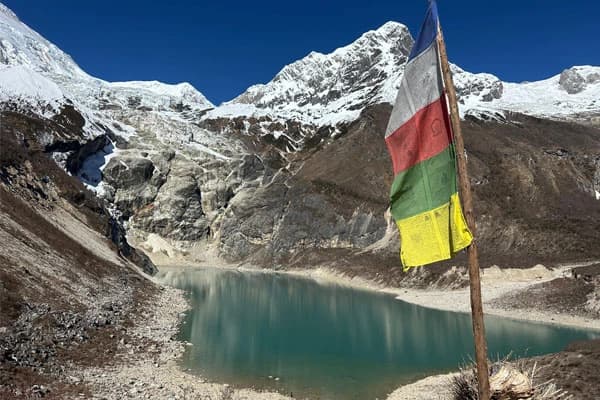
The fact that Tilicho Lake is the highest-altitude lake makes it one of the most alluring high-altitude scenes of Nepal. Situated at 4,919 m., it is a sacred lake surrounded by towering peaks and glaciers, an aesthetically very pleasing natural setting. Equally, white mountains in the turquoise-blue water created their kind of magic. The lake has views of the peaks, including Tilicho Peak, Nilgiri North, Nilgiri Central, Nilgiri South, Khangsar Kang, and some of the Annapurna range. Nature-bestowed beauty is more common at Tilicho Lake, but the people believe it to be holy, and therefore, it has great spiritual value associated with it.
Tilicho Lake is mostly reached through the Annapurna Circuit Trek with Tilicho Lake, which ascends to the world's highest altitude lake of Tilicho and then reaches the world's highest walkable pass of Thorung La. Whereas the excursion to Tilicho Lake is an arduous climb that drains energy due to the increase in altitude and uneven landscapes. The routes run in some of the least-reachable parts of the Annapurna Conservation Area and have a sense of wilderness survival. The lake is quite incomparable with mountains reaching aloft. The surroundings of the lake are mostly windy and cold, yet the spectacular view of the mountains and their reflection in the clear waters of the lake is a far reward worth every step of the way.
Highlights
- The photography at the highest lake in the Annapurna region
- Sacred lake with spiritual significance
- Turquoise blue water reflecting snow peaks
- Remote wilderness experience
- Challenging high-altitude adventure
Route-Tilicho Lake is normally accessed as a side trip within the Annapurna Circuit trek during a stop in Manang village. The trail follows the Khangsar village, the Tilicho Base Camp, and subsequently the Tilicho Lake.
Cost: USD 600 to 900 per person
Thorong La Pass (5416 meters/17759 feet)
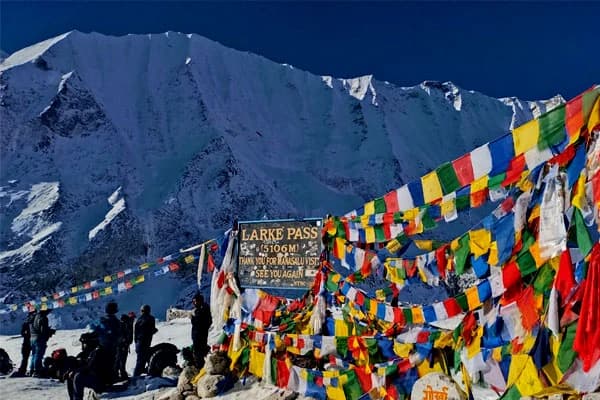
One of the great high-altitude vantage points to be offered by Nepal is Thorong La Pass, which stands out as the world's highest pass, perched at a height of 5416 meters. It serves as a kind of passage between two geographical boundaries: the Annapurna and Mustang. Thorong La Pass is a part of the Annapurna Circuit Trek accessed from Thorong Phedi on one side and descending into Muktinath from the other side. Its brute ascent makes it a trek that leaves the trekker with that extra sense of pride and grandeur of having reached the peak. The pass is commonly decorated by waves of prayer flags blowing in the gusts of wind with bright colors in contrast with white snow and blue sky.
The trek to the Thorong La Pass is considered to be a challenging one, and thus, it is always better to have an early start in order to avoid the afternoon winds as well as the weather. At the top, you can view spectacular scenery of Annapurna, Dhaulagiri, Gangapurna, Tilicho Peak, and Yakawa Kang. The visual landscape here is completely unlike the sights and scenery downhill, unearthly experiences, with rocky terrains and very thin air. What makes it worthwhile is the passage from one valley to another against completely different cultures and landscapes on either side.
Highlights
- Prayer flags and Buddhist culture at the pass
- Dramatic landscape changes from both sides
- Challenging high-altitude crossing experience
- Stunning views of multiple mountain ranges
- A sense of achievement for completing the crossing
Khopra Ridge(3660 meters/12008 feet)
Khopra Ridge happens to be one of the few under-commercialized viewpoints of the Annapurna range. You can see the beautiful panoramic views without heavy crowds. It is a peaceful ridge with stunning mountain views, as many claim that it presents some of the most beautiful ones in the whole Annapurna Conservation Area. The whole feel of Khopra Ridge is so very natural that trekkers feel as if they are on an open balcony, sitting on the railing, just soaking in the spectacular views in utter silence. The trek to Khopra Ridge begins at Nayapul and heads to Ghandruk, Tadapani, Bayeli Kharka, and Khopra Danda, passing through the less-traveled, less-crowded areas.
One nice thing about Khopra Ridge is how it presents the mountains differently, as few eyes ever get to see them. You have wonderful scenery of Dhaualgiri, Annapurna South, Nilgiri, Himchuli, and Machhapuchhre. It is fabulous in the case of individuals who want less-travelled perspectives and more of a relatively pure local culture. Along the way, the trail passes traditional villages where families have lived for all these generations, giving a very real taste of mountain life to visitors.
Highlights
- Secluded and quiet spot for self-reflection
- Amazing sunset and sunrise scenery
- Pure village life experiences
- Eco-friendly lodges and local families
- Various scenery of forests and alpine meadows
- A great place for those who want to enjoy nature alone
Cost -USD 400 to 650 per person
Ghandruk (1940 meters / 6365 feet)
This village is not only a viewpoint but also a living cultural spectacle with the Annapurna as a backdrop, as soon as you come out on the streets of the village. This lovely Gurung village is situated at an altitude of 1,940 meters and presents, perhaps, the most accessible mountain view in the whole region. The unique thing about Ghandruk is that the panoramic mountain view is likely to be found, but the authentic nature of local culture and life in the mountains can also be experienced, making it one of the best Mount Annapurna viewpoints, yet with an immersion of the ancient gurung culture that transports you to the 90s.
The stroll in Ghandruk Village is like traveling back in time. The ideal village scene consists of stone houses, winding lanes, and terraced fields. When you are in the village, you will have excellent glimpses of huge mountains in the valley of Annapurna South, Himchuli, Machapuchare, and Gangapurna mountains. It has a local culture of traditional Gurung people who are very hospitable and are mountaineers in the village.
Highlights
- Traditional Gurung culture and architecture
- Easy access with great mountain views
- Stone houses and terraced fields scenery
- Famous for mountain guides and climbers
- Cultural museum and local crafts
- Perfect base for longer treks
Route: Usually, Ghandruk Village is considered a day excursion from Pokhara, or it may become part of some longer treks. The pathway goes from Nayapul through Birethanti, Syauli Bazar, onto an upward climb to the village of Ghandruk.
Cost: USD 200 to 300
Note: One of the easiest ways to reach Ghandruk Village is by the Short Poon Hill Trek.
Gangapurna Lake (4700 meters)
Gangapurna Lake, also known as the Ice Lake, contains some of the calmest crystal views in the Annapurna region. It is a beautiful lake close to Manang village, which mirrors the images of Gangapurna, Annapurna III, and Tilicho Peak on the calm blue lake. The scenery is astonishing, with rocky areas and glacial moraines around the lake, almost appearing to be a different world. To reach the wetland of the Gangapurna Lake, one must consider including an acclimatization day at Manang on their trek to the Annapurna Circuit, which needs a full-day excursion; however, it also lets you gradually adapt to the rising elevation, making it a win-win situation.
Gangapurna Lake is distinct since it is easily accessible. Numerous lakes are located high above this region, and it takes most of your days to reach them, whereas to reach Gangapurna Lake, it only takes a few minutes of walking out of the village of Manang; hence, it is a wonderful spot to acclimatize on the Annapurna Circuit trek. The lake has one dynamic characteristic that changes with the time of the day; the lake starts blue in the morning and turquoise in the afternoon when the sun comes into alignment with it. The settings give ample opportunity to click Himalayan landscape shots and quietly meditate.
Highlights
- Glacial lake with mountain reflections
- Easy access from Manang village
- Perfect for acclimatization on circuit treks
- Peaceful setting for relaxation
- Great for photography and nature watching
- Dramatic glacial landscape surroundings
Route-Gangapurna Lake is reached from the village of Manang during the trek of the Annapurna Circuit. The route goes through Besisahar, Chamje, Dharapani, Chame, Pisang, and finally Manang, from where the lake is approached.
Cost: USD 600-900
Mohare Danda Viewpoint (3300 meters/10827 feet)
It is a community-run viewpoint that offers 360-degree panoramas that are not only supported by the locals but are also welcomed under sustainable tourism practices. Away from the crowds of obviously famous viewpoints, it lets you see Dhaulagiri, Annapurna South, Himchuli, and Machapuchare, making it one of the best Mount Annapurna View Point Treks, captivating every enthusiastic hiker's heart.
Mohare Danda hosts an extraordinary ambience created by the community lodge system; local families work together on providing accommodation and catering for visitors, hence giving visitors a chance to learn about the local culture while drinking in some world-class mountain views that famous Nepal has to offer. Sunrise at Mohare Danda is difficult to describe as the mountains are washed with golden hues and painted orange in the early rays. This serves as the best location for anyone wishing to be involved in sustainable tourism while perhaps watching from off-the-beaten-path perspectives.
Highlights
- Supports local families through community-based tourism
- Eco-friendly lodges that support sustainability
- Incredible sunrise scenes over several mountain ranges
- Less crowded than other popular viewpoints
- Authentic cultural experiences with local communities
- Great for responsible travelers and nature lovers
Route: Pass through Banskharka, Nangi village, and Mohare Danda from Galeshwor
Cost: USD 350 to 550
Kumai Danda Viewpoint (2500 meters/8,202 feet)
A hidden gem situated with one of the most relaxing mountain views in the Annapurna region. This peaceful viewpoint is best for those who want to experience pleasant views without any laboring at higher altitude treks. From this vantage, the visitors observe Annapurna South, Himchuli, Machapuchare, and the adjacent valleys dotted with green forests and traditional villages.
Considered the land of splendid rhododendrons with a bright red and pink floral display in the spring, Kumai Danda is among the best spots combining mountain views with cultural experiences, as the trail cuts through many traditional villages where visitors meet local families. Apart from that, the area is fantastic for bird watching and enjoying nature with tranquility, unlike popular viewpoints filled with tourists.
Highlights
- Terrain at lower altitudes is best for easier trekking
- Rhododendron forest in bloom during spring
- Traditional villages for cultural experience
- Bird watching and nature photography opportunities
- Calm atmosphere away from tourists
- Family-friendly and beginner trek
The route starts from Phedi and passes through Dhampus, Pothana, and forest trails before the Kumai Danda viewpoint.
Cost: USD 250 to 400
Best Annapurna Viewpoints in Restricted Areas
Annapurna region has some rare views in restricted areas. These areas are considered restricted and are expensive to enter with special permits, giving visitors some of the finest and unparalleled mountain views found in Nepal. These restricted areas still protect the local culture and nature of these regions, while at the same time, presenting stunning views. Here are some of the best iconic viewpoints of Annapurna that pass through one of the most rugged and remote trails, letting you know about the ancient culture, untamed nature, and finally immersing you in great mountain views.
Kang La Pass(5115 meters/16782 feet)
Kang La Pass is considered one of the more difficult and amazing high vantage points to get to in the Annapurna region of Nar Phu Valley. It is perched at a height of 5,322 meters, and it serves as a link between the secluded Nar Pu valley and the Annapurna Circuit. Trekkers are met with some of the most stunning mountain vistas in Nepal, where towering giants encase them on all sides, extending deep into the sky. Mountain passes served as a noble entryway in ancient times, and to reach it, you can do the Nar-Phu Valley Trek, which requires a special restricted permit and can also be combined with the Nar Phu Valley Trek and the Annapurna Circuit, if you want a challenging expedition and are still willing to explore the remote areas of Nepal.
The Nar Phu Valley will take you to an alternate dimension where time seems to have stopped hundreds of years ago. Annapurna II, Gangapurna, Tilicho Peak, Pisang Peak, and the Chulu peaks can be seen through the Kang La Pass. The wild landscape of this place brings back memories of ancient times with Buddhist monasteries, stone houses, and old villages that have not changed for the previous thousand years. The pass crossing is quite difficult and requires favorable weather, yet the views from the top are worth the crossing.
Highlights
- Remote wilderness in the restricted Nar Phu Valley
- Ancient Buddhist monasteries and traditional culture
- Challenging high-altitude pass crossing
- Dramatic mountain views from multiple angles
- Untouched landscapes with authentic experiences
- Perfect for adventure seekers wanting solitude
Route: From Besisahar, through Koto, Meta, Phu Village, Nar Village, Kang La Pass to rejoin the main Annapurna Circuit at Ngawal.
Cost: USD 1200 to 1800
Muktinath Temple(3710 meter/12172 feet)
Muktinath Temple is far beyond being a tourist destination; the temple provides amazing valley and mountainous landscapes, and spiritual uplifting experiences. On the other hand, the temple is located in Mustang and provides a view of the Dhaulagiri, Annapurna, Nilgiri, and Tilicho Peak. The Muktinath Temple is also a religious site of interest to both Hindu and Buddhist believers and has been termed as one of the most holy destinations in the Annapurna region. The best part is that to get here, there are several ways and modes of transportation, while the Muktinath Jeep Tour remains one of the enchanting and shortest ways to pay a visit to this holy Hindu temple.
The combination of the massive natural beauty and spiritual meaning makes Muktinath Temple exceptional. The temple features 108 water spouts and a continuously burning torch of natural gas, which is designed to give people the feeling of awe. The site provides enchanting views of the mountains with a serene atmosphere created by the sacred place itself. The trip from Mustang to Muktinath follows part of the ancient trade route and travels through the traditional villages, ancient trading, and resting places of the pilgrims over the last thousand years.
Highlights
- A sacred temple for both Hindu and Buddhist pilgrims
- 108 water spouts and eternal natural flames
- Spiritual atmosphere with incredible mountain views
- Ancient pilgrimage routes through the Mustang region
- Traditional villages with unique local culture
- Perfect combination of spirituality and nature
Route-It goes over Mustang tour routes which start from Jomsom via Kagbeni, Charang, and Traditional Mustang villages or the Annapurna Circuit Trek over Thorong La Pass.
Cost: USD 800 to 1200
Lo Manthang (3840 meters/12598 feet)
The city of Lo Manthang is one of the very few ancient, walled cities in Upper Mustang, which has scenic mountains and cultural activities to experience. This is a medieval town located at an altitude of 3,840 meters, with its dimensions of culture and traditions that have remained preserved since ancient times in Tibetan culture. From Lo Manthang, you can see the Nilgiri, Tilicho Peak, Annapurna, and the infinite landscape of the Tibetan plateau stretching to infinity. To go to Lo Manthang, one needs to enter theUpper Mustang Trek with special restricted area permits, and such could also be combined with a visit to Muktinath Temple for a complete cultural and spiritual experience.
The trail leading to Lo Manthang conducts tourists through a landscape similar to that of Mars, with walls of red, yellow, and brown colors, with ancient caves and traditional villages built with mud and stone. Lo Manthang is a walled city, having a palace and monasteries along with traditional houses, which are several hundred years old. Lo Manthang has survived an older Tibetan Buddhist culture, which is now defunct even in Tibet; this makes it quite special. With the perfect blend of culture, history, and the unmatched views, Lho tends to be one of the most loved Annapurna Viewpoints here in Nepal.
Highlights
- Ancient walled city with medieval architecture
- Preserved Tibetan culture and traditions
- Royal palace and ancient monasteries
- Unique desert landscape with red cliffs
- Mars-like terrain with ancient cave systems
- Perfect for cultural enthusiasts and history lovers
Route-Beginning from Jomsom and passing through Charang, Ghami, Tsarang, before finally entering the forbidden Upper Mustang land of Lo Manthang.
Cost: USD 1800 to 2300
Best Viewpoints by Type
The right viewpoint depends on what kind of experience you want.
Best for Sunrise
Poon Hill at 3210 meters stands out as the best choice for sunrise views in the Annapurna region, as it is easy to reach and demonstrates a wide-angle view of the Annapurna and Dhaulagiri ranges. The early morning climb at 4:00 AM is rewarding and known as one of the best sunrise points, as trekkers are greeted with golden light spreading across the surrounding himalayan peaks, making it one of the most memorable mountain sunrise experiences in Nepal.
Best for Beginners
Ghandruk, Khumai Danda, and Mohare Danda are ideal for beginners as they showcase impeccable mountain views without requiring a challenging trek. Both destinations are accessible compared to higher-altitude viewpoints, and they allow beginners to enjoy the scenery of the Annapurna while experiencing local culture, village life, and a more relaxed trekking pace.
Best for Photography
Annapurna Base Camp (ABC) and Tilicho Lake are best for photography, because they offer dramatic landscape scenery, close himalayan peaks, and unique himalayan flora and fauna. ABC is especially impressive and stands out for its natural sanctuary setting, surrounded by peaks, while Tilicho Lake is known as a turquoise wetland, with reflections and remote, off-beat high-altitude beauty throughout the season.
Best for Off-the-Beaten-Path Trekking
Khopra Ridge and Mohare Danda are best for individuals who crave quieter, less crowded trails, local cultural lifestyle experiences, and fewer crowds. These viewpoints are perfect for individuals, for trekkers seeking a more peaceful journey, with impeccable sunrise and sunset views, and a stronger connection to local communities of diverse ethnic groups.
Best Time to Visit Annapurna Region Viewpoints in Nepal
Certain times of the year might outshine one another when having mountain views in the Annapurna region. The usual times tourists flock to view those divine sights in Nepal are before and after the monsoons. During this time, the weather would usually settle down, and clear-cut mountain views would be offered.
Annapurna viewpoints are fantastic to visit during the spring, from March to May. Weather conditions are now good and warmer, and that makes it comfortable to go trekking at high altitude. The Rhododendron forests offer a burst of color in this season of the year, as the trekking paths are sprinkled with numerous carpets of red, white, and pink flowers. The breathtaking views of the rising sun can be seen at Himalayan sunrise viewpoints such as the Ghorepani Poon Hill and the Mohare Danda, which can only be described as stunning due to the clear skies and temperate temperatures.
The most popular trekking months in Annapurna are in the autumn, particularly between September and November. It is during this period that the air is washed by showers of the monsoons to be crystal clear and provide clear panoramic views of the mountain ranges. This is the period when the Annapurna ranges appear glimmering with snow-capped mountains embraced by the bright blue skies. This is a time of year when the weather is mostly very stable and also rather dry, which is beneficial for high-positioned spots like Thorong La Pass and Tilicho Lake.
The months of winter (December to February) are another time that might be difficult yet rewarding for an experienced trekker. The mountainous scenery would become transparent, but there would be a cold drop in temperatures at altitudes. But in summer (June to August), monsoons arrive, making hiking slightly difficult and dangerous due to heavy rains and slippery tracks. The season does, however, allow access to some of the areas within the region, like the viewpoints of the Annapurna Circuit that are in a rain shadow area.
The perfect time to plan a visit to the Annapurna Region Viewpoints would be spring or autumn. These months would provide comfortable weather and clear trekking viewpoints of the Nepal Himalayas for an unforgettable mountain experience.
Packing Lists
- Comfortable, sturdy trekking boots and a pair of hiking shoes (when heavy boots are not required)
- Warm or Fleece Jacket
- Light layer of breathable basic T-shirts
- Windproof or waterproof jacket
- Brimmed Hat, cap, or Head Cover to protect from UV exposure
- Sunglasses with UV protection
- Sunscreen and lip balm
- Light snacks, energy bars, or chocolate bars
- Water bottle with water purification tablets
- Small backpack for a day hike
- Trekking poles, or crampons
- Personal medicines - Basic First Aid Kit, with oximeter and preventive medicines
- Powerbank and Multi plug (suggested for long hikes)
- Travel paperwork, like a photocopy of citizenship, travel insurance, and permits
- Camera or phone (for drones, permission is required)
- Cash, Nepali rupees, and card payments are not available
Safety Tips
- Before any trek in the Annapurna Region, it is a must to ensure that all necessary permits are obtained. As there are special permits that need to be obtained to enter any restricted area trekking routes in Annapurna, you should carry the permits with you and present them to the checkpoints along the trails.
- When you are traveling to high-altitude viewpoints in Nepal, take your time to ensure that you do not get altitude sickness. At least take a day of acclimatizing, and go down promptly when your head gives you a headache, your stomach feels nauseous, and you cannot breathe easily.
- The other tip that will give you a safer experience during your trek in Annapurna is to employ the services of a local guide who knows the mountains quite well. They also know well about the weather conditions and can advise you about the conditions of the routes and what to do in case of an accident.
- And bring that warm jacket despite the change of weather in the mountains, even at a lower altitude. Places such as high passes may suddenly turn cold. In addition to the additional layers, bring your trekking jacket and your trekking boots with you at all times.
- Check weather conditions before visiting any viewpoint and be prepared to change the plan. Mountain weather in the Annapurna region can change suddenly with storms or heavy snowfall.
- Carry a first aid kit and know some kind of mountain safety while visiting the viewpoints in the Annapurna region. This should include medicines for altitude sickness, bandages, painkillers, and emergency contact numbers.
- Try to travel with friends and never hike alone towards high mountains to the distant viewpoints within the Annapurna Conservation Area. Anything can happen, such as an accident, and therefore the solo hike is quite dangerous in such destinations as Khopra Ridge or Mohare Danda Viewpoint.
- In the Himalayan cultural villages by the viewpoints, respect the local way of life and nature. Play Leave No Trace and do not litter, and remember the sanctity of locations such as Tilicho Lake.
- Without appropriate insurance, mountain rescue and a helicopter evacuation can end up being expensive to you. Make sure your travel insurance can include trekking activities over an altitude of 6,000 feet and emergency medical flights to distant locations.
FAQs (Frequently Asked Questions)
Which Annapurna viewpoint is best for sunrise?
Poon Hill (3,210 meters) is considered the ultimate, best viewpoint in the Annapurna region for sunrise, which is easily accessible, short in time, and beginner-friendly, demanding only 2-4 hrs hikes and completing within 2-3 days. Whereas, the other sunrise points are Annapurna Base Camp (ABC), Mardi Himal View Point, Sarangkot, and Mulde Viewpoint.
Which viewpoint offers the closest view of Annapurna and Machhapuchhre?
Situated at an elevation of 4130 meters, the Annapurna Sanctuary, also known as Annapurna Base Camp, offers the expansive closest 360-degree panoramic view of the Annapurna range and Mt. Fishtail (Machhapuchhre). This vantage point showcases the massive front insights into Annapurna I, South, II, III, IV, and the Dhaulagiri range. For someone who seeks more off beaten trail, and less crowded sections, the Mardi Himal View Point (4500 m), is best as well, which shows face-to-face ultimate outlook of the entire Macchapuchhre.
What is the easiest Annapurna viewpoint to visit?
The easiest viewpoint to reach depends on personal preference, prior hiking experience, accessibility, and available time. However, among the popular Annapurna viewpoints, Poon Hill (3,210 m) is generally considered the easiest trekking viewpoint, while Sarangkot (1,600 m) is the easiest to access by road.
What is the best time to visit Annapurna viewpoints?
The ideal seasons to trek to the viewpoints are Spring (March-May) and Autumn, starting from mid-September to November, with impeccable weather conditions, clear views, and stable terrain to pass through and walk by.
How many days are needed to visit the top Annapurna viewpoints?
Visiting the top viewpoints in the Annapurna region typically takes 5 to 11 days, depending on which mountain and landscape insights you want to see. Whereas the classic 4-day trek covers iconic Poon Hill at 3210 meters, on the other hand, 9-10 days itinerary combines side trips, like Poon Hill, Muldai, and Annapurna Base Camp (4130 m).
Is Mardi Himal better than Poon Hill for mountain views?
It is a completely personal perspective and type of view that the trekkers want. However, Mardi Himal offers superior and expansive panoramic views, with the thrill of walking to the base camp or viewpoint over 4000 meters. Meanwhile, Poon Hill is better if you want quick, short, easy, and impeccable sunrise views in the distance, with a wider horizon, rather than a close-up one.
Do I need a guide for Annapurna viewpoint treks?
Yes, assistance of the experienced licensed trekking guide, to trail along any himalayan odyssey, for safety purposes, and quick medical responders. Even though you can get easy access independently to easy vantage points like Poon Hill and Mardi Himal, hiring a guide also gives you key safety responsibilities and assistance to interact with locals and track down safe routes.
Conclusion: How to Choose the Right Viewpoint?
The best Annapurna viewpoint completely depends on your time, fitness level, and the kind of experience you want. For those who want a short and easy trek with sunrise views, the Poon Hill viewpoint can be the best choice, while Mardi Himal and Khopra Ridge are better for trekkers wanting quieter trails and closer mountain views. You can choose the trekking route based on personal preferences. For classic high-altitude adventure, Annapurna Base Camp, Tilicho Lake, and Thorong La Pass offer challenging, thrilling routes, while Ghandruk, Khopra Danda, Kumai Danda, and Mohare Danda are better for easy access and rich cultural experiences.
To conclude, indeed, the Annapurna Region can be termed as the crown jewel of Nepal by mountain enthusiasts and adventure seekers with its world-renowned sunrise view at Poon Hill and calm during the day, followed by clear waters with Tilicho Lake; there is magic in whatever view, and it also offers a panoramic view like no other as one gazes upon the tallest snow-capped mountains.
These new perspectives of the Annapurna region are not unique because of the spectacular views of these mountain vistas alone, but because of the spectacular expedition that leads to them. The warm hospitality of the local people, the variations in landscape, like the rhododendron forests to the alpine meadows, and the feeling of accomplishment when one marvels at the tall mountains.
To anyone who would like to take the opportunity next, Destination Himalaya Treks and Expedition is the expert-guided way to take one to these fantastic Annapurna Panorama Points. We are committed to sustainable tourism and make sure you will not only experience the beauty of the Annapurnas, but you will also make a positive contribution to the communities who are indigenous to these mountains. Contact us for the best Annapurna Treks package deals via WhatsApp, or call us at +977 9851016814, or just email us at [email protected].