Distance and Duration
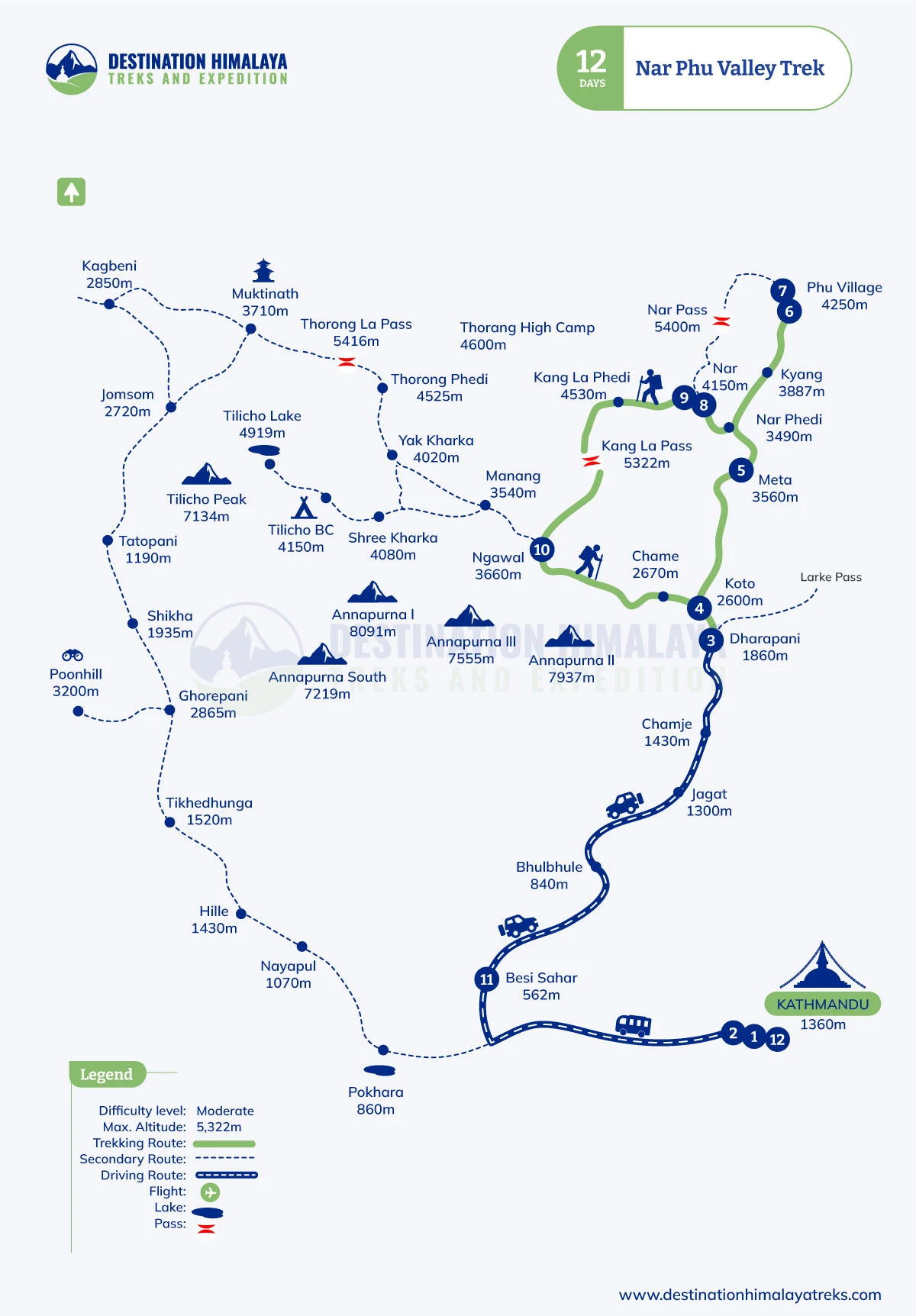
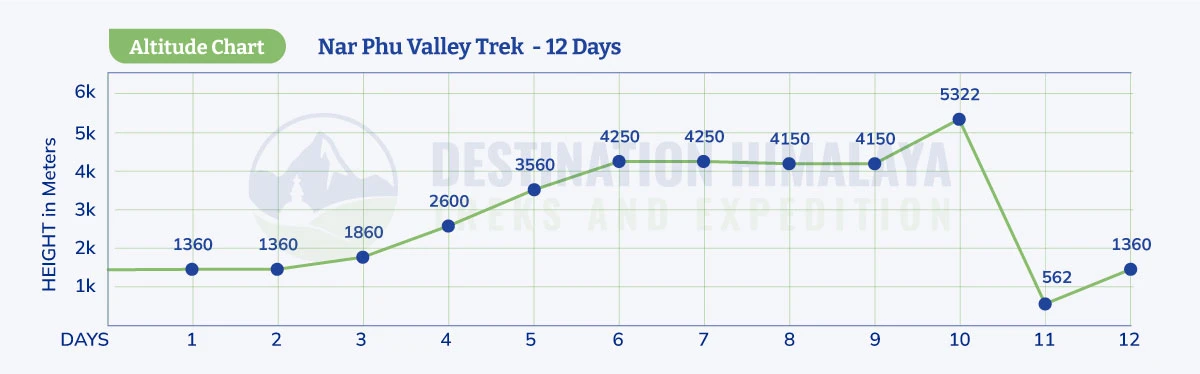
The total distance of the Nar Phu Trek highly varies depending on the route you are opting for, the side trips, or the combined itineraries, included or not, within the itinerary, whereas, in general, the route covers 82 to 102 kilometres of trekking distance in total. If you are considering combining this trip with the Annapurna Circuit Trail, then the trekking distance gets more extended by 50 to 62 kilometers, whereas this trek solely focuses on covering the route, within 12 days, starting from Kathmandu (1360 m), and reachs to the highest elevation at Kang La Pass (5320 meters), with two acclimatization days included.
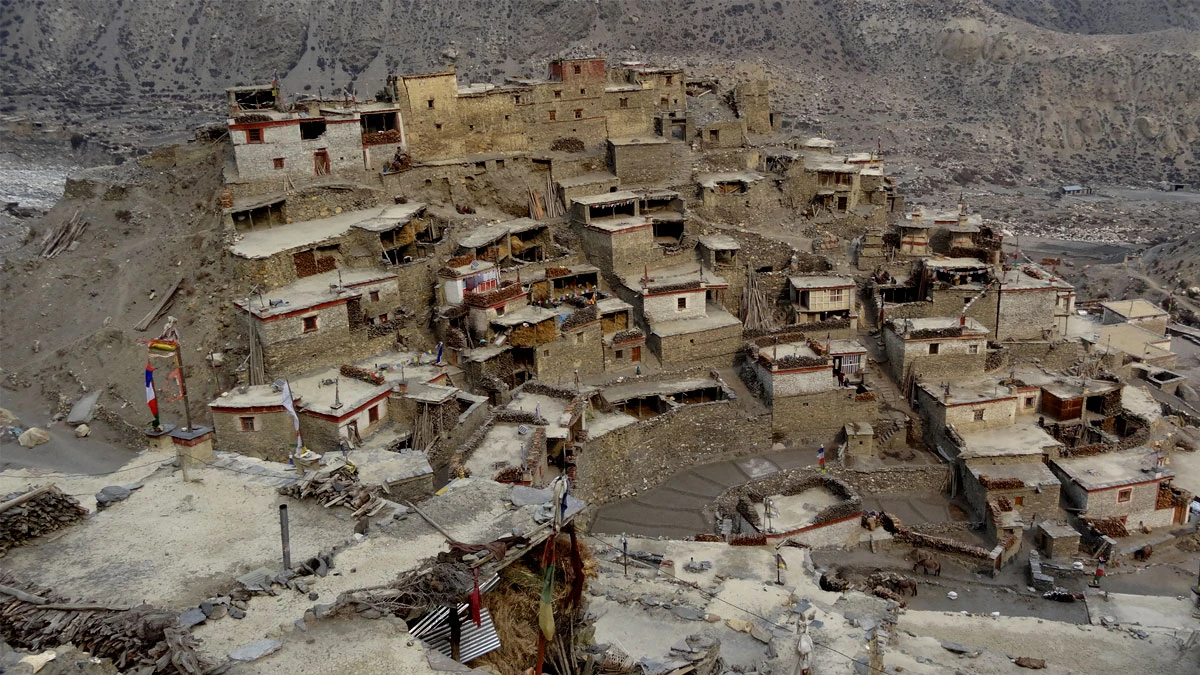
Meanwhile, the walking trekking trails mark somewhere between 9 to 12 kilometres per day, with 5 to 6 hours of hiking, passing through distinct kinds of terrains starting from Dharapani at 1860 meters, from verdant forest, to rugged, remote, isolated sections, to dry Tibetan plateau, surroundings, and alpine meadows, and ascent to high passes. Throughout this trip, it passes through several key stopping points of Koto (2600 m), Meta (3560 m), Phu (4250 m), and Nar (4138 m), before crossing the high elevation. Whereas, two acclimatisation days are set at the major villages of Nar and Phu, which include the side trips to Himlung Himal Base Camp (4842 meters) from Phu gaon, and then, explore the culturally rich traditional Nar on the leisure day.
The longest trailhead that you will come across stands out while crossing over the Kang La Pass (5320 m), for a straight 8 to 10 hours, which demands navigation through several steep sections, up and downhill walks, whereas, the shortest day, is the acclimatization (rest day), at Phu and Nar, that demands only 3 to 4 hours of hike (exploration trip). Our 12-day Nar Phu Valley Trekking itinerary includes a gradual ascent of 300 to 400 meters per day, without navigating beyond the limitation, so that your body gets used to the rising elevation gradually, before proceeding with the trek further to higher elevation, minimising the risk of AMS (Acute Mountain Sickness).
Note: This itinerary covers the trekking route for a straight 10 days, where 2 days have been set as an arrival and preparation day for this trek, before beginning the trip, as a leisure time for packing, arranging permits, and experience the Seven UNSECPO Heritage Tour in Kathmandu, Bhaktapur and Patan, if you don't want one, and planning to start the trek, from Kathmandu straightly, without having any arrival dates included, then the itinerary can be set accordingly.
Nar Phu Valley Trek Difficulty
The Nar Phu Valley Trekking is considered a moderately challenging adventure that covers almost 16 to 18 kilometres, with a daily 5-7 hours of hiking pace, per day, demanding a good physical fitness level, and a strong mindset determination, as it passes via isolated and remote terrains as well. This trek leads you through varied kinds of terrains, from lush green forests to rugged trailheads, isolated sections, with literally zero traces of tea houses and hikers en route, and finally crosses over Kang La Pass at 5320 meters, where one must be physically fit.
The route overall is not challenging; however, what makes this trek difficult is the continuous uphill and downhill walk, through a not well-facilitated route, and steep sections, whereas the limited facilities might be frustrating to some, who have never been to himalaya, adventure, hence, this trek can be easily manageable, by the hikers who got prior experiences, and physical preparedness.
One needs to be prepared for other possible challenges, like altitude sickness and unfavorable weather conditions as well. The hike to Meta is moderate to trail, whereas the demanding section soon comes after we start our trek to Nar and Phu; however, there’s nothing to worry about, as after hiking for several days, our bodies get used to the obstacles and adjust to the rising altitude. The navigation of crossing over to the high pass of Kang La is the most strenuous and wild part of this trip, where you must take a steep ascent for 3-4 hours, straight to reach the high pass, that too, with the thining air, and heavy winds, so make sure to start the trip, at 4:00 AM, for the best possible sunrise views and avoid the heavy windy air, which makes the trail double challenging than it actually is.
There are some risky pathways through the landslide-prone areas, with no signals in the network, and no sign of navigation to follow the correct path; hence, this is why the rule of hiring a licensed trekking guide has been made compulsory, hence, following the assistance of our guides, who will lead you throughout the journey, makes this trek safe and easy to undertake.
Considering the idyllic weather situations, to trek, also, highly contributes in making the trip pass by smoothly, so if possible, opt for the peak season time, to avoid the navigation via, loose gravel, muddy route, and landslide possibilities, other than that, this trek is easy to undertake, meanwhile, you must be physically, mentally prepared, and follow, the safe preventive guidelines, to hike along safely.
To know, regarding the challenges along the trail, and be prepared and trained, with a comprehensive guide, you can take a brief overview of the Nar Phu difficulties and tips, which was expertly written, for the hikers, looking forward for this fascinating odyssey.
Altitude Sickness - Risk and Preventive Guidelines
This trek leads you to the highest elevation of 5320 meters, at Kang La Pass, and takes an ascent of over 4000 meters per day, significantly contributing to the fact that this trip does have a possibility of AMS (Acute Mountain Sickness). Well, even though you are an experienced hiker or a noob, the experiences don't really matter; the only thing that matters is how well prepared you are and what safety guidelines you've followed so far, from the very beginning.
Meanwhile, if you are panicking, whether you can get one, then the Nar Phu Valley Trek itinerary is well crafted with a gradual ascent per day, without going beyond 400-500 meters per day. Additionally, two acclimatisation days are scheduled at Phu and Nar above 4000 meters. By reaching such a high elevation and ascending higher before crossing the highest point, your body becomes accustomed to the rising altitude, thereby reducing the risk of severe high mountain sickness. Throughout the journey, our trekking guides ensure that you are looked after in each step, and also check how your body is reacting, by checking symptoms, pulse rate through an oximeter, and if any unfortunate situations occur, then they will become your emergency medical assistance.
However, the minor symptoms of AMS are expected, while travelling along such high altitudes, such as a mere headache, a bit of discomfort in breathing, physically drained out, and sometimes feeling low in oxygen (just to ensure check pulse rate). If severe symptoms like severe headache, insomnia (loss of sleep and appetite), skin turning pale, and blood vomiting, or complete dizziness, and loss of control, then inform the guide immediately, and then, checking the conditions, even though unfortunate situations are rare, he will act accordingly, hence, following the preventive guidlines from the very start is a must, ro avoid such conditions:
- Do not consume alcohol or overdrink caffeine like coffee beyond limits, and most importantly, avoid smoking cigarettes; this kind of consumption, above 4000 m, makes breathing difficult and turns the skin pale.
- Please follow your pace level, and do not go beyond 400-500 meters per day. Maintain your hiking pace, walk along gradually, remember, panicking, or trying to win over other hikers, crossing your limits, affects your body.
- Try to hydrate your body, right from the very beginning, with 3-4 liters of water per day. If this sounds too much or overpowering, then substitute it with ginger or garlic soups to warm and strengthen the body.
- Make sure to check your pulse rate via oximeter at every stopping point, ensuring that your body is acting up well. If it doesn't seem so good to pursue the trip ahead, then rest a bit for 1 day, wherever you are, and proceed with the trip further afterwards.
- If you are a beginner, then, if possible, try to have "Diamox" after consulting with a doctor, to avoid the possibility of severe AMS.
- Maintain your healthy diet, right from the beginning, do not have inappropriate meals, which can upset your body, leading to worse conditions, like diarrhoea, vomiting, and stomach.
Who can do this trek?
This adventure is only suitable for those, who have prior high altitude experience and possess a good knowledge regarding how remote trails and distinct terrains are supposed to be like. But, beginners, with proper training, preparedness, can also embark on the trip, however, the itinerary must be considered to be scheduled, as your fitness level, overall health conditions (if you have any), and you must be fit enough to bear such long hour trekking route. There are no any technical climbing sections, or high mountain passes, which makes the odyssey, not so, tough, but it does include, high passes, above 5000 meters, thus, make sure to atleast, engage in training programs near home town, read articles, or listen to podcasts, to strengthen your body along with persistent mindset.
Best Time to visit Nar Phu Valley
The ideal seasons to hike Nar and Phu stand out to be Spring, Autumn, and even the monsoon season, because the trailhead lies within a rain shadow area, which means there are few possibilities of precipitation (rainfall) or almost zero at the upper trails, reaching the highest elevation. During the two seasons, which are Spring from the start of March till the very end of May, and Autumn from mid-September to November, which is possibly known as the best time to trek in Nepal, you can expect the weather to remain stable, with unhindered views of the mountains and landscapes. Thus, if your time collides, then bingo! You are travelling at the top-notch timing, where even basic preparations, moderate fitness level, and the hassle of bad climatic conditions are minimal.
Spring marks the peak season for the Nar Phu Trek, where the trailhead thrives with the blooming red and pink rhododendrons, white shades of orchids, and oaks, with the possibility of encountering Himalayan fauna and rare species, like the elusive red panda, snow leopards, and migrating birds. As this time of the year comes after the end of wintertime, you can expect a mild chill and humidity, to meander a long distance hike, without draining yourself, physically or mentally, and long hours of exploration, time, as the day's sunlight lasts for a longer time. Due to the clear skies, without any fogginess, the snowcapped peaks thunder highly in their panoramic form, without hiding itself, via gloominess, whereas the crossing over Kang La Pass also becomes easier, as at this time, the snow pathway gets completely cleared out.
Autumn is the time of the season when the trailhead experiences a high number of hikers along the route compared to other trekking seasons, where the beauty of the highland thrives in the rich cultural exploration of Dashain and Tihar, which are the major festivals of Nepal. At this time, which comes after the conclusion of the monsoon time, you can expect almost zero rainfall, even at the lower terrains, offering safe yet captivating views of the mountains, lush green valleys, and a time period to explore the diverse culture of the Tibetan communities, by participating in their festive time.
Even though the trailhead of the Nar Phu valley has a very limited number of hikers, at this time, compared to other times, you get to catch up with many trekkers, en route, make new friends, and do cultural exchange across the globe, without making you feel lonely or just isolated, with you and just a guide. Hence, if you are someone who loves to engage with other ethnic groups' culture and tradition, and hike with ease, with the company of other fellow hikers, as well, then Autumn is perfect for you!
Is it possible to trail along in the off-seasons (winter and monsoon)?
On the other hand, while other treks are not suggested during the monsoon season (from July to August), as the trekking route follows the rain shadow dry route of the Manaslu and Annapurna region, this trek to Nar Phu can surely be done at this time frame. Meanwhile, this trip is a bit challenging in the winter season, from December to January and February, due to cold climatic conditions, high elevation navigation with thin air, and extremely heavy snowfall conditions, blocking the route to the high pass of Kang La, due to snowy blockage pathways and risk of avalanches.
While this trek can be safely commenced at the Spring, Monsoon, and Autumn, with distinct experiences, in each time of the year, winter trekking can also be experienced best, safely, and soundly, if prior preparation is done with comprehensive packing of the essentials and gears.
Accommodations along the route to Nar Phu valley
As you enter the trailhead, the lodges are quite simple and basic, as they are locally run by the families. However, the rooms are clean and hygienic, and most of the tea houses have attached bathrooms. The rooms are quite cosy and warm as they are made out of wood. Moving to the upper sections, such as Meta, Nar, and Phu, the facilities of the room will be quite minimised in terms of the attached toilet (that means a common washroom), with no electric socket in the room, but it is available in the dining area.
Although the room sounds basic, they are well maintained, and the locals make sure that you have a comfortable time there. In every tea house, warm blankets, mattresses, and pillows will be provided. Every lodges, have every kind of required logistic facilities, like, wifi, charging sockets, laundry service, hot shower, with extra fare, and hygenically sanitized, whereas the rooms, are on the twin or group sharing basis, but, if you are trekking solo, privately, then, private rooms can be arranged as per your convenience and comfort.
Meals
Even though the trail passes through a remote and isolated trailhead, every lodge/tea house's food here caters to the taste of every trekker. Whether it's Western, Tibetan, Asian, or local cuisine, you will get a variety of options so that you don't have to compromise your taste and liking.
During breakfast time, you'll be provided a menu with the breakfast options from which you can choose. For an early morning breakfast, inform the guide what you want to have by checking out the menu, and it'll be prepared right in the morning after we wake up. From toasted bread, chapati (Indian bread), muesli, French toasted bread with butter, and jam to Tibetan breakfast like Tibetan bread, potatoes, and omelettes, you can choose whatever you want.
Our lunch mostly happens en route to the hike or after we reach our lodge, where we'll be staying overnight. If the trek is long, then you'll have lunch in between the trek; lunch is made freshly from the village-grown crops off the terraced fields. Multi-cuisines are served according to your demand. It is cooked freshly and hygienically after you order the meal. However, as the trekking is quite tiring, we recommend you have "the ultimate Dal-Bhat that is filled with nutritious side dishes like Rice, curry, Lentil soup, pickle, and spinach. The best part is! You can refill it. Dinner and lunch options are quite similar; just go through the menu and savour the delicious foods, and make your tummy happy.
Drinking Facilities
A variety of drinking beverages is available throughout the trip, from hot to cold ones, while the hot drinks include, such as tea, coffee, and hot lemon water with ginger, and any kind of tea, from black, milk, green, etc. Whereas, for the cold beverages, include Coca-Cola, Fanta, energy drinks, Sprite, and even fresh juice at some tea houses, as well. You can find alcoholic beverages as well, like beer, wine, and local ones; however, we do not suggest that you drink such after navigating over 3000 meters, which makes your body completely zoned out and completely unconsiousness, which is not a good idea, to have such. Instead, try savouring hot soups, such as tomato soup, ginger garlic soup, and hot lemon tea, or water, to warm up and energise the body, which works as a form of hydration as well.
On the other hand, for the drinking water, you will be served hot boiling water, which is safe and hygienic, straight from the tap water, coming from the Himalayas; however, make sure to use a water purification tablet to purify the water. There are bottled mineral waters available to purchase, meanwhile cost approximately USD 1 to 2 per bottle, which is on the expensive side, so drinking boiled purified water is safe, cheaper, and follows sustainability, to save the ecosystem of nature, by minimising waste.
Electricity, Communication, and Charging Facilities
Throughout the journey, the medium of communication won't be a hassle to get in touch with your loved ones back home, as at every tea house, there is wifi and telephone services available. However, it can only get connected at the dining area, which requires paying an extra cost of approximately. $ 2-$3 per day, in the remote villages, whereas in the lower terrains, they won't charge you an additional cost. The extra charges are quite understandable, as the electricity is accessed through the solar panel, due to which even for charging gadgets, like phones, cameras, or batteries, you will be extra charged, hence, it is suggested to bring power banks, and extra batteries, to use it in an emergency, rather, than, waiting in queue, just to recharge your electronic appliances.
For the telephones, it will charge you on a timing basis, while being along the route, use a SIM Card for an immediate call. If the network is found unstable, then our trekking guide also carries satellite phones to use in an emergency. Nonetheless, the communication won't be a problem throughout this trek.
Permits to trek to Nar Phu Valley - Updates in 2026
To trail along the restricted area of Nar Phu, it demands three permits; firstly, the Annapurna Conservation Area Permit (ACAP), the TIMS Card (Trekkers Information Management System Card) and the Restricted Area Permit (RAP) as well. With the new update that happened in March 2026, the new permit regulations, regarding all the restricted zones in Nepal, now allow solo private trekkers as well, where you do not need a partner or join a group to trek in such areas. However, the assistance of the local licensed trekking guide is still mandatory, via a local-based agency, to apply for the permits.
- ACAP (Annapurna Conservation Area Permit): An ACAP permit is mandatory for this trek. The cost for an ACAP Permit is USD 20 (NRS 3000/- per person).
- Restricted Area Permit: This permit is based on the off-season and peak season, which means the price depends on the season. If you are hiking from September to November, then the permit cost is $100, and for December to August it is USD 75 (approx. NRS 10,000).
- TIMS Card: For the restricted areas like Nar Phu, the core permits required are ACAP and RAP; however, including a TIMS Card ensures record-keeping and trekker data base purpose.
Note: Destination Himalaya Treks and Expedition arranges all your paperwork and required permits for this trek after your booking confirmation is made.
Why a Licensed Guide Is Compulsory on the Nar Phu Trek?
Trekking along with a licensed trekking guide, that too through a registered trekking agency, remains compulsory for the Nar Phu Valley, no matter how experienced you are, as the trailhead follows the restricted area, protected by the Annapurna Conservation Area Project (ACAP). Without hiring a guide, you won't be able to grab the restricted area permit or do any paperwork for this trip as per the permit regulations, for the safety of the hikers and protection of the pristine landscapes, cultures, and wildlife. As the Nar Phu stands out as one of the most isolated routes in Nepal, with almost zero modern infrastructure and poorly marked pathways, the guide is crucial for safe navigation, cultural interaction with locals, and medical emergency assistance.
On the other hand, the medical help line throughout the trek is minimal; you can see many small health check posts for minor medical treatment, however, there are many sections, that goes through zero trace of the tea house, and even locals or other hikers, so if any unfortunate situations occur, then, literally, you've got no one except guide, which not only guide you but also, acts as an emergency aid, as they are medically trained along with being experienced, for many years.
Besides, the trailhead possesses many kinds of terrains; some days, you gotta pass through dense forested areas, rugged trails, many river crossings, and other days, moving at higher elevations, it takes you through dry landscapes, with no signboards, only surrounded by huge cliffs and canyons, with a high possibility of AMS (Acute Mountain Sickness). Thus, the guides are superheroes who ensure that you are in care and looked after if any risky situations arise.
Porter Vs No Porter
Hiring a porter for the trip depends on person to person, key experiences, and the loads they are willing to bring on the Himalayas, as the heavier your backpack is, the higher your requirement for the porter increases. As we are well aware, the route passes through a remote, isolated region with zero fine tree lines, vegetation, or steep sections. Having a porter helps you to carry your backpack over 20 kgs with ease, letting you completely delve into the beauty of nature. While the hiring guide remains compulsory, whether a porter will assist you on a shoulder-free hike, and also, they care for and keep your belongings safely, with safe hands.
1 porter can be shared between two hikers, with no additional cost for individual costing; however, the limitation is only up to 22 kgs. If it exceeds, then it costs you additional money, because easy and safe access is crucial, for porters as well, who are skilled in taking care of the gear securely. However, if you are willing to hike, just with a trekking guide, then please take note that having no one to carry your backpack, especially during a long hour uphill walk, increases your fatigue level, and drains you out mentally and physically. Meanwhile, hiring a porter means you are supporting them in their communities, boosting their economy, and supporting the local economy and Himalayan activities.
Nonetheless, the conclusion of hiring a porter or not depends on your preparedness, fitness level, comfort level, and budget as well, whereas if you are a beginner, then, along with carrying your gear, they also care about your safety, as they can be a great safe companion whom you can rely on throughout the adventure.
Tips for Supporting Crews
Tipping is a way of showing gratitude, after the trek possibly ends, as a thank-you gift, to the supporting crews like porters and guides, who have been assisting you throughout the Himalayan odyssey, right from the very beginning, ensuring a safe and smooth adventure. While the tipping culture is compulsory, how much to tip them, it depends on you; however, one advice I can give you regarding tipping is to tip at least $10 to $ 22 per day, for the trekking guides and $ 5 to $10, for the porter, after the trek ends, appreciating their hard work and assistance for safe amd sound trek. You can tip them as much as you like, while the salary and other insurance, spending of the guides, and porters are covered by the package, as they are inclusive in the cost, tipping them has to be paid by you.
Trekking Solo/Group
Whether you travel solo, or group, now due to major restricted area update in 2026, permits solo hikers, without having to join a group, or fixed departures. It gives you a full hand opportunity, to choose your preferred dates and time, and explore one of the wildest, and remotest trail in Nepal. So, if you have been thinking about this expedition, however, was holding back, due to compulsory group trek odyssey, this is your great chance to wander around, learn tibetan cultures, traditions and walk in freedom, with your own pace and customized itinerary.
On the other hand, if you have your own group, friends, families or any project or adventorous group, then, we offer more than 10% discounts, assistant guide, as per group size, liberting to trail on a budget. Take a note, that the discount is only valid for your own group hikers, and do not impy on the group departures we launch every seasonal time.
Travel Insurance
As the Nar Phu Trek takes you to the highest elevation of 5320 m, at Kang La Pass, and also takes an ascent, navigates over 3000 m every day, through distinct kinds of terrains, and unfortunate climatic conditions, there are always some sorts of dangerous challenges revolving around that you haven't thought of beforehand. Also, travelling for a long time, within an isolated area, where medical assistance is limited, is quite risky. The immediate medical response is difficult; hence, travel insurance remains compulsory and vital for the excursion.
While you grab the insurance policy, ensure that it includes all the necessities, like theft, trip delay, cancellation, luggage lost, minor to severe injury assistance, and most importantly, the helicopter evacuation over 3000 meters up to 6000 meters. Please remember that, if any kind of unfortunate severe medical problems occur on the route, then the only option is heli evacuation, as there's no other option, so choose the policy intelligently, so that it saves a higher cost in the future, and also lets you travel with ease, with a free mind.
Transportation Accessibility
The transportation used to and from the trailhead follows the roadway, covering a driving time of 6-7 hours, via tourist bus, to reach Besisahar, as per the itinerary, and then take a shared jeep towards Dharapani, from where the walking trail gets started. Then, the trek ends with touching the village of Pisang, which is also marked as the route to the Annapurna Circuit.
From Pisang, we will take a drive to Besisahar, via private 4WD jeep, and then take a tourist bus ride towards Kathmandu, or Pokhara, wherever you want to end the trip. While the transportation costs are included in our package, if you want more comfort or travel privately, with your choices of stopping points, for a tea break, leisure exploration en route, then you can upgrade the sharing jeep, or tourist bus to a private jeep sharing which accommodates 5 passengers, well, if you have a group, then, that's a great deal, to share the cost. Whereas, if you are trekking alone solo, then the private jeep can be on the expensive side, costing approximately USD 230 to USD 270 per private 4WD jeep; however, the shared jeep cost to reach the trailhead is included in our package.
Essential Packing Lists
There are no specific requirements regarding the packing gears, but some of the essentials will make your trek quite easy to complete. As the amenities are limited on the route, it would be a great idea to carry everything in your backpack. Here are some of the lists that are a must to carry for this trek:
- A down jacket and a T-shirt with fleece inside
- Hiking boots/ Trekking shoes (it is a must)
- Crampons (as we must pass through some of the snowy trails in high passes)
- Warm socks, hats, gloves, and a jacket
- 2 trekking poles/sticks
- Dry-fit t-shirts and pants
- Sunglasses and Sunscreen (to protect from ultraviolet light)
- Headlamp or a simple light
- Purifying water tablets
- Basic medical kit (also carried by guide)
- Sleeping bags (if allergic to harsh coldness; provided by us)
- Personal medicines/ daily medications
Some of the essentials for your trek, such as a trekking company T-shirt, cap, duffle bag, and even a sleeping bag, will be provided by us as complimentary items. Additionally, to ensure a safe ascent, we include must-have equipment like an oximeter, a basic first aid kit, and water purification tablets for you.
Essential Tips for the Nar Phu Valley Trek
Before you venture out on this trek to Nar Phu, there are some considerations and essentials you must be comprehensively prepared for the hassle-free adventure, which lets you be prepared for the unexpected situations, and lets you travel on a budget, cost-effectively at the same time.
- Money Exchange: Before starting the trip, ensure to exchange the foreign currency (if you have) into Nepali currency (NPR) to avoid the additional cost on the route, and for feasibility, as other currencies, or a debit or credit card, don't work along the trailhead. Carrying cash is the most effective option for personal spending, as ATM Facilities are almost nonexistent, so the only option you have is carrying Nepali rupees.
- Electric Sockets: Please, take note that the electricity is accessible by the solar panel, a natural form of electricity, due to which the electricity en route is limited, with no electric sockets attached in the room, so consider carrying a power bank (2 of them), for emergency purposes.
- Be prepared for all seasons: You never know how the weather conditions typically fluctuate in the Himalayas, so being prepared accordingly is the least expected. Consider carrying all the gears and essentials for four seasonal variations. For instance, even though you are hiking in the spring and monsoon (peak season time), bring rain gear, like a bagpack cover, raincoats, windproof jackets, insect repellent, etc, in a limited amount, and winter gears like crampons, down jackets, or even a sleeping bag (for emergency use), at cold altitudes.
- Travel Documents: Do not miss out, bring the travel documents, papers, along with the trekking route, which includes required permits, travel insurance, passport (citizenship), and a photocopy of each, with a passport-sized photo as well, for immediate use.
- Respect the distinct culture: While at the trailhead, you will have an opportunity to visit the local monasteries, get to participate in their festivals, and experience their livelihood, which might not always match your perspective and way of life. Please value their culture and avoid discrediting or pointing out their preserved ancient culture. Also, if you want an interaction, just do not say hello, or shake hands, or hug them; firstly, initiate them with respectfully greeting them, saying "Namaste" or Tashi Delek, and engage in further communication.
- Follow the Navigation and Instinct of the Guide: Throughout the adventure, do not leave your guide's navigation, follow their footprints and hike along safely, through safe terrains, as they know what's the safe route and the dangerous section, also, if any challenging condition occurs, or seems like occuring, then, follow their instinct and pace, for safe adventure.
- Eco-Friendly Practices: Do not throw the waste anywhere you like; just store it in your backpack, and let it be discarded at the dustbins available at the tea houses or along the route.
Booking Procedure
For the confirmation of your trip, we require a 10% advance payment after the reservation is made. Please send us your necessary documents, such as a copy of your passport, passport-sized photos, and arrival flight information (if available), within a few days. As we are affiliated with TAAN (Trekkers Association Agency of Nepal), and NMA (Nepal Mountainning Association), for more than 15 years, with the services for the safe booking procedure we offer, your trip is safe with us, where soon after the payment is made, we will send you a confirmation registered voucher, bill, mentioning the amount you paid, name, and company's stamp on it.
You can send booking amounts through bank transfer and online from our websites. After your booking is done, we’ll arrange everything for you that is necessary for the trip. After you arrive in Nepal, you can make payments through Credit card, Cash, or bank transfer. For more detailed information, please email info(a) [email protected] or WhatsApp +977 9851016814, +977 9860480456.