Discover Nepal's most thrilling high-altitude adventures with the top 7 high pass treks for 2026, perfect for experienced hikers to even beginners seeking epic Himalayan challenges and stunning vistas. In this blog, we've handpicked the best high passes treks in Nepal in 2026, over 5000 m amid the Everest, Annapurna, and remote frontiers where Sherpa trails meet Tibetan plateaus for unforgettable triumphs and hassle-free journey
Top 7 Epic High Pass Treks Nepal 2026: Ultimate Himalayan Adventures
Top 7 Best High Pass Treks in Nepal for 2026
Everest Three High Passes Trek: Kong Ma La, Cho La, and Renjo La (5000 m+)
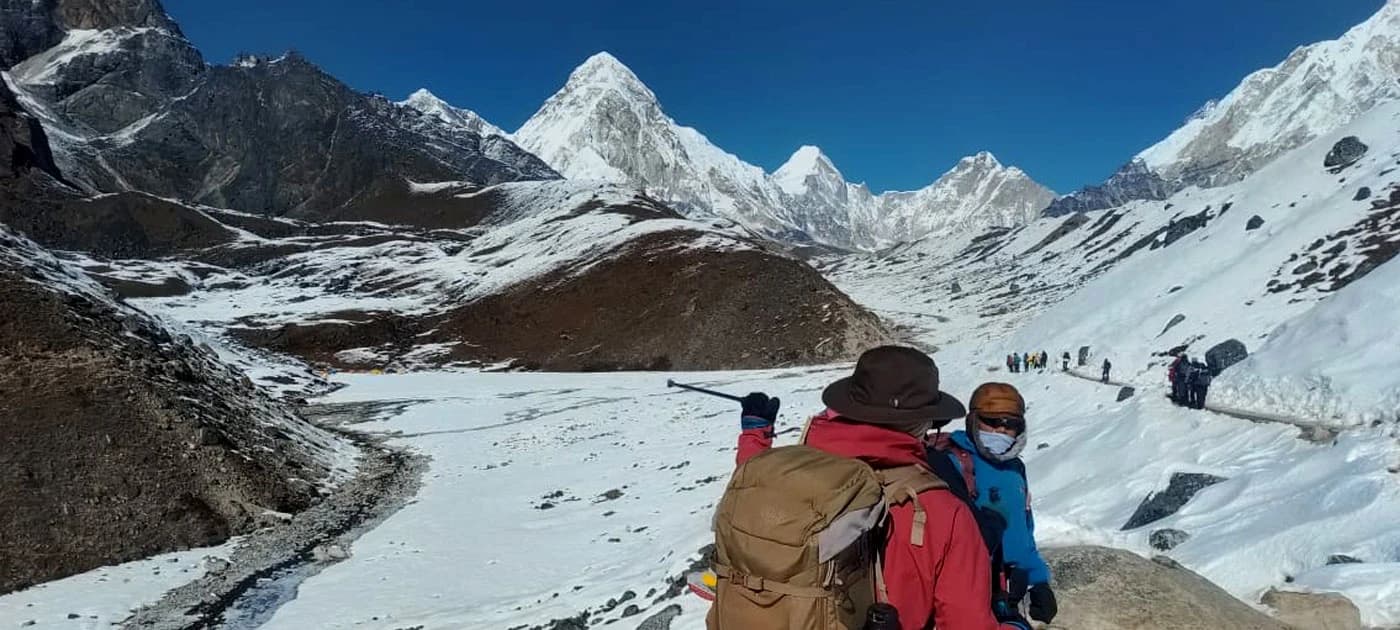
Ever heard of the iconic Everest region, where the world's tallest peak, Mount Everest (8848.88 meters), resides, along with other legendary mountains including Lotshe, Nuptshe, Makalu, Cho Oyu, and many others. Apart from that, the high mountain passes, over 5000 meters, also stand tall, showcasing the wide-angle panorama of the Himalayan peaks, where the passes are named as Kongma La (5535 m), Cho La (5420 m), and Renjo La at 5360 meters, which you will ultimately cross, during the Everest Three Pass Trek, and also, ironically reach the lap of the Everest's (EBC), as well.
Considered as the 3 high passes adventure, it is one of the thrilling odysseys in the himalayas, navigating via off-beaten, less crowded sections, and remote Sherpa villages, which can be completed within a 17-19 day time frame. The trail begins with a Lukla Flight (35 minutes), and proceeds through Phakding, Namche Bazaar, and then, the route takes a diversion towards Thame, Lungden, and crosses Renjo La, and the turqouise Gokyo Lakes and Gokyo Ri (5457 m). Then, the trekking route continues to Dzong La via Cho La Pass, touches the standard Everest Base Camp route, and finally crosses over the Kongma La at 5535 meters.
If you choose the clockwise route, then this will be your route, which is the most chosen one, as it acclimatizes your body well, and makes the trip easier, whereas, for the experienced hikers, you can also consider the Anticlockwise route to the 3 passes, which crosses Kongma la, Cho la, and Renjo La. For the trekkers who have already undertaken the standard EBC Trek, can avoid going to the base camp; however, it is just a matter of 2 extended days, so excluding it from the part of the itinerary won't make a huge impact on the trip.
Top Attractions
- Reaches Everest Base Camp (5364 m), Kala Patthar (5545 m), Gokyo Ri (5357 meters), three legendary popular Everest viewpoints, including crosses, the three thrilling mountain passes all in one single journey
- Meanders along the UNESCO-enslisted heritage, Sagarmatha National Park
- Panorama mountain 360-degree views of the mountains, such as Cho Oyu, Makalu, Everest, Cholatshe, Pumori, Taboche, Khumbu ice fall, and others
- Insight into the six series of Gokyo Lakes, and the Himalaya's longest Ngozumpa glacier
Manaslu Larkya La Pass Trek - 5106 meters
The Manaslu Circuit Trekking is marked as one of the best off-beaten, isolated, remote trails in the himalayas, which encircles the world's eighth tallest peak, Mount Manaslu (8163 meters), and also explores the Tibetan cultures, such as Nubri, Tsum, Rai, Limbu, and other communities. What makes this trip more exciting is that it also includes the longest walkable pass, Larkya La, which neither demands technical climbing skills nor prior high altitude experience, and is doable by everyone, with prior preparations. This adventure is highly suggested to those who crave to know about the mountain people, their daily livelihood, and untamed culture, whereas the scenic vista of the landscapes, changing every hour, won't disappoint.
The Larkya La Pass demands 9-10 hours for a round trip from Dharamsala to Larkya Pass, cross over, then descend to Bhimtang. Even though the long hour trail might sound physically draining, you will face a steep climb for only 20-25 minutes, while taking an uphill walk to the top, just with the basic level of fitness, you are good to go. Throughout the himalayan odyssey, you will be rewarded with the gigantic peaks, such as Himlung Himal, Annapurna range, Samdo Peak, Cheo Himal, Mt Kang Guru, and many more.
To access the restricted area of Manaslu, a special permit is required, as independent hiking is not allowed, and permits can be arranged only by a local travel agency affiliated with TAAN (Trekkers Association of Nepal). Due to the special restrictions permit requirement, the territory is still in the pristine version, being unbothered by a large number of tourists, and only lucky ones get to enjoy the breathtaking views, scenic remote villages, unchanged Tibetan roots and heritages, and accomplishment of reaching a height above 5000 meters.
Facts about Larkya La Pass
- Located at: Manaslu Conservation Area within the territory of Gorkha district
- Elevation: 5106 meters (highest point of the Manaslu Circuit)
- Trip Duration: 10-16 days full circuit
- Distance: 12-16 kilometers (longest pass day)
- Views: Panorama vista of several giants, including Mt. Manaslu (8163 m), Himlung Himal, Annapurna II, I, IV, Kang Guru (6979 m), and many more
- Side Trips: Birendra Lake, Pungen Gompa, Rui La Pass (Tibetan Border), and the Manaslu Base Camp
Langtang Ganja La Pass Trek - 5130 meters
Situated within Langtang National Park, Ganja La Pass stands at an altitude of 5130 m (16,840 ft), which is one of the most technical yet fascinating high passes, that is linked with the famous Langtang valley to the remote Helambu region. The standard Langtang trek doesn't include the pass, which you must include in the itinerary distinctly, by extending the route for an extra 4-5 days, which demands a 16 km route from Kanjin Gompa (the acclimatisation key spot) via Ngengang Kharka and to the top, then takes a descent to Keldanf and Tarke Ghyang. It is a full 7-8 hours of a round trip, and considered a difficult high pass in Nepal, rated Grade 3 in terms of difficulty, requiring crampons, ice axes, and ropes, as well, due to steep climb and icy glacier sections.
Unlike other high altitude passes in Nepal, what sets the Ganja La unique is that it traverses via a less crowded and no tea house section, which requires a full camping setup, which makes the adventure more thrilling. While it is considered one of the most challenging passes, it is less strenuous than the 3 high passes, but more difficult than the Larkya La Pass. It can be a perfect trip for those who want to attain the Everest Passes and build their confidence level and portfolio as well. With proper preparations and the assistance of the experienced licensed trekking guide, this trek is one hundered perfect successfully doable. You only require two permits: the Langtang National Park Permit and the TIMS card; no extra summit permit is required. Also, include acclimatization days (2 nights) at Kyanjin Gompa, with a side trip to Tserko Ri, to adapt to the thinning air. After attaining the height of Ganja La Pass, get ready to be rewarded with panoramic 360-degree views of Langtang Lirung (full, massive vista that is perched at 7227 m, Dorje Lakpa, Langtang glacier, Yala Peak glacier, etc.
Why Ganja La Pass stands out? Quick Facts
- Located at: Langtang National Park (combined with the Langtang standard trail distinctly)
- Elevation and Duration: 5122 meters, 12-14 days for proper ascent and acclimatisation
- Highlights: Kyanjin Gompa (spiritual hub), Langtang village, a remote other unique section of Langtang, while navigating via Kyanjin - Nyengang Kharka - Ganja La - Keldang - Trake Ghyang
- Distance: 16 km (full pass day, 8 hrs approx)
- Technical section: Ropes, Crampons, and ice axes required, giving a mini summit yet an easy trail for hikers
- No tea houses for 2-3 days, which means you get to experience the camping side of the trek
- Combines the Langtang and Helambu regions in one
Annapurna Circuit via Thorong La Pass - 5416 meters
The Thorong La Pass is marked as one of the best high pass treks in Nepal, which is part of the classic Annapurna Circuit Trekking, and is also known as a remote, diverse adventure in the Himalayas, that touches two major districts of Manang and Mustang. While journeying on this trip, it unveils the majestic beauty of the six climatic zones, from lush woodlands to sub-tropical thin patterned valleys, to isolated Tibetan villages, to the alpine meadows, surrounded by the huge arid Tibetan plateau. It takes a climb through the Marshyangdi valley, and takes a descent to the world's deepest gorge of Kali Gandaki, visiting the Muktinath Temple and the Jomsom valley of the Mustang region.
Perched at an elevation of 5416 meters, in the Damodar himalayas north of the Annapurna range, the Thorong La Pass is named as the world's highest altitude pass crossing, which demands a total of 12-14 days of full circuit starting from Chame via Dharapani, and includes an acclimatisation day at Manang (3538 meters), that include a side trip to Ice Lake and Gangapurna Lake. In a day of the pass summit, it requires 9-10 hrs of cross over, almost 14 km, passing via steep switchbacks, long ascents, and a quick downhill to Mustang. The pass is not so challenging, considered moderate in terms of difficulty; however, the recent problems, after the roads have been built till Manang, hikers face the high possibility of altitude sickness, due to the high altitude starting point, so consider starting the trip, from either Dharapani or Chame, so that you acclimatise well enough, to summit the pass.
Facts about Thorong La Pass
- Highest Point: 5416 meters, reaches the highest elevation on the Annapurna Circuit, considered the world's highest trekking pass
- Difficulty: Moderately challenging, no technical section included, hence, can be done by beginners with prior preparations as well
- Location: Located between Manang's eastern side and Mustang's western side, within the protection of ACAP (Annapurna Conservation Area Project)
- Required Pemits: ACAP and TIMS Card, no special restricted area permits required
- Views: 360-degree panorama insight into Annapurna and Dhaulagiri massif, Tibetan Plateau, wide-angle view
- Includes Poon Hill View Point, as well, if you are doing the full circuit
Kanchenjunga North and South Base Camp Trek (Full Circuit) - 5 Passes above 4500 meters
The ultimate Kanchenjunga Circuit Trekking is a long adventure in the himalayas, that visits both the base camps, north and south in one, reaching the maximum height of 5143 meters at Pang Pema (North Base Camp). It takes a full circuit of the world's 3rd tallest peak, Mount Kanchenjunga, and crosses exactly five high passes above 4500 meters, linking Oktang viewpoint and Pangpema viewpoint, through the eastern himalayan side, where the peak borders Tibet and Sikkim. The trail first covers the South Base Camp at Ramche, and ascends via Tamo la at 3900 meters, and then slowly crosses the high passes of Mirgin La (4664 m), Sinion La (4660 meters), Sele La (4600 m), Lapsang La via steep Tseram descent, before reaching Pang Pema.
When compared to other mountain passes, it is the most demanding and physically challenging odyssey, where the hikers have to spend almost 18-21 days in the remote and isolated area, with few trekkers and limited tea houses. The trek is only suggested for the experienced trekker having prior high altitude experience, as the frequent climb to the high vantage points might be physically daunting to beginners, and mentally challenging as well. You will require two permits: firstly, the Restricted Area Permit (RAP) and secondly, the Kanchenjunga Conservation Area Permit, which can only be attained via a local travel agency and must be assisted by the licensed trekking guide as well. The high passes are not so technical, and somehow tend to be straightforward as well; it's just that hiking cannot be done independently, and must be guided by a local agency.
Trip Facts and Highlights
| Quick Facts | Attractions |
| The highest altitude is 5143 meters, and the other 5 high passes | Breathtaking panoramic views of the mountains, including the Kanchenjunga range, Makalu, Lhotse, and many others, from a distinct perspective |
| Takes approx. 19 - 21 days (covers 220+ kilometers), with a daily hike of 5-6 hours | Navigates via isolated and remote villages, off-beaten, less crowded trails, and explores the eastern part of Nepal |
| Encircles the lap of the world's 3rd highest peak, Kanchenjunga Main's south and north | Rich Tibetan Buddhist cultures, of Loba, Rai, Limbu villages, and visit many Tibetan ancient monasteries, and ancient trade routes |
| Remote tea house, trek, and challenging adventure | Traverses via Kanchenjunga Conservation Area, insight into himalayan flora, red rhododendrons, pines, and encounters with rare fauna, like red panda, snow leopard, himalayan tahr, etc |
| Restricted Area Permit and KCAP (Kanchenjunga Conservation Area Permit) | Crosses, five high passes above 4500 meters in total |
Upper Dolpo via Kang La Pass - 5320 meters
The Upper Dolpo Kangla Pass Trek stands out as Nepal's most remote high pass adventure, which explores both the upper and lower sides of the Dolpo region, a Tibetan enclave preserved by restricted access. It is one of the major isolated and unexplored places, also marked as part of the Great Himalayan Trail (GHT), and demands a special restricted area permit, where the trekkers must be guided through a local registered trekking agency. This trip, in total, demands a time period of 22-24 days, which follows the ancient salt trading routes, and crosses almost five high passes above 4500 meters, and visits the sacred Shey Phoksundo lake and the legendary Kang La Pass, soaring at an elevation of 5320 meters.
The major highlight of this trek, which sets itself completely apart from other expeditions, is that it goes through a full camping expedition, as there are no tea houses in between, and serves as a gateway to Crystal Mountain.
The overall trip is considered one of the most strenuous treks in Nepal, whereas the pass of Kang La includes 6-8 hours of crossing time, but does not consist of any technical sections, but has loose scree, offering the 360 degree panoramic vista of several peaks, including the Dhaulagiri range, Kanjiroba, and the Tibetan dry plateau landscape surrounding the area.
Trip Facts
- Destination: Upper Dolpo region, within north western part of Nepal
- Max. elevation: 5320 meters (Kang La Pass)
- Trip Duration: 22-24 days (daily 6-7 hrs)
- Difficulty Level: Challenging, can be strenuous, for beginners, or even moderate pace hikers, Experienced hikers only
- Trek Style: Fully Camping Trek
Major Highlights:
- Crossing the legendary Kang La Pass (5320 m) and the other four passes, depending on the itinerary
- Exploring Shey Phoksundo Lake, a sacred high altitude lake, and Shey Gompa (Crystal Mountain)
- Part of the Great Himalayan Trail (GHT), Remote landscapes and Tibetan-Buddhist culture
- Ancient salt trade routes and traditional villages
- 360° panoramic views of Dhaulagiri Range, Kanjiroba Himal, and the Tibetan plateau
Nar Phu Valley with Kang La Pass -5320 meters
The Nar and Phu Trek is marked as one of the best high pass treks in Nepal, which includes the crossing of the Kang La Pass, which is the same as the Dolpo Route Pass, as the routes are connected with each other, so do not get confused with the naming. The Kangla pass offers a remote, challenging himalayan trek, within the Annapurna region, that fusions, tibetan culture, isolated mountain villages, a huge, towering arid Tibetan plateau, and a high altitude odyssey. It falls under the off-beaten trail, which suits perfectly the experienced hikers craving raw, authentic wilderness. The trek is shorter than the Upper Dolpo, and is also a full tea house trek, lasting for only 10-14 days. It can be a great alternative to the Dolpo, who seek to cross the Kang La Pass, as it is comparatively easier and falls within budget as well.
It enters the restricted area of Nar Phu, and passes via ancient remote villages, of Meta, Phu, and Nar, before you cross the Kang La Pass, ranging in between 5306 m - 5322 meters, and touches Ngwal and Manang, connecting the circuit trail of Annapurna. If you want more challenges, then you can consider combining Thorong La Pass and Kang La Pass by combining Nar Phu and Annapurna Circuit Trek, which unveils another side of the iconic trail, and the panoramic vista of Annapurna I, II, IV, Gangapurna, Tilicho Peak, Dhaulagiri, and Manaslu, from the top of the pass. The pass is moderately graded in terms of challenges; however, it includes some steep ascents and several ascents and descents, so make sure to have a basic level of fitness and be prepared physically and mentally.
Facts about Kang La Pass
- Elevation: 5320 meters, one of Annapurna region's highest passes, which connects Nar Phu Valley's Nar and Ngawal in Manang district
- Difficulty: Steep 1200 meters, continuous ascent from Nar village, and a sharp downhill walk, basic fitness required
- Cultural Access: Gateway from restricted Nar Phu (Tibetan-style villages) to Annapurna Circuit trails
- Best Season: Spring and Autumn for clear views, stable weather, moderate, mild, humid
High Pass Treks Comparison Table: Difficulty, Duration & Cost 2026
Comprehensively overviewing the 7 best high pass treks in Nepal, all above 5000 meters, here is a table comparison of the top passes, sorted by altitude, duration, difficulty level, cost, and required permits for 2026:
| Trek | Max Pass Altitude | Duration (Days) | Difficulty | Cost (USD) | Best For | Required Permits |
| Everest Three High Passes | 5535 m | 17-21 | Moderately Challenging | $ 1199 - $1499 | Experienced Trekkers | Sagarmatha National Park and Pasang Khumbu Municipality Local Permit |
| Annapurna Circuit (Thorong La) | 5416 m | 12-14 | Moderate | $699 - $1199 | Beginners to Experienced ones | ACAP and TIMS Card |
| Manaslu (Larkya La) | 5016 m | 10-14 | Moderate (Easier than other high passes) | Budget Friendly ($599 - $1049) | Remote culture and easy-going pass | MCAP, RAP, and ACAP (must be guided via travel agency) |
| Langtang (Ganja La) | 5130 m | 12-16 | Hard (Technically challenging) | $1999 - $2100 | Experienced Hikers | Langtang National Park Permit and TIMS Card |
| Kanchenjunga Circuit (5 passes included) | 5143 m | 19-21 | Hard | $2499 - $2700 | Wilderness exploration and remote endurance | KCAP and RAP (guided) |
| Upper Dolpo Kang La | 5320 m | 22-23 | Streneous | $2000 - $2900 | Isolated section | Special permits: RAP and Shey National Park Permit |
| Nar Phu Valley Kang La | 5320 m | 15-18 | Moderate | $1499 - $1699 | Annapurna off beaten | ACAP and RAP |
How to Choose the Best High Pass Trek for Your Experience Level?
With a wide variety of high pass treks, you might get confused about which one to choose, the best one that suits you. While selecting one, you must consider several factors, such as fitness level, altitude experience, duration, and budget, to select your adventure for 2026. To clear your confusion, here I've mentioned the best high passes for you, considering on the experienced level and your physical endurance as well.
Best for Beginners
If you are a beginner who has no prior trekking or high altitude himalayan experience, then either the Manaslu Circuit or the Annapurna Circuit suits you perfectly, where both the high passes demand less than 14 days of time frame, and can be done by first timers, with proper preparedness, as there are no technical sections included. The tea houses are also well built, at every key stopping point, even luxury ones, on the Annapurna Circuit Trail, without having to go for a camping expedition.
The passes are well marked, straightforward, without having of requirement of technical gear, such as micro spikes, crampons, ice axes, ropes, making it quite a first-timer friendly. Both the Larkya La Pass and the Thorong La Pass take only 7-9 hrs of round trip, max. 10 hours, but can be seamlessly undertaken by any kind of hikers, with just a basic level of fitness. The itineraries also include great side trip options, and a gradual ascent of 400-500 meters, where you do not have to face high vantage points or continuous passes, as the only highest pass that you will attain on this trip marks the mountain passes of Larkya La or Thorong La itself. The success rate is 90%, perfect for beginners, if you compare with other technical passes, that has only 50-50% of summit success for beginners.
Best for Experienced
For those who have already been to high altitude adventures, and gained experience regarding how the remote odysseys are supposed to be, and seek an adrenaline boosting journey, should definitely choose the ultimate Everest Three Passes Trekking, which crosses 3 legendary pinnacles. In this trip, you will encounter several high points, other than Kongma La, Renjo La, and Cho La, which include Gokyo Ri (5357 m) and the almighty Kala Patthar (5545 m) via EBC, which can be a great option for experienced hikers who want to achieve great heights. It does not include any technical sections or advanced trail passes, with 98% success rate with proper acclimatisation and the assistance of the guide, making the adventure safe and smooth to commence for the trekkers having some experience before.
On the other hand, if you want more technical and remote routes, then you can opt for the Ganja La Pass, Kanchenjunga Circuit with 5 passes included, and Upper Dolpo with Kang La Pass, which are very challenging, and also require a long duration hike, and prior experience.
High Pass Trekking Preparation & Permits 2026
To commence on any high passes treks, the first and foremost thing that everyone must consider is being well trained and prepared, doing some planning, getting some safety tips and ideas, and altitude sickness preventive measures, for a smooth odyssey. Here are some of the things to consider (optimise) before undertaking this himalayan high altitude adventure:
Best Time
The ideal seasons for high pass trekking in Nepal are Spring, starting from March to the end of May, and Autumn, from September to November, where the weather is expected to remain stable, with zero or less chances of precipitation. Due to very little possibility of rainfall or snowfall, you can expect the best panoramic mountain views, under the blue sky, and the beauty of changing landscapes throughout. Also, the terrains tend to remain dry, without muddiness, or slipperiness, or icy glacial sections, making the crossings of the passes to be completed seamlessly. While you can expect the long hour trekking during the daytime, and blooming rhododendrons, and the scenic view, more hikers encounter the major festival celebrations, Dashain and Tihar, during Autumn.
To know more about the seasonal time in Nepal, please check out our best time to trek in Nepal, which has a comprehensive overview of humidity, climate, and weather patterns.
Required Permits
Every high pass trek requires specific trekking permits, which are checked at specific hubs, points, and almost every key section. The permits required depend on the region you are hiking in; some are basic, whereas other restricted permits are essential to cover the remote zones, like Nar Phu, Dolpo, Manaslu, and Kanchenjunga. To get access to the restricted area or get the RAP permit, you must book via a local travel agency, like us at Destination Himalaya Treks, where all the paperwork and required permits are handled.
| Trek | Permits Required | USD (Per Person) | Guides Mandatory | RAP Required |
| Everest 3 Passes | Sagarmatha NP, Local Khumbu Permit | approx. USD 30 total | No | No |
| Thorong La Pass | ACAP and TIMS Card | approx. 32 total | Yes | No |
| Larkya La | MCAP, RAP, ACAP, and Tim's Card | Above $100 | Yes | Yes (accessible through the agency only) |
| Ganja La | LNP, Tims | USD 22-28 | Yes | No |
| Kanchenjunga | KCAP and RAP | Above % 100 | Yes | Yes (accessible through the agency only) |
| Upper Dolpo | Shey National Park Permit, Lower Dolpo Permit, and RAP | $500 for 1st 10 days | Yes | Yes |
| Nar Phu Kang La | ACAP and RAP | approx. $100 (minimum 1 week) | Yes | Yes |
Packing Essentials
| Category | Required Items | Why Important |
| Base Layer | Thermal wear (Top to Bottom), 3-4 easy, quick-drying inner wears, liner gloves, and socks | Wicks 24-hour sweat |
| Mid Layer | Fleece Jacket, Zip-off pants, Moisture wicked Tshirts (4-5), medium wool socks, avoid cotton wear | Traps body heat and is versatile, even for low temperatures up to 0 degrees Celsius |
| Outer Layer | Gore-Tex Jacket and pants, -14 degree Celsius down jacket, insulated mittens | Wind / Rain /Sun protection |
| Feet | Trekking Boots, Gaisters, liner socks, micro-spikes, and slippers | Avoid blisters |
| Head / Eyes | Beanie, buff, baseball cap, Cat4 glacier glasses, headlamp, and batteries | avoid snow blindness |
| Daybag pack (32 - 40 L) | Daily must-haves, gadgets, water bottle, thermos, snacks, sunscreen, extra batteries, Diamox, and others | 7-9 longer pass crossing day |
| Sleep | Down jacket, hotpack, silk liner | Comfortable sleep at high altitude |
| Pass Specific | Crampons, and trekking boot | During high pass crossing |
High Altitude Safety Tips
- Daily, take 300-400 meters of ascent; never go beyond 400 meters. Follow the climb-high, sleep-low approach; set 1-2 acclimatisation days to adapt to the rising high altitude and thinning air.
- Climb high, sleep low, approach means, for instance: If you are crossing Thorong La or 3 passes, then, after ascending to the top, take a downhill walk to the lower section, and take a nap, rest at a lower elevation.
- Fuel your body with a full pack of nutritious meals, which includes all the nutrient values such as carbs, proteins, and fibers, fats, that keep you engaged, and hydrate your body with 4 liters of water every day.
- Throughout your trek, walk along with the trekking guide, do not leave his assistant, and follow the pole-to-pole approach.
- If you feel the symptoms of altitude sickness, either mild or severe ones, like headache, nausea, fatigue, no sleep, or loss of appetite, inform the trekking guide immediately.
- Before undertaking the trek, get travel insurance that covers all the essentials, such as helicopter evacuation above 3000 meters, medical expenses, theft, trip delays, and cancellation.
- If you have any sort of discomfort, such as shortness in breathing, an unusual pulse rate, or some feel like, innerbody is not cooperating well, with the increasing altitude, then please take a descent, if thing is normal, then take 1-2 rest days, and if it sounds serious, then descend immediately.
Plan Your High Altitude Treks Smartly
Understanding a detailed guideline, height, difficulty level, and preparation do's and don'ts stands out to be very crucial, when it comes to any high altitude adventure, in Nepal, or any high passes, or even simple hikes. Whereas, the most important part remains, who are your support crews, to lead you through some remote, thinning elevation routes, and lower oxygen, where hiring an experienced licensed guide, via a local travel agency, is very crucial. Having the pro expert teams along with you means you have a big backbone, along with you, 24 hours a day, at remote places, and acts as a quick medical responder when necessary.
We at Destination Himalaya Treks have been taking hikers across the globe, over 10,000+ groups over 2 decades, with 98% success rate, at the high altitudes. If you are planning the high pass treks in Nepal, then feel free to contact us for expert guidance, customised itineraries, and support for your adventure to the mountains.
Best places to visit in NepalMountain GuideNepal Top PlacesNepal's Best PlacePlaces to visit in NepalTourist Destination in NepalTrekking Gear
Need Help? Call Us+977 9851016814orChat with us on WhatsApp
Latest Travel Blogs
Need Help? Call Us+977 9851016814