Known as the Little Tibet of Nepal, in the Himalayas, surrounded by the Tibetan plateau of the thundering Annapurna and Dhaulagiri range, within a rain shadow area, the Upper Mustang Trek is a once-in-a-lifetime opportunity to explore the rich culture of the Tibetans and distinct landscapes. Typically, considered as the "Himal Pari ko Jilla", translated as "The Land beyond the Himalayas" in English, every gaze you strike in and every stride you undertake, expect to be accompanied by the great panoramic insight of the mountains. The Mustang region is distinguished into two areas: firstly, the Lower Mustang, and secondly, the Upper Mustang, where the Forbidden Kingdom of Nepal - Lo Manthang, is located at an elevation of 3800 m (12,600 feet).
Both areas are equally famous; however, they depend on personal choices, whether they want an easy, short and easily accessible adventure, or a thrilling, high altitude tour or treks, as both regions are partially distinct from each other. The lower Mustang cover the areas of Jomsom, Kagbeni, Marpha, to the highest at Muktinath Temple (3710 meters), whereas the Upper Mustang, Nepal, takes you into more rugged, remote and isolated areas, such as Chele, Syangboche, Ghami, Charang, Ghilling, Chukksang, and the highest at Lo Manthang, navigating through the restricted territory of Nepal, which demands the special restricted area permit.
Both the lower and upper mustang region take you into deep cultural and traditional areas, whereas someone who craves to explore more out of the Himalayas, visiting ancient monasteries, dating back to ages, ancient sky caves, dry Tibetan plateau, and visit some iconic view points, then, the trail to Upper Mustang in Nepal, is something, that you surely do not want to miss out. What makes this region completely apart from others is that the monarchial system is still followed by locals, having its regulations, following the sky burial system, polyandry cultures, and so much more, leaving you surprised, like you are transported back decades. Hence, the mustang region, cultures, festivals, and traditions are highly revered by the locals.
Situated in the rain shadow area, it can be visited any time of the year, where every seasonal variation has its own unique features to offer, with enchanting insights that are worth even gazing at and experiencing. There are many ways that you can visit Mustang in Nepal, either upper or lower, by jeep, trekking or combining with some thrilling adventure, that lasts from a week to 22 days, depending on the accessibility means, routes, and itinerary, which we will discuss thoroughly.
This guidebook for Upper Mustang Valley comprehensively takes you deep into the isolated and remote territory, highlighting its historical, geographical, and cultural aspects, with many possible routes and accessibility, matching the preferences of every adventure seeker with insightful tips to be prepared.
Where is Upper Mustang Located: Geographical Aspect
Sharing the border with Tibet (China) to the north, and the Tibetan Border, at the Korala Pass, the Upper Mustang is situated in the northern part of the Mustang District, in Nepal's Gandaki Province, within the trans-Himalayan region behind the Annapurna and Dhaulagiri range. Spanning across the 2,020 square kilometres (780 square miles), it shares a mix of ethnic Tibetan communities, mainly covered by the Lhoba people (old Bon religion followers). Starting from an elevation of 2800 meters, from the world's deepest gorge of the Kali Gandaki valley, to the highest at Khamjung Himal Range at 6700 meters, it is situated within a rain shadow area, with less likely precipitation (rainfall), opening the gateway to every kind of hiker, across the globe.
Considered as the "Himal Pari ko Jilla", The Land Beyond Himalayas, the population count tends to be between 1430 to 1890 people only, and fewer visitors, as a special permit is required to get access to the territory of the restricted area zone. The area features dry Tibetan plateau landscapes, narrow gorges, colourful rock and geographical formations, more than 10,000 sky caves, and ancient monasteries dating back to ages, a varied kind of trekking trail navigation from woodlands, to apple orchards, to remote rugged patterns, which is distinguished between Lower and Upper Mustang. While the Upper Mustang area only occupies two-thirds of the Mustang district, with coordinates of 29°05′N 83°55′E.
Being far away by 456 kilometres from Kathmandu, it can be easily accessible, with a Jomsom flight from Pokhara, to start the navigation of the trekking route, entering the gateway from Kagbeni, and further passes through several Tibetan villages such as Chele, Syangboche, Ghame, Charang, or can be accessed through direct jeep ride, or motor ride, as well, whereas, accessibility is easy, and smooth to navigate through.
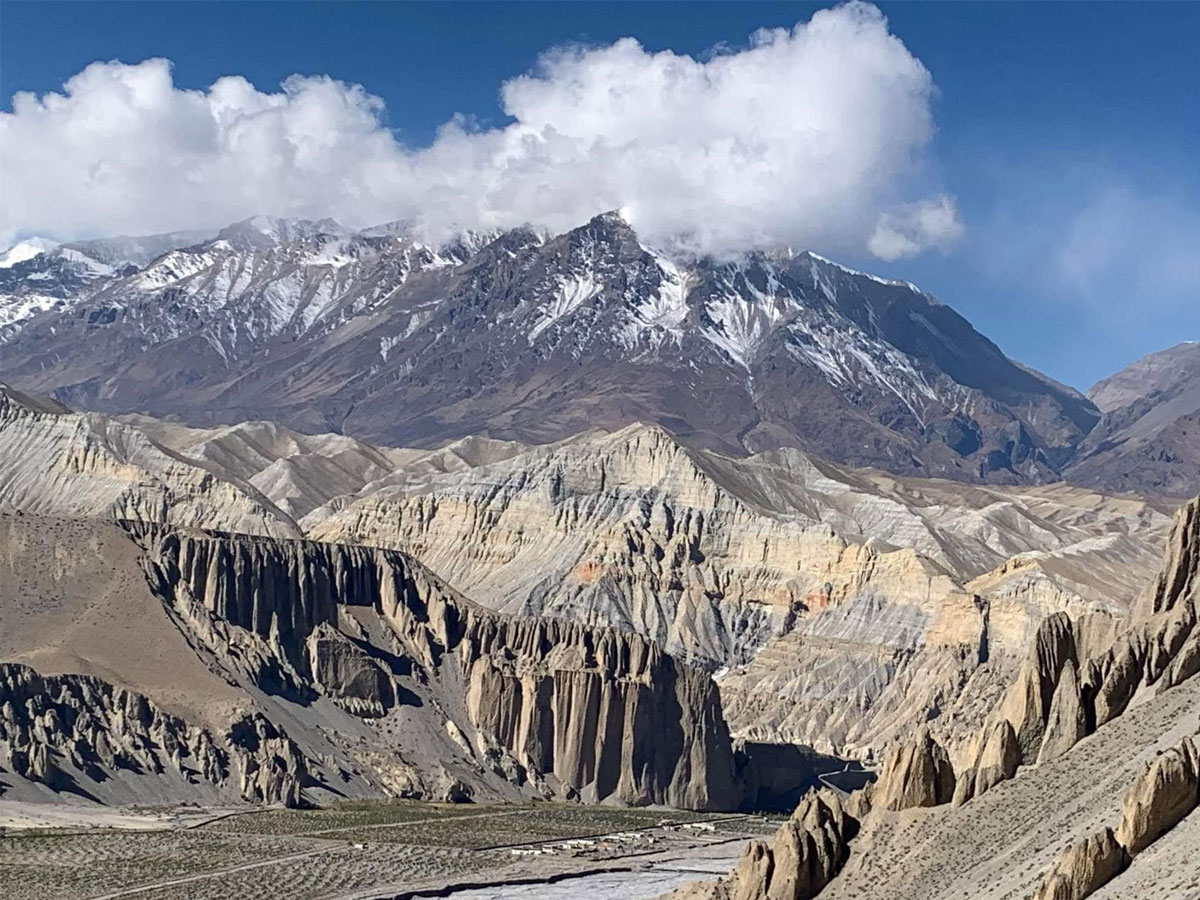
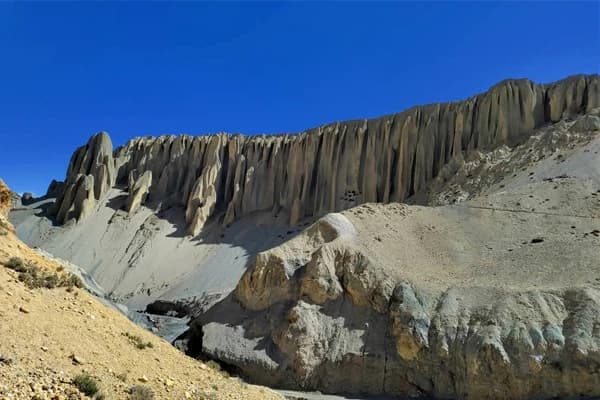
Distinct overview of the dry tibetan plateau landscapes, at Upper Mustang valley
Whereas a special trekking permit limits the number of hikers, as the permit is costly, and also demands the assistance of the guided trekking agency and a local experienced guide, limiting the independent trekkers ' access. However, to intrigue the visitors, the Government of Nepal and the Tourism Board of Nepal have initiated a change in the permit cost, since November 2025 AD, that the permits that used to cost USD 550 for a straight 10 days, and extra cost for further additional days, in present is replaced by USD 50 per day per person, allowing the payment only the days, spent within the restricted area. With this new regulation implementation, the territory is expected to be visited by many explorers, across the globe, boosting the economy, cultural exchange and more coverage by media, as well, which is great when viewed by the local daily economic perspective as well.
Upper Mustang Vs Lower Mustang: Know the Differences
Many people are confused about the differences regarding the Lower and Upper Mustang, whereas, even though located in the same geographical territory within the Mustang district itself, the accessibility, cultures, permits requirements, distance coverage and the elevation gain, which keep them distinguished from each other. Let's take an insightful overview of the Upper Mustang and Lower Mustang differences, with an insightful point to point, differences, keeping them apart:
Upper Mustang Vs Lower Mustang
Features
Lower Mustang
Upper Mustang
Location
Located in the southern part, covering 1/3 of the Mustang district, within the Thak region
Covers 2/3 of the Mustang District, of the upper territory, and attains the highest altitude of 3800 meters, in the Kingdom of Lho - Lo Manthang
What Captivates Visitors?
Jomsom Alley, Marpha, the Apple orchards, and the main attraction remains the Muktinath Temple, a sacred place for both Hinduism and Buddhism
Lo Manthang (the capital city), navigation along the Kali Gandaki valley, a more rugged and rough pattern navigation and many isolated villages such as Sele, Syangboche, Ghame, with more cultural engagement
Permits requirement
No Special Permit is required, except the regular ACAP (Annapurna Conservation Area) and TIMS card
A Special Restricted Area Permit is required, which demands USD 50 per day, from 2026 onwards, where the new permit regulation replaces the old cost, demanding USD 550 no matter how short you stay
Culture
Mix communities, from Brahmin, to Thakali, to Pure Tibetan communities like Thakali, Sherpa, Rai, etc
Mostly covered by the Lhoba locals, especially at Lo Manthang, the capital city itself
Landscape
Green valleys, mostly covered by apple farms, at the villages of Jomsom and Marpha, and the river navigational route alongside
Budget-friendly side, as mostly visited by students, families, and short-term travellers
Higher cost, which demands +USD 999 per pax
Elevation
2700 to 3800 starting from Jomsom to Muktinath Temple
3000 to 6700 meters, considering the Khamjung Himal Range, whereas, only attains at 3800 max, at Lo Manthang
While the Lower Mustang can be easily accessible to everyone, the special permit requirements, costlier package, and longer days, somehow limit the number of hikers to the Upper Mustang, making it one of the most isolated, less crowded trekking trails in Nepal.
What is Upper Mustang called?
Located within the rainshadow area, the Upper Mustang valley is named after the Forbidden Kingdom of Nepal, as the territory has preserved its cultural roots and traditions, being situated in a hidden area, and it falls under the restricted area, demanding a special permit. It is behind the Great Himalayas (Annapurna and Dhaulagiri range), where little precipitation is expected. Being situated in a high-altitude, remote desert area, the landscape is adorned with high cliffs, orange, black, and red rock formations, and the complete Tibetan plateau, which is completely transformed into an unearthly world, far from the modern or industrial touch.
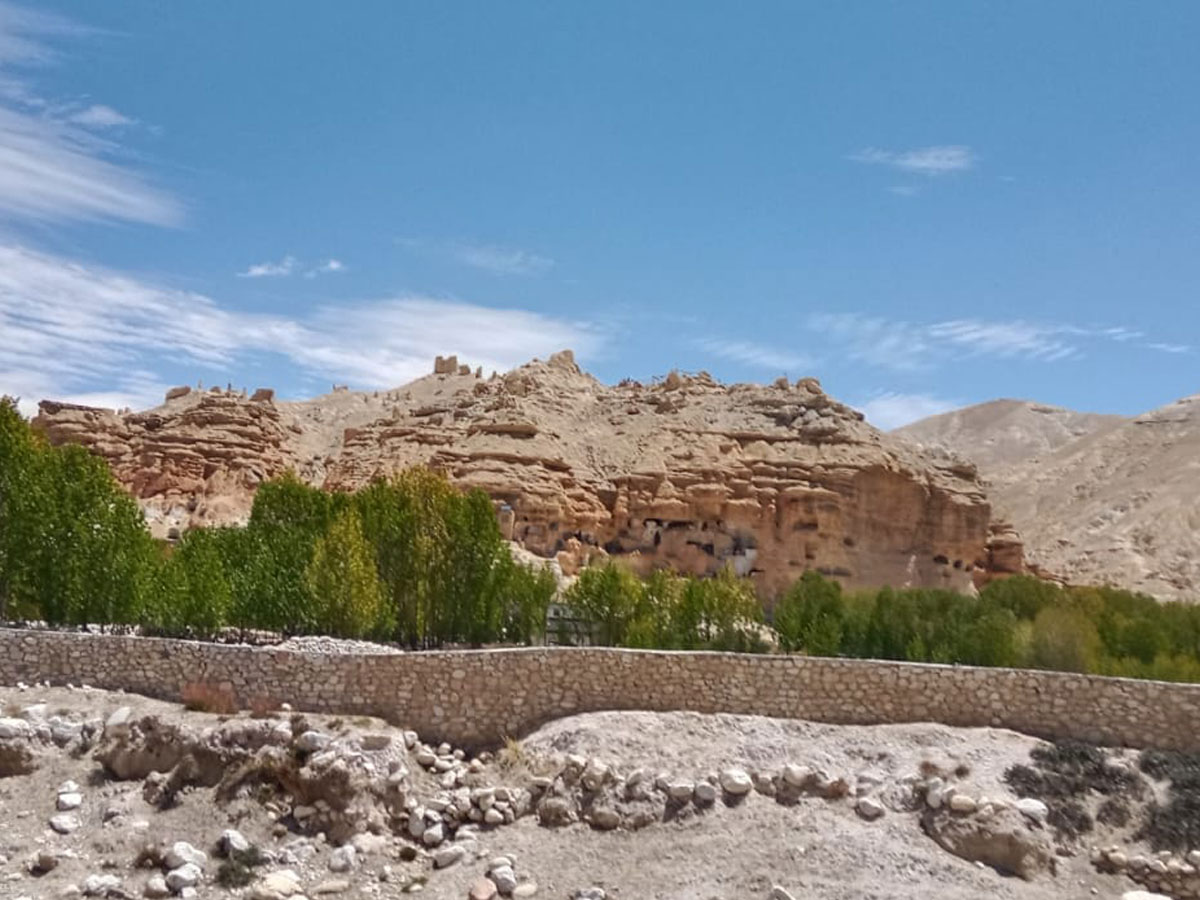
Additionally, it is also known as the Kingdom of Lho, or the Lo Kingdom. where the monarchical system still rules over, even though it was removed during the Nepal unification, due to the locals ' firm belief in the King and Prince, you can still experience the monarchical system ruling over, where Lo Manthang (3800 meters) is regarded as the capital city of the Upper Mustang. The distinct cultures, traditions, and lifestyles of the locals can be witnessed through the unique festival celebrations, such as the Tiji Festival, where the 3 days are celebrated after the festive, in the form of masked dances, instruments playings, prayers in the monasteries, where many enthusiastic people, come across the world, to completely, thrive in at such a surreal, velebrations, different from usual. .
How to Reach Upper Mustang in Nepal? Best Options and Requirements to Get There
There are many ways to reach the Upper Mustang region of Nepal, as the trailhead has improved with road conditions being infrastructured, then, it was before. No matter whether you are an experienced hiker or just a beginner, having a limited time frame or ample time period to spend in Nepal, it caters for the preferences of everyone. There are several routes, and combined alternatives as well, with the transportation accessibility to get into the upper mustang, where the pricing time duration, total distance coverage, starting point, and the difficulty level vary accordingly.
Getting the Required Permits
As the Upper Mustang territory falls under the restricted area, first and foremost, one must consider getting the restricted area permits to trail along the restricted protected area. Whereas, as per the regulation of the Special Restricted Area Permit, one must hike along the guidance of the experienced trekking licensed guide, with a minimum of 2 hikers in the group, and the assistance of the local-based trekking and tour operator; otherwise, entering the area is impossible.
In total, there are three permits required to trek to Upper Mustang. Firstly, the Restricted Area Permit, which costs approximately USD 50 daily per head, replaced the old rule demanding USD 550 for a straight 11 days within this area, and an additional cost on a daily basis. Whereas, the other two permits mark to be ACAP (Annapurna Conservation Area Permit), costing approximately USD 30, NPR 3100 per head, whereas the TIMS Card is the cheapest one, costing USD 10 per head.
To get the required permits, feel free to reach out to us anytime, where we will arrange a guided package, along with all the paperwork done following the legal requirements, soon after your booking is confirmed with us.
Standard Trekking Route (Kathmandu - Jomsom - Upper Mustang / Lo Manthang)
One of the most popular ways to reach the Forbidden Kingdom of Nepal stands out to be the off-beaten trekking trail, which starts with a flight or jeep drive to Jomsom, from either Pokhara or Kathmandu, wherever you are, the starting point tends to be there. Following the route passing through, several villages such as Kagbeni (2804 m), Chele (3050 m), Syangboche (3780 m), Ghami (3520 m), Charang (3560 m), and attains the highest elevation of 3840 meters at Lo Manthang, passing through the remote and isolated section.
Rugged patterned route to reach Lo Manthang at 3840 m, the highest elevation
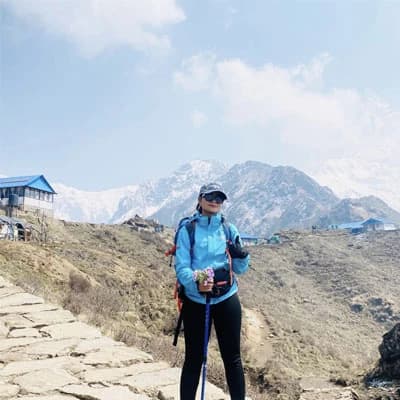
The Upper Mustang Trek navigation gets completed within just 12 to 15 days of timeframe, depending on your timeframe, demanding almost 5 to 6 hours of daily pace of hike, traversing through varied kind of terrains, from apple orchads, rugged remote patterned steep sections, tibetan loba communities tea houses, and lodges, and tibetan dry plateau, trailhead, offering a thrill of adventure, and distinct perspective of the Himalayas.
Classic Regular Route to Upper Mustang
Day
Daily Route
Elevation
Daily Hours Coverage
01
Kathmandu - Pokhara by bus or Flight
890 m
35-minute flight, 7-8 hours drive
02
Pokhara - Jomsom with a Flight - hike to Kagbeni
2840 m
40 minutes, 4 hours hike
03
Kagbeni - Chele
3050 m
6-7 hours
04
Chele - Syangboche
3780 m
06 hours
05
Syangboche - Ghami
3520 m
5-6 hours
06
Ghami - Charang
3560 m
5-6 hours
07
Charang - Lo Manthang
3840 m
6 hours
08
Acclimatisation Day (Rest Day)
3840 m
-
09
Lo Manthang - Drakmar
3810 m
7 hours
10
Drakmar - Ghilling
3570 m
5-6 hours
11
Ghilling - Chhuksang
2980 m
06 hours
12
Chhuksang - Jomsom
2720 m
07 hours
13
Jomsom - Pokhara (35-minute Flight)
890 m
35 mins flight
14
Pokhara - Kathmandu
1360 m
35 minutes flight or 8-9 hrs drive
Overland Tour by Roadway Navigation
One of the easiest ways to get to Upper Mustang is the Overland Tour by Jeep to Lo Manthang, which only demands 12-14 days of driving, taking you to several key points that can be easily accessible by jeep. Traversing through several stopping points, villages such as Pokhara, Tatopani, Kagbeni, Ghilling, Tsarang, and attains to the highest at Lo Manthang - The Walled City of Nepal, at 3840 meters, in comfort, which suits perfectly for first time hikers, who are just new to the world of Himalayas, however, still willing to experience the distinct Tibetan cultures and rugged tibetan landscapes. This route is widely popular for families with kids, or beginners, who want a luxurious and comfortable journey, avoiding the hassle of long-distance trekking coverage.
Overland Jeep Tour to Lo Manthang
Day
Route
Elevation
Driving Hour
1
Arrival Day
-
-
2
Sightseeing Tour in Kathmandu
-
-
3
Kathmandu - Pokhara
890 m
7-8 hrs
4
Pokhara - Tatopani
1260 m
3-4 hrs
5
Tatopani - Kagbeni visiting Muktinath Temple
3710 m
5-6 hrs
6
Kagbeni - Ghilling
3572 m
3-4 hrs
7
Ghilling - Charang (Tsarang)
3560 m
4-5 hrs
8
Charang - Lo Manthang
3840 m
2 hrs
9
Rest Day at Lo Manthang
-
-
10
Lo Manthang - Marpha
2670 m
7-8 hrs
11
Marpha - Sarangkot
1620 m
6-7 hours
12
Morning View from Sarangkot and Drive Back to Kathmandu
1360 m
8-9 hrs
13
Final Departure Day - Back to Home Country
-
-
Special Tiji Festival Route Navigation by Jeep for 2026
The famous main festival of Tiji gets started from 14th May, and is celebrated till 16th May in 2026, lasting for 3 days, which is the most iconic timeframe, where the Lo Manthang (3840 m) captivates the people, who seek to explore the Tibetan festivals, celebrated every year, following the Lunar calendar.
Tiji Festival Itinerary for 2026
Day
Route
Elevation
Daily Driving Hour
1
9 May 2026, Arrival in Kathmandu
1360 m
-
2
10 May 2026, Flight from Kathmandu to Pokhara
890 m
25-30 minutes
3
11 May 2026, Drive to Tatopani
1149 m
5-6 hrs
4
12 May, 2026, Drive to Kagbeni via Muktinath Temple
3800 m
4-5 hrs
5
13 May, 2026, Kagbeni to Tsarang
2820 m
05 hrs
6
14 May, 2026, Drive to Lo Manthang - Experience 1st day of Tiji Festival
3840 m
4-5 hrs
7
15 May, 2026, 2nd Day of Tiji Festival
-
-
8
16 May, 2026, 3rd day of Tiji Festival
-
-
9
17 May 2026, Drive to Jomsom
2720 m
5-6 hrs
10
18 May, 2026, Drive to Pokhara
890 m
7-8 hrs
11
19 May, 2026, Drive to KTM
1360 m
9 hrs
12
Departure Day
-
-
Tiji Festival celebrated at Lo Manthang, in the year 2025
Weather and Temperature: Know the Idyllic Seasons
Being situated within the rain shadow area, the walled city of Lo Manthang can be visited any time of the year, which is itself in the Upper Mustang region; however, considering the mild humidity, favourable weather and climatic conditions, the ideal seasons, marked to be Spring, starting from March, till the very end of May, and the Autumn season, in between September and November. Located in the arid dry landscapes, surrounded by the Tibetan plateau, and a highly towering mountain range of Dhaulagiri and Annapurna, in the evening, the wind gets intense, with heavy dry winds, and low temperature below -5 to -10 degrees Celsius.
Meanwhile, in the seasons of Spring and Autumn, the weather remains stable, with mild humidity with clear views of the landscapes and mountains, making it the best idyllic seasons. Starting from March to May, the temperature usually remains between -5 to -9 degrees Celsius, which is also the most crowded time, compared to other seasons. The major festival of Tiji also falls within this span of the year, whereas it starts from 14th to 16th May, in the year 2026 A.D., thus, if time fits, then consider this season, for sure!
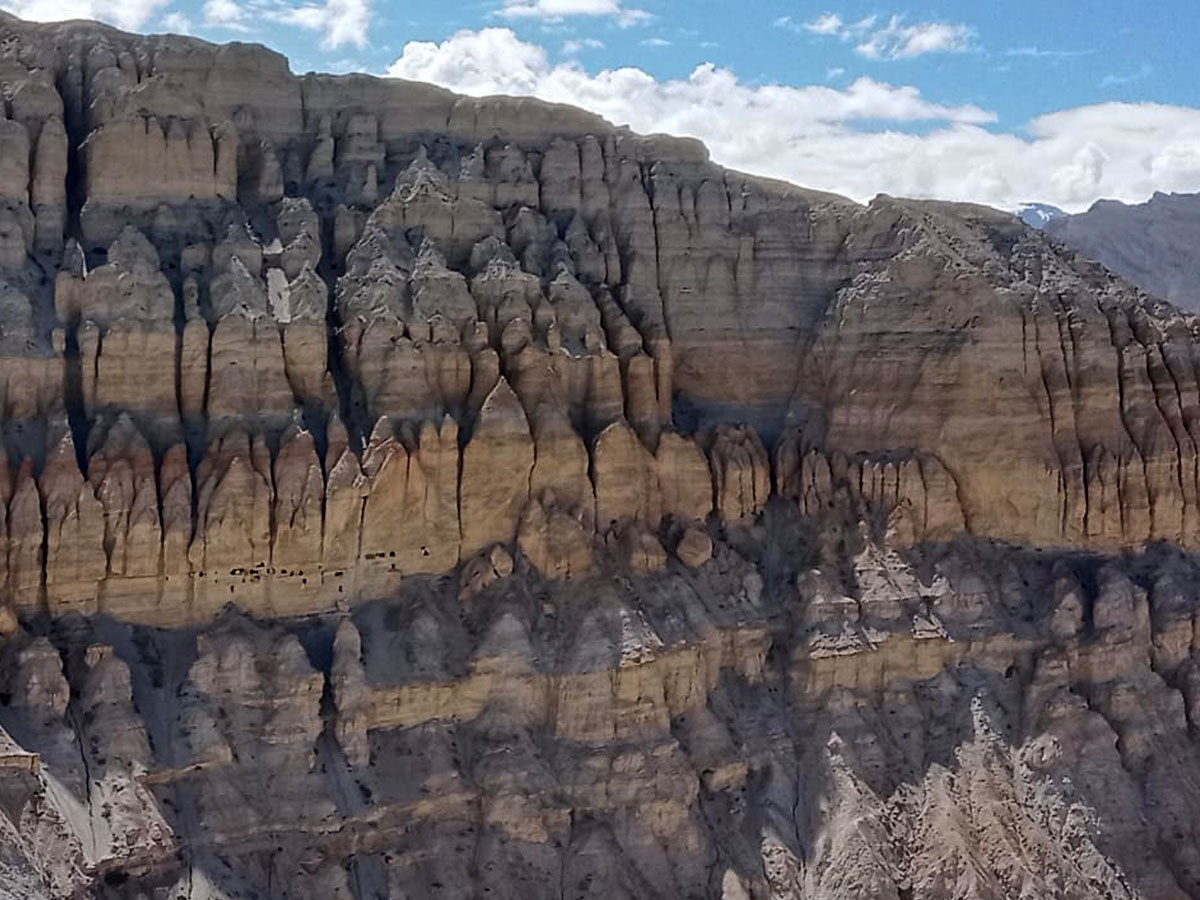
Burial Sky Caves, one of those 10,000 sky caves within upper mustang region
On the other hand, another ideal season is considered as Autumn time, which begins from mid-September and lasts till the end of November, where weather and climatic conditions generally remain clear and stable, demonstrating the intriguing views of the mountains and landscapes in the most prominent form. Other festivals, such as Dashain and Tihar, the major festivals of Nepal, also come in between this season, so it is a chance to immerse yourself in a distinct perspective of the celebration done in the Himalayas.
December through February brings peak winter to the Himalayas, marking the year's coldest period with nighttime temperatures plunging to -15°C (6°F) while daytime highs hover between 4-8°C. Lo Manthang features dry air, fierce winds, and frigid conditions that intensify during winter with substantial snowfall, demanding thorough preparation and essential cold-weather gear. Even though it is located in the rain shadow area, the trail before attaining the mustang might experience a heavy level of precipitation, increasing the possibilities of landslides, especially while considering the jeep tour, so make sure to be prepared accordingly.
Accommodations Variation: Where the Comfort meets Preferences
Accommodation options in Upper Mustang have a wide variation, when it comes to a vast range of choices, so one can basically choose, whether it is a cultural tour, short ones, a comfortable luxury tea house, or ancient lodges, it caters for the preferences of everyone.
Lodges: Simple tea houses/guest houses, run by the locals, however, more on the comfortable side, ensuring that they meet the basic amenities such as wifi, laundry, charging services, warm bedding configuration, where the price varies as per the lodges you are staying at.
Tea Houses: It is mainly focused on rich cultural and daily life exploration of the locals, with the warm hospitality of the locals, warm dining, and also caters for the requirements such as wifi, laundry, charging, meals and various services, which is more on the budget-friendly side.
Luxury Tea House / Lodges: In the main, particular key points such as Jomsom, Kagbeni, Marpha, and Lo Manthang, you can find a luxury tea house option, just take it as a 5-star hotel in the Himalayas, where every essential gets met, with a touch of local culture experience.
Food and Local Cuisine: Delicious Himalayan Special Meals to Savour
Lo Manthang has simple yet deeply satisfying food! As this region follows Tibetan culture, you'll be having food that has been seasoned with warmth for hundreds of years. Barley, buckwheat and potatoes are the main foods here, cooked as soups and stews that taste heavenly after a chilling mountain day. One of my favourites is Thukpa, a spicy soup with noodles, which will comfort your body and your mind. An alternative favourite is called Tsamp, which consists of roasted barley flour mixed with butter tea. Even though it might raise eyebrows, it is still good for your energy! You’ll find butter tea, which is salty and made by mixing tea leaves, yak butter and salt, and you might just want it all the time. This Khapse bread, which is local, is both crispy and delicious with a cup of tea. During festivals, the local teahouses serve food prepared with fresh local ingredients at heart.
Travel Essentials: What Not to Miss out while visiting Upper Mustang, Nepal
Don’t forget your warmest winter clothing. In May, the cool days of evening and morning can be felt while you're in the hills. Remember to take your thermals, fleece clothing, warm hats and gloves.
You should always remember to bring sunscreen and sunglasses when outside. Being in the sun at high elevation can quickly damage your skin and leave burns. Carry sunscreen with an SPF of over 50 and really good sunglasses.
A good water bottle. The water must be kept down at high altitudes. An insulated water bottle will keep the drinks from freezing in the cold morning air.
Study footwear that is comfortable and ensures you don’t slip. Walking around here means going over cobblestones and dusty paths. Being comfortable on your feet is possible with good hiking shoes or walking shoes.
A first-aid kit for altitude sickness. Basic medicines for headache, stomach-related issues, and altitude sickness would really save lives. Band-aids and painkillers would be needed as well.
Power bank or portable charger. Electricity can be unreliable in remote areas. A good power bank will keep your phone and camera charged right through the festival.
Cash in Nepali Rupees. There are no ATMs in Lo Manthang! Carry sufficient cash for your eating, lodging, and souvenirs. Small denominations are very helpful.
Snacks and energy bars. While local food can be sourced locally, having your bar snacks gives you energy during long festival days and helps in case you don't fancy local cuisine.
FAQs (Most Asked Questions)
Why is Upper Mustang restricted?
With an uphold, the preservation of the rich cultural roots of the Tibetans and maintaining the trans-Himalayan desert ecosystem, biological and untamed nature, and the security of the border near Tibet (China), the Government of Nepal has made it a restricted area territory to limit the number of hikers along the route.
How much does the Upper Mustang Permit cost from 2026, and what are the changes regarding the required permits?
To hike along or visit the Upper Mustang restricted area, one must acquire a restricted area permit, and two other permits, one stands out to be Annapurna Conservation Area Permit (ACAP), and the other is be TIMS Card. While all these permits are required, the cost for the restricted area permit has replaced the cost of USD 550 per head, no matter how short or long you stay, whereas, as per the new regulation, it only costs USD 50 per day, costing only the days you are staying. On the other hand, the cost for ACAP and TIMS cards remains the same, just as it was.
What are the accessibility ways to get into this territory?
Whether you opt for a jeep, motorbike or go for a long-duration trekking adventure, you can reach Lo Manthang in any way, whereas proper acclimatisation is required, no matter what kind of accessibility you choose to venture out.
Is it easy to reach the Upper Mustang region for non-Nepalese, or are there any special requirements?
Compared to Nepalese locals, getting to the restricted area of Musyang, Nepal, is quite challenging, as a special permit is required, which can only be accessible if you are hiking with an experienced licensed trekking guide, guided by the local tour and trekking operator based in Nepal.
How high does the elevation reach, and how high do I reach, in terms of elevation?
Starting from the deepest gorge of Kali Gandaki Valley, the trek leads you to the highest elevation at Lo Manthang at 3800 meters, whereas the highest altitude above sea level this area covers is at 6700 meters (Khumjang Himal Range).
Which one is suitable, the Jeep Tour or the Trekking route, to get to the Upper Mustang region?
The easiest way to get to the Upper Mustang region tends to be a jeep ride, which only demands 3 to 4 days to get to the highest point of Lo Manthang, accommodating 5 passengers in a seat, where you can split the cost. Whereas, the trekking route asks, almost 14-16 days of trekking duration starting from Kathmandu (1360 meters), with a flight to Jomsom from Pokhara, or a roadway navigation.
Can I travel to Mustang during the monsoon?
Yes, located in the rain shadow area, the trailhead can be visited any time of the year, as the precipitation tends to be very minimal in the upper terrains, whereas at lower Mustang, make sure to carry gear and essentials to get protected from the rainfall, which is still minimal compared to other parts of the country.
Can I set camp in the Upper Mustang area?
Yes, camping is possible, at the upper terrains of the isolated section of the Upper Mustang area, due to its geographical and topographic features, whereas proper planning and preparation are crucial, with a guided package by a local-based tourist operator.
Can I hike independently or solo?
No, hiking solo is restricted to the Upper part of Mustang, as it has been clearly mentioned by the Government of Nepal that hiking along with a registered licensed guide, and operated by the local agency, is compulsory to grab the restricted area permits.
Final Say: Few Words Before I Conclude the Article
Upper Mustang Valley stands out, being one of the best off-beaten wild adventures in Nepal, leading you to the less-travelled area within Nepal, surrounded by the highly towering mountains and landscapes. Every glance you take rewards you with a Tibetan plateau engraved with the barren, rugged and stretched by the Kali Gandaki Valley, alongside. The lush green valleys, the rugged hills, thousands of sky caves, rock formations of distinctiveness, cultures, ancient monasteries, and the rich Tibetan cultures and traditions, everything tells a story, where the Tibetan culture, followed by the Bon religion itself, defines the salt trade route and the relationship and strong border with Tibet (China).
As the territory extends its route to other popular iconic routes, such as the Annapurna Circuit Trail, the twin valleys of Nar Phu, you can combine it with the iconic route to Upper Mustang, enhancing your experiences and in-depth knowledge regarding the Tibetan cultures, especially the Loba people and their festival celebrations and traditional roots. We at Destination Himalaya Treks and Expedition have been operating treks and tours in Nepal for 3 decades, where our expert teams are highly experienced, from navigation assistance by the experienced medically equipped guide, to the teams crafting your packages, matching your timeframe, and choice, to the trip to Upper Mustang, where we ensure a smooth and safe adventure. For any further queries, feel free to contact us anytime.