Unmissable Reasons why the Tilicho Lake Trek is famous
- Record-holding highest altitude lake in the world, which stands after Kajin Sara at Dolpo, whereas the Tilicho Lake in Nepal, is still considered as one of the highest accessible trekking routes in the world, that soars at the height of 4919 meters.
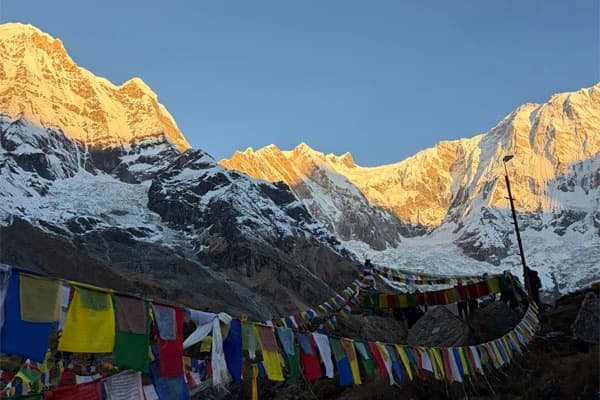
- Turquoise wetland, a spiritual and holy lake, that shines exhilaratingly, with the panoramic 360-degree views of Tilicho Peak, Nilgiri, Mount Annapurna, and glaciers surrounding the peak.
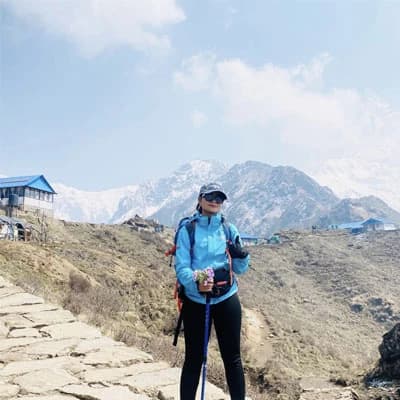
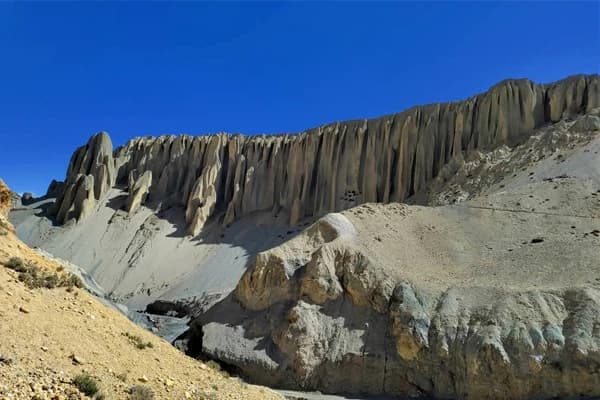
- Passes through several Tibetan origin villages, gompas (monasteries), tibetan influenced trail - main walls, chortens, shrines, verdant forest, alpine valleys, with drastically changing landscapes, in each stride, before attaining the final destination.
- Can be combined with many other legendary trekking routes, as it resides within the iconic Annapurna Conservation Area, where other famous trailheads easily and seamlessly merge, making the adventure more thrilling and adventurous.
- The trail of this lake falls in between the trail of the highest walkable pass of Thorung La at 5416 meters, and also touches the Tibetan plateau Mustang region.
- Also, considered a sacred pilgrimage site for Hindus, as mentioned in the mythological ancient texts, where it is said that Kak Bhushundi used to meditate here.
- Less crowded, off-beaten, full tea house cultural route, which offers an opportunity for hikers to delve into the rich cultures and traditions of the Manange. Sherpa, Thakali, and Gurung communities enjoy the less populated (less traffic trail), unlike the Everest Trek.
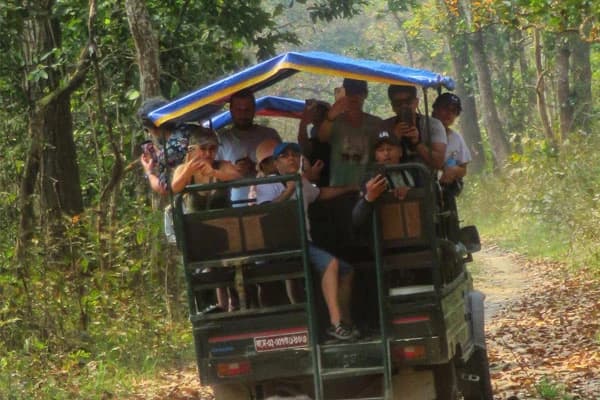
- Opportunity to see the himalayan rare wildlife such as himalayan tahr, muskellonger deer, and also the himalayan village domestic animal species, such as himalayan yaks, blue sheep (chyangra), etc.
- Beautifully covered in snow, and freezes in winter, that seems like a mirror which transforms the lake into a reflection of those surrounding snow covered himalayan peaks, and landscapes, especially in December, January, and February.
Where is Tilicho Lake located on the map of Nepal?
Known as the second-highest altitude lake in the world, Tilicho Lake is located in Nepal, within the Manang District, under the province of Gandaki, protected by the Annapurna Conservation Area Project (ACAP), which also acts as a trail to the iconic Annapurna Circuit Trekking, or can be reached solely. The route lies between the highest walkable pass in the world, Thorong La at 5416 meters, and the Hindu pilgrimage site at Muktinath Temple, which touches the two districts of Manang and Muktinath. Situated in the Annapurna range of the himalayas, half trans himalayan rain shadow area zone, it is only approximately 54 kilometers, on the northern side of Pokhara, the city of lakes, and 130 km (81 miles) from the capital city of Nepal, Kathmandu.
Surrounded by the massive thundering mountains of Tilicho Peak (7134 m), Nilgiri, Annapurna I (8091 m), II, IV, Gangapurna, and also the Tibetan plateau, the route navigates through several Tibetan villages, where Manange and Thakali communities reside, which starts from either Chame, or Besisahar, depending on the preference of the visitors or hikers.
- Location: Gandaki Province, Manang District, at north central part of Nepal, just 204 kilometers away from Kathmandu
- GPS Coordinates: 28°40'60"N, 83°51'14"E (28.6833°N, 83.8539°E)
- Protection: The lake and falls are under the Annapurna Conservation Area, surrounded by the Annapurna massif and the Tibetan plateau
- Notable Landmarks: Thorong La Pass at 5416 m, and the Mustang region, along the Kali Gandaki Valley
Cultural and Religious Significance
The sparkling, intriguingly captivating wetland of Tilicho Lake carries profound spiritual, cultural, and religious aspects for Nepalese, Indians, or you can say, Hindus and Buddhist in general, and locals of Manang as well.
Hindu Reverence
For Hindus, the lake is related to a mythological belief, where it is believed that the Kak Bhusundi Lake, in the form of a crow (Kaag), narrated the whole Ramayana epic to the epic Garuda, the king, also the god of the birds. Also, some Hindus believe that it is the spot where the Kak Bhusundi used to meditate, and his meditation spot, where the spiritual seekers still visit the wetland, for meditation, prayer, take a dip, and do spiritual cleaning, and worship the lake, as a deity for good fortune and also, wash the sins, just like any other pilgrimage holy spirtual lakes or sites in Nepal.
Buddhist Reverence
Whereas, for Buddhist, identify the lake as a meditation spot for Milarepa and also Padmasambhava, and still, in the present days, the local Tibetan ethnic groups, such as Manangi, worship the lake as a daily morning and evening prayer, meditate, where monks chant, that echos thoroughly in the lake.
The perfect blend, fusion of the diverse beliefs and spiritual aspects of the hinduism and Buddhism, that thrives in the lake, surrounded by prayer flags, monasteries, makes this holy wetland a religious spot, and visitors can also experience the boasting cultural and traditional roots, while visiting the lake, during festival times.
Mountain Views from Tilicho Lake
Soaring at an altitude of 4919 meters, the vantage point of Tilicho in Nepal is marked as one of the best Annapurna viewpoints, which demonstrates the panoramic 360-degree views of the Annapurna massif, and a distinct landscape surrounding the sparkling turquoise lake. The mountains: Tilicho Peak (7134 m), Nilgiri Himal (7061 m), Annapurna II at 7936 m, Annapurna IV 7525 m, Gangapurna (7445 m), Thorong Peak (6144 m), and many others rise beautifully surrounding the wetland of one of the world's highest lakes, creating an unmatched world. When the sunrises, this holy Tilicho Lake just sparkles like a emrald diamond, looking exhilaratingly splendid, which will surely make you speechless. On clear days, you can witness the panoramic vista more prominently, with the whole Annapurna massif surrounding the wetland.
How to reach Tilicho Lake: Starting Points, Road, and Transportation Accessibility
Kathmandu to Tilicho Lake Route
To access the trailhead, from the capital city of Nepal, Kathmandu, first of all, one must get to the starting walking trail (starting point of the trek) - Chame via Besisahar, or start the trek from Besisahar (1430 m) as well, which is the safest option, rather than directly starting the trek from Chame (2630 m), so that your body adopts the rising elevation.
Then, the route navigates via Upper Pisang, Manang (3540 meters), where one acclimatization day remains, compulsory, to avoid the possible risk of AMS (Acute Mountain Sickness), and take a meaningful side acclimatization hike to famous spots like Ice Lake, Gangapurna Lake, Lama Cave, and many other options. The trail continues towards Khangsar and then Tilicho Base Camp at 4160 meters, and undertakes an ascent to Tilicho Lake - the main destination, covering 12 to 14 kilometers and 7 to 8 hours round trip.
To get to Tilicho Lake from Kathmandu is straightforward and follows the standard trail, which can be completed within a 12 to 14 days of timeframe. Many hikers also tend to complete this trek within 10 days. However, we suggest you take a gradual ascent rather than over pacing yourself, as the altitude significantly rises, with thinning air, every single day.
Pokhara to Tilicho Lake Route
Another famous starting point of this trailhead stands out to be the city of Pokhara, which is the fastest and easiest option to get to the Tilicho Lake, which cuts offan extra 2-3 days of roadtravel from Kathmandu. Other than that, the route remains the same, just as Kathmandu, as the starting point, marked to be Besisahar, or Chame, whatever you prefer, and follows the route through Upper Pisang, Manang, Siri Kharka, and Tilicho Base Camp. The returning retrace trail is either you choose to get back to Besisahar, solely opting for only one destination, or extend the route to Tilicho Lake and Thorong La Pass, which is the most preferred itinerary, as you get to cover both the iconic destinations in the Annapurna region.
Roadway Accessibility
As the road has now constructed upto Chame, with also, Hongde Airport also built in Manang, some trekkers try to skip extra days, and directly start the journey from Manang, which soars at an altitude of 3540 meters. Rising at such a high elevation, starting the trek, soon from here is a big NO, and possess high risk of AMS (Acute Mountain Sickness) as your body didn't get enough time, or no time, to acclimatize, to reach the pinnacle above 4000-5000 meters, so we highly recommend you to begin the trail from Besisahar, or atleast from Chame, and gradually take an ascend, with an altitude gain of only 300-400 meters per day.
Besides, there is also a rough paved trackway, dedicated the pathway to the visitors who seek motor biking or cycling and get upto Tilicho Base Camp, and proceed on the trail, to Tilicho Lake, covering 11-16 kilometers. Those who are short on time and do not want any walking route can upgrade their trek into a helicopter tour to Tilicho Lake direclty which is expensive and the shortest option, and also, family-friendly.
Transportation Cost
- Public Bus from Kathmandu: NPR 750 to 800 (9 hours), which departs from Gongabu Bus Park
- Tourist Bus: NPR 1500 to 2200 (smoother going, comfortable seating, and AC facility)
- Private Jeep or Hiace: USD 180 to 240 (NPR 18,000 to NPR 25,500) 4WD Jeep
- Flight option: Kathmandu to Pokhara for 25 minutes (USD 100, NPR 11,000 approx.)
- Bus from Pokhara: Tourist buses (NPR 1000-1,800) or local buses (NPR 600), depart from Hemja Bus Park
How long does it take to reach Tilicho Lake?
The total duration of the Tilicho Lake Trail depends on what kind of route you are opting for, starting point, side trips included, your pace level, and your experiences. While estimated, the trip doesn't exceed two weeks, and can be completed within a 12 to 14 days of timeframe. The starting point of this trek is Besisahar, which can be reached through a local bus or a jeep, covering the distance of 172 kilometres, where the driving hour last for 9-10 hours.
Whereas, the total duration from Besishar to Tilicho Lake covers almost 84 to 90 kilometres, just to attain the lake, without any retracement. If the route is stretched to the thrilling pass of Thorung La, then the combined Annapurna Circuit with Tilicho Lake Trek covers the distance of approx. 128 km (142 miles), in total, from Besisahar to Dharapani. The full round trip, on the other hand, almost covers 200 kilometres of trekking distance and can be completed in Kathmandu or Pokhara (830 meters), if you are willing to explore the city of lakes, as well, after the conclusion of the trek.
How hard is it to get to reach Tilicho Lake: Trekking Difficulty Level
The trek to Tilicho Lake is considered a moderately challenging adventure in the himalayas, which demands a strong stamina level to undertake the daily pace hike of 6-8 hours, navigate via such distinct terrain variations, with continuous uphill and downhill, and reach the highest level of 4919 meters, which is not a piece of cake!
The route is filled with surprises, which passes through forest area, rugged, remote, steep sections, alpine and isolated sections, for hours and hours, which surely requires a proper, strong deteminant mindset, and proper preparedness.
Sometimes, the trail becomes wildly strenuous for beginners to proceed through, as there are many dangerous sections, like landslide prone areas, avalanches risk secton, and chances of getting lost in between, as the trail, is very less crowded, and do not have many hikers that, you can ask, the route in between, however, if you are navigating along the experienced local trekking guide, and not independently, then, it won't be any issue, or problem, as you will be safely guided. Just ensure that you are physically trained for this trip beforehand, just basic workouts like cardiovascular exercises, such as running, walking, cycling, so the steep, long hour walk, continuous descent won't frustrate you or create any muscle problems. Other than that, even with those, with a basic level of fitness, you can undertake this trip.
Elevation, Risk, and Preventive Measures of Altitude Sickness
Perched at an elevation of 4919 meters, the Tilicho Lake in Nepal is considered one of the highest lakes in the world, which comes in second position, after the lake, in the Dolpo region, which requires a straightforward, keen mindset and patience. The lake spans a length of around 4.2 kilometres and an altitude of almost 5000 meters. Before reaching Tilicho Lake, the trailhead proceeds through several notable Tibetan villages, over 2500 meters, and as you go higher, the thinning air level increases, with a significant altitude gain at the same time, which increases the high level of AMS (Acute Mountain Sickness).
Some hikers might feel very mild symptoms of AMS such as mild headache, nausea, loss in apettite, and a bit of difficulty in breathing, as expected; however, it can also be avoided if you follow the safety guidelines from the very beginning. Before you begin this adventure, ensure that, it is crafted with your pace level, fitness level and experiences, and set the itinerary accordingly, whereas, throughout the journey, do not change your itinerary to more rapid version, even if you feel heroic after navigating such trail, and still no symotoms are there, and do not be bothered (influenced by hikers) easily. Throughout the trail, ensure that you are hydrated well enough, with 3-4 liters of water at least, and avoid consuming coffee over 3-4 cups, caffeine (smoking), or alcoholic beverages, and try to substitute them with hot soups to keep you warm and cozy.
On the other hand, acclimatizing well plays a very crucial role in your trek. Make sure that you set acclimatization days at lower stops, like Manang, and near the Tilicho Lake - Tilicho Base Camp (4150 meters), so that you get to rest properly, and adopt the rising altitude, avoiding any risk of altitude sickness.
What is the best month to visit Tilicho Lake for clear weather and visibility?
The best season to trek to Tilicho Lake stands out to be the seasons of Spring (March to May) and Autumn, starting from mid-September till the end of November, where you can expect the weather to remain clear, and as there is very little chances of percipitation (rainfall and snowfall), it offers the breathtaking insights of the himalayan peaks, and changing landscapes, making it an ideal season. Besides the climatic conditions, it also favours you, with a moderate temperature (humidity), where you can commence the long-hour duration journey seamlessly, without draining yourself, physically or mentally.
The season of Spring also makes the trailhead, adorned with the colorful rhododendrons, in the shade of red, pink, and the sunlight during the day hours, also, lasts for longer time, with temperature ranging from 5 to 12 degrees celsius, and only fall, upto -6 degrees celsius, near the lake, or Thorung La Pass, making it perfect time. On the other hand, in Autumn (from mid Sep to Nov), the chances of cloudburst remain low, as it comes after the end of monsoon time, making the trail dry and easy to navigate, without having to worry about the snowy navigation.
Meanwhile, the monsoon season (June to August) and winter (December, January, and February) are known as the off-season for trekking to Tilicho, as during this timeframe, the temperature drops to - 22 degrees Celsius, with heavy snowy trails, upto 3 metres high. making the trek more strenuous than it actually is. However, with proper gear, essentials, such as carrying crampons, a sleeping bag, warm clothing, you can trail along the winter and monsoon time, as well.
Meals Variations, and Accommodations Availability: Is it on a tea house or full standard guest house basis?
The trail to the Tilicho Lake within the Annapurna region is full on a tea house-to-house basis, where at some key points, such as Manang and Pisang, you can expect luxury guest house availability, which accommodates premium lodging as well. Other than that, most of the trail usually goes by the ancient tea house basis, hosted (run) by the Manange thakali communities, and more focused on providing the authentic cultural roots and warm hospitality, something raw and unchanged from the city area. Every key stopping points have the accessibility of the lodges, thus, there is no requirement for camping tents, as the tea house and guest house are available everywhere. Even before reaching Tilicho, you can settle in at the Tilicho Base Camp and rest your leg muscles for a bit before opting for such a long odyssey, covering the trekking distance of almost 11 to 12 kilometres.
Every accommodations stop consists of the facilities, like laundry, shower, wifi, and charging, with an additional cost, as it falls under the personal expenses, as it is run by solar. However, the rooms are more on the simpler side, with basic amenities, cozy beddings (mattresses, pillows, blankets), attached to lower terrains, but sharing ones at higher elevations. For the meals, you can find a wide range of variations, from vegan to vegetarian to non-vegeterian options, catering to the taste and preference of every kind of hiker.
FAQs (Frequently Asked Questions)
Is Tilicho the world's highest lake?
No, Tilicho Lake is not the world's highest lake; however, it is considered the highest altitude lake, accessible by trekking route. Meanwhile, it was recorded as the highest back then, until the Kajin Sara Lake was officially declared the highest lake in the world, located in the Dolpo region, which soars to a height of 5,020 meters.
What is the height of Tilicho Lake?
Located at an elevation of 4919 meters (16,138 feet), within Manang district, under the protection of the Annapurna Conservation Area, it is the highest lake, which is also, the part of the Annapurna circuit trail if combined, or you can solely opt for this destination only, avoiding the thrilling pass at Throng La.
What is the temperature in the lake in January and February?
The temperature of the water of the lake of Tilicho, in the coldest time in Nepal, which is marked by January and February, ranges from -16 degrees Celsius to -20 degrees celsius that reamins frozen untill the mid of February. Whereas, as the season progresses, the snow starts to melt, in mid-February, even though the water becomes thick ice, it beautifully reflects the himalayan peaks, such as Nilgiri, Mt. Annapurna I, Tilicho Peak, in the white shining ice.
Can I skip the trekking route and directly reach the lake?
No, reaching Tilicho Lake, directly isn't possible, avoiding the trekking route, as there are no road accessibilty beyond Khangsar or manang village, even if you have a private vehicle, you can just get to Manang, and undertake, the walking trail, for 3-4 days, via Siri Kharka and base camp, with a final ascend to the destination, covering 17-19 kilometers, on the very day. However, if you are not rooting for any trekking trail, then you can directly do a day helicopter tour from either Kathmandu or Pokhara, paying a cost of USD 500-600 depending on seasonal factors and passengers.
What are the network and internet facilities can I expect along the trailhead?
On the Tilicho Lake adventure trek, please take note that the facilities of internet, wifi, electricity, charging accessibility, and mobile network coverage are quite limited as you ascend higher, and it gets more limited and remote. While at some of the key stopping points, such as Manang, Pisang, Chame, Muktinath, you can expect easy access of the network, at the tea houses, at the dining area, as you go high, it gets more remorse, and the locals, charge you extra fee, due to limited electricity as it is generated via solar panels, hydroelectric power, and small generators, only.
To make the journey smooth, consider carrying a powerbank along with you to recharge your gadgets, in an emergency, and for a hassle-free adventure. Also, we suggest buying 1 SIM card in Kathmandu or any city area, so that you can make a direct call en route.
Can I swim in Tilicho Lake?
No, swimming in Tilicho Lake is not allowed due to many dangerous factors, and for safety purposes, firstly, the humidity of water always remains near freezing level due to high elevation, which triggers your body, especially those who have never been to high altitude before. Besides, there are many dangerous sections like avalanche chances, rocky edges, glacial outflows, and above all, no lifeguards, rescue, or rescue infrastructure exist. Apart from that, the lake is considered sacred for Hindus and Buddhists as well, who worship it as a deity or something spiritual mentioned in the Ramayana text, so taking a swim here is disrespectful and hurtful for them.
What are the required permits for the Tilicho Lake Trek?
Two permits, firstly, the Annapurna Conservation Area Permit (ACAP), and secondly, the TIMS Card (Trekkers Information Management System Card) are required for the Tilicho Lake Trail, which also covers the Thorong La Pass permit as well, and if you choose to stretch, the trip, to high mountain pass, no additional permit is required.
Is it possible to reach the lake of Tilicho independently without hiring a guide?
No, as the Government of Nepal, TAAN (Trekkers Association Agency of Nepal), and NTB (Nepal Tourism Board), have clearly mentioned the law, no matter how experienced you are, no matter how strongly fit you are, or how many times you've walked on this trailhead, hiring an experienced local trekking guide is mandatory, and independent hike is simply not allowed. To trail along the route, you need a special permit, which can only be attained via a local travel agency, along with a guide; thus, hiking independently is not possible without the assistance of the guide, and remains a crucial aspect for your trip.
Conclusion: Final Words
To conclude, Tilicho Lake stands out as one of the best prominent trekking destinations in Nepal, and without any doubt, also falls under the challenging trail to undertake in the Himalayas, which demands proper preparedness, mindful consideration, and comprehensive planning for a smooth and easy-going odyssey. The journey truly unveils the beauty of the nature paradise, apart from just attaining the destination, it also lets you experience the cultural, traditional roots of the Tibetan origin communities, their unchanged lifestyle, the diverse wildlife, rich and distinct flora, passing through various terrains and changing landscapes, in each stride, making it one of a kind adventure for sure!
No matter whether you are first time hiker (new trekker) or a spiritual cultural explorer, the perfect fusion of the adventure, scenic views, and the alpine dotted Tibetan villages and their hospitality won't disappoint you. If you want, the itinerary, budget planning, and route optimization can be done, with the assistance of our professional teams, as per your pace and experiences, for a safe Tilicho Lake Trek, where we at Destination Himalaya Treks and Expedition, with an experience of more than 15+ years, are all set to guide you for the Tilicho Lake expedition 2026. If you have any other queries or need more info, feel free to reach out to us, where we guide you to prepare for such a thrilling journey, witn seamlessly pla itinerary and logistics.