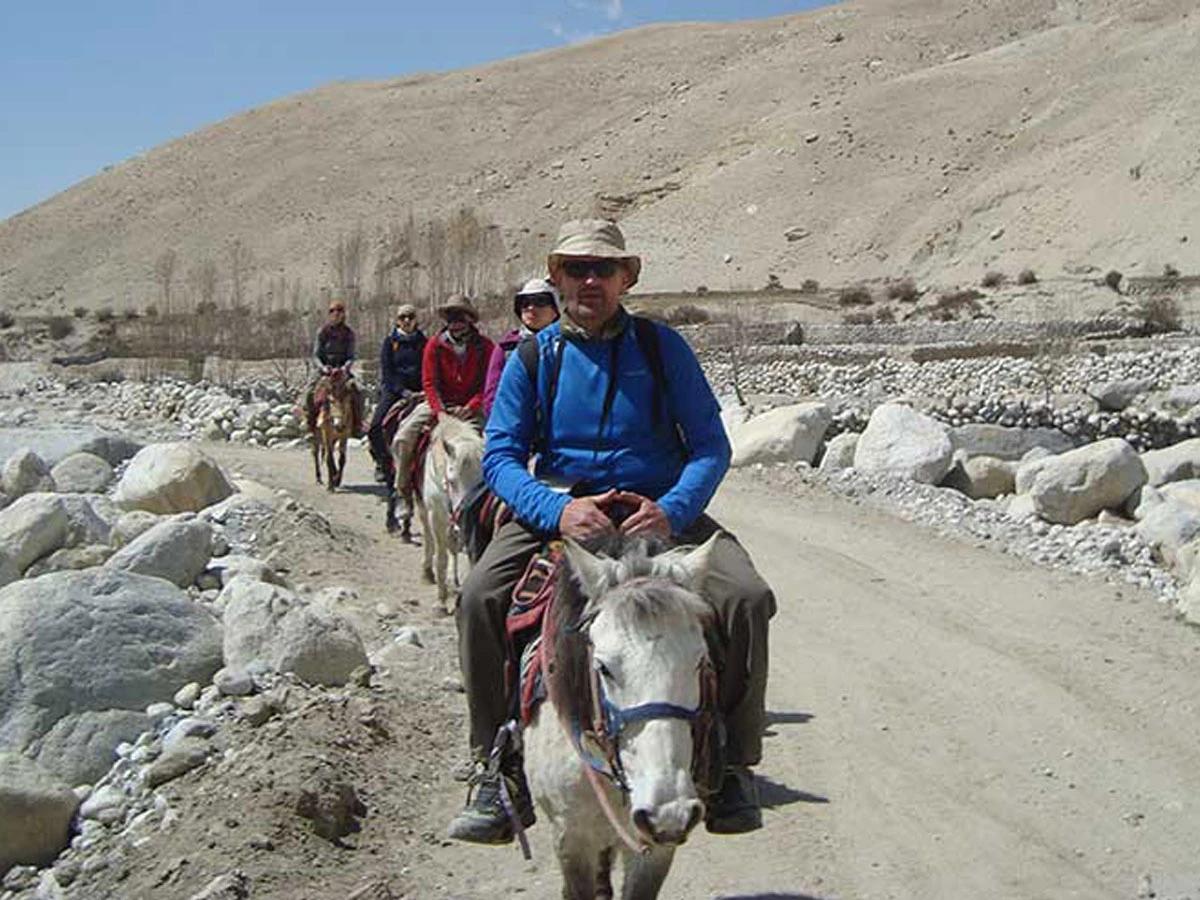
upper mustang trek
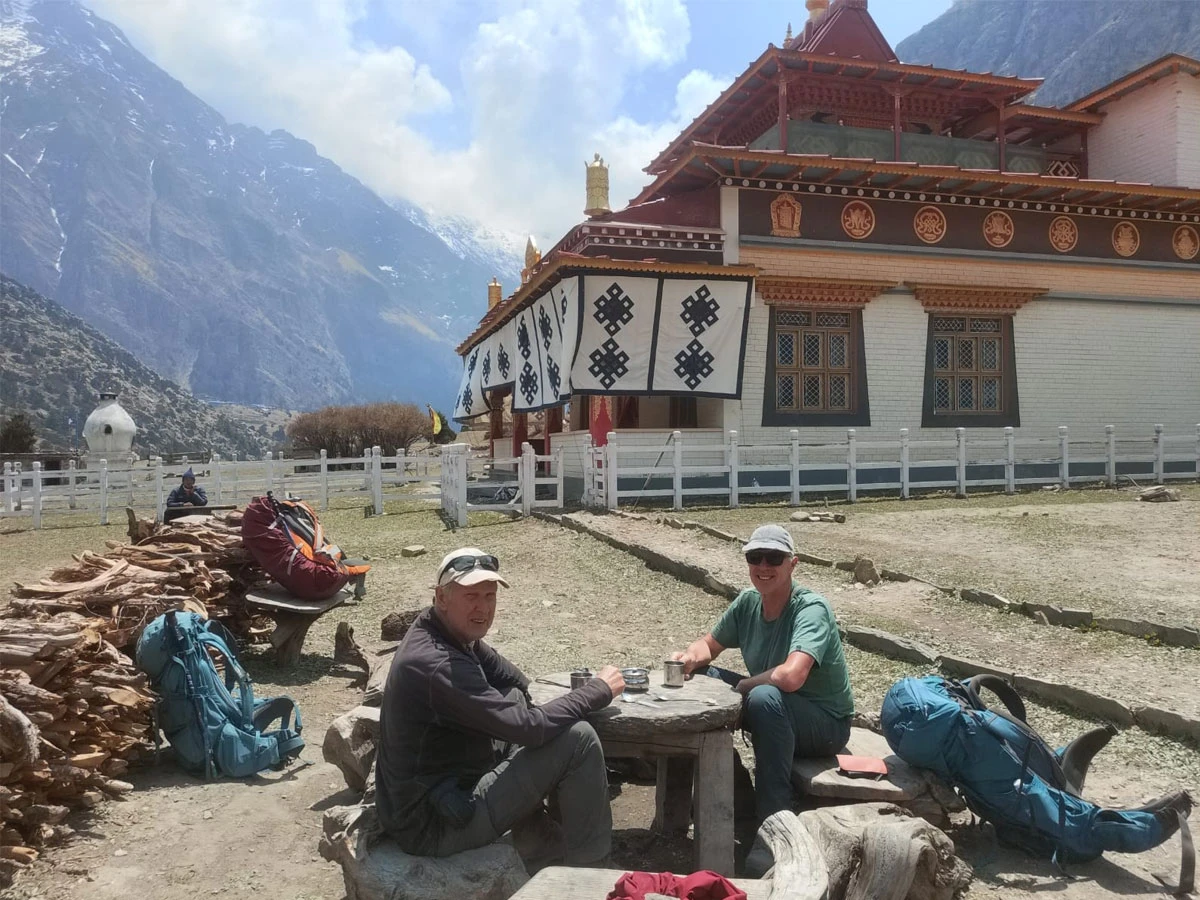
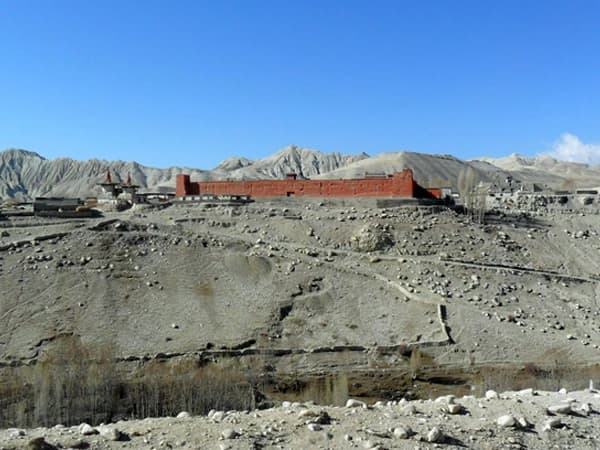
lo manthang monastery
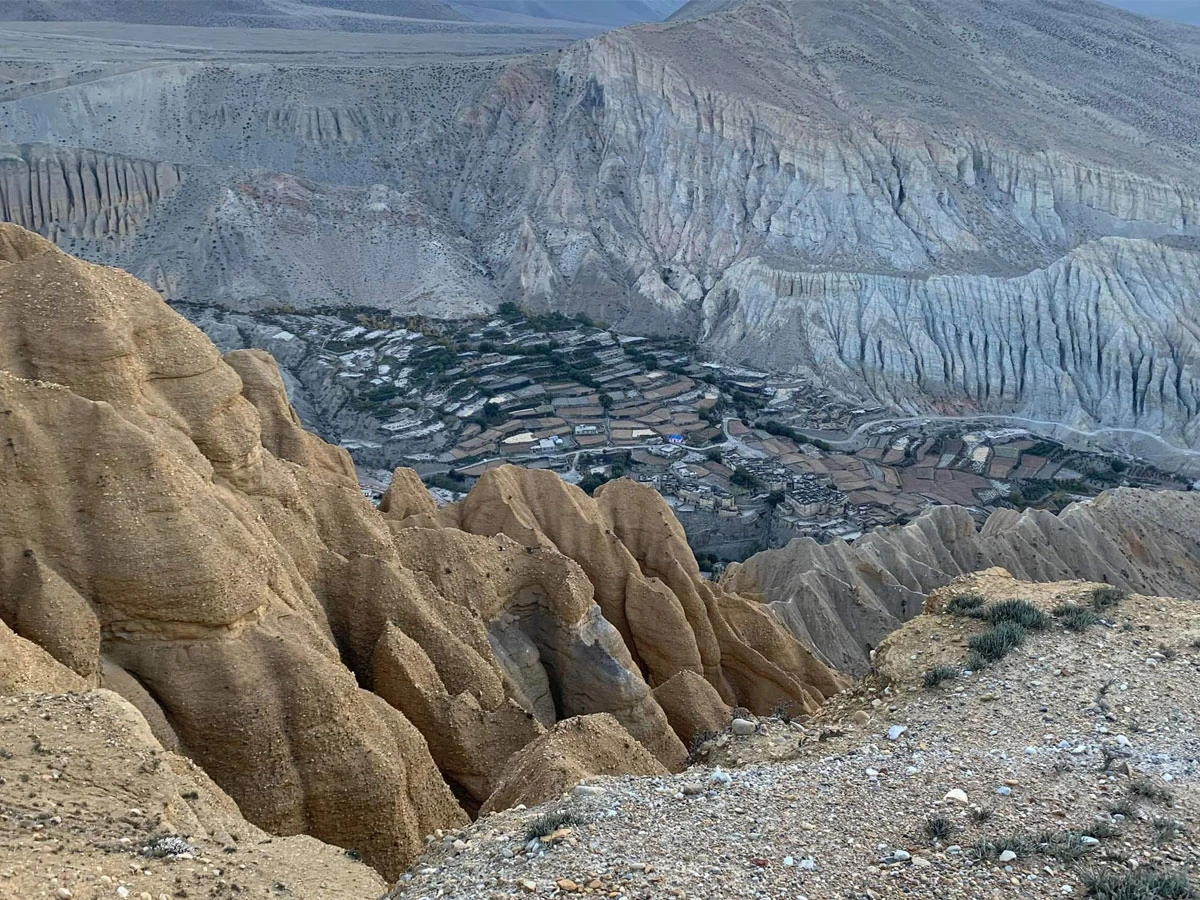
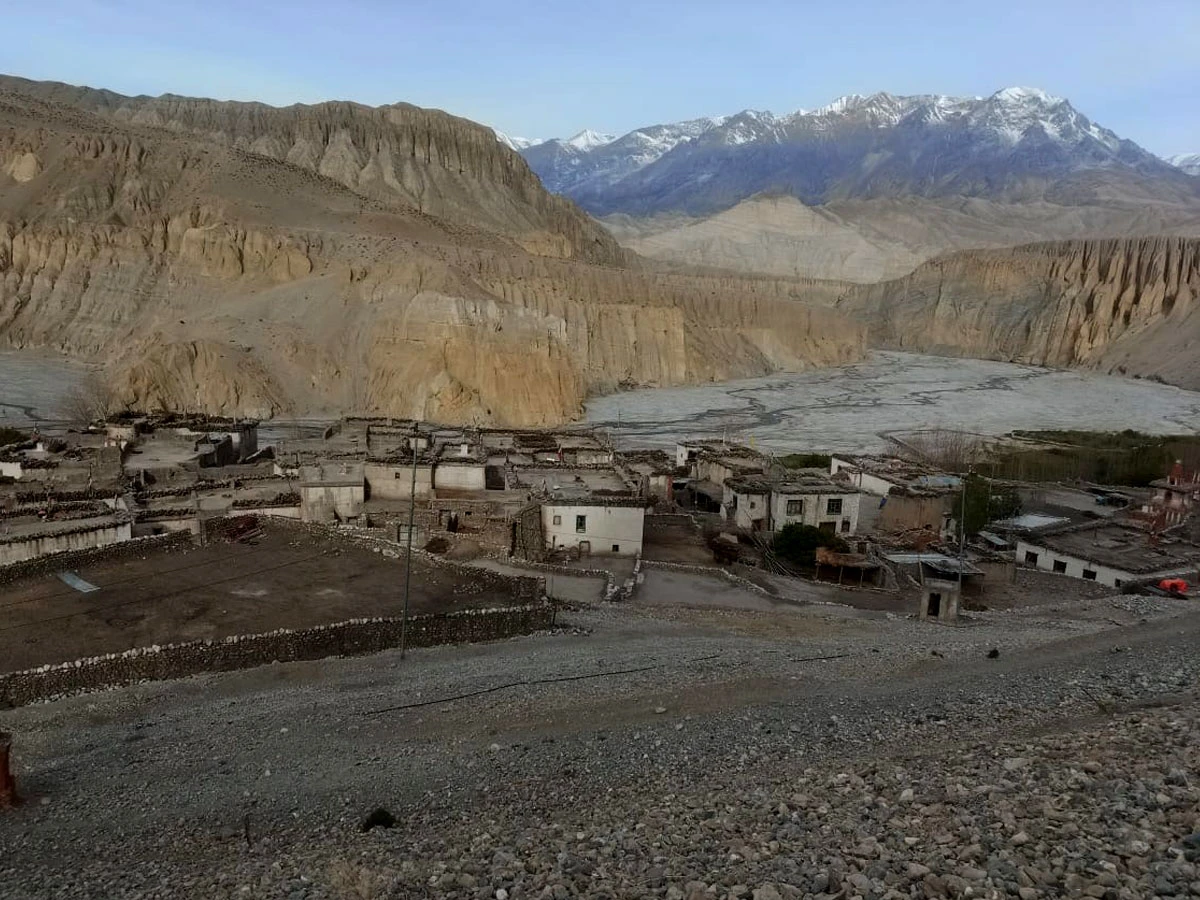
lubra village mustang trek
More Photos

Upper Mustang Trek - 14 days

295 reviews in TripAdvisor
27 reviews in Google Reviews
Recommended by 99% of travelers
Duration14 Days
Trip GradeModerate
Maximum Altitude3800 meters | 12,600 feet
ActivitiesTrekking
Group Size2-40
StartsKathmandu
EndsKathmandu
Best TimeApril to July and August to November

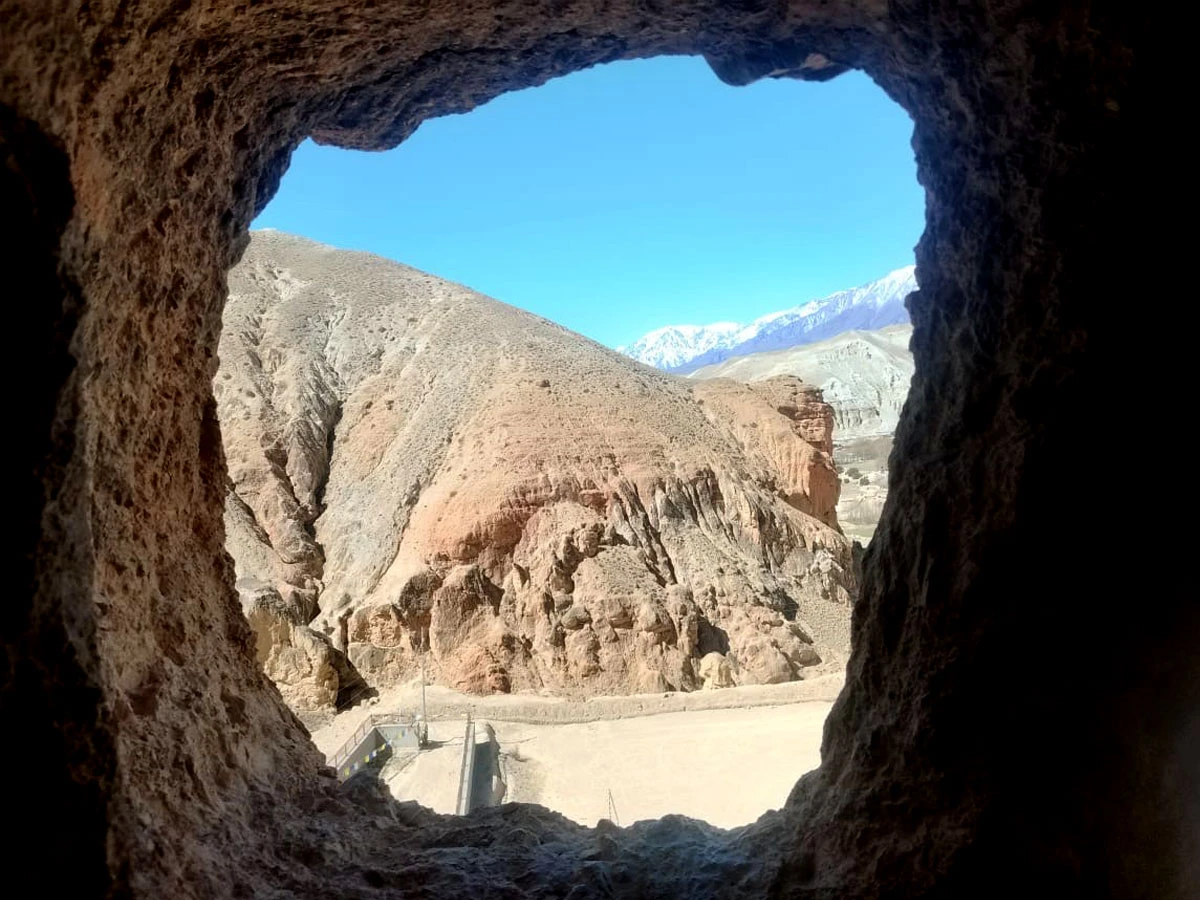
The Upper Mustang Trek reveals the hidden beauty of Nepal’s former forbidden kingdom in the rain shadow of the Himalayas. This remarkable trek takes you through dramatic cliffs, desert-like high-altitude landscapes, ancient monasteries, deep canyons, and sky caves, with a visit to Lo Manthang, the walled capital of Upper Mustang.

It offers rich insight into the region’s Tibetan-influenced culture and is ideal for trekkers seeking an off-the-beaten-path adventure on a remote, less-traveled trail. Along the way, you can also enjoy sweeping views of the Annapurna and Dhaulagiri ranges and the world's deepest gorge, Kali Gandaki.

Upper Mustang Trekking Overview - 14 Days

The Upper Mustang Trek is a classic journey into the Tibetan-influenced highlands, where colorful villages appear like oases in a dramatic high-altitude desert. It is a wilderness trek across rugged, dry, and varied terrain, making it one of the more challenging trekking destinations in Nepal. Our carefully customized itinerary passes through several notable villages and includes important acclimatization stops. With a daily walking time of around 5–6 hours and a gradual ascent of 300–400 meters, it helps reduce the risk of altitude sickness.

Visiting the territory was out of bounds for treks and tours until 1992 AD. Since its initiation, it has been captivating trekkers around the globe for its unique architecture, history, and festivals connected with ancient mythologies that have remained largely unchanged for centuries. As it falls under a rain shadow area, it is one of the all-rounder hikes, ideal for the monsoon season (June-August) as well, giving a solitude of pristine trail even at off season period, through isolated and scheduled sections.

The trek takes place in a restricted area of Nepal, so it requires a special permit arranged through a locally based travel agency. Under the updated 2026 rules, solo trekkers are now allowed to visit the region, replacing the earlier minimum two-person group requirement. However, the trek must still be led by a registered local trekking guide and cannot be done independently for safety reasons. The permit is now charged on a daily basis, with the Restricted Area Permit (RAP) priced at USD 50 per day, along with the ACAP permit. Since the earlier minimum-day category has been removed, trekkers can now pay only for the days they actually explore, which makes the trek more flexible and appealing for limited-time travelers.

The people of Upper Mustang are mainly ethnic Loba, whose language, history, and culture are closely linked to Tibet. Daily life in the region centers on Tibetan Buddhism, visible along the trekking routes through stupas, mani walls, prayer flags, sacred sites, and centuries-old monasteries. Popular cultural and spiritual stops on the trek include Jampa Lhakhang, Thubchen Gompa, Charang Monastery, Ghar Gompa, and the Chhoser (Ghar) Cave, which makes the journey even more spiritually awakening.

Highlights

  • Walk back to the ancient era of the former kingdom of Lo Manthang, visiting the Royal Palace, dated back to the 15th century
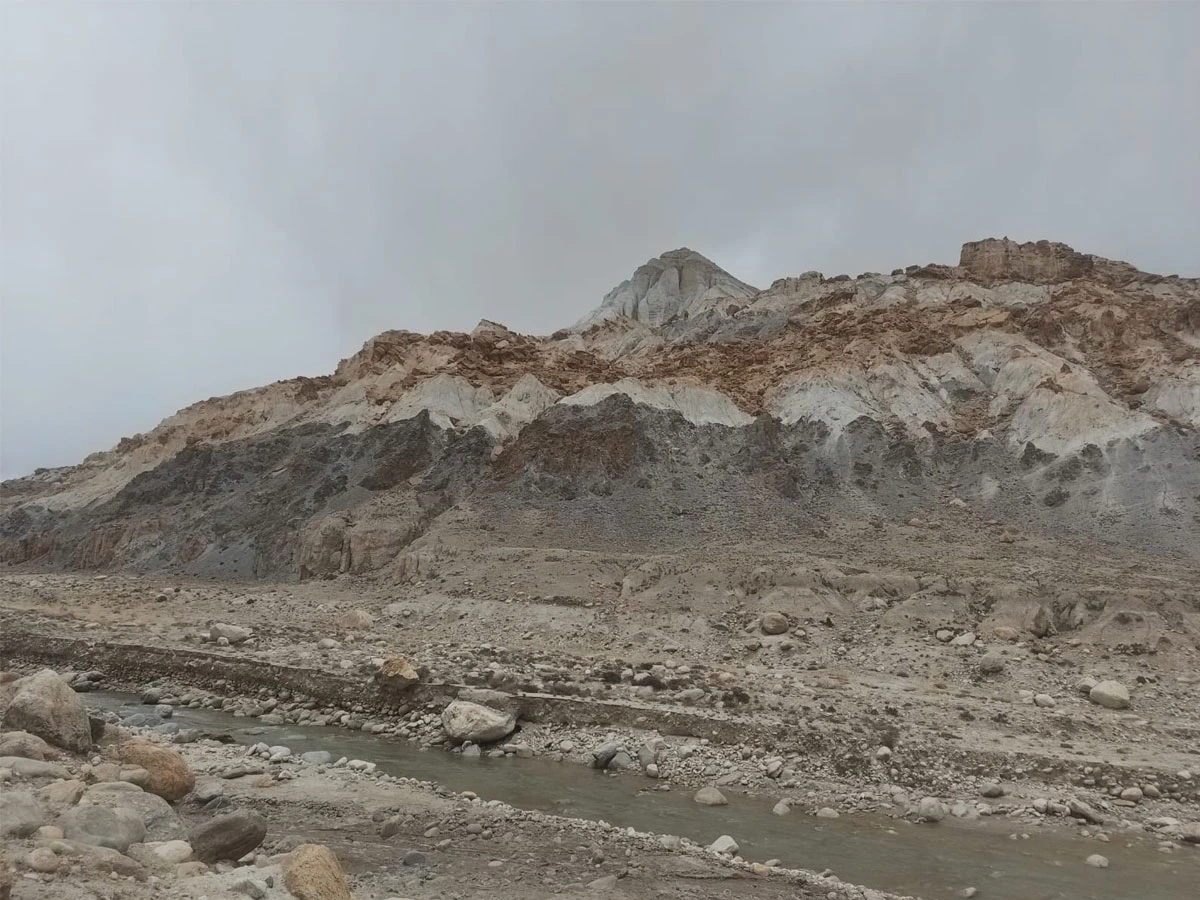
  • Unravel the great, marvelous transition of the landscapes, changing itself, to rugged, more remote, and brown, black, orange, and colorful surroundings, with a semi-arid trailhead, giving you a thrill as if wandering around the planet, MARS.
  • Experience the Tibetan Buddhist culture and fascinating ancient practices that are still practiced here, such as the polyandry system, the sky burial system, and the distinct livelihood, being inherited by the Bon religion
  • Meander along the Kali Gandaki River, one of the world's deepest gorges, and take a glance at the Saligram (a holy fossil stone) at the bank
  • Get captivated by the dry Tibetan plateau, blending perfectly with the massive, towering Annapurna and Dhaulagiri range
  • Spend a day in the city of Lake Pokhara, engaging in boating, kayaking, and strolling around, visiting nearby spiritual Buddhist and Hindu hubs
  • Explore the historical monasteries, sky caves, sculptures, architecture, and one of the oldest, Gompa - Ghar Gompa, dating back more than 500 years
  • Pass through the Tibetan-influenced villages, exploring the Loba cultures and traditions
  • Unveil the blooming orchard farms and apple delicacies in Jomsom, enjoying the cold, windy air and thriving market at such a high altitude

Trekking Route

Our Upper Mustang Trekking starts with a pleasant bus ride from Kathmandu to Pokhara along the Trishuli and Marshyangdi Rivers side by side. Upon reaching Pokhara, we’ll be welcomed by majestic views of mountains, including Dhaulagiri, Lamjung, and Hiunchuli Himal, and crystal-clear lakes reflecting those peaks. The next day, we’ll take a flight to Jomsom. Keep your eyesight widely open to the windows as the Dhaulagiri and Annapurna massifs reward you with their spectacular views. Upon landing in Jomsom, we will begin our trek to Kagbeni (2804 m), the gateway to the Upper Mustang valley.

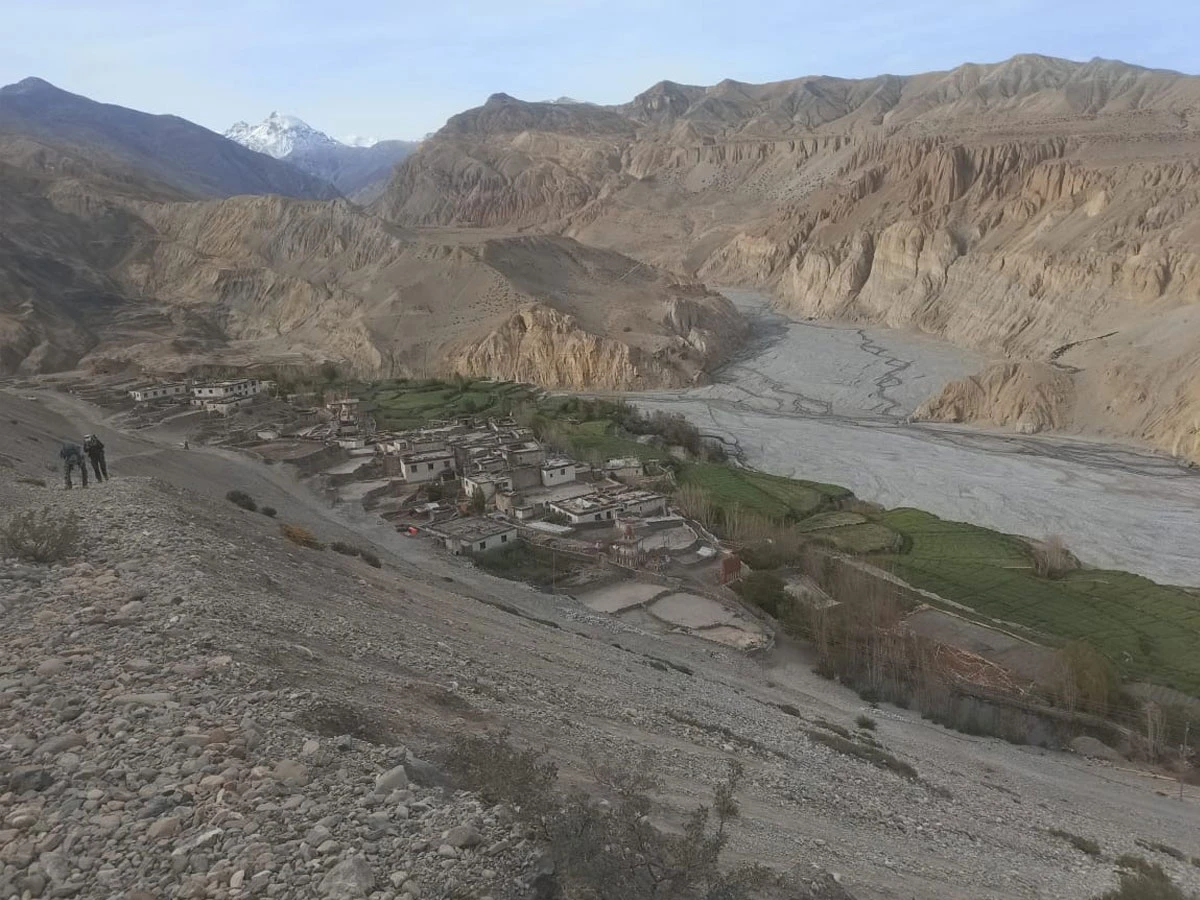
As we traverse through the diverse settlements, continuing the trail from Kagbeni to Chele (3050 m), Syangboche (3800 m), Ghami (3520 m), and Tsaran (3570 m) in the following days. We are greeted by a landscape abundant in beauty and culture. Brilliantly painted chortens (Buddhist shrines), mani walls, Deep gorges, unusual, colorful rock formations, and giant hills engraved like the shape of snakes create a magical, otherworldly view. The warmth and hospitality of Thakali, Gurung, and Tibetan along the way add a personal touch, leaving us speechless.    

But this is not the end of this magical journey. The heavenly experience awaits us at Lo Manthang, the former Kingdom of Lo, known as the walled city in the Tibetan language, which stands out as the major highlight of this trek, surrounded by forts of the Middle Ages and adorned with mani walls. As we wander through its narrow streets, the fluttering prayer flags and the Loba people reciting prayers with beads in hand create a serene and spiritual aura. Make sure to explore the local shops where you can find exquisite Thangka paintings and wood carvings showcasing the abundant heritage and artistry of the Loba community.

After exploring Lomanthang, we return to Dramkar (3820 m) and Ghiling (3806 m) through the same route, from where giant red cliffs and deep canyons can be seen. From Ghiling, the trek continues to Chukksang (3050 m) before descending to Jomsom, where we’ll take a drive back to Pokhara, enjoying the breathtaking Himalayas from above. Finally, we will drive back to Kathmandu, wrapping up our trek to Upper Mustang Valley in Nepal.

Why Upper Mustang is Gaining High Popularity: Trend and Key Takeaways

The Upper Mustang has been trending all over the internet, among youths, family visitors, or thrill-adventure seekers, who crave to explore the distinct landscapes and cultures hidden behind the mountains.

It is said that once you visit this place, your perspective on people, or the mountains, gets changed drastically, in a good way, where trekkers push their limits, walking through such rugged and rough terrains, to reach the highest elevation, at Lo Manthang, for several days, along the world's deepest gorge, Kali Gandaki, where family travelling with kids, via jeep, enjoy the scenic ride, acing over the desert alike landscapes, comfortable luxury amenities, hence, catering the preference of every one, making it one of the best place to visit in the himalayas, no wonder!

Here are some key takeaways and current trends that attract hikers all across the world to undertake this journey, and what you can expect during 2026 and 2027:

  • Instagram Worthy Snapshots: The picturesque vista of the desert canyons, sky caves, and the colourful formation of the rocks, against the backdrop, seems like you are in an interstellar movie or on Mars, with a Tibetan desert plateau, where you can flex, sharing on social hubs. Not joking, when I visited the valley back in 2024, even though I did trek in a group with my colleagues, my biggest flex was sharing the pictures on Instagram and getting over 1K likes, yay!
  • Unique Cultural Experience: Being located within the restricted area, the Tibetan cultures, traditions, and languages are still preserved, like old days, where you can completely delve into and gain unique insights into the old culture.
  • Livelihood and Surprising Practices: Do you know that the local people still follow the practices of the polyandry system, where 1 woman gets married to the same household brothers, as a custom practices, if that sounds surprsing then, while moving to higher elevation, you can see the sky burial practices, where after dying the meats, are given, to vultures, following the old tibetan practices.
  • Less Crowded Trekking Route: Situated within the restricted area, it demands a special permit, with heavy permit cost and special regulations by the Government, minimising the number of hikes along the trekking route. Due to the less crowded trailhead, one can get the authenticity, navigate along the isolated, untamed area, and fully immerse.
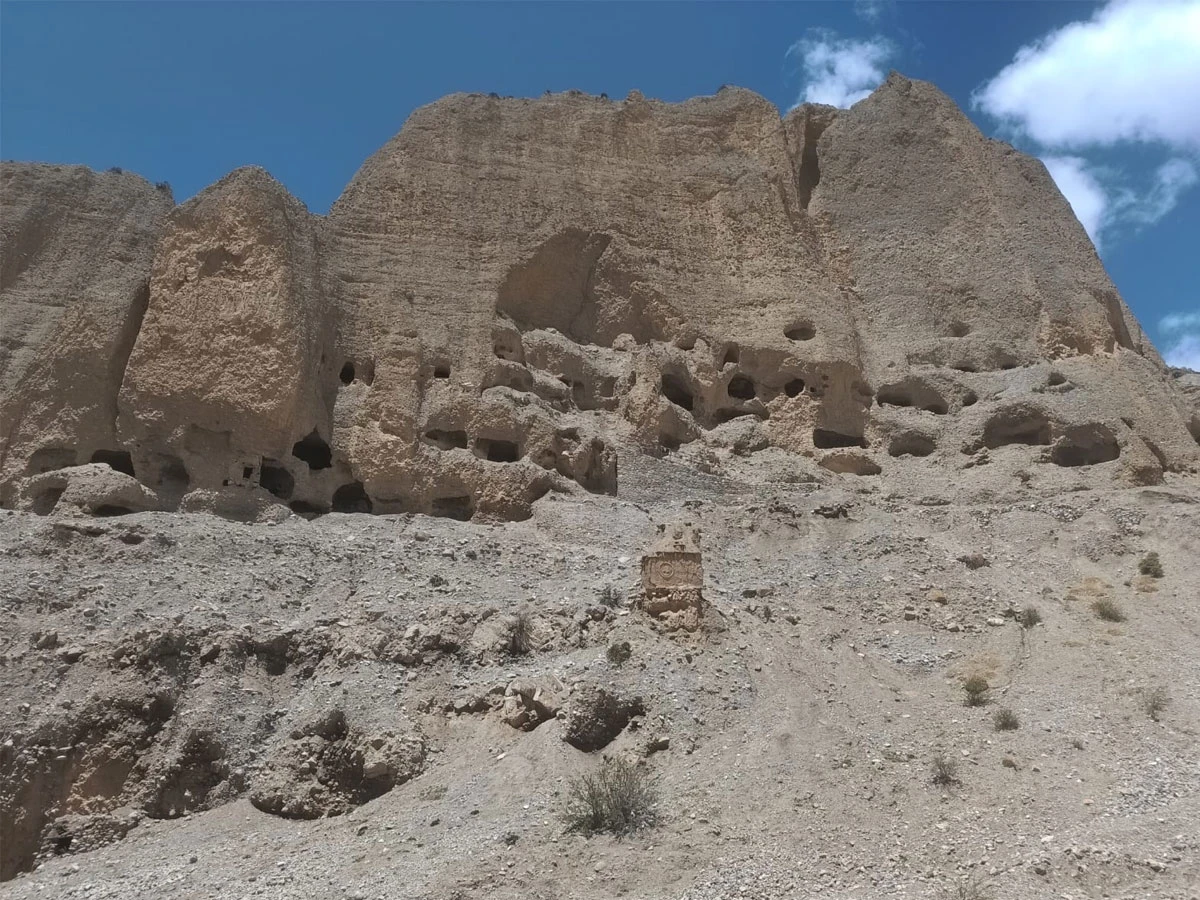
  • Ancient Monasteries and Sky caves: As the area is covered with ancient monasteries, dating back to ages, like Chhoser Cave, and over 10,000 sky caves, such as Jhong Cave, Shhija Jhong Cave, where people used to live during 800 BC, until the end of 1400 A.D, which is intriguing, to those who carry a great interest in historical and mysterious aspects, captivating researchers, visitors, cultural explorers, across the world.
  • Rain Shadow Area: Known as the Land Beyond the Himalayas, it is situated in the rain shadow area, where there is a less likely chance of precipitation, even during monsoon times, captivating hikers any time of the year.
  • Kali Gandaki Gorge: The walking route leads you through distinct changes in the landscapes, including the world's deepest gorge, Kali Gandaki Gorge, and a marvellous transition of the surroundings, each day, from lush valley, apple orchards, high cliffs, and surrounding rock formation, making it an intriguing destination for hikers.
  • Adventure Hub for Every Kind: It is an adventure hub that tends to attract every kind of adventure seekers for mountain biking, jeep safari, hiking, combined with longer days, for 22-30 days, as well, and comfortable setting accommodations, for family and beginners, or luxury hikers, attracting every kind of hikers.
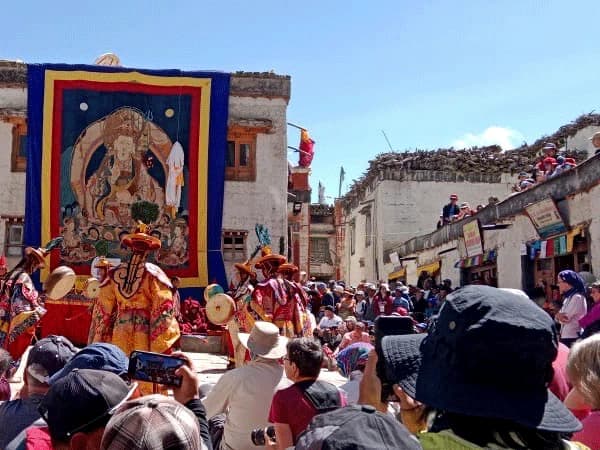
  • Thriving Festival Celebrations: Various boisterous Tibetan festivals are celebrated, such as the Tiji Festival (starting from March to May), the Yartong (Horse Racing) in August and September, Tibetan New Year (Sona, Lhosar), perfect for those who seek to delve into distinct cultures and traditions.

Upper Mustang Trek Cost for 2026 and 2027

The cost to the Upper Mustang varies on several factors, such as trip duration, group size, seasonal basis, and mainly transportation and logistics services. As the route now features luxury lodges and stopping hubs as well, you can choose a semi-luxury package as well, which includes private premium rooms and the best scenic window view; however, the cost tends to be a bit on the higher side, exceeding USD 2500 per head. This standard 14-day Upper Mustang Trek package costs start from USD 1499 and go up to USD 1699, depending on the number of trekkers that each group holds. If any alteration is made, then the final costing may be influenced by the services and the modification of the itinerary.

The package includes every essential, such as meals, accommodations, permits, transportation arrangements with flight ticket cost, and an experienced trekking guide. Here is a quick overview of the pricing influenced by the group size:

Group Size Standard Cost (USD)
1 1699
2-3 1579
4-6 1539
7-10 1499

Why choose Destination Himalaya Treks for your adventure?

Booking your journey, any kind of tours, treks, or even peak climbing, with Destination Himalaya Treks means choosing a trusted local company, highly determined to deliver a safe, authentic, and meaningful himalayan experience. Our experienced pro expert teams and licensed trekking guides carefully and effectively plan every detail of the journey, as per your hiking experience, preferences, and estimated budget, letting you focus only on immersing yourself in the beauty of nature with complete peace of mind, with no worries.

Besides, we highly prioritize your safety and comfort, providing expert guidance, consultants, great acclimatization planning, and best logistics services throughout the trip. It doesn't matter whether you are a beginner or an experienced trekker; we customize the trip accordingly. We at Destination Himalaya Treks focus on delivering a smooth and reliable trekking experience through clear pricing, convenient booking choices, quick communication, and round-the-clock support throughout your trip.

Here are the other benefits that you should expect while booking with us.

  • Experienced, licensed, medically trained, and equipped trekking guides.
  • English-speaking guides, having 5-10+ years of experience on the route, providing excellent local cultures and traditions insights.
  • 2-3 days extra accommodation in Kathmandu, Thamel, if you have decided to extend your stay in Nepal.
  • Flexible and 100% Departure Dates matching your holiday dates
  • Duffle Bag and Sleeping Bag (must be returned after trip completes)
  • Expert guidance on the trip preparations, acclimatization, and Pre-Trip Briefing in a detailed way
  • No hidden costs and fully transparent in costing
  • Safe Booking Procedure and 24/7 communication via WhatsApp, Viber, or direct call at +977 9851016814
Itinerary
Trip PlanExpand all

Today our adventurous journey to Upper Mustang starts. Your guide will meet you at 6:30 am at the hotel. Shortly, After having breakfast he will take you on a tourist bus drive to Pokhara. It takes about 6-7 hours. Along the way, we can see stunning forests and small villages. After we check in to our hotel, we’ll trail around the lakeside area to get some fresh air and buy souvenirs. If the weather is good, we will also go boating on Phewa Lake as the views from the lake are amazing.


Max Altitude: 822 m/ 2,700 ft Meals: Breakfast, Lunch and DinnerAccommodation: Lake View Resort

Today in the early morning, we will catch a flight to Jomsom from Pokhara. From the window, we can catch beautiful insights of snowcapped peaks slowly shifting to colorful landscapes. After reaching Jomsom, we will begin our hike to Kagbeni. Upon reaching Kagbeni we can explore this unique village where the tiny white houses and walled passages are crafted with white clays. We’ll stay here overnight immersing ourselves in the warm hospitality of Tibetan people.


Max Altitude: 2804 m/ 9,199 ft Meals: Breakfast, Lunch and DinnerAccommodation: Guest house

After checking the restricted area trekking permit in Kagbeni, we'll begin our trek early, as the Mustang area gets windy later in the day with blowing dust and sand. Leaving Kagbeni behind, the trail climbs up, giving us a good view of the village, the valley, and the Himalayas. The scenery is remarkable and very characteristic of Mustang, with red sandstone pillars and rock formations featuring fantastic shapes and colors, formed by thousands of years of erosion.

The first main village we reach, Tangbe, has red and whitewashed houses, and on the other side of the river from here are caves perched high on a vertical wall, which were habitations in old periods. Chile appears as a small white dot at the end of the canyon. The trail towards here descends gradually to the riverbed—this area is well-known for its fossils. The wide valley ends abruptly at a vertical cliff, and a bridge crosses the Kali Gandaki, which flows through a natural tunnel in the cliff. The valley narrows further north, and a steep trail leads us up to Chele. Overnight in Chele.


Max Altitude: 3050 m/ 10,007 ft Meals: Breakfast, Lunch and DinnerAccommodation: Guest house

Leaving Chele behind, we’ll start our hike to Syangboche through Ekle Bhatti. Today, the trail is quite challenging as we’ll cross Taklam La Pass (3424 meters) along with Darjori La Pass (3735 meters). Bypassing some narrow trails, we descend towards Samar village which leads us to Syangboche where we will be staying overnight. Although the trek is a bit harder today, the exhilarating views of mountains and caves make our trek enjoyable.


Max Altitude: 3780 m/ 12,400 ft Meals: Breakfast, Lunch and DinnerAccommodation: Guest house

While we think that yesterday was the best pass we crossed, there is another famous pass that awaits us: the Yamada La (3850 meters), surrounded by chortens, Buddhist prayer flags, and tiny settlements of villages that highly reflect Tibetan culture. After climbing Nyi Pass (4010 meters), we’ll descend towards Ghami. Upon reaching this ancient village, we can explore the surrounding fields and houses decorated with beautiful carvings.


Max Altitude: 3520 m/ 11,500 ft Meals: Breakfast, Lunch and DinnerAccommodation: Guest house

Leaving Charang behind, we’ll cross a long suspension bridge over the Ghami Khola. We’ll also meet some trekkers heading to the Dolpo Trek, as this bridge leads to the Dolpo region. After crossing the bridge, we will pass by mani walls (stones crafted with Tibetan mantras that reflect Buddhist spirituality). Upon reaching Ghami village, we’ll have lunch and explore this stunning village, as we arrive here in the middle of the day and have enough time. By strolling around the village, we will be mesmerized by the terraced fields that add greenery to the surrounding landscape, and visiting ancient monasteries will bring a different vibe to our stay.


Max Altitude: 3560 m/ 11,680 ft Meals: Breakfast, Lunch and DinnerAccommodation: Guest house

Our journey starts today in the early morning with a short descent, passing the Charangchu River, followed by a steep uphill as we cross through the Tholung Valley. Then, we will gradually climb as the valley ascends to a large Chorten, which marks the boundary between Tsarang and Lo. Finally, we will reach Lo from where clear views of the Lo Manthang valleys can be seen. The magnificent mountain vistas of Nilgiri, Annapurna I, Tilicho, and Bhrikuti Peak accompany us throughout the trail, making our trek scenically beautiful.

Max Altitude: 3840 m/ 12,570 ft Meals: Breakfast, Lunch and DinnerAccommodation: Guest house

Today is an exciting day as we will be exploring Lo-Manthang for the whole day. So, make the best out of it. In the morning, we will set off to visit famous ancient monasteries, including Namgyal Gompa and Garphu Gompa, where we can see many locals and visitors meditating. 

If you wish, we’ll also explore several caves, such as Jhong Cave, which reflect a profound spirituality and peace. This entire exploration day truly offers a deep insight into this valley.

If your itinerary collides with Tiji Festival then, don't forget to witness this out-of-the-world festival that depicts the true culture of this region.


Max Altitude: 3840 m/ 12,570 ft Meals: Breakfast, Lunch and DinnerAccommodation: Guest house

Today, we’ll leave Lo-Manthang after two days of heavenly experiences. Before reaching Drakmar, we will walk through Gyakar village, where the more than 1,200-year-old Ghar Gompa resides. It is surreal to witness, with its spectacular paintings crafted into the rocks. It is believed that whatever you wish for here is granted. We will explore this gompa in detail, as we have enough time before reaching our destination, Drakmar where we will spend overnight.

Max Altitude: 3810 m/ 12,500 ft Meals: Breakfast, Lunch and DinnerAccommodation: Guest house

Today, we begin our trek early in the morning to reach Ghiling. Along the way, the trail becomes windy at many points, making our hike quite strenuous but captivating at the same time, as we can see spectacular glimpses of Nilgiri and Dhaulagiri throughout the trail. When we reach Ghiling village around midday, we will explore this settlement after having a short lunch. In the afternoon, it is expected to be quite windy, so it’s best not to stroll around. At dinner time, enjoy your delightful meal in the dining area, where you will have the opportunity to meet many visitors and locals.


Max Altitude: 3570 m/ 11,713 ft Meals: Breakfast, Lunch and DinnerAccommodation: Guest house

Leaving Ghiling village behind, we’ll head towards Chhuksang, passing through several tiny village settlements where we can observe smiling local Tibetan people bidding us hello, which makes our trek filled with warmth. Walking along the trail, reminiscent of a desert, with exhilarating mountain views to accompany us, we’ll reach Chhuksang, where we will be staying overnight.


Max Altitude: 2980 m/ 9,777 ft Meals: Breakfast, Lunch and DinnerAccommodation: Guest house

With a heavy heart, we bid goodbye until next time to the heavenly Upper Mustang region and move towards the lower Mustang of Jomsom district. We traverse through narrow gorges, green hills, and tiny village settlements, with the Kali Gandaki River alongside, adding serenity to the hectic trek. Upon reaching Jomsom, we can see different chortens, mani walls, and monasteries, including the famous Chhairo Gompa. Additionally, some lodges offer cultural programs where we can indulge in the rich traditions of Mustang one last time. The cultural program is only available if your visit coincides with the festivals of this region.


Max Altitude: 2720 m/ 8,927 ft Meals: Breakfast, Lunch and DinnerAccommodation: Guest house

Today, we will take a drive to Pokhara from Jomsom, via sharing public bus, enjoying the changing landscapes, gazing at apple orchards, and farms, to the wetland of Pokhara.

Max Altitude: 822 m/ 2,700 ft Meals: Breakfast, Lunch and DinnerAccommodation: Guest houseDuration: 7 hours

Today marks the end of our remarkable journey. Our morning begins with breakfast, accompanied by the beautiful sunrise view shining over the mountains. We will head back to Kathmandu by super deluxe bus. Don’t worry about comfort, we will provide you with the best tourist-standard bus. However, if you prefer to return to Kathmandu by flight or private vehicle, that option is also available.

Upon arrival in Kathmandu, we will rest at the hotel. In the afternoon, we will enjoy a farewell dinner with the company representative, along with the guide and porter, recalling every special moment created throughout our unforgettable voyage. 

Max Altitude: 1400 m/ 4,600 ft Meals: Breakfast, Lunch and DinnerAccommodation: Guest house
Route Map
Upper Mustang Trek Route Map
Altitude Chart
Upper Mustang Trek Altitude Chart
Cost Details
Includes
  • All land transportation required for the trip 
  • Mentioned Domestic flights (Pokhara-Jomsom-Pokhara)
  • 3 full meals throughout the trek (Breakfast, Lunch, and Dinner)
  • All necessary permits are required for the trek 
  • Trekking gear like jacket, cap, sleeping bag (if required for rent)
  • Luggage storage service at our office
  • Basic medicine Kit, water purification tablets
  • One professional English fluency guide, assistant guide (for a group of more than 12 trekkers), and porter ( 1 porter for 2 trekkers)
  • Trekking guide- expenses, including meals, salary, equipment, transportation, and insurance
  • Emergency evacuation service if needed (funded by your travel insurance)
  • Destination Himalaya Treks and Expedition Trek Success Certificate
  • Farewell dinner with all team members at Kathmandu
Excludes
  • All the Beverage bills and personal expenses (Hot water, Hot shower, Wifi charge, battery recharge, bottled water, Laundry charge )
  • Porter if required (US $ 280/porter)
  • Tips for the guide and porter
Add-ons & Options

To elevate your Upper Mustang Trek, to make the journey even smoother, easier to commence, and hassle-free, with exceptional services that you can add to the adventure, making it an once in a once-in-a-lifetime Himalayan odyssey, offered by us at Destination Himalaya Treks and Expedition, with professional guidance.

Flight from Kathmandu to Pokhara for USD 110 per person

  • Undertake a quick, short flight of only 35 minutes to get to Pokhara, with the breathtaking aerial view over the Himalayan range, avoiding the long driving time of 8 hours, and also allowing you to get to Pokhara earlier, so you can explore the city of lakes in depth.

Flight from Pokhara to Kathmandu for USD 110 per person

  • Conclude your trip with an exhilarating vista of the mountains and landscapes, with a distinct perspective, from Pokhara to Kathmandu, a perfect way to end the journey.

Porter for USD 280

  • Let your loaded backpack be carried by our strong porters, making your ascent easier and smoother to commence with no hassle, where one porter can carry up to 22 kgs of duffel bag, which can be shared between two trekkers in the group.
Dates & Availability
Select your preferred date
Aug 2026
Sep 2026
Oct 2026
Nov 2026
Dec 2026
Jan 2027
Feb 2027
Mar 2027
Apr 2027
May 2027
Date and Days
Price
Status
Date & Days
Aug 03, 2026 - Aug 16, 202614 Days
Price
US$1499US$1899
Save US$400
Status
Guaranteed
Date & Days
Aug 31, 2026 - Sep 13, 202614 Days
Price
US$1499US$1899
Save US$400
Status
Guaranteed
Essential Information

Best Time to Trek Upper Mustang

Every four seasons, it features something unique and distinct, where one can truly immerse oneself in the rich culture and breathtaking views of landscapes in an enchanting way. As it comes under the rain shadow area, it falls under an all-rounder trek, doable throughout the year; however, the ideal seasons for the Upper Mustang stand out to be Spring, Autumn, and Monsoon. During this timeframe, the weather remains stable, with perfect moderate mild humidity, making the expedition smooth without any natural hazards. Here is a quick overview of what to expect in each span of the year.

Spring (March - May)

 The whole valley thrives with wildflowers and blooms along the colourful flora, making the rugged trailhead pleasing to gaze over during the hike. Just walk down the alley, enjoying the cultivation of agricultural plants and vegetation of a Mediterranean-like climate, and lavender, you can truly expect the unexpected while meandering around this timeframe. The temperature is mild and less windy, which means it is easier to trail with a stunning vista of the Himalayas as a backdrop, and various flowers, including rhododendrons and wild alpine flowers, bloom perfectly, adding a vibrant tone to nature. 

Apart from all of the perks, the main highlighted part about the journey in spring is that, the main festival that is celebrated here every year, by the loba (Tibetan Buddhsim) community, falls - Tiji Festival in Lo Manthang, falls in between these months, hence, if your holiday timing matches with the festive season, then you should not miss out this season of Spring.

Autumn (September - November)

Autumn is regarded as another suitable time to explore Upper Mustang valley, as the clear views of stunning landscapes, hills, and crystal clear skies due to moderate temperatures make the overall expedition perfect to begin with. Even though it is also known as the peak time of the year, you can see fewer footprints and meet fewer hikers along the trail, as Dashain-Tihar falls between these months. YES! You might feel like, how festive season makes the route quieter, what happens is at this peak season, many individuals avoid hiking and rather spend time with their family, rather than hiking. Hence, if you want a serene environment to get immersed in and also love to be part of the culture of locals, well then, Autumn is definitely for you.

Monsoon and Winter 

Well! If it were any other trek in Nepal, to be honest, these months are usually considered the off-season and tough to even complete within the restricted area. However, as this region sits in a rain shadow area, with a bare minimum chance of rainfall, even during the high precipitation season like monsoon and summer (June to August), you can ease yourself and venture out on the Upper Mustang Trekking in monsoon easily without thinking much about what kind of climatic conditions to expect and tracking the weather forecast every time. The weather simply remains dry, with just a little bit of a spark of raindrops, which makes the trip even more lovely, hiking with mild humidity. 

Regarding the winter span of the year, if you are opting for high passes as well, then make sure to plan your itinerary accordingly, as the pathway remains mostly blocked, and the last part is concerning! During winter, the accessibility of the tea house is relatively low, as the locals in the higher trails close their lodging service and head down to the lower sections. Nonetheless, if you are an adventure seeker, then you should commence this expedition in winter and the monsoon. 

How difficult is the Upper Mustang Trek?

Located in a remote and restricted area of Nepal, the Upper Mustang is considered a challenging Himalayan trek that takes several days and involves long daily walks. Although the trail does not require technical climbing or crossing high mountain passes, trekkers still need to navigate varied terrain, including rocky paths, steep sections, repeated ascents and descents and long distances between lodges. The remoteness of the region can make the trek both physically and mentally demanding, especially for those not accustomed to multi-day hiking in isolated areas.

Each day usually involves 5-6 hours of walking, with gradual altitude gain that can reach up to approximately 3800 meters. Although this makes the journey manageable for beginners, with good preparation, it still requires basic training, a steady pace, and reasonable physical fitness. Hikers should ensure that they are medically fit and prepared to spend two weeks in such secluded territory, where facilities are limited and conditions can change quickly and unexpectedly. 

In addition, the weather conditions add more to the challenges, as Upper Mustang is a dry and windy region, where trekkers often face strong sun exposure during the day, and a cold, humid and harsh alpine environment. However, for those who are properly prepared and open to adventure, the trip offers a rewarding experience, with great cultural richness, and an off-beat walk, far away from crowds and offers a peaceful journey.

Altitude Sickness

The foremost concern for any trek that is situated at such an elevation is altitude sickness, as no one wants to face the hassle during the trip and ruin the expedition. Meanwhile, the risk of such AMS factors would be minimal, as the highest elevation it reaches is at Lo Manthang - 3840 meters, which doesn't touch the height of 4000 meters, so you can undertake this hike at ease.

Even though the risk of Acute Mountain Sickness is minimal, there are some preventive guidelines that you must follow. That being said, it is always better to follow the preventive measures and be prepared accordingly, rather than regretting it later. 

  • If you feel any sort of discomfort, such as a rapid heartbeat, which happens due to low oxygen, difficulty in breathing, feeling like vomiting or nausea, a severe level of headache, or skin turning completely pale, then inform the guide immediately, or your fellow hikers, or someone nearby.
  • At every stopping point, try to watch over the oxygen level and pulse rate using an oximeter, and if it goes below the normal level, then please inform the guide immediately.
  • Do not rush yourself and try to make your way at your own pace. Sometimes, we might panic or feel excited about keeping up with the pace of other hikers. But, please remember that every hiker has their own prior experience, and not everyone matches the pace of others, so walk slowly as per the itinerary and do not overdo it.
  • Please remember that the region is located in one of the most isolated sections, with some undergoing construction, or you can say a risky trailhead that is affected by landslides, so make sure to walk with a guide. Follow the navigation of the guide as he knows every corner and leads you through safe sections.
  • Avoid undertaking any alcohol or caffeine in high levels, or even cigarettes, as it can make your heart beat faster and more rapidly, making you lose control, and also leading to a high chance of severe AMS.

Accommodations in Upper Mustang Trek

The accommodation options along the Upper Mustang are simple tea houses and guesthouses in key stopping points, such as Kagbeni, Chele, Syangboche, Ghami, Tsarang and Lo Manthang. These places, even though features, basic but comfortable facilities and all the lodges are hosted by local families, which adds a cosy, warm and authentic touch to the experience. Besides, there are many luxury premium lodges, built now, highly focusing on comfortable seating with heated rooms and attached bathrooms. 

The rooms are generally simple, with single or twin beds and a small table, and meals are served at the common dining area. We highly recommend dining in the kitchen area, as the shared fireplace, there provides extra warmth, especially in the higher altitudes and colder sections of the trek. In the lower terrains, attached bathrooms are available, but in the upper regions, it is only available at the luxury accommodations, which often cost 2 or 3 times more than regular standard tea houses. 

Additional facilities such as hot water for showers, laundry services, and electricity are often solar-powered, and charging devices require additional cost, so it is wise to carry a power bank and freshening spray with you. Since accommodations remain basic throughout the route, it still provides more comfort and warm local hospitality than modern premium amenities.

Food Variations and Local Meals in Upper Mustang

Throughout the trip, you will get three meals a day with a variety of Asian and Western dishes to suit different tastes. Most teahouses serve a range of menu items, but we highly recommend trying the local foods, such as Tibetan bread, Tibetan salt tea, thukpa, and other traditional dishes that reflect the region’s Tibetan culture.

For breakfast, you can usually choose from toast, omelette, porridge with milk, noodle soup, Nepali tea, coffee, and lemon tea. Lunch and dinner menus often include dal bhat, ramen, Nepali noodles, fried rice, vegetable and non-veg curry, dry meat, thenduk, momo, pasta, and apple pie. Dal bhat is especially recommended because it is nutritious and offers unlimited refills at no extra cost, making it a favourite among trekkers.

Lo Manthang offers simple but satisfying food, with dishes made from barley, buckwheat, and potatoes. Popular local items include thukpa, tsampa, butter tea, and khapse bread, which are especially comforting after a long trekking day. To help prevent altitude sickness, it is best to avoid alcohol and too much caffeine and instead drink hot soups, ginger tea, lemon tea, black tea, and hot lemon water to stay warm and hydrated.

Trekking Permits and Rules

As the Upper Mustang sits near the border of Tibet, it is a restricted area. To trek in this region, there are still three permits required in 2026: the Restricted Area Permit (RAP), the TIMS Card, and the Annapurna Conservation Area Project (ACAP). 

Whereas back then, before 2026, the special restricted area permit used to cost around USD 500 for one person, and if you tend to extend the trek (within the Upper Mustang region) for more than 10 days, then you’ll need to pay an additional USD 50 per day. However, the updated Upper Mustang Restricted Area Permit (RAP) has now become more flexible and cost-friendly, pricing approx. $ 50 per person per day, following the approach of a "pay as you go" system, making the shorter packages more affordable.

For the ACAP (Annapurna Conservation Area Project), foreigners must pay $30, and $15 for SAARC nationals. Without this permit, it is not allowed to enter the conservation area, as this region is situated in the Annapurna Conservation Area. The permit fee directly goes to preserve the natural diversity and maintain the trekking trails. Without these permits, entry into this conservation area is not allowed. 

To get through this restricted area and attain the permits for Upper Mustang, there are major rules set by the government of Nepal:

  • You must trek along with at least one other person, and this requirement does not include the guide and porter. This means that there should be a minimum of two trekkers in your group, excluding any hired guides or porters.
  • You must apply for permits through a registered local agency for special permits.
  • You need to take at least one licensed guide along with you from a local authorised trekking agency.

We, Destination Himalaya Treks and Expedition, will arrange all necessary permits for the trek soon after the booking is confirmed with us.

Private Solo Trek Update for Upper Mustang

Yes, with a new solo permit update of restricted areas that happened just in March 2026, trekking to Upper Mustang, or any restricted zones or regions of Nepal, allows a solo private guided trek, removing the strict two-person minimum rule, benefiting the lone hikers who do not seek group joins. Solo travellers can now book private trips; however, independent hiking is still not possible, where the hikers must hire a licensed, experienced trekking guide via a local travel agency like Destination Himalaya Treks, where you no longer have to join larger groups.

With this updated initiative enforced by the Government of Nepal and Nepal Tourism Board, which promotes solo trekkers worldwide, it offers flexibility, personalised pacing, and cultural one-to-one insights and navigation assistance from the guide, ensuring safety and experiences in such remote regions. Thus, a solo private guided trek is a hundred per cent possible in 2026, without forcing group join or hike, for the solo hikers who crave lone time.

Guides and Porters 

To visit the Upper Mustang of Nepal, it is compulsory to hire an experienced licensed guide; without the assistance of the guide, the trip is impossible. To acquire permits, you must hike along with the trekking guide through a local trekking operator, for safety and legal reasons.

As the guides are medically equipped as well and trained, in case any unfortunate condition occurs, they become your first helping hand, ensuring immediate medical service to you. As any Himalayan adventure doesn't only mean gazing at the mountains and attaining new heights, the trip becomes more meaningful when you get to know more about the background, history, and culture. Our guides ensure that you also get to know about the hidden value that the landscapes, mountains, local festivals, cultures, and monasteries carry, as they provide a brief description of every corner gem and treasure of the region.

In addition, a strong porter is an optional choice, but if you are travelling for such long two weeks, hiring a porter is suggested, who will take care of your duffel bags and weights as well, who can carry up to 25 kgs of weight on a sharing basis between two trekkers, which ensures that your trip becomes a hassle-free journey, rather than always worrying about big weights and shoulders for 24 hours. 

Travel Insurance

With our trekking experience of many years, we are well-known for the incidents that might, unfortunately, occur during high-altitude trails, so travel insurance is necessary for us to cover any sort of possible accidents.

Many trekkers may find no difference, but many problems like high altitude sickness or unexpected hazard situations could occur, and health injuries may also occur; for this reason, we will always guarantee that our clients have full benefits. Insurance must cover all kinds of helicopter rescue, all medical treatment bills, flight delays or cancellations, etc.

Therefore, travel insurance can never be obtained in a rush, so please check your insurance policy in detail for the trek. After the booking is confirmed with us, make sure to send your detailed travel insurance for trekking in the Mustang region, which will help us to arrange the emergency helicopter service and medical expenses quickly.

Please note that it is always best to arrange the travel insurance policy from your own home country.

Booking Procedure

Destination Himalaya Treks and Expedition is a registered, government-approved trek and tour operator in Nepal that has been providing trekking services for more than 15 years to clients worldwide. You can securely make your tour reservations with us as we are also members of TAAN (Trekking Agency Association of Nepal) and Nepal Mountaineering Association (NMA). Hence, you can book your trips in Nepal with us with full confidence.

For the confirmation of your trek, we require a 10% advance payment after the reservation is made. Please send us your necessary documents, such as a copy of your passport, passport-sized photos, and arrival flight information (if available), within a few days. You can send booking amounts through bank transfer and online from our website.

FAQs

Situated in the northwestern part of Nepal, surrounded by the huge towering Annapurna and Dhaulagiri range, bordered by Tibet, Upper Mustang Valley, sits itself, at the isolated, restricted, and remote territory, where trekking trail leads you to the highest elevation at Lo Manthang (3800 m), known as the Walled City of Nepal.

The starting point of the Upper Mustang Trek is from Jomsom and ends in Jomsom as well. You’ll take a flight to Pokhara and return to Kathmandu by bus or jeep. 


Following the standard trekking trail, the highest elevation of the Upper Mustang valley stands out as Lo Manthang, which soars at 3800 meters above sea level.

As the Upper Mustang takes you to such a high elevation at 3800 meters, with a hiking trail above 3000 meters, in such thin air, the risk of altitude sickness is always there if proper preventive guidelines are not followed thoroughly.

Thus, make sure that you follow a gradual pace, without going beyond your limitations, and undertake the journey at a moderate pace, hydrate well with 3-4 liters of water per day, avoid smoking and alcoholic beverages, and most importantly, try to check your pulse rate via an oximeter at each stopping point. As our 14-day Upper Mustang Trek itinerary encompasses gradual ascent, with only 300-400 meters of altitude gain each day, the possible risk of AMS is rare; however, following preventive guidelines is crucial.

This trek normally takes 14 to 17 days to complete depending on your itinerary. It is also possible to complete the Upper Mustang Trek within a week through a jeep tour. However, this option is highly discouraged, as proper acclimatization is often not achieved during a jeep tour, which can lead to altitude sickness.


Daily, this trek demands a daily pace of hiking from 5 to 7 hours, depending on the route and pace level, covering the maximum distance of 14 kilometers per day, after flying from Pokhara to Jomsom, from where the walking trailhead officially gets started.

The Upper Mustang region is located in the restricted area, protected by the Annapurna Conservation Area, to protect the off-beaten trekking route, tibetan influenced cultures and traditions, the unique desert-aird topography, and most importantly, as it is close to the Tibet-Nepal border, making it untouched by a huge number of visitors, as special, restricted area permit, is required to get access through the trekking trail.

As per the new updated rule, the Upper Mustang restricted area permit cost, which used to be priced at USD 500 for the first 10 days following, has been replaced by the new rule, costing only USD 50 per day, per person. While the new permit rate might sound a bit expensive, it has made the shorter trips more affordable. For instance, if you are staying just a week, within the region, it only costs USD 350 per person, which was initiated with the motive for promoting local economics, tourism, and sustainability. 


Yes, even though the route to Upper Mustang in Nepal is considered one of the challenging routes in the Himalayas, following the streneous varied of trailheads, to navigate through, and demanding a strong physical fitness and mindset, it can surely be completed by first-time hikers as well; however, it requires prior preparations, planning, and packing essentials as well. The trailhead is equipped with modern, luxury amenities,  and compared to other restricted areas, which beginners can easily accommodate into, without much of a hassle, meanwhile, the safety guidelines must be followed to avoid the dangerous aspect and risk of high altitude sickness.

The internet connectivity and phone network are very poor along the trail. But in the lower regions, they are stable. By paying extra charges at teahouses, satellite connections are available but may or may not work. Using a local SIM card, an internet facility can also be used in the lower regions.


If you are doing the trek with the proper guidance and a professional guide then you are good to go despite your age. Many people from 12 years old to 60+ old generations have done this adventurous trek to this region without any challenges. A proper mental set and a basic level of fitness would be okay for this trek. But the only thing that needs to be taken care of is altitude sickness, and getting enough acclimatization properly. 


When it comes to Porter, it isn’t completely necessary to hire. But, if you are a beginner then it is highly advised to take a porter along with you to carry your trekking bag. Even if you are a professional trekker, hiring a porter helps you to enjoy the trip without any difficulties. Carrying the bag for continuously 14 days is not an easy task.


The health of the porters and the comfort of our clients are our main priorities. All the arrangements for this trek in the upper Mustang are done on this basis. The luggage limitation of the porter is an average of 20 to 24 kg. One luggage or duffle bag of 2 trekkers is carried by one porter (1 porter for 2 people). Hence, the luggage limitation per person is a maximum of 10 to 12 kg in this trek.


Yes, hiring a guide is the first thing any trekkers must do through a local authorized trekking agency for safety purposes. Trekking to remote areas means the possibilities of unseen challenges. If you hire a professional guide then, he will not only show you the trekking route but also accompany you ensuring safety and comfort throughout your trek in Mustang region.


No, as this region lies in a restricted area. Several rules must be followed to trek in the upper Mustang. Trekking solo is strictly prohibited. You must trek with at least one other person, excluding the guide and porter. To make it clear, there are a minimum of 2 trekkers required in the group and that doesn’t count the porter and guide.


Need Help? Talk to Expert!
min gurung
Min Gurung
+977 9851016814
Tailor-made Naar-Phu, Annapurna Circuit and Upper Mustang Circuit Trek

Destination Himalaya Treks organized a wonderful, tailor-made 36-day trek for us. Starting at Ghorepani (Annapurna Circuit), we walked to Koti and from there to the beautiful village of Phu. Then...

read more +
E
Explorer816634
May 31, 2026
Nar phu upper mustang trek

Excelent trek with good service from staf from Destination Himalaya trekking and expedition.

H
Henk V
April 22, 2026
Over Two Decades of Adventures: My Journey with Min Gurung and DHT

Soon I will be going to Nepal for the 8th time for a beautiful trek. All eight times, Min Gurung was involved. First as a guide and later as the...

read more +
M
M G
February 09, 2025
You May Also Like
kids of upper dolpo
Starting from
US$3200US$4600
lo manthang mustang
Starting from
US$799US$1299
tiji festival tour to lo manthang
Starting from
US$1499US$2199
unveil the thrill of Tiji Festival
Need Help? Call Us+977 9851016814