cho la pass
Everest Base Camp Cho La Pass Gokyo Trek
Everest Base Camp Cho La Pass with Gokyo Lake Trek

Everest Base Camp Cho La Pass Gokyo Trek - 15 days

295 reviews in TripAdvisor
27 reviews in Google Reviews
Recommended by 99% of travelers
Duration15 Days
Trip GradeModerate
Maximum Altitude5545 meters
ActivitiesTrekking
Group SizeAny
StartsKathmandu
EndsKathmandu
Best TimeSpring and Autumn

The EBC Cho La Pass Gokyo Trek combines Everest Base Camp, the high Cho La Pass (5,420 m), and the viewpoint of Gokyo Ri (5,357 m) into one single adventure. This itinerary links one of the iconic Everest Three High Passes, the six turquoise lakes of Gokyo, and reaches its highest point at 5545 m, Kala Patthar.

Designed with two acclimatization days and a gradual ascent profile, this trek prioritizes your safety while maximizing time at the region’s most iconic viewpoints. Guided by experienced local trekking leaders, you’ll enjoy sacred lakes, towering Himalayan peaks, and authentic Sherpa culture on a once-in-a-lifetime exploration of the Khumbu region.

Everest Base Camp Cho La Pass Gokyo Trek Highlights

  • Walk through Sagarmatha National Park, discovering rich Himalayan flora and fauna from day one
  • Enjoy a thrilling 25-minute scenic flight to Lukla, with close-up views of towering snow-capped peaks
  • Challenge yourself over the high Cho La Pass at 5,420 m, stepping into a wilder side of the Khumbu
  • Explore the vibrant Sherpa hub of Namche Bazaar, the historic gateway to Everest
  • Immerse yourself in Sherpa culture by visiting ancient monasteries, mani walls, chortens, and traditional villages
  • Make a pilgrimage to Tengboche and Khumjung monasteries, important spiritual centers in the Everest region
  • Hike to Kala Patthar for unobstructed sunrise or sunset views of Everest and the Khumbu Glacier
  • Stand beneath the world’s highest peak, Mount Everest, and soak in a powerful sense of achievement
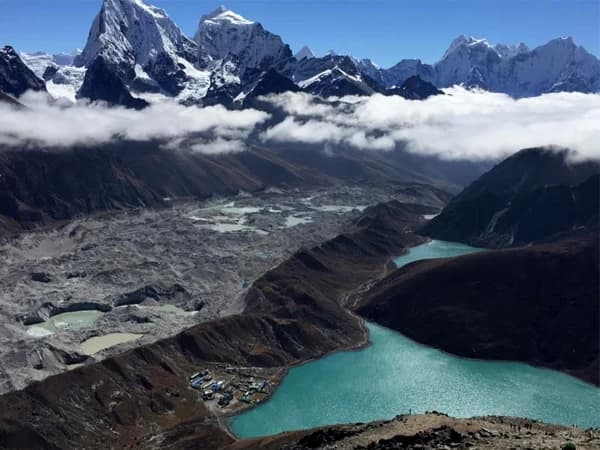
  • Marvel at the six sacred Gokyo Lakes, including pristine Gokyo Lake, shimmering with reflections of surrounding peaks
  • Walk beside the mighty Ngozumpa Glacier, the largest glacier in the Nepal Himalaya
  • Climb to the summit of Gokyo Ri for one of the best panoramic views in the entire Everest region

The Everest Base Camp (EBC) via Gokyo Cho La Pass Trek is a truly adventurous journey that combines both the classic and off-the-beaten-path trails of the Everest region. It is a dream-come-true experience for climbers, trekkers, and adventure travelers who want to immerse themselves in impeccable mountain views, varied landscapes, diverse walking terrains, and the pristine beauty of Sagarmatha National Park, a UNESCO World Heritage Site. Along the way, trekkers are rewarded with sweeping panoramas of Himalayan giants such as Lhotse, Makalu, Pumori, Nuptse, Ama Dablam, Thamserku, Cho Oyu, and Mount Everest (8,848.86 m).

This route also links to the remote Gokyo Valley, one of the highest permanent settlements in the world, known for its shimmering glacial lakes, wetlands, and dramatic alpine scenery. Time spent in Gokyo not only reveals stunning views and nearby glaciers, but also offers a much-needed rest and acclimatization stop after crossing the high Cho La Pass and before rejoining the main Everest Base Camp trail.

The Everest Base Camp Cho La Pass Gokyo Trek begins with an enchanting flight to Lukla, from where the walking route officially starts, following the Dudh Koshi River. The first day proceeds towards Phakding, entering the lush green forest of rhododendrons and pines, crossing several suspension bridges, waterfalls, river streams, and reaching Namche Bazaar on the second day. On the following consecutive days, the trail navigates through Tengboche Monastery, Dingboche, Lobuche, Gorakshep, and attains EBC (5364 m) and Kala Patthar (5545 m), completing the first half of the trekking route.

Then the trail descends to Dzong La and Thagnak, via crossing the pass of Cho La, and the six lakes of Gokyo and the vantage point of Gokyo Ri. Apart from just the mountain views, the Sherpa people, their cultures, and warm hospitality make the trip memorable. Whereas the side trips to Everest View Hotel (3880 m), Khumjung Village/ Monastery, and Nangkartshang Peak (5083 m), during the rest days at Namche and Dingboche, help you significantly adjust to the thinning altitude and explore the hidden gems within the region.

Solo, Private, and Group Trekking Options

The Everest Base Camp Cho La Pass Gokyo Trek passes by many remote sections, forested areas, and rugged terrains; thus, the assistance of a guide is required for this trip to be a safe expedition. Besides, there are many routes where you must hike through zero tea houses in between, so you might get lost or be distracted by another trailhead. Even though you are a solo or private traveller, you must hire a guide at least to show you a safe route and also become your shadow to assist you in every stride.

  • Solo Trek Option: If you are a solo wanderer who loves to explore and walk along feeling peaceful, then this trek shall be on your one-hundred-per-cent bucket list. But, YES! with guides to assure the safety firsthand. Solo Hike allows you to connect with nature fully and forget about city life and crowded life.
  • Private Trek option: If you are seeking an elusive private hike, customise your own Everest Base Camp Cho La Pass Gokyo Trek itinerary, tailoring the luxury and even holiday duration with other corners that you might want to explore within the Everest region, then our pro expert teams will assist you in crafting the packages. Of course! The idea is yours! But we will just guide you with the safety trailheads and the best options available, along with top-notch, experienced guides and porters.
  • Group Joins: Meanwhile, we are also fully aware that not everyone loves to explore nature on their own and loves to be accompanied by other fellow hikers; in that case, you can join the group trek for the Everest region. We have fixed departures for 2025 and 2026 in Spring and Autumn, where other free-minded hikers are already ready to embark with other adventure seekers. For more info, contact us anytime.

Everest Base Camp Cho La Pass Gokyo Trek Cost for 2026 and 2027

Our EBC Cho La Pass Gokyo Trek starts from USD 1149 to USD 1399, covering all the essentials for the trek, such as permit fees, logistics, accommodation, meals, transportation (airfare, and one experienced licensed trekking guide. The price variation also simply depends on how many individuals you are hiking with, which means the number of trekkers in your group. If you are opting for the private, exclusive trip, hiking just solo with no travel partner, then the cost will be slightly on the higher side.

If your group carries more than 6, or you can say 12, then the price will be minimised to USD 1149. Thus, the standard price of the Everest Base Camp Cho La Pass Gokyo Trek is USD 1399. To know more about what's included and excluded, you can visit our include and exclude section, where the services provided at a fair price are mentioned in more detail.

Nonetheless, if you want to handcraft/customise the itinerary, for example, by making it more luxurious by opting for a helicopter tour to EBC, then you can simply do it to avoid the hassle of the Lukla flight. Hence, to craft the itinerary with the estimated budget, you can contact us anytime for more details and guidance. For now, here is an outline of the pricing based on a group basis, curated for 2026 and 2027.

Group Size Standard Price (USD)
1 1399
2-3 1279
4-6 1249
7-9 1179
10-14 1149

Why Choose Destination Himalaya Treks for your Everest Adventure?

Having said that, "No one can truly showcase the corners of the Himalayas unless they have explored them themselves", our expert team of top-notch trekking guides carries an experience of more than 10 years that has been assisting many hikers across the globe, exceeding the milestone of hundreds every year. Since its initiation 15 years back, Destination Himalaya Treks has gained extensive experience to craft your packages, provide safety guidelines, and serve you with the best service possible with an open mind, as your smile matters more than anything, acting as a reward to us. 

Our trekking guides and porters are highly experienced and local, and are fully medically equipped to become your rescue in case of a minor injury. Besides, if our itinerary doesn't match your holiday duration, then DHT Team looks forward to tailoring the packages as per your holiday duration and budget in a short time, ensuring that your adventure becomes a success without burning your pockets.

Other Benefits Included:

  1. Free Staycation at "Hotel Bihani": As the cost doesn't include accommodation in Kathmandu, we can offer you a complimentary stay at our hotel for 1-2 days, before and after the trip.
  2. Customised itinerary within a few minutes with the help of the pro expert team, considering your time and budget estimation.
  3. Airport Shuttle (Free Airport Pick up and Drop off) via private vehicle - IN and OUT
  4. Easy and Secure Payment System
  5. Online Briefing regarding the trip before and after the trip confirmation, with an in-person briefing upon arrival
  6. 24-hour communication: WhatsApp, Viber, and call at +977 9851016814 or email at [email protected]
  7. Oximeter- to check the pulse rate and identify the oxygen level to prevent the risk of AMS, and also to make sure the body is working well
  8. Complimentary souvenirs such as a DHT Cap, T-shirts, a Duffle Bag, and a Trekking Bag
  9. Basic Medical Kit with a water purification tablet to purify the water en route
  10. Complimentary welcome and Farewell Dinner at the Nepalese Fine Dining restaurant with a cultural performance.

Itinerary
Trip PlanExpand all

Today, the enchanting journey begins with a thrilling flight to Lukla from either Kathmandu or Manthali, The trekking guide will assist you right from the start- Kathmandu, so do not worry.

Please note that, during the peak seasons (Spring and Autumn), there is a huge traffic to the Everest region, hence there is a huge chance of flight redirection to Ramechhap Manthali. If such things happen, then the guide will come to pick you up in the early morning, and we will head for a 4-5 hour drive to Manthali Airport. Nonetheless, in the other seasons (regular season: Winter, Monsoon, and Summer), the flight will be directly from Kathmandu to Lukla.

If you want to avoid such conditions and do a direct flight to Lukla, then try to do the pre-booking so that the ticket arrangement can be done earlier. In case of flight delays of flights which are uncertain, then you can book for helicopter to Lukla with sharing by five other passengers, which costs around USD 530/- approximately. 


After we land here at the Lukla Airport, the hike soon begins with a descent to the Thado Koshi River via Chauri Kharka village to reach Phakding. En route, the first glimpse of Tharmseku can be seen, and if we arrive at Phakding village earlier at daytime, then, we can explore small Sherpa hamlets and monasteries such as Rimishung Monastery while staying overnight.


Max Altitude: 2650 m. Meals: Breakfast, Lunch and DinnerAccommodation: Tea houseDuration: 4 hours

Starting our hike along the Dudh Koshi River, we will cross almost six to seven bridges, the fifth is quite thrilling and long, as it is also known as the world’s 123rd longest suspension bridge (Hillary Suspension Bridge). 

While crossing the bridge, the insights of Himalayan mules transporting goods back and forth truly captivate us. After a while, we will finally arrive at Monjo village, where we will have our permits checked and registered, and the hike continues to Jorsalle, entering the iconic territory of Sagarmatha National Park.

After a steep climb, we’ll reach Namche Bazaar- also known as a gateway to Everest Base Camp. Attaining Namche (3440 meters), the surroundings change into the thriving town, as it is a bustling section that is usually called as “unofficial capital of Khumbu region”, from here the trailhead to many other expeditions begins. While staying overnight here, immerse yourself in the lively markets of Namche, visiting bakeries and many local streets, and also try to mingle with other fellow hikers who might have laughable jokes and adventurous stories to share with you.

Max Altitude: 3440 m./11294 ft. Meals: Breakfast, Lunch and DinnerAccommodation: Tea houseDuration: 5-6 hoursDistance: 7.2 km

Today, we’ve set our first acclimatization here in the bustling town of Namche Bazaar, however, it doesn’t mean settling in a tea house all day long, as we’ve many corners within the Everest region to explore nearby. 

There are several options to choose from; either you just spend the whole day exploring the Namche, visiting bustling cafes, restaurants, local markets, sherpa architecture, and witnessing how such city-like shops are run up there. And we can even visit nearby monasteries and mani walls to know the Sherpa culture in depth.

Option I: For the excursion, we can hike to Everest View Hotel, also known as the world’s highest situated hotel, from where the surreal views of Mt. Everest, Ama Dablam, Lhotse, and Pumori towers right in front, offering a heavenly experience. 

Option II: Or else, we head to Khumjung village, exploring Syangboche Airport, and Hillary School, meandering by several sherpa villages en route. After 4-5 hours of hiking, it led us to “Khumjung Monastery” where the Yeti Scalp is preserved, which shocked to whole world into shock about the news of the Snow Man. Whatever options we opt for, we will surely love every bit of it.


Max Altitude: 3880 m. Meals: Breakfast, Lunch and DinnerAccommodation: Tea house

Leaving the bustling town of Namche, we walk along the bank of the famous Imja River, crossing the white roaring Dudh Koshi River, from where we will reach Phunge Thenga by passing Lhososha with the spectacular views of Lhotshe, Nuptshe, and Ama Dablam right in front. After having lunch at Phunge Thenga, enjoying the first insight of Lobuche, our hike continues with an uphill walk to the forested section and finally reaches Tengboche.

Along the way, we will also visit the ancient Tengboche Monastery- founded in 1916 AD and also serves as a realm of motivational insight, as it was destroyed by fire and earthquake, and again rebuilt with international aid. Surrounded by mani walls, chortens, thangka paintings, and ancient monasteries, it stands out as be enchanting part of our trip- truly remarkable! 

Max Altitude: 3867 m./12862 ft. Meals: Breakfast, Lunch and DinnerAccommodation: Tea houseDuration: 5 hoursDistance: 9.8 km

The trail today begins with a downhill walk to a forested section of pines, oaks, and blooming rhododendrons, with many ascents and a rocky trailhead in between that takes us to Pangboche, surrounded by several ancient Sherpa hamlets. Crossing the wooden bridge over Imja Khola, we’ll arrive at Somare village (4000 meters), where we will have our lunch and tea break before reaching Dingboche. The gradual transition can be witnessed today, en route to changing from forested greenery to no tree lines as soon as we cross 4200 meters- Dingboche village.


Max Altitude: 4410 m./14280 ft Meals: Breakfast, Lunch and DinnerAccommodation: Tea houseDuration: 5-6 hoursDistance: 13 km

Today, we’ve another acclimatization or excursion day set where we’ll hike to Nangkartshang Peak, also known as Dingboche View Point- 5083 meters. Or else, we can just explore the Dingboche village, exploring the Sherpa culture and also enrich our knowledge of how Sherpas run their livelihood at such high altitudes. If you just want to rest and don’t want any hike or ascent, then you can just wander around the village; the choice is yours!

Meanwhile, as planned, we will climb to Nangkartshang Hill, from where, close, panoramic, stunning views of the highest mountains such as Mt. Makalu, Ama Dablam, Pumori, and the enchanting Sherpa valley can be seen underneath. Make your best out of it by clicking good pictures on top and even along the trail as we pass by several mani walls and chortens while retracing the steps downhill to Dengboche.


Max Altitude: 5083 m./16704 ft. Meals: Breakfast, Lunch and DinnerAccommodation: Tea house

The trailhead today winds off through Thukla- 4600 meters, with an ascent that showcases a glimpse of Pheriche valley slowly opening up, that takes us to Thukla Pass- 4900 meters, bypassing the moraine of Khumbu Glacier. Attaining Thukla pass, we can see a memorial stone engraved with the names of sherpas and summiteers, who lost their lives during the summit of Mt. Everest. After a short hike of 45 minutes, we will finally reach Lobuche, where we will be staying overnight!

Max Altitude: 4920 m./16249 ft. Meals: Breakfast, Lunch and DinnerAccommodation: Tea houseDuration: 5 hoursDistance: 9 km

Finally, the day has arrived when we will hike to Everest Base Camp, the foothill of the world’s highest peak. Walking along the moraine of sparkling Khumbu Glacier, after approx 2-3 hours, we’ll reach Gorakshep, which is the last settlement to reside in EBC. After having lunch here, we’ll leave our loaded backpack and other belongings here and trek to Everest Base Camp (EBC).

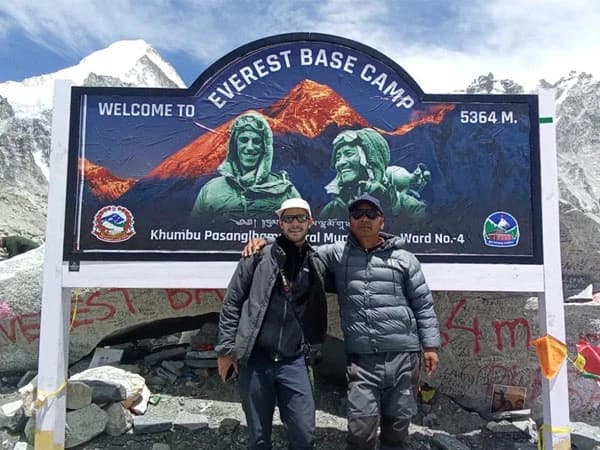
Reaching Everest Base Camp, we can feel the serenity and a high sense of accomplishment as we stand in the shadow of the iconic peak that exists in Earth. Enjoy the views of the tallest mountains along the glaciers, and also let yourself fully immerse in such a highland that adventure seekers look forward to accomplishing. Leave your footprints at such high altitudes of 5364 meters, and the fascinating part is that you can even see many summiters getting ready to conquer the tallest mountain.

After relishing here, we’ll descend to Gorakshep retracing the pathway and stay overnight here feeling the fresh air coming out of the himalayas. 


Max Altitude: 5364 m./17614 ft. Meals: Breakfast, Lunch and DinnerAccommodation: Tea houseDuration: 9-10 hoursDistance: 16 km

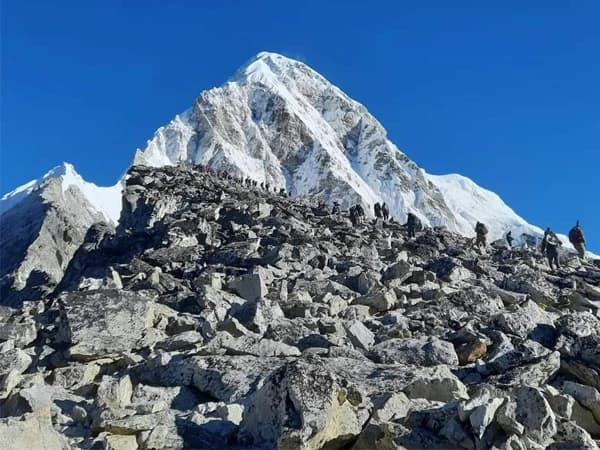
Gear yourself up, as today, we will be heading to none other than the highest point that anyone can reach. without the climbing permit to Everest. YES! Today, we will finally trek to Kalapatthar- 5545 meters for the best sunrise view over the legendary peaks towering in the highland. As soon as we wake up, our journey begins at 5 AM, following the rugged and slippery terrain for 2 hours, which is one of the challenging sections of the entire trek.

However, reaching Kalapatthar, the spectacular panorama views of none other than Mount Everest surround us with the best possible views that stretch to other Himalayan ranges of Pumori, Nuptse, Makalu, and the Khumbu Glacier. The sunrise golden view over these mountains creates the surreal surroundings. 

Celebrating the success of attaining the highest point, we will descend to Gorakshep and continue the hike to Dzongla after having lunch. Retracing the pathway via Lobuche and Dingboche, we will arrive at Dzongla village- a small settlement amid the Himalayas.


Max Altitude: 5545 m./18194 ft. Meals: Breakfast, Lunch and DinnerAccommodation: Tea houseDuration: 7-8 hoursDistance: 15 km

Today, the hike proceeds towards Cho La Pass- 5420 meters, with slippery and challenging sections, yet the captivating views of several snowcapped peaks such as Cholatse, Cho Oyu, Ama Dablam, Nuptse, Lhotshe, and several others tend to accompany us, making us forget the long, strenuous hike. Immersing the spectacular views of the Khumbu Himalayas, from the summit point of Cho La pass, we will head to Thagnak, where we will rest before we hike to Gokyo Lakes on the very next day.

Max Altitude: 5420 m./17694 ft. Meals: Breakfast, Lunch and DinnerAccommodation: Tea houseDuration: 6-7 hoursDistance: 16 km

Another challenging hike is just ahead us, as we’ll be heading to Gokyo following through rugged, snowy and glacier morains, the trek will be wild en route, however, the enchanting views of frosty peaks and alpine lakes tend to accompany us along the trail.

Following the fascinating glacial terrains, we will cross the first and second lakes, bypassing the Nzogumpa Glacier, known as the longest glacier amid the Himalayas. Afterward, we’ll finally reach Gokyo Lake sparkling in the shade of green, if you are hiking in winter, then you can see the frosty ice wall (lake). Traversing through all five lakes, along the bank of Dudh Pokhari River (Milky River), we can finally see the Gokyo Valley opening up. Meandering through the yak pastures, tiny shores, we’ll arrive at the tea house of the Gokyo village, where we will be staying overnight.


Max Altitude: 4790 m./15684 ft. Meals: Breakfast, Lunch and DinnerAccommodation: Tea houseDuration: 3-4 hoursDistance: 6 km

Waking up early in the morning, soonly after we will commence for an ascend to Gokyo Ri to immerse in the golden hues of sunrise slowly opening up showcasing the best ever panorama views of several iconic peaks over 8000 meters with the Gokyo Lake that looks insanely beautiful on the turquoise and emerald shade along the reflection of snowcapped peaks.

Reaching Gokyo Ri (5360 meters),  the 360 views of legendary peaks such as Cho Oyu, Makalu, Everest, Tawache, Cholatshe, Nuptshe, Lhotse reward us with it’s best mountain views. Immersing here, with the fresh air coming out of Himalayan range with the flaggering of prayer flags, we’ll walk downhill to Dole via Nzogumpa Glacier alongside.

Overnight stay in Dole!


Max Altitude: 5357 m./17429 ft. Meals: Breakfast, Lunch and DinnerAccommodation: Tea houseDuration: 5-6 hoursDistance: 14 km

The morning trail winds off towards Namche Bazaar leaving the settlement of Dole behind, passing by rugged terrains, forested section, monasteries, mani walls, chortens along the roaring sound of rivers and yaks, mules en route, we will take an ascent to Mongla Danda. Attaining here, the breathtaking vista of surrounding peaks such as Ama Dablam, Tharmseku and even Mount Everest can be viewed up close for one last time.

Bypassing several Sherpa villages, along the Dudh Koshi River, we will reach Namche Bazaar. If you have missed out on strolling around this vibrant hub, then take your time to interact with the sherpa locals and visit many local shops to buy souvenirs before saying goodbye to this town.


Max Altitude: 4260 meters Meals: Breakfast, Lunch and DinnerAccommodation: Tea houseDuration: 6-7 hoursDistance: 12 km

Retracing the pathway of several hamlets today, bidding a final goodbye to the majestic Mt. Everest, we pass by several sherpa villages, such as Benkar, Monjo, following the Dudh Koshi and Bhote Koshi River, after crossing the large suspension bridge, we will reach Lukla.

As, it is a last day here within Everest region, try your best celebrating every memento here such as thrive with the success of trip with fellow hikers, and the supporting crew members (guide and porter). Make the overnight stay in Lukla, fruitful so you create a good memory for one more time until next time in this territory.


Max Altitude: 3440 m./11294 ft. Meals: Breakfast, Lunch and DinnerAccommodation: Tea houseDuration: 6-7 hoursDistance: 14 km

The day has finally attained that we bid a emotional goodbye to Everest-Khumbu region as we’ll fly back to Kathmandu via flight. Recalling every memories, that were created here, with the views of breathtaking views of mountains that once welcomed us at day one while we begin our journey, we will reach Kathmandu.

Arriving here, the guide will assist you to the hotel that we stayed in before (the safe 4-star hotel), get yourself freshened up, and have a good rest. In the evening, Destination Himalaya Treks has set a farewell dinner where we recall memories one last time and also distribute the trip completion certificate to you. 

Note: Let us know your departure date, at the very day one of the airport representative will assist you to the airport.

Max Altitude: 1360 meters Meals: Breakfast, Lunch and DinnerAccommodation: Guest HouseDuration: 35 to 40 minutes
Cost Details
Includes
  • Airport Shuttle (Airport Pick Up and Drop off) via private vehicle 
  • Accommodations throughout the trek
  • Standard meals including Breakfast, Lunch, and Dinner, and a cup of tea or coffee every day
  • Flight fare: Kathmandu/ Manthali to Lukla and Lukla to Kathmandu/Manthali (IN and OUT)
  • Required permits - Khumbu Pasang Lhamu Rural Municipality Permit and Sagarmatha National Park Permit
  • One experienced Registered English Fluency Professional Guide (including all his expenses such as lodging, permit, food, insurance, gear, and essentials)
  • 1 assistant guide exceeding the number of trekkers of 8
  • Sleeping bag if needed (must be returned after the trek is completed)
  • Basic First Aid Kit, including an oximeter to check the pulse rate and a water purification tablet to purify water
  • Destination Himalaya Treks T-shirt, duffle bag, sleeping bag, and caps
  • Appreciation Certificate after the trip is attained
  • Official VATS and Government Taxes
Excludes
  • Nepal Entry Visa
  • Accommodation in Kathmandu
  • All the Beverage bills and personal expenses (Hot water, Hot shower, Wifi charge, battery recharge, bottled water, Laundry charge, etc)
  • Personal Trekking Gear and Equipment
  • Porter (USD 350 for one porter). One porter cancarry 20-25kg and can be shared between 2 trekkers 
  • Tips for porter and guide (appreciated if given)
Dates & Availability
Select your preferred date
Aug 2026
Sep 2026
Oct 2026
Nov 2026
Dec 2026
Date and Days
Price
Status
Date & Days
Aug 15, 2026 - Aug 29, 202615 Days
Price
US$1149US$1699
Save US$550
Status
Guaranteed
Date & Days
Aug 17, 2026 - Aug 31, 202615 Days
Price
US$1149US$1699
Save US$550
Status
Guaranteed
Date & Days
Aug 19, 2026 - Sep 02, 202615 Days
Price
US$1149US$1699
Save US$550
Status
Guaranteed
Date & Days
Aug 21, 2026 - Sep 04, 202615 Days
Price
US$1149US$1699
Save US$550
Status
Guaranteed
Date & Days
Aug 22, 2026 - Sep 05, 202615 Days
Price
US$1149US$1699
Save US$550
Status
Guaranteed
Date & Days
Aug 24, 2026 - Sep 07, 202615 Days
Price
US$1149US$1699
Save US$550
Status
Guaranteed
Date & Days
Aug 25, 2026 - Sep 08, 202615 Days
Price
US$1149US$1699
Save US$550
Status
Guaranteed
Date & Days
Aug 27, 2026 - Sep 10, 202615 Days
Price
US$1149US$1699
Save US$550
Status
Guaranteed
Date & Days
Aug 30, 2026 - Sep 13, 202615 Days
Price
US$1149US$1699
Save US$550
Status
Guaranteed
Essential Information

Best Time for Everest Base Camp Cho La Pass Gokyo Trekking

The ideal seasons for the EBC Cho La Pass Gokyo Trek are Spring and Autumn, just like any other Himalayan expedition in Nepal, due to stable weather and great unobstructed views. During this timeframe, the climate conditions are more likely to be awesome for trekking and day hikes, with no chances of precipitation like monsoon or winter. The humidity is mild and moderate as well, perfect to trek along for long hours without being physically drained. The pass crossings are marked to be safe and open, with no snowy sections or icy slippery pathways, making it doable for beginners at the same time.

What to expect during Spring (March to May)?

During Spring, the temperature ranges from 5 to 12 degrees Celsius and doesn't fall below -5 at higher sections, which provides an exceptional humidity to hike without being drained and zoned out.

The forested area, at the beginning, is fully thriving with blooming flowers such as rhododendrons, oaks, and the best part is! The chirping sound of birds accompanies you throughout the verdant forest section. Also, do you know that snow leopards and Himalayan tahr become more active in Spring, especially in this territory, as at this time it is said that they come out of their den in search of food and support their cubs, due to which many hikers found almost 6 sightings of snow leopards in just 2025. For adventure seekers, it is a completely different realm to hike en route, besides just showing the colourful flowers.

Apart from that, in general, Spring has longer golden hour sunlit days, which means hikers can fully immerse themselves in the clear views of mountains and even meander around the trail more without worrying much about dark and gloomy days. 

What to expect in Autumn (September to November)?

Heading on any trekking during Autumn means one can fully relish the vibrant culture of the Himalayas, as it falls under the main festivals of Dashain and Tihar of Nepal; the whole route is thriving with a cultural aroma during this span of the year. The temperature usually ranges from 5 to 10 degrees Celsius and doesn't fall below - 10 degrees Celsius even at the upper trails of Everest Base Camp, offering a cosy night to settle in and appropriate weather to complete the trek with no challenges.

As it also comes after monsoon (the heavy precipitation), there is less chance of rainfall and snowfall fall or you can say even zero if luck favours you, due to which the trails become easy to navigate and also reward visitors with unhindered views of mountains, landscapes, and lakes, making the trek worth it.

In simple words, if you are someone who loves to explore something new and a unique culture without any bother of high humidity that makes the pathway insanely challenging to navigate, then the Autumn season fits perfectly for you.

What to expect in Winter (December to February)?

Even though winter is referred to as the off-season for the Everest Cho La Pass adventure, it stands out as the preferred time for experienced hikers who love challenges and are looking forward to getting an insight into something new.

As the weather is cool to hike in, you will find no difficulties and enjoy the best, undisturbed views of several iconic peaks and varied landscapes throughout the journey. However, one should pack the gear efficiently and even include crampons in the equipment list as the pathway to Cho La Pass and Gokyo Lake is covered with snow, making the pathway strenuous to cross over.

In general, the temperature range is between 0 and 5-10 degrees Celsius during daytime, which is the best time to walk uphill; however, at the upper trails, especially at Everest Base Camp (EBC), it falls to -22 degrees Celsius, making the night cold, but it won't be any problem settling in a cozy tea house or carrying sleeping bags. Besides, as the crowds are relatively low and fall by 80% of visitors, you can have "ME Time" and peacefully enjoy nature.

Why avoid the Summer and Monsoon?

This combined trip becomes one level up in challenging as these seasons bring a high level of rain and snowfall, making the pathway slippery and strenuous to walk on. On top of that, this expedition also bypasses the forested section at the beginning.

When the monsoon hits, the route is covered with leeches and muddy sections, and the trailhead becomes slippery, which is a nightmare for a novice hiker. The temperature in summer goes above 27 degrees Celsius and falls below - 15 anytime; if so, then the body becomes unable to handle the sudden changes of weather and can also lead to altitude sickness. Hence, this trek is not highly recommended for this duration in the summer and monsoon.

Everest Base Camp Cho La Pass Gokyo Trek Difficulty

It is considered a challenging high-altitude adventure that combines standard and off-beat trails, including rocky paths, steep ascents and descents, and a demanding high pass crossing. While basic amenities are available along the route, the trek still requires prior hiking experience and a good level of physical fitness to handle long walking days and changing terrain confidently.

On average, trekkers cover about 10–16 km per day, walking 5–7 hours over mixed terrain, from well-trodden paths to rough, sometimes icy sections around Cho La Pass and Kala Patthar. The pass itself can require using crampons and moving carefully over snow and rock, so some familiarity with basic gear and pre-trip physical training is highly recommended. Staying fit and prepared significantly improves comfort and safety on the trail.

Altitude is a major factor: the route climbs from Lukla at 2,860 m up to around 5,545 m at Kala Patthar, where thinner air and lower oxygen levels increase the risk of altitude sickness. Unpredictable mountain weather, especially in winter and monsoon, can bring heavy snowfall, rain, landslides, and temperatures that drop well below freezing, sometimes delaying the itinerary. Taking acclimatization days seriously, ascending gradually, and packing proper gear are essential to manage these risks and enjoy the trek safely.

Altitude Sickness

Every himalayan journey that takes place above 3000 meters poses a high risk of altitude sickness; just like that, this trip does entail the possibility of AMS (Acute Mountain Sickness). However, it can be avoided and prevented through a well-planned route and following safety guidelines, from the beginning till the end. The itinerary includes gradual ascent, gaining 300-500 meters daily, not overdoing or speeding the pace, helping trekkers of all kinds adapt to the rising elevation. Besides, here are the preventive measures that we recommend for every hiker to follow.

  • If you feel some symptoms such as headache, nausea, vomiting, similar feelings, insomnia (loss of sleep and appetite), loss of control, or feeling of dizziness, inform the guide immediately. If things get worse, such as skin turning pale, vomiting, bloody vomit, and the feeling of a rapid heartbeat, descend and take an evacuation (rescue). If not then, you can either take a break in between and rest and take an ascent after feeling completely fine.
  • Make sure to hydrate the body with 3-4 litres of water each day, and if that sounds too much, then try to substitute it by having ginger soups, sherpa stews, thukpa, and other soups so your body stays hydrated and warm at the same time.
  • It is highly suggested to avoid alcoholic beverages that could lead to a rapid heartbeat and also ignore smoking caffeine after crossing 3000 meters (Namche), as the body gets fragile at such an elevation, leading to AMS.
  • Do not overdo yourself; that means do not try to meet the pace of hikers and rush the hike thinking to overline time. Please walk along the guide as there are several dangerous sections causing landslides and slippery terrain, in unfortunate weather.
  • Inform the guide and lodges beforehand if you are allergic to some foods, like lactose intolerance, or vegan, as they might not know your health condition. So, it is always best to remind the guide as well
  • If you are a newbie, then carry a sleeping bag (compulsory) as the higher elevation at Gokyo and Everest Base Camp, the temperature might drop to -15 degrees; even though the tea houses have warm blankets, they might not be enough. Remember to be warm throughout the journey; as soon as the cold hits you, the risk of AMS tends to be higher.

Accommodations during EBC Cho La Pass Gokyo Trek

Tea houses in the Everest region range from simple budget lodges to comfortable standard options and a few high-end luxury properties, so there is something for almost every preference and budget. Along the Gokyo side of the route, facilities are generally more basic, with simple rooms and shared bathrooms being the norm.

If you prefer luxury, high-altitude lodges with upgraded rooms and attached bathrooms (often considered 4-5 star by Himalayan standards) are available at an additional cost. Unless you request an upgrade, this package is based on clean, cozy standard rooms in local tea houses, hosted by the local people themselves. The rooms aere on the variation types, like group sharing, twin basis, or single rooms; however, the bathrooms are not attached and are on the sharing basis, due to limited sources in the mountain areas. Every lodge has basic essential amenities, including Wi-Fi, Electricity, laundry service, hot shower, and charging accessibility with an extra fee. Furthermore, the rooms are hygienic, well-maintained, and offer cosy mattresses, pillows, and blankets to settle in on cold nights.

Foods and Beverages

As the trailhead includes well faciliated tea houses, with proper basic requirements such as cosy bedding configuration, dining area, and offers a wide range of menu options, including western, continental, asian, to local meals, that caters to every diet plan, such as vegan, vegeterian, and good protein based healthy meals, you won't have any problem, to fill your tummy and keep you energized all day long for longer duration hike at the same time.

Whereas for the drinking facilities, you can get a wide range of options, from hot to cold beverages, which are not included in your package, unless it is a side breakfast drink, like tea, coffee, or cold drinks, like Coke, Fanta, Sprite, or energy drinks. On the other hand, for the drinking facilities, you will be given boiled water, which is surely safe to drink; however, you can buy bottled water as well, for USD 0.5 to 0.6 per bottle. The best option stands out to be filtered water, where you can refill at the tea house, paying extra for the service as it is limited in the himalayas.

Travel Insurance

As the expedition goes all the way through many remote and limited accessibility areas, travel insurance is one hundred per cent mandatory for such a high-altitude trek that reaches its highest at 5545 meters. While opting for insurance, please ensure that it includes 5 major things: minor injury coverage, medical emergency, luggage theft, trip delays/cancellations, and most of all, immediate helicopter evacuation upto 6000 meters. 

It is highly recommended to check past reviews while choosing your insurance company. If possible, try to look out for companies in your home country, which makes it much easier for you to review policies and gain trust. Having good insurance not only creates a safety net but also allows you to go on an adventurous journey with a free mind. 

Required Permits

To do this, it requires two permits to embark on this trailhead of the Everest region. However, you do not have to pay extra, as it is included in our package cost and will be managed beforehand.

  • Khumbu Pasang Lhamu Rural Municipality Permit cost: NPR 2860/- (USD 20 per person)
  • Sagarmatha National Park Permit cost: USD 30 (NPR 4000)/- per person

After the booking is confirmed, the essential permits will be arranged by us at Destination Himalaya Treks and Expedition, and included in the package itself.

Packing Essentials for the Everest Base Camp Cho La Pass Gokyo Trek

While considering this trip, proper packing gear and equipment that covers all the seasonal variations is one hundred per cent crucial, as you navigate at such high elevation over 4000 meters per day. At the same time, as this trip starts with a regular Lukla Flight, which has a maximum weight requirement of 15 kg, packing smartly ensures that your trip becomes safe, along with all the gear and essentials included.

In case your weight exceeds the limitation of 15 kgs, then an extra charge of USD 2-3 will be added per kilogram, so make sure to carry only essentials and leave behind the unnecessary items. Also, take note that, as this trip includes three major high-elevation treks in 1 single adventure, you must pack lightly, especially when you are considering not hiring a porter and carrying your backpack on your own; hence, to make the ascent easier and not burn your shoulders, pack smartly. Below are essential packing items to consider on this adventure.

Travel Documents

  • Permits required for the trip
  • Passport - Photocopy and passport-sized photos
  • Nepali Rupees Cash (Dollar and Euro work as well)
  • Travel Insurance photocopy
  • Lukla Flight Round-trip tickets (photocopy as well)
  • Debit and Credit cards 

Clothing Items 

  • Upper Body: Brimmed Hat, Trekking Cap, Sun Hat or Cap, Neck Gaiters, Sunscreen SPF 40+, Moisturisers to avoid face drying, Face towels, Chap Stick, Warm Woollen Hat
  • Middle Body wear: Trekking T-shirts, Dry Fit T-shirts (moisture-wicking), Thermal wear (tops), Windproof and rainproof jackets, 4-5 full-sleeved T-shirts, Raincoat (other rainwear as well)
  • Lower Body wear: 2-3 Hiking Pants, Hiking shorts, Fleece Trousers (lightweight and quick drying), Thermal wear trousers

Footwear 

  • Go Rex Hiking Boots: Consider wearing 1 size smaller than your actual shoe size
  • Slippers or flip-flops: to wear at the tea house
  • Hiking Sport Shoes: to hike in lower terrains, below 4000 meters
  • Long hiking socks: prevent cold altitude, and also avoid minor injuries and blisters
  • Short Hiking shoes: just for casual wear, for side trips, or at the tea house

Backpack

  • Duffle bag: To stuff/ pack all the essentials and clothing items in one, which will be carried by the porter
  • Daypack: Carry all daily necessities for a side trip, or for a day hike
  • Waist Bag: To stuff in basic items, such as phone, charger, batteries, cash, or medicines
  • Sleeping Bag: All-season rated for high elevation (will be provided by us)

Other Miscellaneous Items

  • A pair of trekking poles (stretchable)
  • Crampons: must be essential in the winter season, or late spring, or late autumn
  • Headlamp and Torch Light with extra batteries
  • Water Bottle with a water purification tablet
  • Power bank, if possible, bring 2 power bank back-ups
  • Nepali SIM card: NTC or NCELL
  • Chargers for mobile and cameras
  • Med Kit with an oximeter to check your pulse rate, and your regular doctor's suggested medicine

Note: Please take note that some of the clothing items, such as a trekking company t-shirt, 1 cap, duffle bag or sleeping bag (must be returned after trek), will be provided by us, with a basic first aid kit.

Booking Procedure

Are you ready to set your footprint in this iconic trailhead? Then, do not wait longer. Destination Himalaya Treks and Expeditions has been operating services for treks, climbing, and tours in Nepal for 15 years, and we are also members of NMA (Nepal Mountain Association) and TAAN (Trekking Agency Association of Nepal); thus, your booking is one hundred per cent safe with us. To secure the booking, you just have to pay 10% to 20% to secure the booking, and the rest of the amount (remaining cost) can be paid after you arrive in person. 

If you are quite late for booking, then YES! The last-minute booking can be made; we'll manage everything soon after your booking is made with us, ensuring everything goes smoothly. For further queries, you can contact us via WhatsApp +977 9851016814, make a direct call, or you can just send us an email at info(a)destinationhimalayatreks.com. We are available to assist you 24/7 hours so feel free to contact us.

FAQs

Perched at an altitude of 5,420 meters (17,781 ft), Cho La Pass is part of the EBC and Gokyo classic route, considered one of the Everest Three Pinnacles, and connects Dzongla and Thagnak.

Even though these two treks might sound a bit similar, there are ample reasons that set them apart. Firstly, the trailhead itself is unique, as EBC tends to be one of the most crowded and visited routes, Gokyo is quiet and goes all the way through off-beaten adventure. While one reaches the highest vantage point of 5545 m. at Kalapathar, another attains 5357 meters elevation at Gokyo Ri. However, as this 15-day combined trek, you will come across both destinations, crossing over Cho La Pass at the same time.


This Everest Chola Pass Gokyo Valley trek takes almost 14 to 16 days, covering the standard Everest Base Camp Trail in the very first half, with an acclimatisation day at Namche Bazaar, and then descends from Kala Patthar to Dzongla and Thagnak. crossing over the pass of Cho La. Afterwards, the route visits the wetland of Gokyo Lake and the vantage point of Gokyo Ri before returning to Namche Bazaar. The total duration of the overall trip highly depends on how your itinerary has been set, extra acclimatisation days, and side trips included; however, following a gradual ascent, the trek, in total, takes almost 15 days, starting and ending with a Lukla Flight.

No, this EBC Gokyo Cho La Pass Trek doesn’t demand any age limit or ask for minimum age requirements, set many youngsters and kids with families and groups have completed this trek with no hassle. But one thing to consider is, you must have a basic fitness level to conquer and succeed in the trek; otherwise, it’s a nightmare for a newbie.


The EBC Trek via Cho La Pass and Gokyo spans 132 to 140 kilometres (81 - 84 miles) round trip, covering 8 to 16 kilometres of hiking daily, depending on the route, and attains the highest altitude at Kala Patthar, 5545 meters via base camp, unveiling the panoramic views of Mount Everest and Khumbu Glacier. The adventure stipulates a 5 to 7 hours of daily hiking pace, whereas the longest trekking distance marks to be 16 - 17 kilometres (approx. 8 hours), hike, while undertaking the route of Dzongla - Chola Pass- Thagnak.

The Everest Base Camp Trek via Gokyo Lakes and Chola Pass is considered one of the moderately challenging high-altitude treks in the Everest region, which traverses through the distinct kinds of terrains, forests, remote, rugged, steep, glacier, and icy sections, with continuous ascent and descent. Daily, the trek requires 5 to 6 hours of hiking, with an increasing altitude every single day, and a vast transformation of the surroundings and the trailhead, which can be strenuous to some, demanding a determined, positive, enthusiastic mindset, and physical endurance. 

Meanwhile, the daily pace of hiking is not more than 7 to 8 hours, which can even be undertaken by beginners, with proper preparedness. While prior experience is not necessary, it is crucial to be physically active, maintain a gradual elevation climb, follow the preventive measures throughout and navigate along with the experienced trekking licensed guide.

Before undergoing this trek, engage in cardiovascular exercises, such as running or walking in treadmill (3 mph, 12 incline, 30 minutes), or nearby home, as well as cycling, swimming, stair climbing, and increase your stamina, by carrying a loaded backpack. You can also push your workout session, by calves, legs, back, weight workouts, or just continue on any kind of physical activity, you have been doing, or sports, that will be great as well, to strengthen your overall body stamina. Apart from that, please ensure to be mentally prepared by doing some research, downloading positive podcasts, motivational music, and learning yoga, and also, pack the gears and essentials comprehensively, according to the weather and climatic conditions.

Reaching the vantage point of 5420 meters, which is one of the high passes of Everest, requires a good level of physical fitness; hence, it traverses through rugged, rocky, and snowy terrains. If it’s snowy, make sure to be prepared accordingly while opting for the high terrains of Chola Pass. However, this pass is considered the most challenging one, among the Everest's Three High Passes, which is technically strenuous, and includes steep rocky ascents, icy downhill walk, demanding technical gears like crampons, at the same time.

Ensure to navigate along with the trekking guide throughout, track the weather situations, and if possible, try to opt for this odyssey during peak seasons, Spring, Autumn, or the beginning or end of winter, where the weather is stable, the pathway is typically dry, without compromising the surrounding mountain and landscape views.

If you are a beginner and have never been to any remote expeditions before, then it is highly suggested to engage in some kind of physical strengthening activities, so you can be fully prepared and complete the long-duration hike with ease. For a newbie, the preparations are highly suggested as this includes one of the high passes of Cho La Pass as well, and ascends over 5000 meters in Gokyo Ri and Kalapatthar; hence, if prepared well, then no matter whether you are a beginner, this trek can be completed with no hassle.


The Cho La Pass weather is extreme, unpredictable, and takes a shift every hour, being at an altitude over 5000 meters, which changes rapidly, from morning to afternoon time. During the spring and autumn seasons, the stability of the weather conditions is expected, with no heavy snowfall, or dangerous windy and avalanche possibilities, with moderate temperature dropping to only -2 °C to 5 °C during the day and not below than, -15°C at night.

Whereas, in the winter season, the temperatures take a massive drop to -10 °C (day) and -18 °C to -22 °C at night, with heavy snowfall, and icy terrains. On the other hand, during monsoon, the humidity basically ranges between 3 °C and 8 °C and drops to -10 °C at nighttime; however, the possibility of whiteouts, avalanches and high rainfall, at lower terrains, with heavy snowfall, at upper terrains, is always there. Thus, the best season to trek to the pass of Cho La stands out to be Spring and Autumn.

Please note that the trail is remote and the health posts are only available at some sections, like Namche Bazaar, Macchermo, Phakding, and Lukla. Beyond that, there are neither hospitals nor medical facilities, nor anything, so it is very crucial, immediately, to inform our trekking guide if any unfortunate situations occur. As they are medically trained for the mountain himalayan trail, they will do what's best for you. For instance, if you've got mild symptoms of altitude sickness or minor injuries, then, if your time suits, then, he will basically suggest you take one extra rest day or take a slow descent back. However, if the situations get worse, like severe Acute Mountain Sickness (AMS), a serious medical case, then, helicopter evacuation must be done immediately, for quick medical assistance. 

Ensure that your travel insurance covers the essentials, such as medical bills, theft, trip delays/cancellation, and most importantly, the heli evacuation from 2000 to 6000 meters to save extra medical cost, and arrangement of the helicopter immediately at peak time.

Our 15-day Everest Base Camp Chola Pass Gokyo Trek package includes all the standard meals throughout the expedition, which include: Breakfast, Lunch, and Dinner. The trailhead caters to the taste of every hiker from western, continental, asian to locals; hence, the food options have a wide variety and are cooked by locals themselves, so they are hygienic and well prepared. 

For the drinking water accessibility, there’s nothing to worry about as every tea house offers hot boiled drinking water and also has a variety of options for beverages. However, for the extra beverages, you must pay extra, nonetheless, our package covers all the requirements.


Every tea house has the services of wifi facilities, but please take a note that you must pay an extra USD 2-3 to use it at the upper section, mainly after Namche, as the amenities get limited after crossing this trailhead. While en route, for communication, use phone calls or a satellite phone, buy an NTC SIM Card in Kathmandu, and buy a data pack that lasts for 2 weeks. Hence, for conveying information, there won’t be much problem as our guide also carries a satellite phone for an emergencies.


Need Help? Talk to Expert!
min gurung
Min Gurung
+977 9851016814
3 Passes w Bharat was Awesome

Excellent guide and porter for the 3 Passes Trek! They were super knowledgable and kind.
We got hit with some altitude sickness after the first pass and Bharat was...

read more +
A
Amy N
December 21, 2025
Great hike and guide

Baharat was the best guide!! Super helpful and accommodating up in the mountains for our 3 pass trek. 10/10. Ask for Baharat you won’t regret it- see you next time...

read more +
W
Will S
December 21, 2025
Very accomodating!

We hiked three passes trek and had si much fun that we wanted to add on an extra trip at the end. Unfortunately we could not go, and we were...

read more +
C
Chelsea B
October 25, 2025
You May Also Like
Everest Base camp Trek via Gokyo Lake
Starting from
US$1199US$1799
Trending Combo offer
Everest Base Camp Trek by Road
Starting from
US$1149US$1699
mount everest base camp trek
Starting from
US$1199US$1699
Bestseller
Need Help? Call Us+977 9851016814