Best Time to Trek Manaslu and Annapurna Circuit
The ideal seasons for the Manaslu Annapurna Trek are Spring, from March to May, and Autumn, from mid-September to November, due to stable weather and clear mountain views. During this time, you can expect the best of nature, as the chances of rainfall are minimal, which keeps the terrain dry, smooth, and easy to pass through, even for first-timers.
Spring (March - May)
Spring is one of the most rewarding times to hike the combined Manaslu Annapurna route. Daytime temperatures generally sit between 5–12°C at higher elevations, while nights rarely drop below -5°C in the upper sections. This means you can walk for hours in cool, fresh mountain air without feeling exhausted by heat or humidity, and still enjoy cosy nights in tea houses with manageable cold.
Along the way, the trails come alive with blooming rhododendron forests, fresh pine, and apple orchards that brighten up the deep green valleys. The forested sections feel vibrant rather than monotonous, and the contrast between colorful blossoms and snowcapped peaks makes the journey especially photogenic. Spring also offers good snow stability on the passes, so crossings of Larkya La and Thorong La are generally smoother, provided you follow a proper acclimatisation plan.
Autumn (mid September - November)
Autumn is considered the other prime season for this trek, arriving soon after the monsoon concludes. The air is fresh, the views are unhindered throughout, and the possibility of precipitation, especially at higher elevations, is low. The high-passes route becomes predictable and easier to cross, reducing the risk of route blockage and weather-related delays, contributing significantly to the success of the journey. At lower altitudes, you even get to engage in local mountain people's agricultural activities, as it is the time for harvesting and planting crops. Besides, Nepal's major festivals, Dashain and Tihar, fall in between, enhancing the overall trek. For trekkers who want both scenery and culture, Autumn offers clear Himalayan panoramas plus deep immersion into rural life; this is the season for you.
Winter (December - February)
On the other hand, you might have a question about whether this trek can be done in the winter season or not. The answer is yes! But one must have prior Himalayan experience, as the hikers have to encounter cold temperatures and slippery sections, especially at the pass-crossing trails. During this time, the surrounding landscapes are beautifully covered with snow, and the routes experience the least number of visitors; thus, if you are someone who wants to spend some peaceful time in the Himalayas, then winter is for you.
Monsoon (June - August)
The monsoon season is highly not recommended for the Manaslu Annapurna Trek, as it is arguably the worst time to walk such a thrilling adventure that crosses diverse terrains. Continuous heavy rain (and occasional snowfall at higher sections) makes the route extremely challenging. The trail becomes slippery and muddy, with increased hazards of landslides and even avalanches, which can block sections of the path. On top of that, leeches and mosquitoes along the forested stretches make the trek more irritating than fascinating. For these reasons, this combined trek is generally not suitable in the monsoon.
Difficulty of Manaslu and Annapurna Circuit Trek
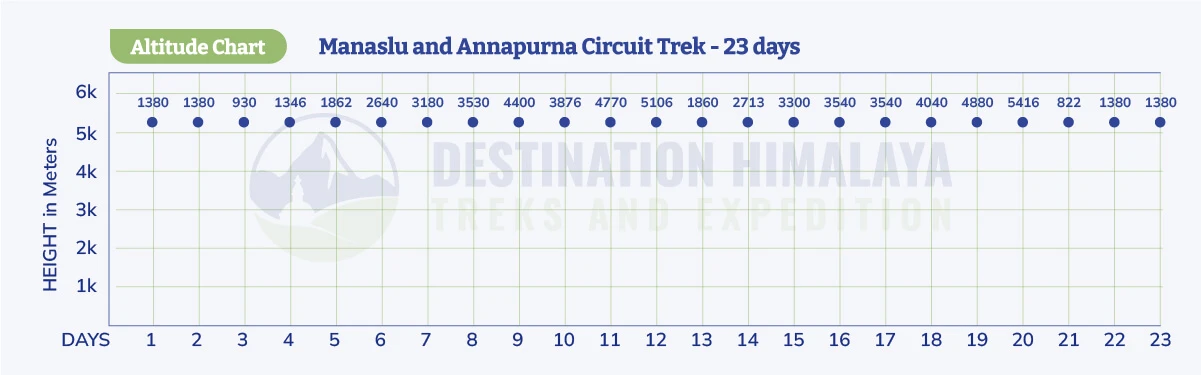
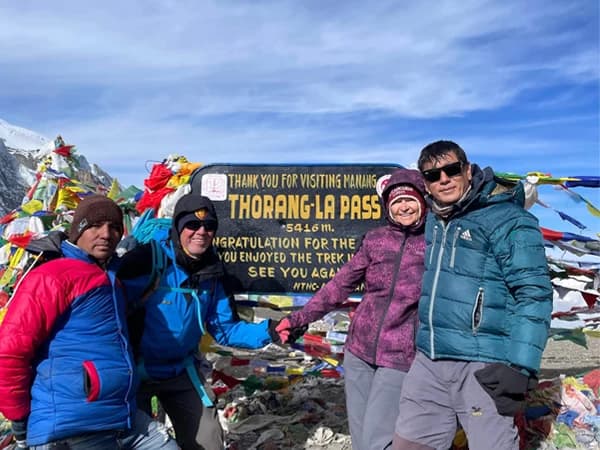
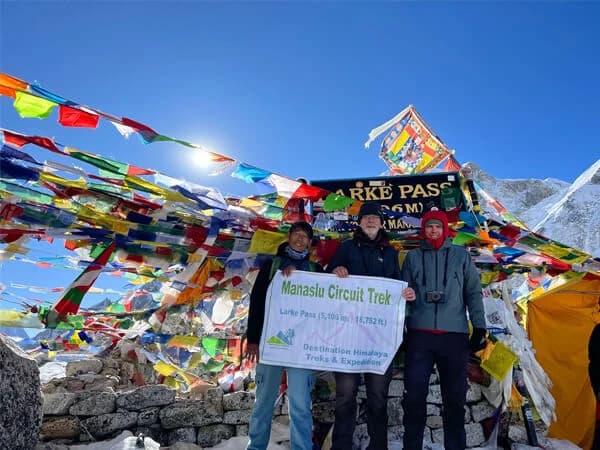
The Manaslu and Annapurna Circuit Trekking is generally rated moderate to challenging, with long walking days, diverse terrain, and two demanding high‑pass crossings at Larkya La (5106 m) and Thorong La (5416 m). It is still a doable trek for trekkers with basic fitness, some prior hiking experience, and good preparation, especially if they follow a gradual pace and proper acclimation.
Compared to tougher Everest‑region routes like the Everest Three Passes Trek, this combined Manaslu-Annapurna journey feels slightly more straightforward because it does not involve technical climbing, rope work, or very exposed ridge sections. The difficulty comes mainly from altitude, length of the itinerary, and repeated steep ascents and descents, rather than from technical mountaineering skills.
The trail itself is constantly changing. You begin in lush, dense forests and river valleys, then move into rugged, remote sections and broad alpine landscapes above 4,000 meters. There are many rocky, steep ups and downs, which can be physically demanding and sometimes mentally tough, especially in the more isolated parts of the Manaslu side where there are fewer people around. However, the itinerary is designed with lower‑altitude overnights and well‑spaced acclimatisation days, which helps reduce risk and make the journey safer.
Acclimatisation Strategy for Larkya La and Thorong La
On the Manaslu half of the route, you get one acclimatisation day at Samagaon (3530 m), sleep at a maximum of around 4470 m in Dharamsala, and then cross Larkya La Pass (5106 m) the next morning. On the Annapurna Circuit half, your body is already more used to altitude and daily hiking, which makes the ascent to Thorong La (5416 m) more manageable. You rest again at Manang (3540 m) for acclimatisation and sleep at Thorong Phedi (around 4540 m) before crossing the pass and descending into the Mustang region toward Muktinath (3800 m).
This combination of progressive altitude gain, built‑in rest days, and “climb high, sleep lower” style overnights means that, while the trek is demanding, it is realistically achievable for prepared trekkers rather than only elite athletes.
Altitude Sickness Prevention Tips
- Walk slowly and at your own pace, without rushing the itinerary, and adapt to the rising altitude slowly, instead of big jumps at once.
- Drink around 3-4 litres of water per day, or substitute it with other alternative hot drinks, such as ginger garlic soups, to stay warm and hydrated.
- Avoid drinking alcoholic beverages or smoking throughout, which can lead to dehydration, mouth dehydration, chest pain, and worsen altitude response.
- Use an oximeter regularly, especially at night at the tea houses, to monitor oxygen saturation and pulse.
- If you feel any difficulty and the symptoms get worse, like severe headache, nausea, loss of appetite, breathing problems, and dizziness, inform the guide immediately.
By following these simple guidelines, listening to your body, and staying along with your trekking guide and following his instructions, makes the journey smooth and successful, without any risk of altitude problems.
How Professional Guides Keep You Safe throughout the trek
To cope with such a challenging adventure, professional guides follow these rules.
- Daily Health Checks: Monitor your health and look out for signs of AMS (Acute Mountain Sickness) through an oximeter, and take immediate action when needed.
- Safe Trekking Pace: Maintain a comfortable walking pace, and give your body enough time to adjust to the gaining elevations
- Flexible Itinerary Management: Adjust the trekking schedule, as the daily nature of the trek, for instance, in case of uncertain conditions, like changing weather, or your physical condition, ensuring a safer journey.
- Emergency Medical Support: Carry a comprehensive first-aid kit, essential medications, and emergency communication devices to respond quickly to unexpected situations.
- Daily Trail and Weather Updates: Share up-to-date information on weather and trail conditions, and proceed further with the trip accordingly.
Is the Manaslu Annapurna Trek Safe for Female Trekkers?
Yes, the combined Manaslu and Annapurna Circuit trek is safe and doable for women, including solo hikers, as long as you prepare well, travel with a licensed guide, and follow basic safety awareness. In recent seasons, well over 90% of female trekkers have successfully crossed both Larkya La (5106 m) and Thorong La (5416 m) without major issues, making this one of Nepal’s most empowering high‑altitude treks for women.
Why does it feel safe and empowering for women?
- Proven track record: Solo female hikers regularly complete this combined route, and many report that both regions feel very safe, with welcoming, warm, and hospitable locals.
- Extra security presence: Women’s police cells, regular police, tourism police, and APF units are present in major trekking hubs, adding a sense of real security.
- Mandatory guided trekking: Both regions require licensed, trained, and medically aware guides, giving women a built‑in support team and quick response if any health or safety issues arise.
- Trail fellowship: You will meet many fellow trekkers (including women) at tea houses and rest points, creating a strong sense of camaraderie and shared support.
- Very low rates of gender‑based incidents: Harassment or violent crime against trekkers on this route is extremely rare. The main challenges are rapid natural weather changes, altitude, and fatigue, rather than human risks.
Practical safety tips for female trekkers
- Walk with your guide at all times; avoid letting others pressure you to leave the main trail or change plans.
- Carry a small personal whistle as an emergency signal.
- Pack personal hygiene items and essentials such as menstrual products, basic skincare, gut‑health supplements, and any medications you need.
- Set clear boundaries politely; if anyone makes you uncomfortable, tell your guide, the tea house owner, or locals you trust.
- Avoid walking alone in the dark; if you want to explore in the evening, go with your guide or group.
If you are a female trekker, whether solo or a beginner with good fitness, this combined route can be a safe, supportive, and confidence‑building adventure. With experienced guides, strong trail fellowship, and warm local hospitality, it offers women a uniquely empowering high‑altitude journey, as long as basic safety tips and cultural respect are followed.
Can Beginners Complete the Manaslu and Annapurna Circuit Trek?
Yes, this 23-day adventure is doable for beginners, but you must train properly, follow a gradual acclimatisation plan, and trek along with the trekking guide while maintaining your pace.
Beginner’s training and preparation
- Start cardio training 3-4 months before your trek so you can comfortably walk 5–6 hours per day with breaks. Focus on hiking, brisk walking, stair climbs, and light strength work.
- Even though there are no technical climbing sections, the passes involve steep, rocky, rugged terrain, with many ups and downs that test endurance, balance, and mental stamina.
- Respect gradual ascent: never rush the itinerary. Follow the two basic rules, “climb high, sleep lower” and don’t skip acclimatisation days, to give your body time to adjust.
For beginners who train their body well, pack smartly, and co-operate with the trekking guide, and vice versa, this trek is nothing like a walk in the park, but an achievable Himalayan goal, rather than an extreme excursion. It is challenging, but with a strong mindset and preparedness, it can be your first major high-altitude success.
Food and Accommodation along the trail
Throughout the trek, you will stay in basic tea houses run by local mountain families. These lodges are simple but well‑maintained, with clean rooms, shared dining areas, and a warm, homely atmosphere. At lower altitudes, some tea houses offer single rooms with attached bathrooms, while at higher elevations most rooms are twin‑sharing or group‑sharing with shared toilets (eastern style). All rooms come with a mattress, pillow, blanket, and bed sheets, but it’s best to bring your own toiletries (toilet paper, soap, shampoo, hand sanitizer) as bathrooms are shared.
Facilities like Wi‑Fi, battery charging, hot showers, and laundry are generally available, but they are provided by the lodge for an extra fee, especially at high altitudes, as it is operated through solar panels.
Meals are served in the communal heated dining area, where you can directly order from the menu that includes various options. You will find every kind, from local, asian to Western cuisines prepared freshly on request. The menu caters well to vegetarians, vegans, and non‑vegetarians alike. Typical options include:
- Breakfast: Tibetan bread with jam/honey/curry and eggs, chapati with vegetable curry, porridge (oats, corn, muesli, granola, chocos), pancakes (plain or with apple, banana, Nutella), toast with jam/peanut butter/chocolate, and a range of hot drinks (black/milk tea, green tea, coffee, Tibetan tea, hot lemon, ginger water, hot chocolate). Ginger‑garlic soup is highly recommended at altitude.
- Lunch and Dinner: Dal bhat (rice, lentil soup, vegetable or meat curry, spinach, pickle) with free refills, noodles (ramen, spaghetti, simple pasta, thukpa), fried rice (veg, buff, chicken), pizza and burgers, momo (veg/non‑veg) and spring rolls, and a variety of soups (veg, chicken, non‑veg).
- Beverages: Tea and coffee, energy drinks (Red Bull, X‑Treme), sodas (Coca‑Cola, Fanta, Sprite), canned juices, and bottled water.
Standard meals (breakfast, lunch, and dinner) are included in the package, while beverages, hot showers, Wi‑Fi, and charging are extra and paid directly at the tea houses.
Travel Insurance
The Manaslu with Annapurna Circuit Trekking goes through remote, rugged terrain with limited accessibility. Hence, travel insurance is mandatory for this trek, and there are certain things to take care of. While making your insurance policy, make sure that it includes theft, lost baggage, trip cancellation, delays, and, most importantly, helicopter evacuation, that too for higher elevations above 3500 meters.
If you are considering trekking without travel insurance, it's worth reconsidering. This trek crosses two high Himalayan passes, where altitude-related illnesses, injuries, and unexpected weather conditions can occur. Without adequate travel insurance that covers high-altitude trekking and helicopter evacuation, even a minor emergency can become stressful and expensive. A comprehensive policy provides peace of mind and ensures that, if an emergency arises, a helicopter rescue can be arranged promptly when medically necessary.
Required Permits and Cost
- Manaslu Restricted Area Permit (MRAP): Since the Manaslu region is a designated restricted area, obtaining a Manaslu Restricted Area Permit (MRAP) is mandatory. The permit fee varies by season. During the peak trekking seasons (September–November and March–May), it costs USD 100 per person (approximately NPR 13,400) for the first 7 days. If you stay longer within the restricted area, an additional USD 15 per person per day is charged.
- Annapurna Conservation Area Permit (ACAP): An Annapurna Conservation Area Permit (ACAP) is also required, as the trek continues into the Annapurna Conservation Area after crossing Larkya La Pass. The permit costs NPR 3,000 (approximately USD 25–30) per person for foreign nationals and NPR 1,000 (approximately USD 8–10) per person for SAARC nationals.
Destination Himalaya Guide & Support Team
For this iconic combined adventure, throughout the Himalayan odyssey, you'll be assisted by our experienced support crew and team members, who will guide you and take care of everything to make this trip hassle-free, safe, and more meaningful, with cultural insights. Below is a glimpse of the attributes of the team leaders and the guide for the tour:
Here are the major attributes that the trip leaders have:
- Assisted more than 1000+ trekkers along the Himalayan trail with 10+ years of experience
- Medically trained and equipped with a comprehensive Basic First Aid Kit, they handle any emergency cases along the route
- Affiliated with NMA (Nepal Mountaineering Association) and TAAN (Trekkers Association Agency of Nepal), and a certified trekking-licensed guide by the Nepal Government
- English-speaking fluency, with other languages as well
- Link with locals of the region, facilitates interactions, and provides insights into the ethnic communities
- Problem-Solving Skills at higher elevations and in emergency cases
- Comprehensively provides insights into cultures, mountains, and historical sites, enhancing the trip highlights
Booking Procedure
Destination Himalaya Treks and Expedition has been a registered and operating trekking agency for 15 years and is also a member of TAAN (Trekking Agency Association of Nepal) and Nepal Mountaineering Association (NMA); hence, your booking is totally safe with us. For the booking confirmation, you just have to pay 10% of the total cost, and the remaining amount can be paid after you arrive in Kathmandu, aka Nepal, where the trip starts.
The payment options are either Bank Transfer, Web Transfer, Cash, Credit Card, or many others. To know more, contact us anytime by emailing info(a)destinationhimalayatreks.com or just call or WhatsApp us at +977 9851016814; we are available 24/7 online. After the booking is made, send us your original passport and passport-sized photo so we can arrange the logistics soon after the booking is confirmed with us.
Last Minute Booking
For last-minute booking for this trip, you have to make 100% of the total payment. If you are starting the trip after a week or 10 days, you do not need to make the full payment because we trust you. However, what happens is that during peak seasons, logistics become very limited due to a high number of visitors and bookings, so we must arrange everything- the best logistics for your comfort- rapidly, which is why full payment is crucial. After the payment is made, we will notify you via WhatsApp or email, confirming the successful booking of the trip. Furthermore, if you have any questions or queries, feel free to contact us anytime.