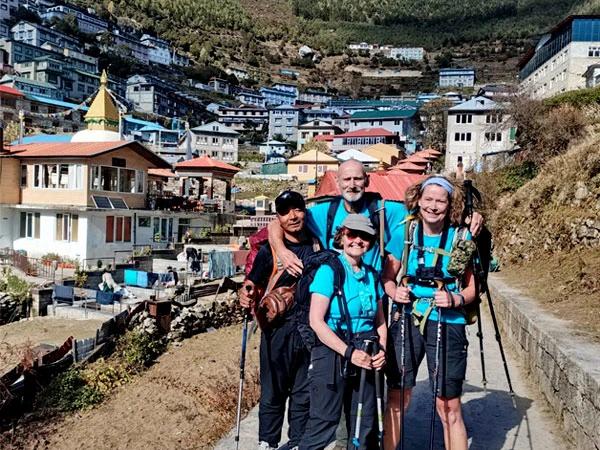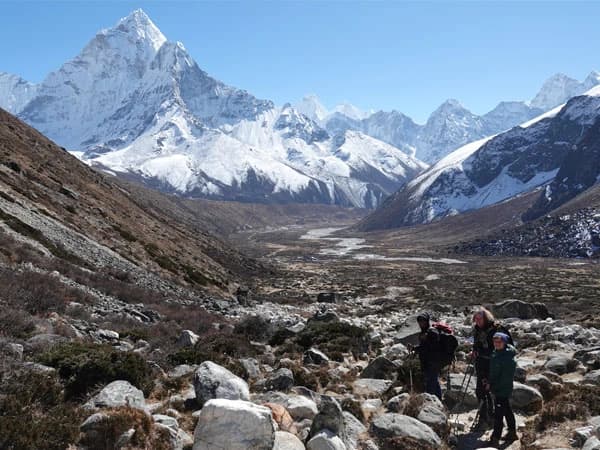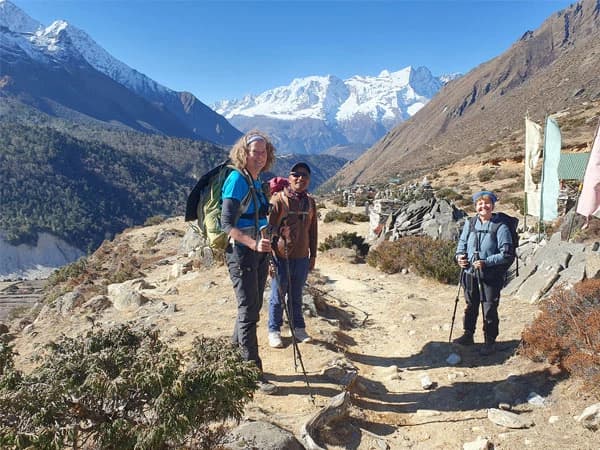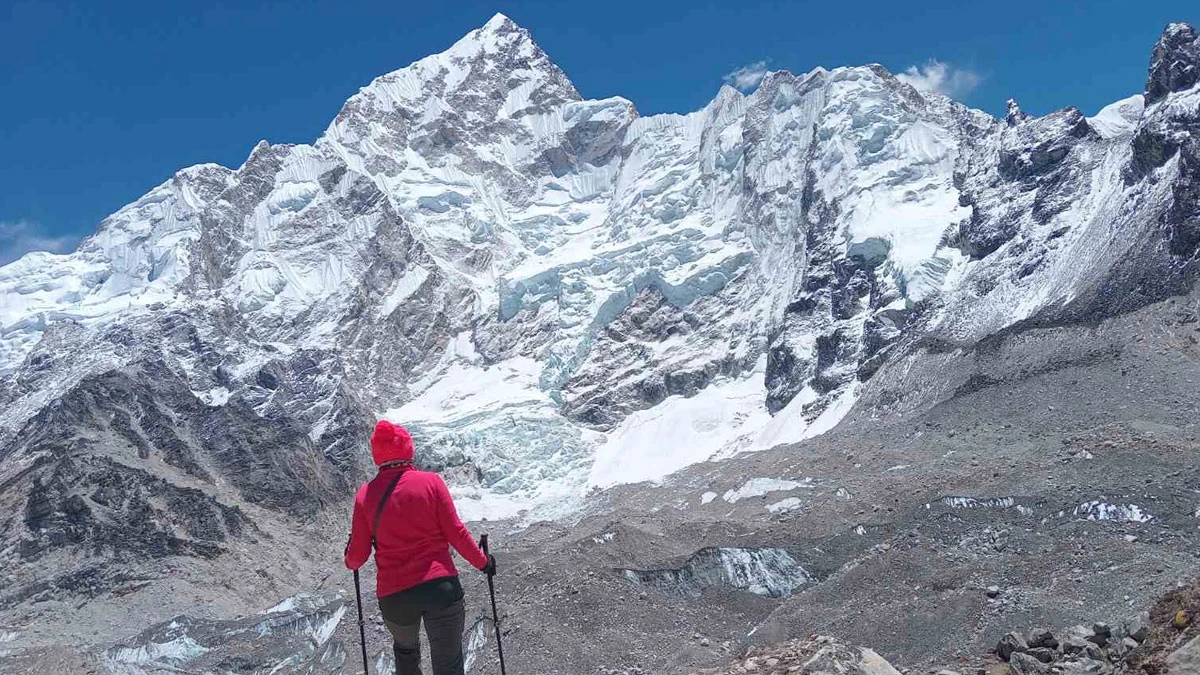
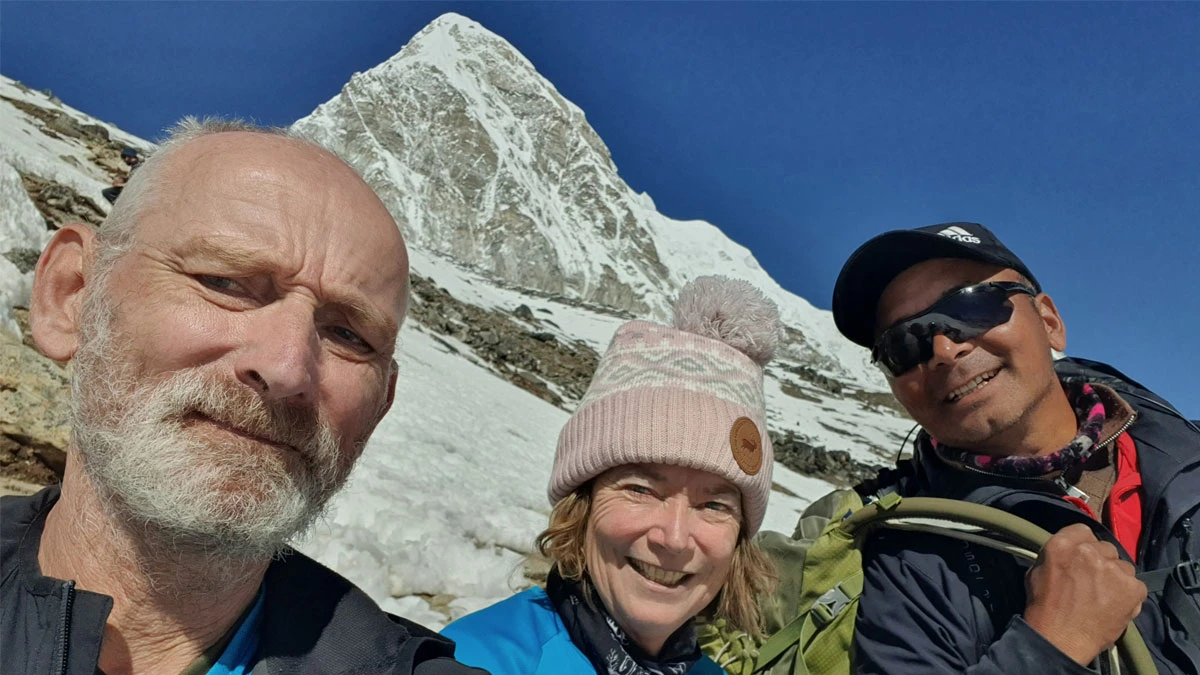
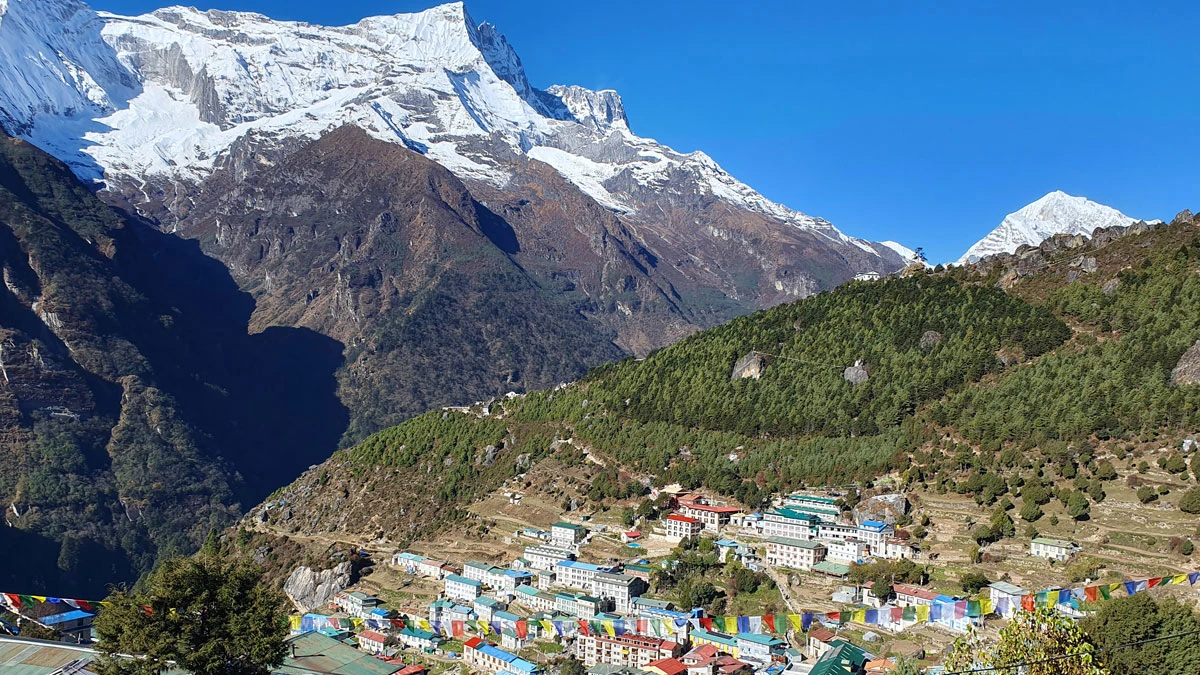
The Jiri to Everest Base Camp Trek retraces the classic route of Hillary and Tenzing, offering a quieter and more authentic Himalayan journey. Venturing along this traditional trekking route takes you back in time, following a quieter and less crowded trail in the early stages of the journey. From Namche Bazaar onward, it joins the main Everest Base Camp route, blending the remote charm of the old trail with the well-known classic path.
This trek offers a remarkable journey through the diverse landscapes of the Khumbu-Everest region, from lush forests and terraced farmlands to traditional Sherpa villages, glacial valleys, and towering Himalayan peaks. Throughout, you will be accompanied by the iconic mountains, including Tharmserku, Ama Dablam, Pumori, Lhotse, Nuptse, Makalu, Kantega, Cho Oyu, and the world's tallest peak, Mount Everest. Along the way, the journey passes through Sherpa villages, monasteries, mani walls, chortens, and prayer-flag-lined trails, offering both natural beauty and deep cultural insight. With two acclimatization days and the scenic highlight of Kala Patthar at 5,545 meters, this trek delivers a truly memorable adventure through the heart of the Khumbu region.
Driving from Kathmandu to Jiri (2,100m) takes about 6 hours. The trek to Everest Base Camp (EBC) follows the traditional route used by early Everest expeditions and remains the main artery into the roadless Sagarmatha (Everest) region. Known as the Solukhumbu, it is the home of the Sherpas. This relatively tiny society of 8,000 people is the best-known and most admired of all Nepal's ethnic groups. According to their oral history, Sherpas migrated to high valleys south of Mt. Everest from eastern Tibet about 450 years ago, hence the name Sherpa, "people of the east." Many families along this route have converted their homes into trekkers' lodges catering to foreign hikers.
Trekking through Sherpa villages offers a warm cultural experience, along with the generous hospitality of the local people. One of the main advantages of starting the trek from Jiri is the gradual ascent, which helps with acclimatization along the way. Covering around 190 km, the route includes a total altitude gain of nearly 9,000 meters through many challenging uphill sections. The journey begins with a jeep drive and continues through Sete, Junbesi, Nunthala, Bupsa, and Cheplung before joining the standard Everest Base Camp trail, and it concludes with a flight back to Kathmandu from Lukla.
In short, the Jiri to Everest Trek is a rewarding choice for trekkers who want a more traditional, scenic, and culturally immersive journey in the Everest region. With its gradual ascent, stunning Himalayan views, and rich Sherpa heritage, this 18-day adventure offers a deeper experience than the standard route, making it ideal for fit and well-prepared trekkers seeking both challenge and authenticity.
Jiri to Everest Base Camp Trekking Highlights
- Scenic road views on the way to Jiri
- Pristine terraced farmlands, Himalayan scenery, and the beautiful Dudh Koshi River
- Alpine forests, ice-cold rivers, astonishing rhododendrons, and pine forests
- Reach Everest Base Camp, the foothills of the world's tallest peak, Mt. Everest (8848.88 m)
- Magnificent mountains, high passes, attractive monasteries, and meeting friendly local people
- Plenty of time to spend on the extended pastures, yak farms, glaciers, and adequate time to acclimatise en route
- The native land of the Sherpa people, their culture, lifestyle, and picturesque villages
- Stunning beauty of the Khumbu Glaciers and Khumbu Icefalls
- Relish the stunning sunrise view and witness the intense panoramic mountain views of Mt. Everest, Mt. Nuptse, Mt. Lhotse, Mt. Pumori, and Mt. Ama Dablam from Kalapatthar
- Memorable 35-minute flight to Kathmandu from Lukla with panoramic peak views
2027 Trail Update
- The road expansion has improved access from Kathmandu to Jiri, reducing the travel time and making the trip more comfortable.
- Jiri remains the traditional starting point of the trek, located at an altitude of 2100 meters.
- The required basic amenities, such as wifi, laundry services, hot showers, and charging access, are available till Gorakshep, the last stopping tea house point, before reaching the highest point at Kala Patthar.
- The trail offers a quieter and more gradual ascent, supporting better acclimatization before reaching Namche Bazaar.
- Two acclimatization days before crossing 5000 m give you enough time to gradually ascend and adapt to the rising elevation
- For the 2027 season, early booking is recommended for permits, Lukla flights, accommodation, and guide arrangements.
Why Choose the Traditional Jiri Route?
The Jiri to Everest Base Camp route is the historic trail once followed by Sir Edmund Hillary and Tenzing Norgay Sherpa on their early Everest summit. Choosing this traditional route allows trekkers to experience the Everest region, in a more authentic and meaningful way, away from the busier Lukla, as to start the trek. The trail begins in Jiri and gradually proceeds through the stunning Solukhumbu countryside before joining the main EBC route at Namche Bazaar.
One of the major advantages of starting from Jiri is the gradual and meaningful ascent, as the lower elevation, starting point, and slower pace give your body more time to adjust to the increasing altitude, reducing the risk of altitude sickness. Along the way, you will also pass through traditional Sherpa villages, terraced fields, rhododendron forests, river valleys, mani walls, chortens, and prayer-flag-lined trails, gaining a deeper insight into the culture, traditions, and lifestyle of the Sherpa people.
The Jiri route also offers a serene, off-the-beaten-path beginning, where trekkers get rewarded with views of the Himalayan foothills, local Sherpa villages, and varied mountain landscapes, before reaching the dramatic high-altitude alpine scenery of the Khumbu region. From Namche, onward, the trail joins the standard Everest Base Camp route, leading to EBC and the spectacular viewpoint of Kala Patthar. For trekkers seeking history, culture, natural beauty, and better acclimatization, the traditional Jiri route is an excellent choice.
Itinerary Outline
- Day 01: Arrival in Kathmandu
- Day 02: Kathmandu to Jiri (by bus), Jeep drive to Bhandar (2250 m.)
- Day 03: Bhandar to Sete (2520m.)
- Day 04: Sete to Junbesi (2580 m.)
- Day 05: Junbesi to Nunthala (2200 m.)
- Day 06: Nunthala to Bupsa (2360m.)
- Day 07: Bupsa to Cheplung (2700 m.)
- Day 08: Cheplung to Namche Bazaar (3440 m.)
- Day 09: Acclimatisation day
- Day 10: Namche to Tengboche (3940m.)
- Day 11: Trek to Dingboche (4350 m.)
- Day 12: Acclimatisation Day
- Day 13: Dingboche to Lobuche (4910 m.)
- Day 14: Lobuche to Everest Base Camp (5364 m.), back to Gorakshep
- Day 15: Kalapatthar hike (5644.5 m.), trek down to Pheriche (4200 m.)
- Day 16: Trek to Namche Bazaar (3440 m.)
- Day 17: Trek to Lukla (2860 m.)
- Day 18: Flight from Lukla to Kathmandu
Jiri to Everest Base Camp Trek Cost for 2027 and 2028
The Jiri to Everest Trek costs start from USD 1249 to USD 1599 per person, depending on the group size. The final price may also vary based on accommodation upgrades, itinerary changes (if done), private transportation, additional sightseeing inclusions, or an extension of the journey.
This package includes all major trekking essentials, such as trekking permits, meals during the trek, land transportation, accommodation, airport transfers, hotel accommodation in Kathmandu, and the scenic Lukla-to-Kathmandu flight at the end of the trek.
Early Bird Discount
Book early and receive a 5% early-bird discount on the Jiri to Everest Base Camp Trek for the spring and autumn 2027 seasons. This special offer is available for trekkers who confirm their booking in advance, helping you secure the best price, preferred departure date, experienced guide, and well-planned itinerary.
Early booking is especially recommended for the spring season, as March, April, and May are among the most popular times to trek in the Everest region. Booking early also allows better arrangements for permits, accommodation, internal flights, and professional trekking staff.
Here is the costing of the trip, depending on the number of trekkers, that each group typically holds, for the years 2027 and 2028:
| Group Size | Standard Cost (USD per person) |
| 1 | 1599 |
| 2-3 | 1499 |
| 4-6 | 1399 |
| 7-9 | 1349 |
| 10-12 | 1299 |
| 13-16 | 1249 |
The above pricing is applicable for both the 2027 and 2028 trekking seasons. Group discounts make the trek more affordable for families, friends, corporate groups, and organized trekking teams. For larger groups or customized itineraries, Destination Himalaya Treks and Expedition can provide a tailored quotation based on your requirements.
Why Book for Spring & Autumn 2027?
Spring & Autumn 2027 is an ideal season to experience the Jiri to Everest Base Camp Trek. The weather is generally stable, the skies are clearer, and the trail offers beautiful views of rhododendron forests, terraced hills, Sherpa villages, and towering Himalayan peaks. With the 5% early-bird discount, trekkers can enjoy a more affordable and well-organized journey while securing their preferred departure date.