Best Time for Kanchenjunga Circuit Trek
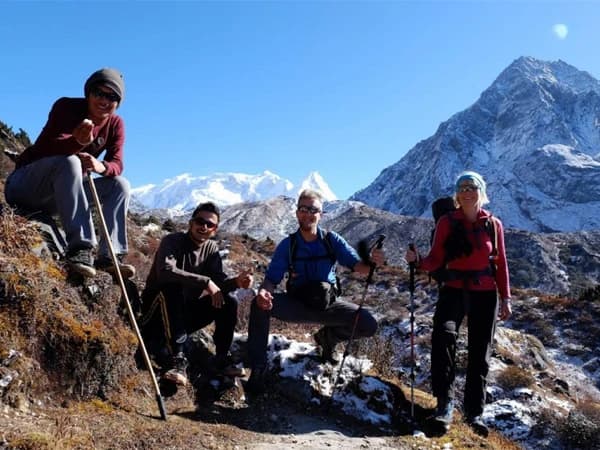
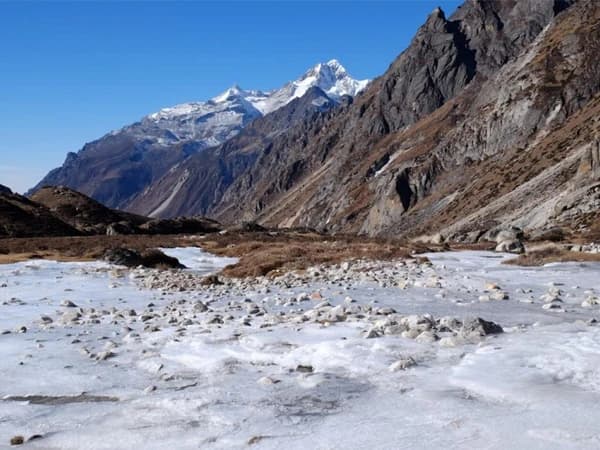
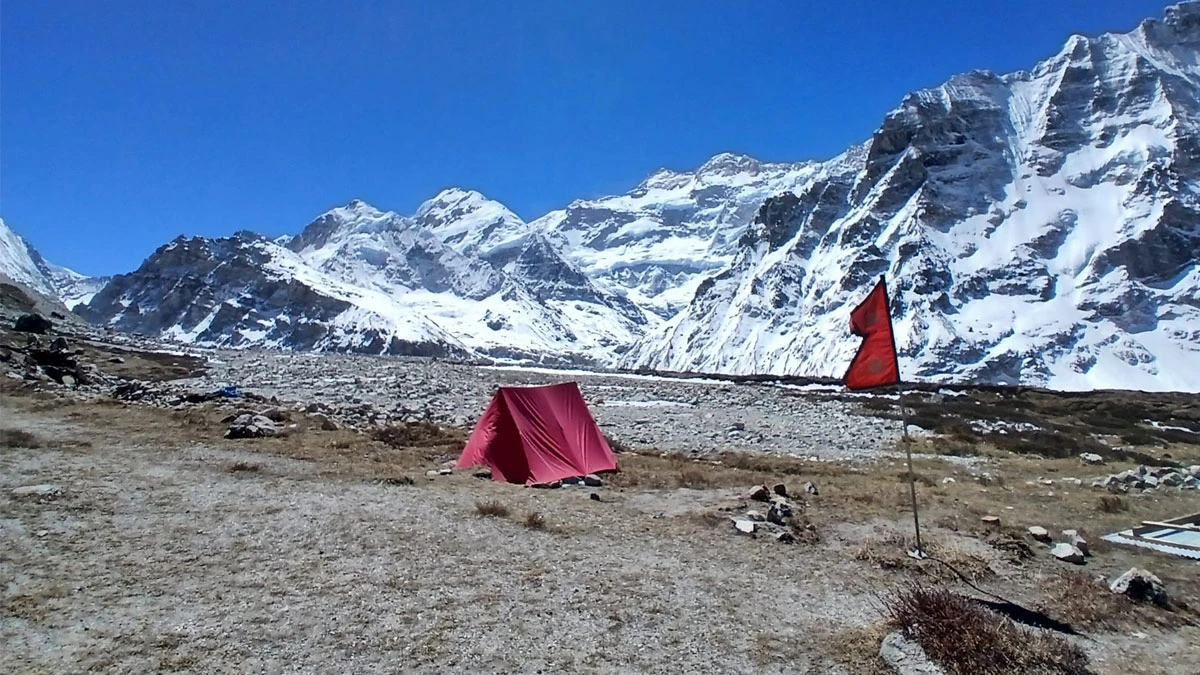
To do this, Kanchenjunga Circuit Trekking, the ideal seasons are Spring in between the months from March to May, and Autumn, from mid-September to November. To consider this span of the year, there are several reasons attached to it, and the first and foremost reason is the safety and easy trailhead. During this period, there is a low chance of precipitation, rainfall, and snowfall that eventually makes the route easy to navigate with clear views of mountains and landscapes at the same time.
Meanwhile, if you are planning to do the trip, in the off-seasons of winter and monsoon, then there are several things to consider beforehand, as due to the heavy snowfalls and rainfall at lower trails, of course! The route becomes 10x times more challenging to pass through with slippery pathways and blockages of the passes and to the base camp of Kanchenjunga due to heavy snow blockage. Every four seasons has distinct features to offer and has ample perks to hikers, hence no matter what season you opt for between Spring and Autumn, it will truly be a rewarding expedition with success to reach the lap of the world's 3rd highest peak.
Why Spring (March - May)?
Trekking along this trail during spring means you'll be head over heels, with the blooming rhododendrons in the first half of the trail and with the colourful flowers at higher sections. The temperature doesn't fall below -10 degrees Celsius even at night in the upper trailhead, which means the temperature is mild and the nights are not too freezing, and cosy enough to get settled in at the heating tea house area within the area. Despite being one of the peak seasons, unlike any others, you will find few crowds with no disturbance of overflow of fellow hikers, allowing a solo me time and finding a realm in nature.
Perks of Autumn (September - November)
Autumn is truly another peak season and most preferable among hikers, as it falls right after the monsoon. You can expect the temperature to be moderate with no sign of rainfall at the same time, offering clear weather and climate throughout the route. That's not the end yet! Many festivals like Dashain, Tihar, and the most thriving Futuk festival that is only celebrated within the Kanchenjunga Conservation Area, fall between Autumn, making it one of the ideal times of the year. With the perfect fusion of the panorama of mountains and glacier-like Yalung throughout the trip and the boasting cultural celebration, you will love every bit of hiking here in Autumn.
Why avoid the Summer and Winter seasons?
The trek can be done during the summer season as well, but it will require a higher level of preparation and also longer days, as due to the snow blockage, you might require contingency days, such as the summit of peaks.
Whereas exploring Kanchenjunga during the winter is somewhat similar to the summer season, as there is heavy snowfall in higher altitude areas, due to which many tea houses might get closed as the trail is quite empty during this time of year. But, if you have a group to trail, then you can go during this season well with your group, but you must be well-prepared with a proper itinerary. For that, we can discuss it beforehand with the team to ensure your trek goes smoothly and safely without any hurdles.
Kanchenjunga Circuit Trek Difficulty
Stretching around 200 kilometres, rising to an elevation of 5143 meters, makes the Kanchenjunga Circuit Trek one of the most strenuous and wild treks in Nepal, with limited amenities. Simply speaking, the difficulty level also depends on individual perspective and experiences. If you are into adventurous journeys that crave to push limits, passing through rugged terrains, high glaciers, high passes, with 6 to 7 hours of hiking per day, then well! This trek is for you.
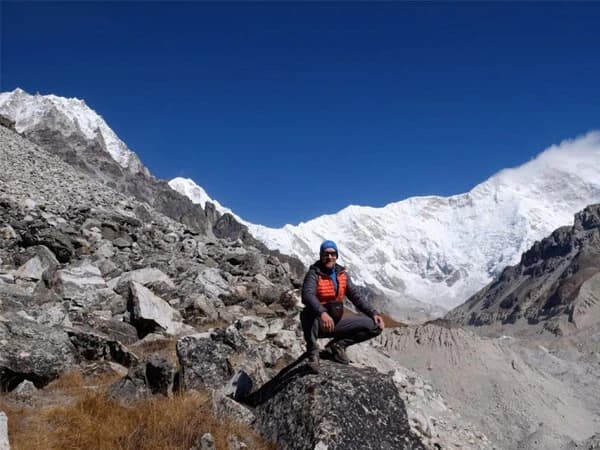
Starting the trek from Sekathum - the beginning point of the walking trail- is quite easy to navigate; meanwhile, after crossing Ghyabala (3000 meters), the terrain becomes more rugged with several ascents and descents demanding almost 7 to 8 hours of hiking on some days. In several days, this Kanchenjunga Trek takes you through higher elevations of 4000 to 5000 meters, and reaches the highest elevation at Kanchenjunga North Base Camp - 5410 meters, so some things and preparations must be considered beforehand.
Similarly, the great concerns remain the possibility of AMS (Acute Mountain Sickness) at such high altitude and the changing weather conditions that frequently change drastically, unlike other treks, this expedition does require a proper fitness level and acclimatisation days set properly to make the journey safe and pass by smoothly.
Risk of Altitude Sickness and Safety Tips to follow
As this trail reaches such a high elevation, over 5000 meters, the risk of altitude sickness is expected if you are not prepared well enough beforehand. AMS usually hits you when navigating through thin air and higher terrains, which is more unusual than the city area that we spend our everyday lives in. 1 small mistake, and then the possibility of Acute Mountain Sickness increases. We are not stating that Kanchenjunga is a dangerous route, but such uncertainties of health come with no sound of a bell in such mountain areas.
So, you might be panicking and wondering whether you could get one during this expedition. Well! If that's the case, then do not settle back as our Kanchenjunga Circuit Trek itinerary is carefully tailored with professional expert teams with a gradual ascent of 500 to 600 meters per day, making sure that you are adapting to the rising elevation. We do not encourage you to go over the top and rush the pace; that could even worsen the situation, which is why we've set the itinerary accordingly.
Apart from that, there are some tips and tricks that you must follow for a successful expedition that we highly suggest considering the weather, long hours of expedition, and the highest elevation to tackle the risk of AMS:
- After crossing 3500 meters, you might feel the mere symptoms of AMS, like mild headache, fatigue, dizziness, tiredness, or insomnia, then do not worry and just inform the guide and follow some medication, as the condition might not be too serious (in case of mild AMS). However, if you get a serious/severe headache, skin completely turning pale, losing control, vomiting, and trembling of legs continuously, then descend asap! If things don't turn out to be serious, then you will be evacuated via helicopter (with your travel insurance).
- If you do not have prior 5000 meters altitude experience, then it is highly suggested to take "DIAMOX", with the medication by your doctor, to avoid mountain sickness.
- Try to stay hydrated throughout the expedition by drinking 3-4 litres per day. If that sounds too much, then substitute it with ginger hot soups or any other soupy items, which warm up the body and work as hydration as well, avoiding mouth dryness at the same time.
- Maintain your level of pace, and do not go over the board thinking about matching the pace of other hikers; remember that everyone has different experiences and endurance levels. Hence, walk along with the guide slowly, gradually, and intelligently.
- Before 1 week, and throughout the trek, avoid consuming too much caffeine, smoking, and alcoholic beverages. It could worsen overall health at high altitude and lead to serious mountain sickness.
- Choose a professional licensed trekking company along with an experienced trekking guide who can craft your packages as per your fitness level and experience, and who can promptly respond in case of emergencies.
Accommodations
Being isolated and located within a restricted area, the Kanchenjunga Circuit is a full tea house trek with basic lodging facilities, and it also passes by ample camping sites. However, as the route is well facilitated with tea houses and lodges, camping isn't required, but if you want, you can choose the camping option as well. As the number of teahouses/lodges is fewer, and at far distances from each other, the tea they serve is basic and comfortable enough, and hygienic enough to settle in.
However, you can have difficulty adjusting to these lodges, but you'll surely enjoy your stay due to their rawness and the warm hospitality of distinct communities. Since there are fewer teahouses in these trails, sharing of rooms and toilets must be done. The toilets are of the eastern style and are outside the teahouse. In the lower sections, you can get a separate room with an attached bathroom as well.
But when moving to the higher areas of the trail, each room consists of two beds with shared washrooms. Since this is trekking in the mountains, some adjustments must be made. For instance, there are no electricity sockets for charging in each room, and you must go to the dining area to charge up the phone, which costs you around $2- $5 same goes with the Wi-Fi facility as well. As the trekking is in mountain regions with limited facilities, some adjustments must be made.
Meals
Along the Kanchenjunga Circuit Trek route has quite basic foods, but also offers appropriate, nutritious foods. In the morning menu, there are different options available in the tea house like Tibetan local food (Roti, curry, and boiled eggs), English breakfast, Veg, and non-veg soups with tea and coffee, etc, pancakes, porridge, noodles, which are provided before the hike. For lunch and dinner, you just have to mention your preferences to the tea house or guide, and it will be prepared accordingly.
For the standard meals, you will find a wide range of meal options, just like any other trekking route, filled with nutrients, like protein, carbs, and fibre, to keep you energetic and persistent throughout the journey.
No matter whether you are vegan, vegetarian, or non-veg, or allergic to some foods, you will find every available option, but make sure to inform the guide and the chef, locals, while preparing the meals, stating your preferences. Just take a note that this Kanchenjunga Trek passes through the remote trailhead, with no tea houses in between, so it is highly suggested that you carry snacks to munch on and keep yourself going and your tummy filled, till we reach the next destination.
Carry a durable water bottle to fill water from the taps or at teahouses. Along the way, the price of bottled water is way out of the affordable range. You can fill the water in the tea house that you are staying in. For the extra boiled water, you have to pay additional charges to the lodge. Hence, it is highly suggested to carry a Steripen during the Kanchenjunga Trek to purify the water.
Our package includes all three standard three-time meals - Breakfast, Lunch, and Dinner, hence, you do not have to pay extra, untill and unless it incurs expenses.
Communication, Device Charging & WiFi Facilities
While trekking in such isolated territory, communication facilities are limited as only some tea houses include satellite phones; other than that, for ease, please make sure that you buy a SIM CARD while being in Kathmandu. If possible, try buying an NTC SIM Card, as it works fine most of the time except in higher elevations and dense forested areas.
You can buy the datapack for NRS 120 (USD 1), for a 1-week package, or just buy a monthly package paying NRS 380/-, for immediate communication via phone call. Along the trailhead, the guide will carry a satellite phone, so do not worry about an emergency. In the tea house, you can connect with WIFI in the dining area, except in some areas, at the upper trails, do not expect strong connectivity.
As electricity is limited in the upper sections and mostly runs by satellite, you must head toward the dining area and recharge the gadgets, waiting in line and paying extra charges. It is expected that at high elevation, it is run by the solar panels, so the accessibility of quick charging ports is difficult, and it is highly suggested to buy 1 power bank for immediate purposes, and recharge gadgets.
Trekking Guide
As an independent hike is completely banned along the trail, no matter which ever base camp you go for, north or south, or combined like the Kanchenjunga Circuit Trek route, you must hire an experienced licensed trekking guide for safety and legal purposes. We 100% guarantee anything about safety and comfort, as comforting the clients is our utmost priority. The guides are certified and well-trained with several years of expertise in this field, so you don’t have to worry about anything, as they are technically competent and have excelled in safety performance. The guides are not only experienced in serving more than hundreds of hikers like you within the Kanchenjunga region but are also fully medically equipped so they can respond promptly in case of emergency.
Not only that, but a guide ensures that you are making the best out of this trek, as you will be provided with a great in-depth history, culture, and traditions knowledge through their lens, covering every highlighted aspect of the eastern Himalayan gem.
Trekking Porter
Meanwhile, porters are truly the backbone of any expedition, as they are not only carrying your gear but also bearing a huge responsibility of taking care of you and all the essentials, so you can hike with a free mind. 1 porter can carry like 22 kgs in total, which can be shared between 2 hikers. If you are a duo hiker, then 1 porter will be enough. However, our Kanchenjunga Circuit Trek package doesn't include porter costs, but we highly suggest you hire a porter for such a long expedition, paying some additional cost. For the details, check out our ADD-ONS section above the site.
Packing Lists
Here are some of the packing gears and essentials, suggested for the trip, lasting for 19 days.
Clothing Items
- Dry Fit T-shirts and Shirts (moisture-wicking ones)
- Fleece Jackets and lightweight jackets - windproof and waterproof ones
- Thermal leggings and tops
- Down Jacket or Puffer Jacket
- Quickly drying pants
- Hiking pants - Breathable ones
- Wool, Cap and Hat (Brimmed)
- Comfortable trousers
- Moisture-wicking underwear
- Neck Gaiter and Muffler
- Sport Bra
Footwear
- Trekking Boots (High-Ankle) - avoid injuries as well
- Sandals (Slippers) to wear in the tea house
- Comfortable shoes - for lower trail acts as a substitute at some places as well
- Cotton socks and thermal socks
Equipment
- Sleeping Bag - will be provided to us as a complimentary (must be returned after the trip)
- Trekking Poles (2 sticks), which can be adjusted
- Duffle Bag (55 to 85 L)
- Head Lamp and Torch Light with extra batteries
- Day Bagpack (45 to 65 L)
- Water Purification Tablets - to purify water
- Oximeter - to check the pulse rate
- Sun Glasses UV Protected
- Snacks - nuts, protein bars, and chocolates
- First Aid Kit that includes bandages, basic medicines, and precautionary medicines
Travel Insurance for the Kanchenjunga Circuit Trek
For the trekking within the area, one must grab travel insurance that covers some necessities to make the expedition safe and secure, no matter whether you are a pro or a newbie. While venturing out, many challenges might come up along the way, especially in remote and restricted areas, where the basic amenities are like luxury facilities, with low accessibility to medical emergencies. Not only that, but please be assured that the policy covers all the requirements like theft, lost baggage, trip cancellation, and above all, the helicopter evacuation, as it is the only way of rescue during the trek.
When you buy an insurance plan, make sure that it consists of all the requirements mentioned above, so it won't be a frustrating situation while being on the trailhead. If possible, try acquiring one from your own country from a trusted company, so you can hike with a free mind here in Nepal, saving thousands of dollars and walking around with no worries.
Safe Booking Procedure
To secure your trek, the booking process is as simple as it sounds, being all secure and safe, which can be done in a minute. Being affiliated with TAAN (Trekkers Association Agency of Nepal) and NMA - Nepal Mountaineering Association for more than 15+ years, we always look forward for hassle free adevnture for you from visualising your manifestation, crafting the itineraries, safe bookings, to safe assistance of guidance along the route. Hence, you can book your trips in Nepal with full confidence with us.
For the confirmation of your Kanchenjunga Circuit Trek package, we require a 10% advance payment after the reservation is made. Please send us your necessary documents, such as a copy of your passport, passport-sized photos, and arrival flight information (if available), within a few days. You can send booking amounts through bank transfer and online from our websites. After your booking is done, we’ll arrange everything for you that is necessary for the trip. After arrival in Nepal, you can make payments through Credit card, Cash, or bank transfer. If you have further queries, then you can contact us anytime.
Last Minute Booking
Even though it is quite hard for us to book the trip, Destination Himalaya Treks and Expedition will arrange it for you to make your trek possible even during peak season without any problem. But to confirm the last-minute booking for the trek, you must pay 100%, and there will be no refund, as we must pay for a guide, porters, and accommodation before the trek, just to make the trip. For more details, make sure to WhatsApp or Viber (+977 9851016814) or email us directly at info@destinationhimalayatreks.com.