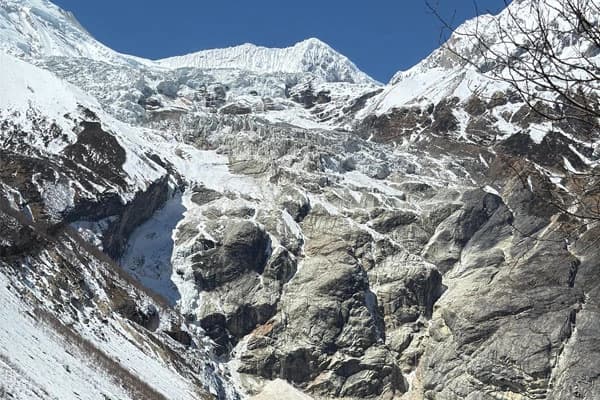
Newly introduced, Khopra Ridge Trekking is considered one of the best, short, quick, and moderate trails in the Annapurna region, and is famous for being a less crowded, off-beaten route compared to other Annapurna treks. The trailhead lies in between the iconic Ghorepani Poon Hill and the Dhaulagiri range, passing through verdant forests of rhododendrons, tranquil, remote villages, and less densely populated areas, transitioning from woodlands, lush valleys, to the alpine meadows, surrounded by panoramic mountains. The highest point this trip reaches is either Khopra Danda at 3660 m or Khayer Lake at 4600 m, depending on the itinerary.
Being just rising himalayan trails, and non-popular destinations, unlike ABC or EBC, the Khopra Danda Trail still holds the pristine beauty of the Annapurna Conservation Area, traversing through charming, quiet villages, giving you a full tea house experience. This trek is also widely known as Khopra Danda, which means Ridge or the viewpoint in English terms, so do not get confused between these two terminologies. With all the great pros of the Khopra route, one of the major drawbacks of the journey is that it navigates through non-maintained, unmarked, and less-facilitated routes, demanding a compulsory trekking guide for proper wayfinding.
In terms of the Khopra Ridge Trek difficulty, it falls under a moderate adventure, but the distinct terrains and continuous ascent demand a basic fitness level, at least, and prior preparations. However, there are many other factors that make and determine the overall trip challenges, which we will comprehensively take an overview of on this blog, assisting you for a safe odyssey, and get prepared as per the difficulties.
How Difficult is the Khopra Ridge Trek?
The Khopra Ridge is considered a moderate trek in the Annapurna Trail, which is recommended for hikers who can undertake a 4-5 hour hike per day, through diverse terrain. The daily hike or the distance coverage is not challenging, but what makes it a bit difficult is that the trekkers have to pass through stone steps, forest walks, and ridge ascent, and a less crowded trail, which might frustrate the beginners, having no prior experience. The most challenging part is the steep section, from Chiysibang to Dobato, with almost 2000 ft ascent, via a rocky downhill walk, that requires a strong fitness level, and gears like trekking poles and sturdy boots. The starting point stands out to be Pokhara (830 m) upto the highest at Danda (Ridge), at 3600 meters, where the intense altitude gain may cause the possibility of altitude sickness, so we suggest proceeding with a gentle hike, and moderate daily altitude gain, not more than 500+ meters daily.
The optional Khayer Lake extension adds 1000 meters more elevation, and 1-2 extra days, through the loose scree paths, but if you have basic fitness, then you are all good to go. In addition, the trail is supported by local tea houses, hosted/ run by the local communities, offering warm hospitality and organised amenities. Thus, in terms of basic logistics, like wifi, meals, laundry, and charging, there's nothing to worry about, with the assistance of the local registered trekking guide.
Factors That Make Khopra Ridge Trek Challenging
Long Daily Walking Hours
Daily, during the trek, it proceeds 5 to 6 hours of hike per dat, depending on your starting point, pace and itinerary, which is still, not so strenuos when compared to other isolated trails, such as Manaslu or even any base camps, however, walking daily through diverse terrains, steep climbs, isolayed sections with no trekkers encountered in betweem might be a bit overwhelming and fatigue to some. The navigation pathway does not entail any technical parts, nor alpine walks, or glacial high passes to cross over, but, every day, with a constant effort, and unique surroundings, maybe too much for some, especially beginners.
Some days, you might feel energetic, especially in the first 1-2 days, as you pass by Ghandruk and Tadapani, with many tea houses, and easy walks. As the day passes by slowly, your energy may drain out, and your legs may feel heavier, but it is all part of any himalayan trekking, and consistency is what matters. Go for the personalised itineraries, as per your fitness level, experiences, and take a gentle pace, with enough breaks, and maintain a steady pace, without rapid or speeding up the walking pace level. Prior Training and comprehensive planning make the trip more enjoyable, fascinating and less hurdle, so ensure to engage in preparations before you actually head out to the trailhead.
Diverse Terrains
The main challenge of the Khopra Danda route is that you'll experience rapid changes in the walking pathway, every day, from sub-tropical forest to alpine ridges. The lower terrains basically navigate via dense forested areas, with moderate stone steps and gentle walks, which is quite easy and smooth going.
Whereas, from Bayeli Kharka, above 2600 meters, the terrain takes a shift into rocky uphill and downhill walk, through open meadows, and gravelly trails, getting more challenging than compared to the first few days (Ghandruk to Tadapani route).
The trail, then, transforms into a wind-exposed grassy plateau (landscape) at Khopra Danda, with sudden changes in altitude and weather shift. The overall trek is not challenging, and is considered neither hard nor easy, but the frequent shift into the terrains makes the journey a bit demanding; thus, comprehensive research and physical readiness are the major things to consider.
Isolated and Fewer Facilities
As the Khopra Ridge trail is a newly introduced, just being popular to the foregin trekkers, and worldwide, the trek is known as an off-beaten and less trodden quiet route, which is far away in the remote valleys amid the mountains. Unlike ABC or even the Manaslu Circuit, the terrain is less crowded and has limited tea houses and basic lodges, just like in ancient days.
You won't find any luxury amenities, standard rooms, or attached private washrooms, just to clear your doubts, which can be frustrating to some who have never been to the himalayas before. The accommodations are basic, simple, and the route remains quiet and non-infrastructured, but pristineness and tranquilness are what make the trip special and intriguing. Sometimes, being far away from crowds and completely immersing in a unique culture and traditions entails self-reliance, reflection, and peace of mind, far away from people or a 9-to-5 job.
Altitude Sickness Considerations
As the adventure of the Khopra is a high-altitude trek reaching highest upto 4600 meters, if extended to the Khayer Lake, with an intense altitude gain, it somehow has the possibility of acute mountain sickness (AMS), if proper guidelines are not followed from the very beginning. Starting approx. 850 m, Pokhara, and gaining almost 3000 - 4000 meters is no joke, and demands a gradual ascent and comprehensive expert guidance.
As high as you go, the air gets thinner, and the oxygen level drops, which fatigues, shortens your breath, and drains you out physically and mentally. However, altitude sickness is rare on this trek, and only happens if you do not follow safety guidelines, and are dehydrated or consume non-nutritious meals, so make sure to stay hydrated, stick to the itinerary with a gentle pace and indulge in nutritious, healthy meals.
Weather Extremes
After crossing the altitude of 3000 meters, especially on the exposed ridges of Khopra, the weather and climatic conditions remain uncertain, and changes happen every few hours or within an hour, with heavy wind and a massive drop in temperature at midday and afternoon. As mentioned, the tea houses are very basic and possess limited facilities; the warmth fully depends on the communal dining area, and they do not have AC or heater services in the room.
The night temperature usually ranges between 0 - 5 degrees Celsius at peak times (Spring and Autumn), and drops to -10 to -15 at winter, so if you are cold sensitive, or a beginner, always choose the right seasonal time, proper winter gear, including a sleeping bag and even crampons, for icy navigation. While the weather might be extreme, it is quite expected in any other mountainous trip, and not in this particular odyssey, so it is always best to choose either spring or autumn for this trek.
Is Khopra Ridge beginner-friendly?
The Khopra Ridge Trek is for sure doable by first-time trekkers (beginners), with proper preparations, and does not require any high altitude knowledge and experiences, as it is an easy-going trail, and has 99% successfull rate to date. Those 1% aren't the hikers who were beginners, but those who went on a quick, rapid and non-guided adventure with no preparations at all. In general, the trip demands a moderate fitness level, with a maximum 5 hours daily hike, and stands out to be just like any other regular hikes, but with higher and less crowded altitude, and lacks technical cross overs, making it accessible for well-prepared beginner trekkers.
Meanwhile, even though the Khopra comes under beginner doable Annapurna treks in Nepal, you must consider several factors, such as prior physical training, itinerary planning matching your personal experiences and fitness, packing smartly, and hiring a licensed trekking guide, for navigation on diverse terrains, especially through not well-marked and rugged upper sections.
Extension to Khayer Lake - Why it's harder & altitude chart
The Khayer Kharka Lake side trip extension to the Khopra Ridge (Danda) trek makes the easy-going trail more challenging, adding 1-2 extra days and altitude gain above 1000 meters. The most difficult part of the entire trip is the ascent to the lake, passing through loose scree and landslide-prone areas, from the ridge to the alpine lake at 4660 meters, with unstable weather and cold temperatures. The uphill walk to the Khayer Lake is on the other day, and getting there is 1000 meters + elevation in just a day, spike the possibility of altitude sickness, especially when you go for a rapid itinerary of 3-4 days. On the very day of the hike to the lake, it demands 16 kilometres for a round trip, which even exhausts the experienced trekkers, so be prepared mentally and physically, whatsoever, if you find this extended side trip challenging, then, you can just reach the Khopra Danda (View Point) at 3660 meters, which is as much as fascinating, showing the panorama mountain insights.
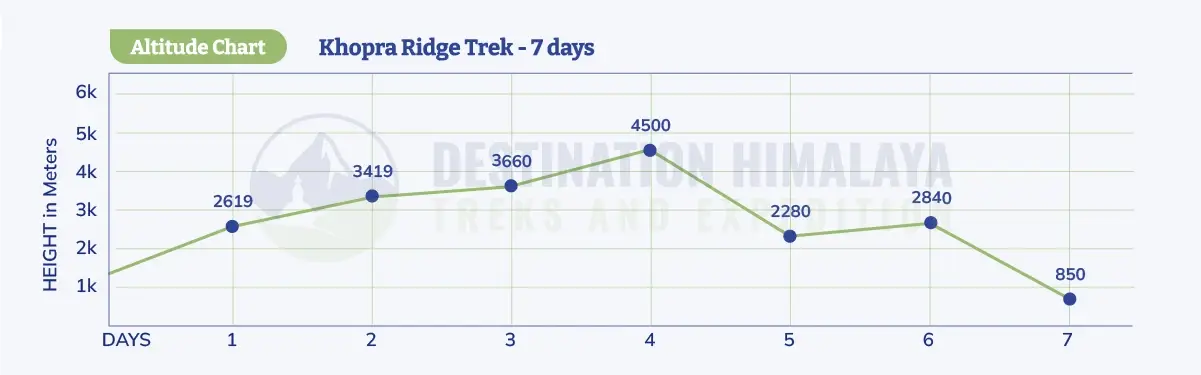
Altitude Chart
Daily Elevation Gain during Khopra Khayer Lake Trek
Segment
Duration
Start - End
Gain
Pokhara - Ghandruk - Tadapani
6 hrs
830 m - 2619 m
1789 m +
Tadapani - Bayeli Kharka
5-6 hrs
2619 m - 3419 m
800 m +
Bayeli Kharka - Khopra Ridge (Danda)
5-6 hrs
3419 m - 3660 m
241 m+
Khopra Danda - Khayer Lake - Danda (round trip)
7 hrs
3660 m - 4600 m
940 m +
Ridge - Swanta
5 hrs
4600 m - 2280 m
2320 (altitude loss)
Swanta - Ghorepani
4-5 hrs
2280 m - 2840 m
560 m +
Poon Hill View Point - Nayapul - Pokhara (drive back)
4 hrs
2840 m - 3210 m
370 m+
Comparing Challenges with other Annapurna Treks: Mardi Himal Vs Khopra Ridge Vs ABC
Factors
Khopra Ridge
ABC
Mardi Himal
Max. Altitude
3660 m (ridge), 4660 meters (lake)
4130 m
4500 meters (base camp)
Duration
7-9 days
8-13 days
5-7 days
Difficulty
Moderate
Moderate
More challenging
Fitness Req.
Basic
Good endurance, great if you have prior trekking experience
Basic
Terrain Kind
Forest trail, ridges, less crowded
forest, villages, and the alpine valley at the sanctuary remain crowded
narrow ridges, distinct landscapes, and alpine meadows
Suggested to
Beginners (moderate hikers)
Same
Doable by everyone, of all age kinds
How does the difficulty vary according to seasonal variations?
The Khopra Ridge Trek difficulty varies as per the seasonal time, shifting from easy to moderate trails, during peak seasons starting from March to May and becomes more challenging during the off-season (monsoon and winter), due to heavy precipitation and harsh climatic conditions. During the seasonal span of the year, you can expect dry terrains, stable weather and mild humidity, which makes the trip engaging and smooth; however, on the other hand, it demands extra preparations and gear considerations, as the trail becomes challenging, slippery and doubles the hurdles.
Spring (March - May): The blooming rhododendrons thrive in the green, lush, dense valley, the trails become stable and dry, with mild temperatures, ranging between 12 and 20 degrees Celsius, and perfect humidity to trek along without being physically drained. The daylight lasts for longer hours, allowing you to explore more out of the journey without speeding up, whereas the afternoon clouds may hide the view, so reach the destinations, in mid-day, upto 4:00-5:00 PM.
Autumn (Sep-Nov): The moderate temperature ranges between 8-16 degrees Celsius, making the hike easier, whereas the crowded trails also make the overall odyssey engaging and cooler nights, with zero possibility of rain and snowfall. The views remain prominent throughout the day, with a dry and stable pathway to trail along.
Monsoon (June - Aug): It is the peak wet season, with heavy probability of rain and snowfall, the trail becomes muddier, slippery, and landslides possibility of landslides, and the lowest visibility of the mountains, only suggested for experienced trekkers.
Winter (Dec - Feb): Coldest time of the year, with the temperature taking a massive drop, to -5 to -10 degrees Celsius, and icy terrains above 3000 meters, demanding prior experiences, and closed tea houses, special winter gears must be prioritised.
Trekking Preparations and Safety Tips
Engage in physical preparedness activities and cardiovascular exercises, such as walking, running, and other strengthening activities, for 4- 6 weeks, with 5-6 kms daily, which helps to handle 500-1000 meters elevation changes.
Follow "climb high, sleep low" rules to adapt to the rising altitude, limiting 300-500 meters altitude gain, stay hydrated, and fuel the body with carbs, protein and fats, as well, which keeps your body engaged.
Hire a licensed trekking guide for easy, smooth navigation through the dense forest area, unmarked trails, emergency medical assistance, and evacuation coordination and support to communicate with locals, as well.
Avoid afternoon storms, check for landslides (monsoon risk); start early and never ascend with headache or nausea, descend immediately.
Carry an oximeter throughout the trail, and at every stop point, check the pulse rate with the help of a guide, and if it doesn't look normal, then inform the guide immediately.
Pack layered for higher altitudes: Waterproof jacket, fleece, down jacket, -10°C sleeping bag, trekking poles, mid-cut boots, power bank, water purifier, headlamp, and first-aid kit (Diamox, ibuprofen, blister kit, rehydration salts).