Why Family Trekking with Kids in Nepal is Exploding in 2026?
Family adventure has increased by 40-50% since 2024, as per records, and is marked as a successful adventure, without any hassle, thanks to the well-maintained and straightforward routes, with the support of the experienced trekking guide, who ensures a smooth, easy-going trekking tour. Trekking in the present day is not only known for reaching a certain destination, or exploration, but tends to be a quick escape, away from the modern world, screen time, and rather, be lost in the serene nature, and deep exploration of other cultures, which makes the children more honest, humble, and also knowledgeable. The ideal seasons, customised itinerary, extra acclimatisation days, and private supporting crews now stand out as the high altitude odyssey, accessible for kids 7+ and seniors.
- Skip from Screen Time: Many parents want their children to be out of screen time, even if it's for some time, and rather seek a strong family connection period, in the holidays and weekends.
- Kids-focused itineraries: With many trailheads and new routes being introduced, and tour companies providing full transparency, accountability, and feasibility to customise the itineraries, enable short, easy walks, extra acclimatisation days, and budget options for families.
- Private Family Guide: 1:1 guide to family ratio, for instance, if you are hiking with 4 family members, then, along with the main experienced guide, an assistance guide will also be provided for more safety, personalised pacing, medical monitoring, and instant cultural storytelling.
- Tea House Game Changers: The lodges are now modernised and well-maintained, with private rooms, a kids' menu, and evening board games with heated dining rooms.
- Prioritising Safety: Assisted by the experienced, medically trained, and equipped trekking guide with portable oxygen, basic medical first aid kits, satellite phones, and knows, every call of the mountain emergencies.
- Cultural Kid-Magnets: Exploration of the ancient monasteries, temples, school visits, wildlife spotting, that turns a short trekking tour into living National Geographic episodes.
Can I trek to Nepal safely with Children? What can I expect?
Yes, Nepal is considered one of the safest countries to undertake the Himalayan trail, with facilitated tea houses, straightforward routes, and the mandatory rules of hiring a trekking guide to trail along. Over 10,000 families with kids have completed treks in Nepal without any hassle and are ranked among the best trekking destinations in South Asia. 1 choice as well.
However, the safety also highly depends on how well prepared you are, the safety precautions followed, and the itineraries as well. There are some of the challenges and major concerns that kids might come across in high-altitude terrain, such as weather fluctuations, the risk of altitude sickness, and being unable to continue or cover long distances. Amongst all, what freaks out the parents is the possibility of AMS (acute mountain sickness), where you must stay alert to what the children are going through, recognise early symptoms, and follow the safety guidelines. Ensure to hydrate well enough, fuel your body with necessary nutrients like carbs, proteins, fibres, and proceed the walk gently, acclimatise well, and if any discomfort or symptoms occur, by any chance, inform the trekking guide immediately.
Even though certain risks still exist, you need to pay cautious, engage in prior preparation, and set an itinerary that is manageable for you and your kids; with these, the existing risks are one hundred per cent manageable. Rather than planning your own trip, trusting the online map navigation route, or seeking local help for the right route pathway, and avoiding any assistance, we highly suggest that you plan the adventure with a reputable, registered trekking agency, like Destination Himalaya Treks, curate the itinerary as per your preferences, experiences, and budget, and hire the expert trekking guides. The overall trip promises to be smooth and safe for the kids with a well-planned trekking trail and a customised package of any route in the mountains.
Is Nepal Trekking Safe for Families After Gen Z Protests 2026?
If you're uncertain about Nepal's 2025 Gen Z protests and their potential impact on trekking safety in 2026, rest assured, political reforms have stabilised the situation, making family treks safer than ever. The late 2025 Gen Z-led protests against corruption and social media restrictions caused Kathmandu/Pokhara disruptions but ended with a stable interim government by early 2026.
Trekking hubs like Pokhara remain accessible, with no spillover to trails. The major trekking trail routes, such as Annapurna, Everest, and Langtang, remain unaffected, even during the protest time, as they are far away from the city area, and operate normally with lodges, guides, and unaffected rescue operations, in case of emergencies. Families report safe experiences post-reforms, and a successful adventure, while the city curfews happened during the protest for two days; on the other hand, rural treks faced zero restrictions, allowing the smooth navigation, without any problem.
Best Family Friendly Treks with Kids 2026
With many himalayan trekking trail options, in different regions, here are the top best handpicked family trekking packages for 2026, that we suggest, promising to be easy-going, gentle hikes, and renowned as family-friendly adventures in Nepal:
Langtang Valley Trek
Being easily accessible from the capital city, Kathmandu, the Langtang Trek stands out as one of the first choice for families with kids who wants a quick escape to the mountains and want an easy, moderate pace hike. It takes a deep exploration of the Langtang National Park, throughout, exploring the pristine himalayan flora and fauna with a walk alongside the roaring Langtang River, and the captivating meander via red blooming rhododendrons, from the beginning, that keeps the children engaged and fascinated. It passes through several notable villages, including Syabrubesi, Ghodatabela, Lama Hotel, Langtang village, and many more, with a deep, lively cultural experience of the Tamang and Yolmo communities.
The highest altitude that this adventure takes you to is Tserko Ri (4984 m), but you can skip this and rather just reach upto Kyanjin Ri (4773 meters), or avoid the ascent side trip, and explore the spiritual hub at Kyanjin Gompa. The optional viewpoints are your choice, and if you are travelling with children below 12 years old, then we suggest you take a hike to Kyanjin Ri viewpoint, which is easier and straightforward. The total duration takes 5 to 8 days, if following the standard straight route, but the best duration, for the families marks to be 8 days, from Kathmandu, with 3-5 hrs of daily hike and 300-400 meters ascent every day.
Why is it, kid-friendly?
- Trip Duration and Daily Hike: 8 days only, with daily walking coverage of 3-5 hrs, perfect for children trailing along with families
- Difficulty: No technical section included, straightforward route, marked as an easy to moderate adventure (expect some uphill and downhill walks)
- Exploration: Cultural Tour to the Tamang mountain villages, mountain panorama views, alpine meadows, distinct changes of landscape, rich biodiversity, an opportunity to encounter rare himalayan fauna, like tahr, langur monkeys, elusive panda, and a tour to a yak cheese factory (process, delicates, and village economy source)
- Age recommendation: Above 6 years old
- Maximum elevation: Approx. 3800 - 3870 meters at Kyanjin Gompa (optional side trips include, upto 4984m, which you can avoid as well).
Ghorepani Poon Hill Trek
The Poon Hill Sunrise Trek is known as the best family trek in Nepal, which is short, easy, and smooth to undertake, for any age category, and can be accomplished within 3-5 days of time only. It is generally gaining a wide family's attention, due to a well-facilitated tea house, lower altitude gain, and traverses through one of the crowded and famous trekking trails, letting you be accompanied by other fellow hikers, with kids as well, giving you a companion to trail along, without you feeling left out.
This adventure takes place within the Annapurna region, and unveils the majestic great gignatic mountain views of Annapurna and the Dhaulagiri range, with other notable peaks, and meanders along the remote villages, with an insight into Magar, Gurung, Rai, Sherpa, Brahmin, almost every main ethnic group in Nepal. The route is straight, and demands only 3-4 hours of hiking daily, for 2-4 days, and the highest altitude that this trip takes you to stands at Poon Hill viewpoint itself, at 3210 meters, which is also famous as the iconic Annapurna viewpoint. The route covers 70% of the forest navigation, via rhododendrons, pines and oaks. You will also come across small river streams, waterfalls, bridges, thundering rivers, and the accompaniment of the mountains, which your children will absolutely love.
Facts: A Quick Insight
- Why does it stand out: Easily Accessible from two major cities, Pokhara (with a drive of 2 hours to reach the starting point) and Kathmandu, the capital city
- Difficulty and Duration: Easy Going, and demands only 3-5 days, with 3-4 hours of daily hiking
- Age recommendation: Any age kinds
- Max. alt: 3210 meters (Poon Hill viewpoint)
- Explores: Cultures, and daily livelihood of distinct ethnic groups, of Tamag, Rai, Sherpa, hot spring - Jhinu Danda, Impeccable Sunrise view of 19 notable mountains, including Annapurna and Dhaulagiri range
Mardi Himal Trek
The Mardi Himal Trekking is known as a newly opened Himalayan trail in the Annapurna region, which takes a wander via off-beaten trails, and unveils the distinct changes of the landscapes, without you having to undertake any remote or isolated area, yet gives an off-the-beaten-path vibe fully. When compared to any other himalayan trails, apart from restricted areas, the Mardi Himal Trail stands out as a less crowded trekking route, and ancient tea houses, reaching the highest at 4500 meters at Mardi Himal Base camp, standing out as one of the best family trekking routes with kids, that can be completed just within 5 to 7 days.
The trip passes via notable key villages of Forest Camp, Badal Danda, Low Camp, and High Camp, where the diverse ethnic communities of Gurung and Magar reside. Daily, you just need to take 3-5 hrs of time, and an altitude gain of 300-400 m only, making it an altitude-friendly trek. If you are travelling with children below 10 years old, then we suggest you reach up upto only Mardi Himal View Point, which is straight and can be successfully reached with minimal effort.
Facts: What you need to know?
- Difficulty: Moderate, yet it covers a varied kind of terrains, with multiple ascents
- Duration: 3-7 days, depending on the starting point (Kathmandu or Pokhara), with a daily hike of 4-5 hrs
- Age recommendation: Children above 7+ years old
- Maximum height: 3500 meters at the base camp of Mardi itself
- Explores: Cultural tour to the villages, varied kinds of topography from blooming rhododendrons, to open landscape trail, to the alpine valleys with panoramic mountain giants, and several mountain views of Annapurna I, II, III, South, Dhaulagiri I, II, Tukuche Peak, Mardi, Hiunchuli, Lamjung Himal and many others
Mount Everest View Trek
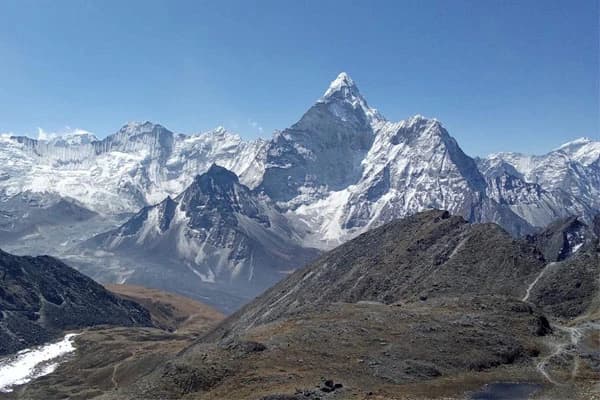
The Everest View Panorama Trekking is marked as one of the best substitutes for the almighty thrilling Everest Base Camp for families with kids, who seek a simple, gentle and easy-going hike, with well-facilitated amenities, yet experience the Everest trail, and the 360-degree panoramic mountain views of the iconic himalayan range. It is also named the Everest Panorama Trek, famous for the unmatched panorama of the legendary peaks, such as Ama Dablam, Lhotse, Nuptse, Thamserku, Makalu, and the world's tallest peak, Mount Everest itself.
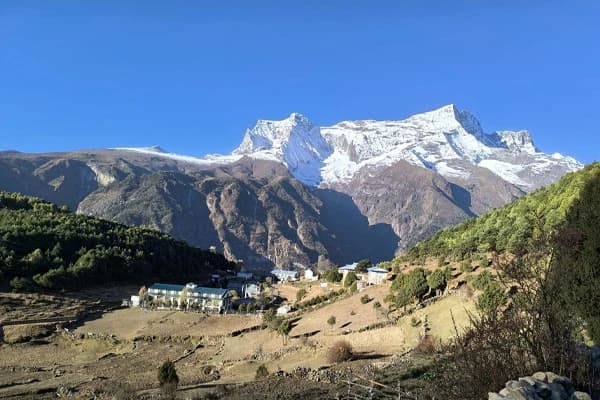
The route typically meanders via Sagarmatha National Park, a UNESCO-enslisted world heritage site, crossing several suspension bridges in between, a Tibetan-influenced route, mani walls, chortens, prayer wheels, along the Dudh Koshi River, that begins and ends with a 35-minute flight to Lukla. You will also get to explore the bustling town of Namche Bazaar, with a side trip to the world's highest luxury situated altitude, Everest View Hotel, Khumjung Monastery, Tengboche Monastery and the remote village of Monjo, covering half the route to the standard EBC, giving you an Everest vibe with gentle and easy effort.
Quick Trip Facts
- Difficulty and Duration: Easy Hike, that takes 5-7 days of timeframe, only with flights and acclimatisation at Namche included
- Visits: Khumjung Monastery and Tengboche Monastery
- Highest alt: maximum, 3870 meters at Tengboche
- Age recommendations: All age groups, even toddlers, with the support of parents and porters
- Highlights: Visits monasteries, explores the lush green forest during the walk to Phakding on the first day, capital city of Everest, Namche Bazaar, high altitude bakeries, pubs, restaurants, live music spots, local shops, and the 5-star hotel of Everest - Everest View Hotel, for panoramic mountain insights
Annapurna Base Camp (ABC) Trek
Known as one of the best trekking routes in Nepal, ranked as no. 2 after EBC, the Annapurna Base Camp (ABC) Trek leads you to the foothill of the world's tenth-tallest peak, and the reward is the sense of accomplishment to attain one of the laps with your kids, safely, creating a lifetime memory. This adventure is also recognised as an all-in-one Himalayan odyssey that explores the cultures of the distinct ethnic groups of Magar, Gurung, Tamang, passes via key notable villages, of Sinuwa, Chhomrong, Deurali, via the woodland of rhododendrons, terraced fields, cultivated farms, bamboos section, alpine valleys, and attains the two iconic base camps, Macchapuchare Base Camp (MBC) and Annapurna Base Camp (ABC) the highest at 4130 m.
About the Trip
- Difficulty: Easy to Moderate
- Duration: 1 week to 12-14 days max, with a daily 4-5 hours
- Max. altitude: 4130 meters
- Highlights: Panoramic Annapurna and Dhaulagiri mountain views, rhododendron colourful forests, cultures of the villages (diverse ethnic groups of Magar, Gurung, reach 2 base camps, varied topography and terrains
- Age recommendation: Above 12 years old only
Preparations Required for Family Treks in Nepal
Customisation of Itineraries
No matter which himalayan trail you undertake, please consider tailoring the itinerary to match your children's preferences, hiking pace, experiences and budget as well. Always know that every kid has their own fitness level and interests, while some children may love deep cultural exploration, some might only seek fun, animal gazing activities, and mountain views, so you must set the packages accordingly. If your kids are below 10 years old, then you can choose to explore cultural villages, whereas kids above 12+ years old can proceed on long walks, high altitude upto 4500 meters, and duration upto 7 to 12 days as well. Consult with a local expert, like us at Destination Himalaya Treks, for the personal customisation of the itineraries.
Family Trekking Seasons
The two ideal seasons for trekking with family and kids, in Nepal, are Spring, starting from March till May, and Autumn (mid-September to November), where the weather and climatic conditions are expected to be stable, along with mild to moderate humidity. The chances of rainfall/snowfall tend to be typically low during this timeframe, making the terrains remain dry, and the trailhead smooth to navigate as well.
Due to the stable climatic conditions and zero precipitation, the mountain views also tend to be clear, with crystal clear skies, with no obstruction or fogginess, where the kids will definitely enjoy, and will not be bored with the continuous hike. On the other hand, the off-seasons (monsoon and winter) are the span of the year, which are not suggested for family adventures, due to heavy rain and snowfall, which makes the route muddy, icy and snowy, making it triple challenging for the children, and risky as well. If your timeframe does not fit within the seasonal time, then you can avoid himalayan trekking and rather go for short cultural tours, or jungle safaris, avoiding long hours of walking.
Permits and Documentation
To undertake any trekking in Nepal, the first and foremost thing that you must do is get the necessary permits to proceed on the journey to any regions, territory, including the main areas, Annapurna, Everest and Langtang. To grab the required permits, you must be guided by a local registered trekking agency and hire a local licensed guide, via the company itself, as the hike cannot be done independently. The permits are included in the package, where the cost of the permits is also covered. Everyone must obtain the permits, but children below 10 years old get them for free. When you choose any of the tours/trekking, the paperwork will be arranged by the company; thus, you do not need to worry.
Health and Safety Considerations for Children
Trekking in Nepal with children demands very crucial attention, when it comes to health and safety, for a fun and risk-free adventure. Here are 10 practical tips focusing on altitude and preparation for a safe family trek:
- Before undertaking the hike, consult your doctor for a full body check-up, and ensure that your overall body is coping well, and get a complete check of the kids' health as well.
- Consider choosing low altitude routes, short duration hikes and easy, gentle pathways; avoid choosing restricted area trekking routes.
- Ensure that your kids are well hydrated throughout the journey, let them drink 3-4 L of water daily, and only consider having nutritious meals, with carbs, fibres, proteins, rather than junk items.
- Always pay cautiously, monitor the AMS symptoms, and if any occur, then inform the guide immediately, and take a descent.
- Do not go above 6 hours of hiking per day; take some breaks in between if needed. Usually, we suggest 4-5 hrs of hiking per day.
- Stock bandages, antiseptics, pain relievers, blister kits, and kids' motion sickness meds.
- Get travel insurance, especially kid-focused, that comprehensively covers all the essentials, like medical expenses, injuries, delays, cancellation and most importantly, heli evacuation upto highest altitude of the adventure.
FAQs (Frequently Asked Questions)
What is the minimum age for trekking in Nepal?
The kids, as young as 4-5 years old, can easily undertake the short trekking trails, like Ghorepani Poon Hill, Mardi Himal, Annapurna Sanctuary, Langtang, and short Everest trails, as well, but avoid high altitude adventure above 4500 meters, as the rapid altitude gain might trigger the kids ' bodies.
Are there child-friendly routes for those below 5 years old?
Yes, easy, moderate and straightforward routes, with well-facilitated tea houses, such as the Poon Hill route or the Langtang village. It is perfect for kids, and even toddlers; however, it requires an extra porter and also family support (minimum 2 hikers for extra support).
What gear do kids need?
For the kids, we suggest a comprehensive kids-friendly packing gear and clothing like sun hats, sturdy boots, and a day bagpack, to store personal stuff, basic medical kits, and a sleeping bag for winter or at high altitude above 3500 m.
Conclusion
Nepal trekking with kids is a once-in-a-lifetime opportunity for families who seek to explore the cultures, mountains and unique landscapes of Nepal, yet also want a safe himalayan trail; however, you must be well prepared before starting any journey. Discover the majestic Himalayas as the ultimate outdoor learning adventure for your family, provided you have a thoughtfully crafted itinerary, the ideal route, and an expert guide by your side. Reach out to Destination Himalaya Treks today to customise your unforgettable Nepal family trek.