Why was solo trekking banned in restricted areas?
Before 2026, March, or you can say, after the law was officially bypassed, solo trekking in restricted area adventure zones was banned, for safe navigation, be aware of the possible hazards, security, and cultural sensitivity to preserve the pristine, unchanged historical roots. Under the old regulations, the isolated areas demanded a special restricted area permit, which was only issued for the organised group treks (minimum 2), where the guide must be hired via a local agency. For such initiatives, the major reasons were:
Safety
- The high altitude trailheads, remote terrains, and sudden changes in weather in the higher elevations, especially at the base camps and mountain passes, made it risky to cross for the independent solo trekkers. If someone gets sick or any emergency situations occur, there is no medical accessibility available; in fact, there is no sign of trekkers and locals, as well.
- The trails are not well-marked, and the maps are old, which do not follow the present navigation trekking route, which increases the possibility of getting lost with no track or backup. The rescue was almost impossible and slow due to the lack of a guide, which is still compulsory to be hired in the present date.
Security
- Sensitive border of Nepal, close to China (Tibet) and other neighbouring countries, for instance, Upper Mustang, Dolpa, Humla, Taplejung, Manang, Rasuwa, and others sit along the Nepal-China border, which is tightly controlled, to prevent illegal border crossings, unauthorised access to the confined restricted zones.
Cultural Sensitivity
- The main initiation of the restricted permit is to preserve the ethnic communities (for example, Bon religion, Tibetan, and high Himalaya margin regional traditions) where the government wanted visitors to come along with guides, agencies, and monitor behaviours, reduce environmental damages, and ensure a good, respectful communication/ interaction with local cultures.
Permit control and Easy Tracking
- The ban on group hikers and limitation of the permits used to limit the foreign trekkers, as the limited permits were only issued back then, which possess, a less foot prints in the restricted zones, making the conservation area easy to track hikers and rescue them immediately.
- Also, seamless collection of fees and enforcing regulations, rather than having dozens of individual solo hikers wandering in loosely monitored zones.
Hence, the ban on the restricted area zones was less about the initiation of the law, but more focused on risk management, safe navigation route, border-zone control, protection of the cultures and arranging the logistics in a hassle-free way.
Big Change: Solo Trekking now allowed in Restricted Areas 2026
In 2026 March 22, Nepal rolled out a major policy update permitting foreign solo trekkers to enter and trek along the restricted area zones, which were previously only accessible for group treks or organised groups. With this major update and changes, it has finally ended the loophole that kept the people out of the confined, isolated terrains, even though independent trekking is still not allowed, where trekkers must trek along with a licensed guide.
This change affects 13 restricted area districts, from northern to western regions, including those core areas that border China-Tibet and lie in the sensitive Himalayan corridors. TAAN (Trekkers Agency Association of Nepal) has already proposed the change initiatives, and to remote regions, for solo hikes. In return, the government officially declared access to solo trekkers in restricted areas, from 2026, March.
What are the key conditions of the new policy?
- Even though solo trekking is now allowed, solo hikers must obtain the restricted area permits via a local registered trekking agency affiliated with TAAN (Trekking Agency Association of Nepal).
- Trekkers must hire a licensed Nepali local guide, as an independent hike is not allowed in this territory.
- Trekkers must follow only the marked approved routes, at key points, designated villages, and checkpoints, by following the major local rules of not harming any Himalayan flora, fauna, or wastage, and respecting the cultural sites.
- Permits are still time-bound, and the price of the permits varies accordingly, as it was before, and late extensions are not allowed, with the cost paid before.
- The agency that processes the permits must take the full legal responsibility for the safe handling of the logistics, accompaniment of the trekking guide throughout and emergency rescue and medical handling (if required).
What does this mean for safety and regulations?
- The government still maintains and protects the near border by tracking the foreign trekkers through agencies, guides, and permit check-ins.
- Protects the pristine ecosystems, untamed cultures and ethnic community groups, as the guide monitors behaviour, and enforces sustainable eco-friendly practices.
- The new rule still enforces the rescue support, helicopter evacuation, in case of serious cases, and if a solo hiker gets sick, injured, or lost, then the registered trekking guide and agency takes full responsibility.
Who benefits the most from the new regulations?
- Firstly, the experienced solo individuals, who do not have any group, and want full freedom of independent travel, but in a controlled form and safe environments.
- Secondly, photographers and Instagram content creators, who prefer quieter, less crowded trails and want to customise the itinerary as per their preferences and budget.
- Thirdly, slow-paced, beginner hikers who enjoy moderate, slow, low altitude gain, and set rest days accordingly, without compromising anyone's pace.
- Lastly, niche-trip operators, or just new agencies and guides, can now design the itineraries seamlessly, such as short extensions, side trips, and custom routes for individual clients.
Which restricted areas now allow solo trekking?
Nepal's new policy for 2026 now allows solo trekkers to obtain the Restricted Area Permit (RAP) for almost 15 restricted districts, previously requiring groups or a minimum of 2 hikers. Here are the major regions, areas, and popular restricted area treks that fall within this territory, all accessible to solo hikers via registered agencies and mandated to hire licensed Nepali guides, with notes on solo access under 2026, March rules:
| Popular Treks |
Region/District |
Permit Fee (USD) |
Solo Access Notes |
| Upper Mustang (Lo Manthang) |
Upper Mustang (Mustang) |
$50 per day |
Solo is allowed but requires a licensed guide to hike along via a local travel agency |
| Upper Dolpo Circuit, Shey Phoksundo |
Upper Dolpo/Lower Dolpo (Dolpa) |
$500 for 10 days, $50 for additional days; Lower $20 per week, and additional fare of $5 per day |
Solo permitted demands yet agency |
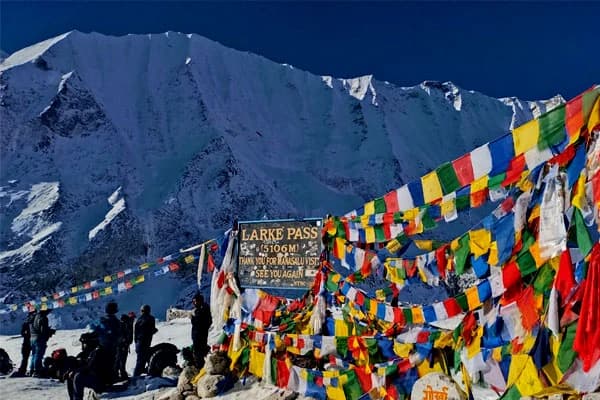
| Manaslu Circuit, Larkya La Pass |
Manaslu (Gorkha) |
Seasonal peak time: Spring and Autumn: $100 per week, $15 additional days, and off-season: $75 for 7 days + $10 extra days |
Solo permitted |
| Kanchenjunga Base Camp |
Kanchenjunga (Taplejung) |
$20 per week (first 4 weeks) + $25 per week |
Solo allowed with a guide |
| Tsum Valley |
Tsum Valley (Gorkha) |
Sep-Nov: $40 per week, $7 per day for extended days, whereas $30 per week, with an extra $7 for extra days |
Solo permitted along the guide |
| Simikot, Limi, Kailash tour |
Humla |
$50 per week (extra $10 for extended days) |
Solo permitted |
| Nar Phu Valley |
Nar Phu (Manang) |
Sep-Nov: $100/week, other season $75 per week |
Solo via local agency |
| Upper Mugu |
Mugu |
$100 per week + $15 per day |
Solo ok |
| Northern Langtang |
Rasuwa |
$25 per week |
Same |
| Manaslu Base Camp |
Sankhuwasabha (makalu) |
$20 a month, whereas an extra $25 per week afterwards |
Same |
| Northern Remote Sections |
Solukhumbu |
Same permit cost |
Solo ok via local agency |
| Gaurishankar |
Dolakha |
$21 per week |
Solo allowed |
| Bajhang |
saipal |
$90 per week, +15 per day |
Solo access |
| Northwestern areas |
Bajura |
Same as Bajhang |
Solo granted |
|
Far western area
|
Darchula |
$90 per week + $15 per day |
Solo via local agency |
Note: All regions follow certain rules, such as solo permits only via TAAN-affiliated agencies, require a licensed guide, pre-arrival online apps using visa number and independent trekkers are strictly banned.
Are hiring guides and restricted area permits still mandatory?
Guides and permits remain mandatory for trekking Nepal's restricted areas in 2026, even though solo access is now allowed, by dropping the old group hikers requirement of at least two hikers, yet core safeguards like permits and guides still remain the same.
Shifted Rules - What has changed?
- No longer demands a minimum of 2 trekkers, as now, solo applicants are fully accepted.
- For agencies, online pre-booking is simplified, using only visa details.
Still Mandatory - What are the unchanged requirements?
- The Restricted Area Permit (RAP) is still mandatory for all 13 districts.
- Hiring a licensed trekking local guide is compulsory throughout, on the basis of a 1:6 ratio, meaning that if the trekkers exceed 6, in a group, then an assistant guide is required.
- Independent hikes are still not allowed; the TAAN agency tracks everything.
- Permits must be granted via a travel agency affiliated with TAAN
How to Get a Restricted Area Permit in Nepal (Step‑by‑Step)?
Here is the process to obtain the restricted area permits from start to finish:
Documents required
- Passport photocopy with full validity dates
- 2/4 recent passport-size photos
- Day by day trekking itinerary with details (entry and exit dates and points)
- Nepal visa number or pre-arrival submission ID
- Travel insurance photocopy with clear policies, that covers high altitude helicopter evacuation
- Emergency contact information - phone number or social media ID's
Pre-arrival permit handling
- The Department of Immigration now allows foreign trekkers to get the permits before arriving in Nepal (the travel agency handles the permit and paperwork arrangements).
- Use your visa application submission ID number to pay fees, and begin the process from your home country.
- Old policies requiring queuing for long hours in Kathmandu are no longer needed.
Agency Submission Process
- Search for the trekking agency or the package you are seeking online, and contact a registered Nepali agency, like Destination Himalaya Treks, and confirm the trek, region, dates, arrival date, departure time, and guide.
- Submit all the documents, such as passport, flight tickets, and photos, via email after confirming the trip to proceed with the further process.
- After the submission, the registered trekking agency handles all your paperwork, permits, and logistical handling, ensuring your feasibility and safety.
Permits collection
- Within 1-2 days, your permits will be verified via the online system.
- After arriving in Nepal, you can collect the permits in Kathmandu from the agency before departure.
- Throughout the journey, carry your permits at every checkpoint, even though they are checked at the entry point, carry them throughout.
Safety and Responsibility for Solo Trekkers
- Throughout the journey, navigate along the licensed trekking guide, do not leave his side, monitor your oxygen level at each key point via oximeter, and do not be influenced by other fellow hikers.
- Share your detailed day-to-day itineraries with your family, friends and agency.
- Proceed with a gradual ascent, set at least 1-2 acclimatisation days, acclimatise properly, recognise the symptoms of the AMS (Acute Mountain Sickness), and stay alert.
- Do not miss out on getting travel insurance that comprehensively covers all the essentials, such as theft, trip cancellation, delays, minor injuries, and helicopter evacuation above 3000 meters - 6000 meters, depending on the route.
- Always consider TAAN-affiliated agencies for safe navigation, transparency, cost, and rescue, which have proven success and safety records.
- Respect cultural sites, for instance, while visiting monasteries, do not take photos without permission, consent and respect local cultures.
- Follow the sustainability practices, pack out wastage, do not damage the ecosystem, and wild flora.
- Adhere to checkpoints and routes; report issues to your guide immediately for compliance.
- Before booking your trip, comprehensively check out the rules, check the details, and review the whole package for mutual understanding.
How to plan a solo trek in a restricted area of Nepal?
- Research Routes: Before you begin or start the adventure, engage in research regarding altitude, difficulties, weather conditions, seasonal conditions, and set the itinerary that matches your fitness and time duration.
- Choose Peak Seasons: Select the ideal peak times, Spring (March-May) and Autumn (Sep-Nov), for easy smooth navigation via dry terrains, and avoid heavy precipitation, wet, muddy and slippery sections.
- Prior Physical Preparation: Engage in physical strengthening activities, especially for the base camps, high mountain passes, and high altitudes, and also get medically checked, and follow the guidelines of the doctors.
- Secure a good insurance policy: Ensure that the policy covers all the essentials, especially heli evacuation, which must be verified by the agencies.
- Find TAAN Agency: Contact registered operators (e.g., Destination Himalaya Treks) 2-3 months ahead via email for quotes and guide matching.
- Submit Documents: Send a passport copy, 2-4 photos, itinerary, visa ID, and insurance proof for RAP processing.
- Confirm Guide: Verify whether your guide is licensed or not, and whether he/she follows emergency protocols, or are medically trained or not.
FAQs (Frequently Asked Questions)
Do I still need a permit to solo trek in restricted areas?
Yes, even though solo trekking in restricted areas is now allowed, you still need to grab RAP and other permits required mandatorily.
Do I need a local trekking agency to get a restricted area permit?
Yes, the permits (RAP) must be obtained via a local Nepali agency, affiliated with TAAN (Trekkers' Agency Association of Nepal), as an independent hike is not allowed.
Can I apply for a restricted area permit before arriving in Nepal?
Yes, Nepal's 2026 rules now allow pre-arrival Restricted Area Permit (RAP) applicants, firstly, to contact a TAAN-registered agency like Destination Himalaya, and submit visa, submission ID, passport copy, passport-sized photos, insurance documents, itinerary details, and submit via email. The permits will be arranged by the agency itself and covered in the package cost.
Are there still mandatory guides or group rules in some areas?
No, there are no mandatory group size rules, allowing solo trekkers with RAP permits, now in 2026, whereas hiring a licensed guide remains compulsory, for the safe navigation along remote areas, and border zones, such as Manaslu and Upper Mustang.
Final thoughts on solo trekking in restricted areas
Nepal's decision to allow solo trekking in restricted areas opens a great once-in-a-lifetime opportunity for independent hikers who are physically fit, solo, and well prepared, and respect cultures and fragile environments. It now supports the fact that you can experience the remote restricted zones, without having to compromise on being with a group, or join fixed departures, giving you complete accountability on scheduling your itineraries, budget and permit compliance. Ready to plan your adventure, a solo trek in Nepal's restricted area? If so, then feel free to reach out to us, contact us, for any queries, where your permits, itinerary, and dates will be arranged as per your choices.