Choosing the best trekking route is always a matter of personal taste, whether you prioritize panoramic mountain views, cultural villages, or quieter trails, and everyone experiences altitude a little differently. For September trekking in Nepal in 2026, as the monsoon clouds drift away and early autumn begins, it is a particularly rewarding time to hit the trails. With that in mind, we have carefully curated some of the best September treks in Nepal for 2026, highlighting tips, weather, best trekking routes, and exactly why they deserve a spot on your bucket list this year.
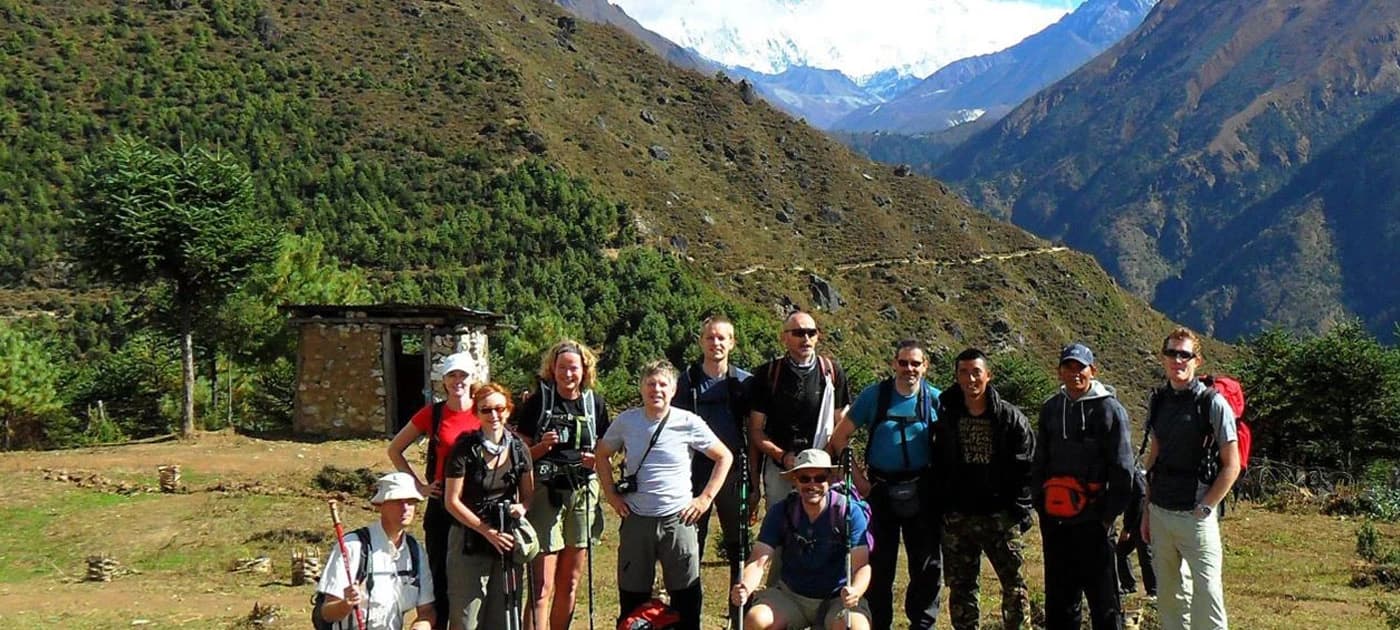
Trekking in Nepal in September 2026: Weather, Best Treks & Tips
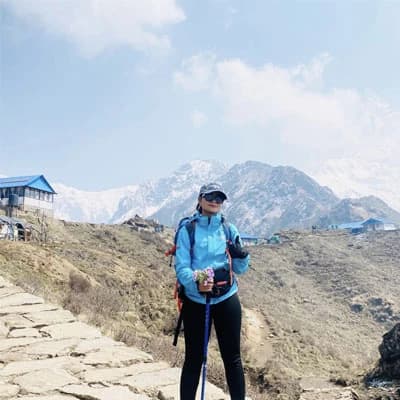
Why does September stand out as a peak time to trek in Nepal?
September stands out as a prime time to trek in Nepal, blending idyllic weather conditions, mild temperatures, early crispness of the autumn clarity and comes after the conclusion of the monsoon time, which rewards hikers with the bright skies, crystal clear mountain panorama views, and a unique perspective of the landscapes and surroundings.
As this month comes after the end of monsoon, there is a less likely chance of the cloudburst (rainfall or snowfall), making the terrains dry and easy to navigate, which can be commenced by any kind of hikers, without having to require prior experience or hectic preparedness. During early Sep, there is a low number of hikers, between 20 and 50% only, compared to October or other seasonal times, letting you feel the serenity, peace, and savour in the iconic gigantic thundering himalayan peaks in each stride.
What makes trekking in Nepal in September truly intriguing is the lush green valleys, vibrant shades of the wild flowers, crusty leaves at wood land area (forested trail), and the terraced farms, turning into gold, with the grown crops, of millets, rice, wheat, with the remote ancient hamlets, and locals engaging in the agricultural works. The landscapes become dramatically exhilarating, with brown hillsides and snowy covered himalayan peaks. Besides, one of the major perks of trailing along this peak time is that it is just the beginning phase of peak tourism time, due to the less crowded route, there is wide options available of the tea houses, where you might even get private rooms, and usuage of amenities, at affordable cost, and also, get to interact with the diverse ethinc local communities at the mountains, like Nubri, Gurung, Rai, Sherpas, Tamang, Rai, etc, without being bothered by other hikers.
The major advantage of undertaking the himalayan adventure at September, is that, the major festivals, Dashain and Tihar basically, falls in between, where you get to thrive in their celebrations, be a part of the local families, and even have family feast, tika blessings, and build a close connect with locals, insighting their livelihood, traditions, spiritual beliefs, elevating the trip, rather than, just attainig certain height or a destination.
Hence, the perfect fusion of the favourable climatic conditions, epic mountain views, safe trailhead, and cultural festival celebration and partially less crowds, September offers the most authentic raw himalayan adventure, without compromising safety or views or experiences, making it a favourite and savy choice for anyone, who seek, true mountain and trekking experience, rather than, following instagram crowds.
Highlights of Trekking in Nepal during September: What to expect?
- As September arrives after the end of the monsoon (rainy monsoon season) in Nepal, there is little chance of heavy rain or snowfall, which makes the terrain drier, washes away the gloomy clouds, and offers a smooth trail to navigate, which suits every kind of trekker.
- The landscapes transform into distinct shades, with lush green valleys, crusty brown hills, and even the insight of the red and pink rhododendrons lingering in the mid-elevation, where the unique surrounding hills will amuse you in each stride.
- Because the peak time has just kicked in at the trailhead, during early autumn, the number of hikers is low compared to October or November, allowing you to hike all the way along, enjoy the views, and get a chance to interact with locals as well.
- As it is a time of harvesting and the major festivals of Teej, Dashain, Tihar and Chhath, you get to experience the unique livelihood of the mountain people and be a part of the celebrations.
- Low chance of disruption/cancellation of trip in between, which usually happens due to the heavy snowfall, snow-blocked pathways, and heavy air traffic congestion, contributing to 100% sucess trip.
- The monsoon season washes away all the gloominess, cloudy skies, rewarding hiking with 80% clearer skies, with the 360 degrees panorama mountains and landscapes, perfect for photographs or video shots.
- Due to the lower traffic volume, the cost of amenities is slightly on the lower side, whereas the variation options of amenities are high, with private rooms available as well.
- The cascading waterfalls, river streams, roaring rivers alongside are at their fullest, accompanying you in each stride and glance, at the trails like Manaslu (Budhi Gandaki River), Langtang (Langtang River) and Everest (Dudh Koshi River), with an eye-appealing insight.
Weather and Temperature in Nepal in September
In September, Nepal experiences the post-monsoon transition period, where the monsoon rains end, presenting clear skies, stable terrains to proceed across the high elevation, and minimal chances of the rain fall or snowfall. Although in early September (first week of Sep), there is a possibility of rainfall, as the month progresses, the chances become low, but it won't bother your adventure, as the himalayan adventure usually lasts for 7 days to 14 days. As you ascend higher, there is less chance of snowfall, as mid September of late kicks in the himalayan surroundings, with the mountain views becoming more prominent and closer day by day, and snowfall, being very uncommon, at this month, even at higher elevation, near base camps, or while crossing the high passes.
The temperature conditions in September, on the other hand, remain mild and moderate, perfect for long hours and longer duration treks in Nepal, without draining you completely physically or mentally as well, making it an impeccable time for deeper exploration of mountain terrains. In the mid valleys like Kathmandu, or Pokhara, below 1500 meters, the temperature usually ranges from 23 to 25 degrees celsius at day, and 14 to 16 degrees Celsius at night.
Whereas, at the mid elevation (2000 m to 2500 meters), at lower altitude himalayan treks such as Ghorepani Poon Hill, or the starting point of the trip, like Namche Bazaar (Everest region), Maccha Khola (Manaslu), Syabrubesi (Langtang), or Kagbeni (Upper Mustang) or Nayapul (Annapurna), the temperature ranges in between 15 to 21 degrees celsius, at day time, and might fall to 5 to 10 degrees celsius, at evening - night time.
Ascending higher, near the acclimatisation point, beyond 3500 meters, like Samagaon, Dingboche, Kyanjin Gompa, the temperature is somewhere between 10 °C and 14 °C during the day and 0 to 4 °C (nighttime). As you reach the base camps like ABC, EBC, or the high mountain passes, such as Thorong La (5416 m), Larkya La (5-16 m), it takes a massive drop to 4 to 8 degrees Celsius, during the day time, and cools down to -5 to 2 degrees Celsius, at night time, which demands a proper gears, and warming clothings like warm fleece layerings, down jackets, and sleeping bag (considerable if required), for warm and cozy time.
As the month progresses, the skies becomes 50% more clearer, and the moderate temperature easing acclaimatization hikes, and also, high altitude treks with virtually no precipitation risk and stable conditions across the Himalayas. The perfect weather patterns, mild temperature, reduce the chances of AMS (Acute mountain sickness), when compared to colder seasons, or heavy precipitation monsoon times, with dry terrains, reducing the natural hazards risk like landslides, avalanches, wet trails, making September an optimal time to trek in Nepal.
Best Trekking in Nepal in September 2026: Top 5 Handpicked Routes
September 2026 unlocks Nepal's most diverse trekking portfolio, spanning iconic Himalayan classics, serene hidden valleys, and dramatic rain-shadow wonderlands. As monsoon clouds finally part, these handpicked best trekking routes in September deliver unmatched scenery, effortless accessibility, and transformative experiences perfect for every adventurer.
Everest Base Camp Trek
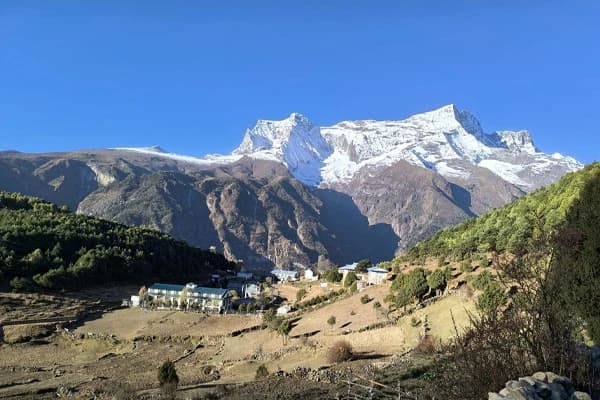
The iconic Everest Base Camp (EBC) Trekking stands out as one of the legendary and most popular treks in Nepal, which leads you to the lap of the world's tallest peak, Mount Everest (8848.88 m), the foothill perched at an elevation of 5364 meters, and the highest pinnacle at Kala Patthar at 5545 meters. Rather than just taking you to the ultimate destination, throughout the adventure, you'll be accompanied by the great gigantic peaks, including Ama Dablam, Tharmseku, Mt. Lhotshe, Nuptse, Cho Oyu, Makalu, and wandering around the UNESCO-registered world heritage trail, known as Sagarmatha National Park, from the very beginning till the end.
While undertaking the Everest Base Camp Trek in September, due to the stable weather and climatic conditions, with mild temperatures, the possibility of delay or cancellation of the Lukla Flight is low, which either happens due to huge traffic congestion or the bad weather situations (heavy precipitation). Kicking off the journey, with a thrilling flight to Lukla Airport, the trail passes through Phakding, Namche Bazaar, alongside the roaring Dudh Koshi River, on the first two days. Then, the route proceeds towards Tengboche, Dingboche, Lobuche, Gorakshep, and finally attains the ultimate destination of EBC and Kalapatthar, via Gorakshep. In between, there are two main acclimatisation stopping points at Namche and Dingboche, where you can include a side trip to the Everest View Hotel, Khumjung village or monastery, and Nangkartshang Peak, which are the prime view points, unravelling the 360-degree view of the peaks.
The trek usually lasts for 12 to 14 days, depending on the route or the starting points, starting and ending with a Lukla Flight of 35 to 40 minutes, whereas, for those, who seek, to avoid the flight air navigation, can opt for the roadway, drive to Jiri, or Salleri, by opting for the EBC Trekking by road itinerary lasting for 16 to 18 days.
Annapurna Base Camp Trek
If you ask any hikers, their bucket list and must-do adventure in Nepal, then, after Everest, the generic answer will either be the almighty Annapurna region, any treks, like Mardi Himal, Poon Hill, or the popular Annapurna Base Camp Trek, which unveils the natural wonders of the Annapurna Conservation Area, and the panoramic vista of the Annapurna and Dhaulagiri Ranges.
The trek to ABC passes through the adorned forested area, bloomed with the red and pink thriving rhododendrons, river streams, waterfalls, almost covering 60% of the forest navigation, with a possibility of glimpsing the distinct himalayan flora and wildlife such as Danfe, Himalayan Tahr, Red pandas, with the spellbinded views of the Annapurna I, II, IV, Hiunchuli, Macchapuchare, very closely, just in front of you, from the beginning. Traversing through the key stopping points of Chhomrong, Deurali, Sinuwa, the hot spring at Jhinu Danda, and Macchapuchre Base Camp, it takes you to the foothill of the world's tenth-highest peak, Annapurna I (8091 m). Lasting for a 7 to 14-day timeframe, after a jeep drive from either Pokhara or Kathmandu to Hile or Nayapul, below 1500 meters, it leads you to the highest elevation at 4130 meters.
The moderate altitude gain and moderately easy trailhead, with the stable weather and climate conditions in September, this ABC Trekking another perfect adventure that you can possibly choose to venture on early Autumn 2026.
Langtang Valley Trek
The Langtang Trek is one of the best September treks in Nepal for 2026, which you can blindly undertake, as it is easily accessible from the capital city, Kathmandu, with only 7-8 hours of road drive towards Syabrubesi, from where the walking trail begins. This adventure stands out as being shorter, closer, and more on the budget friendly side if compared with other high altitude adventure, which can be completed within a 5 to 8-day span of time, taking you to the highest elevation at 4473 meters, Kyanjin Ri, or Tsergo Ri below 5000 meters, which marks as an easy going, beginner friendly and family treks, that one can proceed on, without much hassle, or spending thousands of dollars.
The trailhead navigates along the Langtang National Park, along with the Langtang River side by side, entering the forested trail of the pine, oaks, rhododendron blooms, with a chirping sound of birds, and encountering the rare wildlife, such as Red Panda, Himalayan Black Bear, Spotted musk deer, making the hike truly intriguing. The best part of trailing along the Langtang region, and that too during September, is that the route is less crowded, and the trail gives you off-beaten, remote pathway vibes, without having to spend so much time along the route. The region is densely 80% populated by the Tamang people, where, passing through Tibetan settlements, like Lama Hotel, Ghoda Tabela, Langtang village, and the spiritual hub at Kyanjin Gompa, you get to experience the cultures and traditions of the Tamang locals, living here for decades, and feel the tranquillity of the less-trafficked route.
Throughout the trek, get ready to be accompanied by several glaciers, great himalayan iconic peaks, such as Langtang Lirung, Gangchenpo, Yala Peak, etc., and visit the famous Swiss yak cheese factory, experiencing the remote and unchanged terrains. This journey suits perfectly for those who got limited time frame, and also beginners, who want a moderate pace hike, and a lower altitude adventure.
Manaslu Circuit Trek
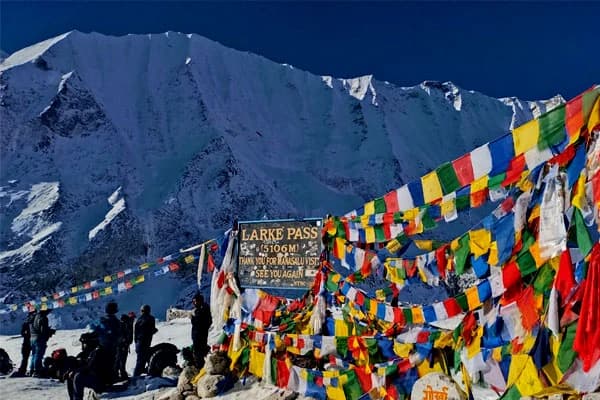
One of the most remote, isolated trekking trails in Nepal stands out as the Manaslu Circuit Trek, which encircles the world's eighth-tallest mountain, Mount Manaslu, at 8163 meters, leading you to the highest elevation at Larkya La Pass, traversing along the restricted protected territory of the Manaslu Conservation Area, along the Budhi Gandaki River side by side. To undertake this trekking route, one must grab a special permit, and navigate with an experienced licensed trekking guide, through a local travel agency for safe navigation, and also, to conserve the bio and ecology of the himalayan flora, fauna and cultures, traditions, and economy of the locals.
Starting the journey, with a drive to Maccha Khola, the route traverses through the Tibetan settlements of Jagat, Deng, Namrung, Samdo, Sama gaun, Philling, Shyala, Lho village, with an acclimatisation hike to Manaslu Base Camp, wetland at Birendra Lake, and Tibetan border - Rui La Pass, while acclimatising at Samdo and Samagaon, before attaining the pinnacle of the Larke Pass. The main highlight of this trek is the navigation along the rugged, off-beaten, remote routes, experiencing the untamed terrains, and the Tibetan cultures of Manaslu, of the bon-religion communities of Nubri, Tsumba, Gurung, Rai and Sherpa communities, with an impeccable mountain view of Ganesh Himal, Buddha Himal, Himal Chuli, Peak 29, and the iconic Mt. Manaslu, also, known as Killer Mountain.
This himalayan adventure, last for 8 to 16 days of timeframe, and definitely considered, as a streneous hike, when, compared to the easier and other popular treks like annapurna, langtang and everest, thus, while trekking in September at Manaslu circuit, you can expect smooth dry terrains, impeccable mountain views, and mild temperature, making the trek, truly outstanding and worthy.
Annapurna Circuit Trek
The Annapurna Circuit Trek ranks among Nepal's premier classic adventures, circling the mighty Annapurna massif through dramatically varied landscapes from lush subtropical forests to the world's highest walkable pass, Thorong La (5416m). September 2026 transforms this iconic route into a trekker's dream with post-monsoon clarity, 60-70% fewer crowds than October, and stable temperatures perfect for the 5400m crossing.
Starting from Dharapani, this 12-16 day journey showcases six distinct climatic zones, ascending the Marsyangdi Valley past culturally rich Tibetan settlements, Chame (Gurung heritage), Upper Pisang (ancient gompas), Braga Monastery, and Manang (3540m acclimatisation hub with Gangapurna Lake day hikes). The trail then climbs to Thorong Phedi basecamp for the pre-dawn pass summit, rewarded by 360° panoramas of Annapurna I (8091m), Dhaulagiri (8167m), Tilicho Peak, and Chulu massif framed by colourful prayer flags.
September's dry trails, golden buckwheat fields, and minimal snow risk make the descent through Kali Gandaki Gorge (Earth's deepest) via sacred Muktinath Temple spectacular, ending with Poon Hill's sunrise over 17 peaks. Daily 5-6 hour stages with dual acclimatisation (Pisang 3200m + Manang 3540m) ensure safe passage for fit intermediate trekkers seeking rugged terrain, high passes, and authentic Himalayan immersion, making it one of the best September trekking routes in Nepal.
Is it Safe to trek in Nepal during September after the Gen Z Protest?
Yes, trekking in Nepal during September 2026 is completely safe. The 2025 Gen Z protests had zero impact on any trekking routes or tourism infrastructure. These student-led demonstrations were strictly confined to urban Kathmandu (specifically the Baneswor area, 8-10km from Thamel's tourist hub), never reaching airports, trailhead access roads, or rural trekking regions like Manaslu, Annapurna, or Everest. Nepal's trekking areas operate in complete isolation from city politics, accessible only by dedicated mountain roads that bypass Kathmandu entirely. Trekkers drive straight from the capital to Soti Khola (Manaslu), Besisahar (Annapurna), or Phaplu (Everest) without urban exposure.
The protests ended peacefully within days by late 2025, with no arrests, violence, or lasting disruptions, standard democratic expression, not civil unrest. By February 2026, Nepal's government will remain fully stable, tourism infrastructure will operate at 100% capacity, and international arrivals have normalised completely. Thamel thrives with zero protest scars, Lukla flights run on schedule, permits process instantly, and teahouse owners eagerly await September's first post-monsoon trekkers. Guides, porters, helicopters, and emergency services function seamlessly across all regions.
September safety concerns = weather only: Early month showers (clears by Sep 15), leeches below 2000m (salt spray), standard altitude protocols. Political risk = nonexistent. Nepal hosts 1.5+ million trekkers annually without incident; thus, 2025's blip changes nothing.
Trail Tips for September: Things to Consider at Early Autumn
Here are some of the top tips (hacks) that we recommend highly to follow while undertaking trekking in Nepal in September 2026:
- Pack a light waterproof shell and pack cover, as trails can still be wet and brief rains are common after the monsoon.
- Try to start your hike, at early in the morning, somewhere around 7:30 to 8 AM, after breakfast, to avoid the wind trails, crowded view points, and possible rain showers at early sep, evening time.
- Do not miss out on bringing insect repellent cream, as in early September, there might still be leeches and mosquitoes; also, consider wearing high socks, gaiters, and using salt or spray.
- Keep electronics and documents in dry bags because humidity and residual moisture can damage gear.
- Wear sturdy and well-gripping trekking boots, as post monsoon (beginning of Sep) still has the chance of trails being muddy.
- Follow the safety guidelines from the start to the end of the adventure, and keep in mind to use trekking poles every day to manage some slippery stone steps, especially while hiking at forest at a lower altitude, and reduce strain on knees.
- Try booking the trip before September kicks in to get early bird offers, get the best lodges with attached washrooms and get flight window seats.
- Even though you are an experienced and have a high level of fitness level, please include 1/2 acclimatisation days before reaching higher altitudes beyond 4000 m+.
- Choose well‑established teahouse routes (Everest, Annapurna, Langtang, Manaslu) if you’re a first‑timer in early autumn for better infrastructure and safety.
Health, Altitude & Safety for September Treks
Even though September is considered a peak seasonal month, certain challenges at high altitude are always circulating, so it is very crucial to consider health and safety on the very first hand, as the amenities (logistics) and health emergency accessibility are quite limited. Taking into account that during September, the weather conditions are still in the improving zone, and tend to be unpredictable, at high altitude, so rather, than fully trusting the ideal time, and luck, it is best if you consider essential things while trekking in September in Nepal, which are highlighted below:
Altitude Sickness Tips
- Please note that, despite being an experienced hiker or choosing the best time, the risk of AMS (Acute Mountain Sickness) is always circulating around, 24 hour, so it is necessary to follow a gradual ascent and acclimatise your body. Rather than speeding up your pace, being influenced by others, follow the "climb high, low sleep" rule, and take a 300-400 meter daily hike, with at least 1 acclimatisation (rest day) set in between.
- Throughout the adventure, ensure to hydrate your body with at least 4 to 5 litres of water per day, avoiding dehydration, and smoking cigarettes; instead, fuel your body with nutritious meals that include fibres, proteins, less fats, and more protein.
- After ascending above 3000 + meters, every night for dinner, you can include hot ginger garlic soups as a side dish or have hot noodles with soup or ramen, to keep you all warm and cosy.
- It is suggested to use an oximeter to check your pulse rate daily, and if it is below 85%, then we recommend either taking a descent or taking an extra acclimatisation day.
- If you feel any symptoms, like mild headaches, severe ones, dizziness, loss of control, insomnia (loss of sleep or appetite), vomiting, difficulty in breathing, then please inform the guide immediately, and follow his call action.
Health Consideration
- Before you start the hike, make sure to check your full body, especially your heart, lungs, and hear what your doctor has to say, regarding high altitude odyssey.
- If you are a beginner, then carry a "Diamox" to avoid AMS, with the precaution of a doctor.
- Do not miss out bring basic fitness kit, which includes cold, cough medicines, hand sanitisers, sunscreen, or other hygenic toiletries.
- If you are considering remote and dry air terrains like Mustang, Nar Phu, or even Annapurna Circuit, consider carrying Electrolyte tabs, which keep you hydrated at dry post-monsoon air as well and salt spray on boots or socks, at forested trails, as there might be leeches, or mosquitoes- Early September Specific.
Safety Essentials
- Before beginning the high elevation trek (beyond 2500 meters), grab travel insurance, which covers trip cancellation/delay, medical bills, medical assistance, and heli evacuation above 6000+ meters to avoid unnecesaary burdern expensive cost.
- Ensure that your package includes a licensed trekking local guide, having at least 5+ years of experience, and are medically trained.
- Please let your family know the travel company you are travelling with, and mention the day-to-day itinerary, so it's easy to communicate and send or receive emergency messages.
- Navigate along with the trekking guide all along, please do not miss your track, and do not get easily influenced by others along the trekking route.
- In early September, there is still a chance of rainfall and snowfall, so ensure that you are prepared for slippery trailheads, and consider packing the essentials, considering the season of post-monsoon as well.
Essential Gears & Clothing Lists
Before you start the adventure, the first and foremost thing that you must keep in mind is to pack smartly and efficiently, highly considering which month, or season, you are proceeding the himalayan trailhead on. Rather than focusing on overpacking and keeping all the gears, confusion might cause you a huge burden along the route, just making the bagpack heavier, and unnecessary gear costs. Thus, September trekking gears must include monsoon-ready and autumn seasonal gears and clothing, with specific September must-haves as well, which we've recommended below:
Clothings
- A base layer of a moisture-wicking t-shirt (base layers)
- Insulated Mid Layering
- Waterproof jackets, trousers and rain coat as well
- Warm Fleece outer layerings
- Puffer or Down jackets
- Lightweight trekking pants
- Sweater or warm long-sleeved hiking t-shirt
- Thermal underwear
- Sun Hat, Head cover, Hair Band
- Gloves
Footwear
- Comfortable shoes - work at a lower altitude or at a lower elevation
- A pair of slippers to wear at the tea house
- 3x wool socks and liner socks
- Light trekking socks - easier to dry
- Sturdy trekking boots with a strong grip
Equipments
- A pair of adjustable trekking poles
- Head Lamp with extra batteries
- Power Bank - never miss out
- Sun Glasses with UV Protection
- Water bottle with a water purification tablet
- Basic Personal Medical Box
September Specific
- Gaiters (for mud or snow) early September
- Sleeping Bag - might be required at high altitude
- Crampons - for high passes, as snow might still be there at first week of Sep
- Waterproof bags and bagpack covers
FAQs (Most Asked Questions)
Can you hike in Nepal during September?
Yes, the month of September, which welcomes the peak season of autumn beautifully, where the lush green valleys are turned into vibes of the fall season of the year, with crisp leaves, stable weather, mild temperature, perfect to proceed the trekking trail of the Himalayas. In fact, it is the favourite span of the autumn, where you can expect a few hikers, as the seasonal time just kicks off in the mountain areas, allowing you to enjoy the majestic views of the mountains and landscapes, and navigate all along, feeling the peacefulness, and savouring the panoramic vista of the majestic peaks, from iconic viewpoints.
Will it rain in September in Nepal?
As it comes after the end of the monsoon season completely, the chances of a high amount of rainfall are minimal, considering the fact that, as September comes in till August, the fogginess, cloudbrust is already washed away. However, at the beginning of this season, for almost a week, there might be a chance of thin rainfall, and even snowfall, whereas, from mid-September, the likelihood of precipitation is low, making the terrains smooth and easy to navigate with dry trailheads.
What is the weather and temperature like in Nepal in September?
The weather in Nepal during September is transitional, with no possibility of rainfall, muddy trails, or heavy snowfall, with the crystal clear views of the mountains and landscapes, making it an ideal month to undertake any trekking/expedition.
While at the lower altitude below 2000 m, at Kathmandu, or any starting point of the trek, the temperature usually ranges from 15 to 22 °C, and falls upto 10 °C at night, whereas, at the mid elevation (2500 to 3500 m), it is expected to be in between 12 to 20 °C at day, and 2 to 5 °C at night time. At higher sections, like high passes or the base camps beyond 4500+ meters, the temperature is expected to range between 2 to 10 °C and takes a massive drop to -9 to 0 °C at nighttime.
Do I need special permits for trekking in September?
No matter which season or which month you decide to undertake the trek in Nepal, depending on the route, required permits must be attained via local based travel agency, whereas the kind of permit depends upon your adventure. For instance, if you are considering annapurna region, then the TIMS Card and the Annapurna Conservation Area Permit are required; meanwhile, if the navigation is along the restricted area, then one must grab the RAP (Restricted Area Permit), for the isolated and restricted area treks like the Manaslu circuit, Upper Mustang, Dolpo, Nar Phu, etc.
Are the trails crowded in September?
No, the trekking route is not crowded in September, compared to other peak prime time, as it marks just the early phase/beginning of the Autumn, where from early till the mid september the trailhead remains quite estimated to be around 10 to 20 % and might hit upto 70% of hikers, while compared to October or early November.
Is it safe to trek in Nepal in September?
Yes, trekking in Nepal during September is usually considered safe, due to the low possibility of rainfall, which makes the trail stable, dry, and with less chances of natural hazards such as landslides, avalanches, and with low crowds. But, it is necessary to do proper preparedness, training, and essential to tailor your package to match your fitness level and experiences. Most importantly, you must hire a licensed trekking guide, following the safety guidelines from the very beginning till the end of the adventure.
How fit do I need to be for a September trek in Nepal?
Anyone with a basic level of physical fitness, who can undertake 4-6 hours of hiking, with a daily distance coverage of 8 to 12 kilometres per day, and with proper preparation, and packing comprehensively, can proceed with the hike in nepal at september.
What is the major challenge of trekking during this month?
It doesn't matter which himalayan adventure you are undertaking at a high altitude above 3000 meters; the main risk for beginners, or even experienced hikers, is the possible risk of altitude sickness if preventive measures are not followed. Thus, make sure to follow safety guidelines and navigate with a licensed trekking local guide for a safe and enjoyable trek.
Is it necessary to get travel insurance during this peak prime early Autumn?
Yes, one must grab travel insurance, even at peak season, which covers all the essentials, such as medical bills, minor injuries, theft, trip delay or cancellation, and most importantly, the helicopter evacuation (2500 m - 6000 m), depending on the kind of himalayan journey you are proceeding for.
Conclusion: Is September 2026 a good time to trek in Nepal?
Nepal, considered the land of himalayas, mountains, filled with cultures and untamed remote areas, stands out as the perfect trekking destination, across the globe, which suits any kind of hikers, whether it is a family trip, cultural adventure, or a thrilling himalayan odyssey. It doesn't matter what time of year, you have enough holiday, or how much time you have, you can organise your adventure any time of the year. However, if time fits, then September is the peak tourism prime ideal time, where the weather remains stable, the green lush landscapes thrive impeccably, with a low number of hikers, and the major festive time, of Dashain and Tihar in Nepal. It marks the perfect time for trekkers who seek a less crowded trail, more solitude, and unhindered views of mountains from legendary viewpoints.
From shorter treks such as Ghorepani Poon Hill, Mardi Himal, Langtang to long remote trails like Manaslu, Annapurna circuit, EBC etc, trekking in Nepal in September is an impeccable choice, that comes after the end of monsoon (high rain-snowfall season), offering dry terrains, clear skies, and favourable weather and climatic conditions, with a very less chance of precipitation.
Venture out on a journey, where the epic iconoc himalayan peaks, and the warm hospitality of the diverse ethnic groups, and their unique livelihood, and culture, will surprisingly amuse you, and feel the accomplishment, and tick off your bucket list, by reaching your manifested goal destination, this year 2026, from bustling town to the himalayas, where the nepalese mountains, are all set to welcome you.
With the crystal clear panorama 360 degree views, ideal moderate temperature, smooth and easy trailhead to navigate, trekking during September means every day comes with rewards, with less hassle. Thus, what are you waiting for? Destination Himalaya Treks stands ready with expert teams and seasoned Himalayan crews to guide you from start to finish. Do not wait longer, feel free to contact us for the most joyful, thrilling Nepal adventure of 2026 and 2027.
Best places to visit in NepalCultures in NepalFestivals in NepalMajor Festivals in NepalMountain GuideNepal Top PlacesNepal's Best PlacePermit and FeesPlaces to visit in NepalTourist Destination in NepalTrekking Gear
Need Help? Call Us+977 9851016814orChat with us on WhatsApp
Latest Travel Blogs
Need Help? Call Us+977 9851016814